Test a Start Capacitor
As an Amazon Associate we earn from qualifying purchases. Details
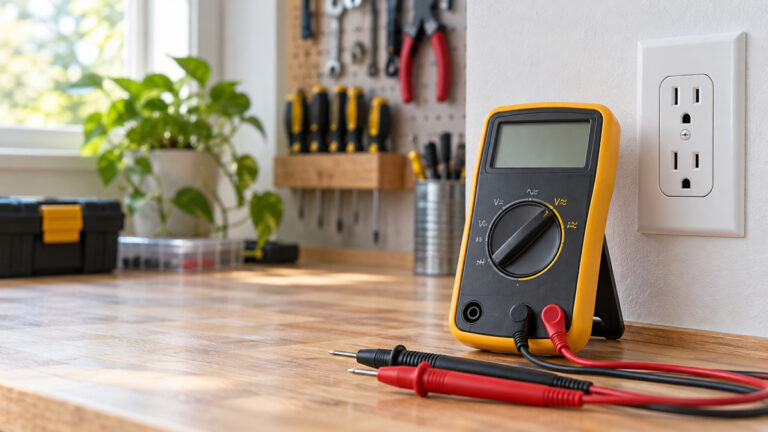
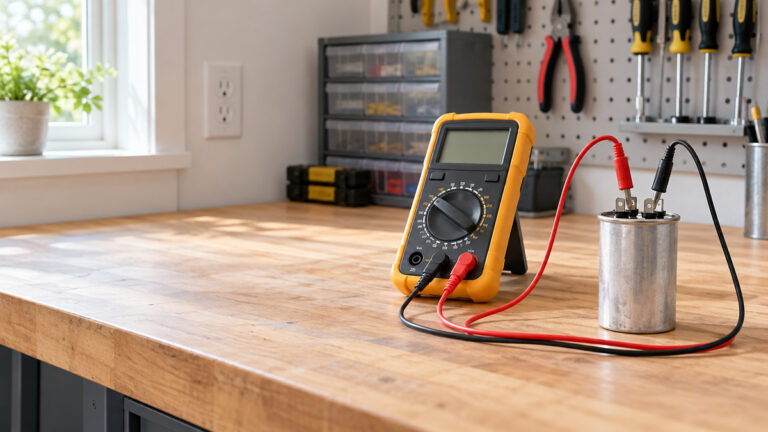
Testing a start capacitor with a meter only works if the meter lists the function you need, not just a familiar shape. This guide separates five multimeters by measurement type, range, display, power source, and listed protection, and it shows when a missing category rating or compatibility statement should stop a purchase. Electrical work can expose lethal energy. Never open a service panel or probe a live mains circuit unless you are qualified; send panel or service work to a licensed electrician.
Quick answer
Start with the AstroAI when you want a battery-powered meter whose listing names capacitance, frequency, and temperature among its functions. The Klein Tools MM420 is the clearer alternative when auto-ranging and lead-alert LEDs matter, because its listing describes LEDs that show proper test lead placement. Choose the Crenova MS8233D for its stated CAT III 600V safety standard, the T21D multimeter for non-contact voltage testing in a 300 g body, and the Fluke 17B+ for temperature readings up to 400C with an included type K thermocouple. A missing CAT statement is never permission to use a tester on household mains, so confirm the manual, rating, leads, and intended circuit before connecting any of them.
What to check on a start capacitor tester
Match the measurement to the job
A start capacitor tester listing should state the measurement you intend to make. All five listings here describe their purpose as Multimeter, so that label cannot separate them and the listed functions have to decide. A voltage indicator answers a narrower question than a multimeter that lists resistance or current. Write down the exact check first, then reject every product whose title, specification, or bullet does not state that function.
Treat voltage and category limits separately
A voltage range tells you what the instrument claims to read. A CAT marking describes the transient environment the meter is designed to operate in, and measurement category is an IEC classification for live circuits, so a broad displayed range does not replace an appropriate CAT statement. If a listing omits the category, do not infer one. Keep that start capacitor tester away from household mains and choose a properly documented instrument or a licensed electrician.
Read the power and package fields
All five listings give Battery Powered as the power source, so that field does not separate them. Power source affects whether a tool is ready when you need it and whether replacement cells belong on your shopping list. Included-components fields matter too: a meter without stated leads or clamps may need another purchase, while an integrated tester may be complete for its narrower job.
Check the display details before buying
A reading helps only when you can interpret it. Some listings specify a digital count, LCD, LED status, or resolution; others only name the measurement type. Prefer the display description that answers your actual question, and if you need a number, do not substitute a tool whose listing promises only a status light.
Let missing statements rule a model out
A missing range, CAT level, or compatible-device statement is meaningful. It does not prove the start capacitor tester lacks the feature, but it prevents a confident match. Check the current listing and the manufacturer manual, and if the statement is still absent, move to a model whose documentation answers the question directly.
The five start capacitor tester models side by side
| Model | Listed purpose | Power source | Listed detail |
|---|---|---|---|
| AstroAI | Multimeter | Battery Powered | 5999-count display |
| Klein Tools MM420 | Multimeter | Battery Powered | Auto-Ranging, 14.56 ounces |
| Crenova MS8233D | Multimeter | Battery Powered | CAT III 600V |
| T21D multimeter | Multimeter | Battery Powered | 300 g, up to 600V/10A |
| Fluke 17B+ | Multimeter | Battery Powered | Type K thermocouple included |
The table uses only fields stated in each listing. It does not equate different measurements or assume that a longer feature list makes a tool suitable for a more hazardous circuit.
The five start capacitor tester models in detail
1. AstroAI Digital Multimeter, True RMS 6000 Counts Auto-Ranging Volt Meter for Automotive & Home (Best overall)
Specs from the listing (checked 2026-10-11):
- Power Source: Battery Powered
- Style: Professional,Safety
- Color: Blue – Multimeter
Pros
- Lists capacitance, frequency, resistance, diode, continuity, and temperature functions
Cons
- The listing does not state a CAT rating
Best for: Buyers who want a battery-powered meter with capacitance among its stated functions
Skip if: You need a documented CAT rating for the circuit
View on Amazon (affiliate link)
2. Klein Tools MM420 Auto-Ranging TRMS Digital Multimeter (Best for lead-alert LEDs)
Specs from the listing (checked 2026-10-11):
- Power Source: Battery Powered
- Style: Auto-Ranging
- Color: Orange/Black
Pros
- Lists LEDs that show correct test lead placement, and includes test leads
Cons
- Confirm its category information against the circuit you plan to test
Best for: Buyers who want auto-ranging with included test leads and lead-placement alerts
Skip if: You need a function the listing does not name
View on Amazon (affiliate link)
3. Crenova MS8233D Multimeter TRMS 6000 Counts Auto-Ranging Live Wire NCV (Best for a stated CAT rating)
Specs from the listing (checked 2026-10-11):
- Power Source: Battery Powered
- Style: 8233D
- Color: Orange
Pros
- States a CAT III 600V safety standard and a 6000-count backlit LCD
Cons
- Confirm that CAT III 600V suits the circuit you plan to test
Best for: Buyers who want a stated CAT III 600V standard and a backlit 6000-count display
Skip if: You need a rating above CAT III 600V
View on Amazon (affiliate link)
4. Auto-Ranging Digital Multimeter, TRMS 6000 Counts AC DC Voltmeter Ohm Volt Amp Meter, Electrical (Best for non-contact checks)
Specs from the listing (checked 2026-10-11):
- Power Source: Battery Powered
- Style: up to 600V/10A
- Color: Orange and black
Pros
- Lists non-contact voltage testing with sound and light alarms, at 300 g
Cons
- The listing does not state a CAT rating
Best for: Buyers who want non-contact voltage testing for outlets and sockets
Skip if: You need a documented CAT rating for the circuit
View on Amazon (affiliate link)
5. Fluke 17B+ Digital Multimeter, for Electrical Applications, Measures AC/DC Voltage 1000V, Current (Best for temperature readings)
Specs from the listing (checked 2026-10-11):
- Power Source: Battery Powered
- Style: Digital Multimeter
- Color: Yellow
Pros
- Lists temperature measurement up to 400C with an included type K thermocouple
Cons
- Confirm its category information against the circuit you plan to test
Best for: Buyers who want temperature readings for heating and cooling systems
Skip if: You need a function the listing does not name, or a smaller body
View on Amazon (affiliate link)
AstroAI: best overall
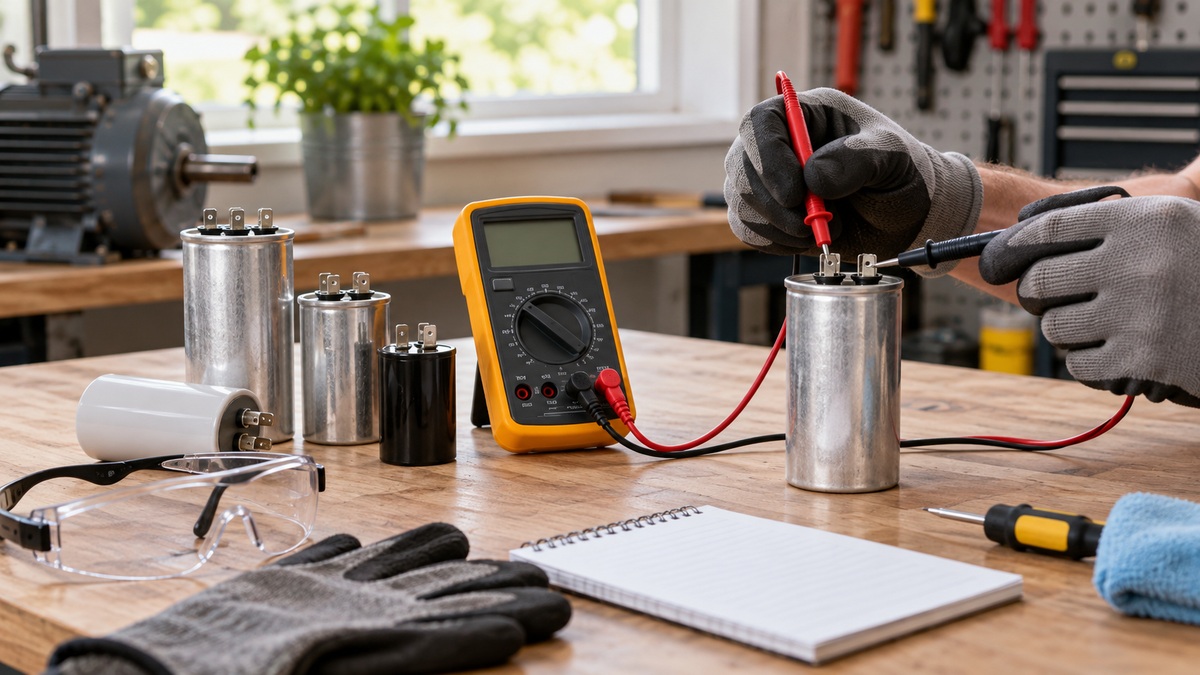
The AstroAI Digital Multimeter is listed as a multimeter. Its power source is battery, its style is Professional,Safety, and its color field reads Blue – Multimeter. The listing records a digital display of 5 ¾, 5999. One bullet states: “Versatile Digital Multimeter – Accurately measures AC/DC Current, AC/DC Voltage, Capacitance, Frequency, Duty Cycle, Resistance, Diode, Continuity and Temperature.” Capacitance appears in that list, which matters for a job like checking a start capacitor.
Its strongest point is the breadth of functions in that one bullet. The listing does not state a CAT rating, so confirm the manual before using it on a live circuit. Skip it if you need a documented measurement category, and do not credit it with anything beyond the words on the product page.
Klein Tools MM420: best for lead-alert LEDs
The Klein Tools MM420 is listed as a multimeter with the style Auto-Ranging. It runs on batteries, is orange and black, and weighs 14.56 ounces. Its compatible-devices field reads: Test leads (included with the product). One bullet states: “LEAD-ALERT PROTECTION: LEDs on the meter illuminate to indicate proper test lead placement, enhancing accuracy and safety during measurements.”
The lead-alert LEDs and the included test leads make the setup easy to verify before you touch a circuit. The remaining safety context, including category information, still needs confirming in the manual. Skip it if your job needs a function or range that the listing does not name.
Crenova MS8233D: best for a stated CAT rating
The Crenova MS8233D is listed as a multimeter in orange, with the style 8233D and battery power. It measures 5.51 x 2.76 x 1.57 inches and lists a CAT III 600V safety standard. One bullet states: “6000-Count LCD ScreenEquipped with a 6000-count (3 5/6 digits) LCD display, the multimeter tester gives clear and accurate readings. Bright backlight allows for working in the dark places.”
This is the one listing in the group that states a CAT rating, CAT III 600V, alongside a backlit 6000-count display. That rating is a boundary, not a promise: it must still match the circuit you plan to test. Skip it if you need a higher rating.
T21D multimeter: best for non-contact checks
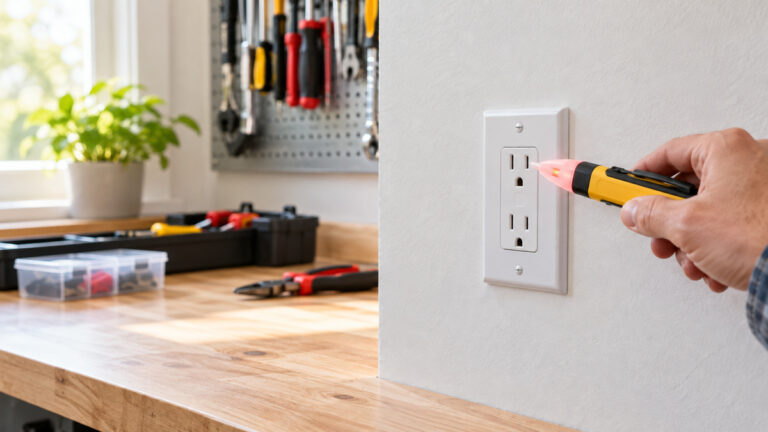
The T21D multimeter, listed with TRMS 6000 counts, is a multimeter with battery power and the style up to 600V/10A. It is orange and black, weighs 300 g, and measures 2.68 x 5.51 x 1.69 inches. Its specification field says UL. One bullet states: “🎁NON-CONTACT VOLTAGE TEST The T21D Multimeter is also designed with safety in mind. It features non-contact voltage testing and lives function with sound and light alarms. It works for outlets and sockets.”
The non-contact voltage function with sound and light alarms is its distinguishing feature, and at 300 g it is a light body. The listing does not state a CAT rating, so do not treat it as approved for household mains. Skip it if you need a documented category rating.
Fluke 17B+: best for temperature readings
The Fluke 17B+ Digital Multimeter is listed as a multimeter, battery powered, in yellow, and measures 8.46 x 2.76 x 5.91 inches. Its unit count is 1 Count, and the title says it measures AC/DC voltage up to 1000V. One bullet states: “Temperature measurement: Provides easy monitoring of heating and cooling systems up to 400C with included type K thermocouple.”
The included type K thermocouple and the 400C limit are the specific details to weigh. Confirm the category information in the manual before connecting it to anything live. Skip it if you need a function the listing does not name for your job.
Three buying situations
You need a direct reading
Choose a meter that explicitly lists a numeric display or measurement range. The Crenova MS8233D lists a 6000-count backlit LCD, and the AstroAI lists a 5 ¾ digit display with 5999 counts, so either is a stronger match than a tool that promises only a status light when you need to record or compare readings.
You need broad device compatibility
The Crenova MS8233D is the model that lists a CAT III 600V safety standard. Use that rating as the boundary: if your intended equipment is absent from the listing, verify it on the current product page rather than assuming that similar voltage means compatible use.
You need a compact tool for a defined task
The T21D multimeter gives 2.68 x 5.51 x 1.69 inches and weighs 300 g, which makes it easy to judge for storage. Size does not establish electrical suitability, so confirm the stated measurement and safety information before letting compact dimensions decide the purchase.
Related start capacitor tester guides
Four related guides cover neighboring searches: best test capacitor with digital multimeter, best testing a capacitor with a voltmeter, best check ac capacitor with multimeter, and capacitor ohm test. Read the one closest to your job before choosing a meter. They help define the job; they do not expand any product’s listed ratings.
Comparing listed dimensions
Listed dimensions are a storage and handling check, not a performance claim. The Crenova MS8233D measures 5.51 x 2.76 x 1.57 inches, the T21D multimeter measures 2.68 x 5.51 x 1.69 inches, and the Fluke 17B+ measures 8.46 x 2.76 x 5.91 inches. Both the Crenova and the T21D list a 5.51 inch side, while the Fluke 17B+ is the largest of the three on its longest side. Compare these figures with the space where you will keep the meter. They do not change the start capacitor tester’s stated range, rating, or compatibility.
Common start capacitor tester mistakes
Treating every detector as a measuring instrument
A start capacitor tester that only signals presence may not give the numeric value a diagnosis needs. Read the measurement-type and display fields before buying.
Assuming a voltage number proves mains suitability
A listed voltage and a CAT classification answer different questions. Do not work in a live panel because a start capacitor tester shows a large range; panel and service work belong to a licensed electrician.
Ignoring contradictory fields
If a title, specification, and bullet disagree, do not choose whichever number looks best. Treat the disputed figure as unresolved and verify it in the maker’s manual.
Buying around an unstated accessory
A start capacitor tester may need leads, clamps, probes, or batteries. Use the included-components field to see what is supplied, then check the current product page for anything left out.
Extending automotive claims to high-voltage vehicles
A tester listed for ordinary vehicle batteries does not automatically cover an airbag circuit or a high-voltage hybrid or EV system. Keep those systems outside a DIY start capacitor tester job and consult a qualified technician.
FAQ
Which start capacitor tester should I choose if I want battery power?
All five listings give Battery Powered as the power source, so that field does not separate them. Use the functions instead: the AstroAI names capacitance in its bullet, while the others name auto-ranging, a CAT rating, non-contact voltage, or temperature. Check that the listing also names your circuit or device.
Does the Klein Tools MM420 include what I need to start?
Its included-components field says Digital Multimeter, Auto-Ranging, 600V, and its compatible-devices field says test leads are included with the product. Compare that with the leads, clamps, probes, or batteries the manual requires, and check the current product page before ordering if an essential part is not named.
Can the Crenova MS8233D be used on household mains?
Do not infer household-mains suitability from its measurement label. The listing mentions a CAT III 600V safety standard, and a suitable CAT classification and voltage rating must match the circuit. A licensed electrician should handle panel or service work.
What does the T21D multimeter display?
Its listing describes a wide-applications multimeter for general electrical testing of power outlets and batteries, and it names sound and light alarms for non-contact voltage testing. Decide whether that output answers a presence question or supplies the numeric measurement you need, and check the manual if the wording does not explain how the indication maps to a result.
Is the Fluke 17B+ compatible with my equipment?
The listing gives no specific compatible-device list, so stay within its wording: AC/DC voltage up to 1000V and temperature measurement with an included type K thermocouple. Similar connectors or nominal voltage do not prove support. If your equipment is not named, verify the exact application on the product page.
Why does CAT information matter for a start capacitor tester?
Measurement category classifies live measurement circuits in relation to available energy and impulse voltage, and it is separate from the displayed range. A meter with no stated CAT classification should not be treated as approved for household mains. Follow the instrument manual and local electrical rules for every live-circuit task.
How should I compare two close start capacitor testers?
Compare one requirement at a time: measurement type, stated range, category information, display, and included components. The AstroAI lists capacitance among its functions, whereas the Fluke 17B+ lists temperature up to 400C. Choose the statement that matches your task, then reject the product with an unresolved safety or compatibility gap.
Bottom line
Choose the AstroAI when its listed functions, including capacitance, are what you need. Move to the Crenova MS8233D when its CAT III 600V rating better matches the job. Skip any meter that omits a required range, compatibility statement, or suitable category rating, and leave panel or service work to a licensed electrician.
Sources
- Measurement category: explains why CAT classification and a displayed voltage range answer different safety questions.