Klein Tool Voltage Tester How to Use: Picks and Steps
As an Amazon Associate we earn from qualifying purchases. Details
This guide shows how to use a Klein voltage tester, a non-contact pen, to check outlets, switches and cords without touching live metal. It centers on the Klein Tools NCVT1P and compares five other testers that work the same way or, in two cases, differently. You will learn what a pen can and cannot tell you and how to prove it works before and after each check.
Work on mains circuits can kill. Follow the manual and local electrical rules. Panel or service work belongs to a licensed electrician, and the CAT rating must suit the circuit.
Quick answer
Turn the Klein Tools NCVT1P on and look for the green light. Hold the tip near a known live outlet and confirm a flashing red light and a beep. Then test your target, and re-test the known live outlet. Red with a beep means AC voltage in its 50 to 1000V AC range was sensed. Green and silent suggests none was sensed in range at that spot. It does not prove a circuit is dead. Never open a panel.
How to use a Klein voltage tester, step by step
These steps follow the usual manual style for pen testers. Always follow the manual that comes with your tester.
- Turn it on. On the NCVT1P, the listing says a bright LED glows green to show it is working. If you see no green, stop and check the batteries.
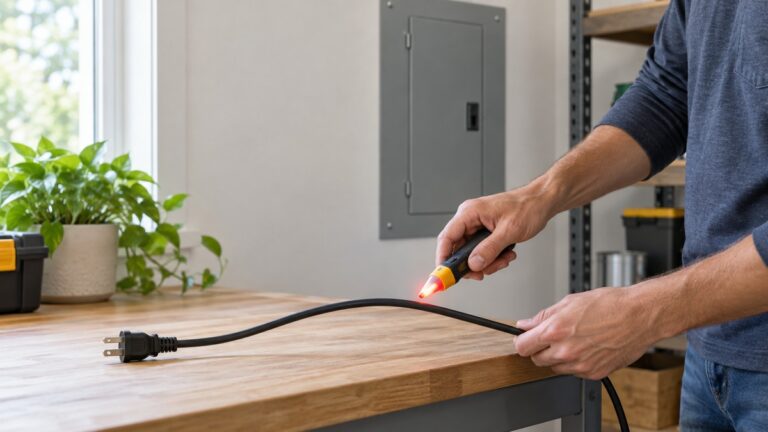
- Prove it on a known live source. Hold the tip near the hot side of a working outlet or cord. The listing says the LED flashes red and a beeping alert sounds when voltage is detected.
- Check your target. Hold the tip near each slot, wire or switch point and move slowly. Red with a beep means voltage in range. Green with no beep means none sensed in range.
- Prove it again. Return to the known live source and confirm red and a beep. This catches weak batteries or a fault.
- Store it. The listing mentions an auto power-off function. Keep the clip on and protect the tip.
A non-contact pen answers one question: is AC voltage present near this point, within its stated range? It gives no exact volts. A twin-probe tester, such as the NSi below, instead touches two points and shows voltage between them. For more on technique, read How Do I Use a Voltage Tester Safely and How to Use a Voltage Detector Pen.
Comparison table
| Tester | Stated range | Indication | Power | Size or weight | Rating wording |
|---|---|---|---|---|---|
| Klein NCVT1P | 50 to 1000V AC | Green on, flashing red plus beep | 2 x AAA, auto power-off | 5.5 x 0.72 x 1 in; 22.68 g | Specification Met: Cat Iv 1000v |
| Weikani VT120 | 60V to 1000V | Red tip plus beep, flashlight | Battery powered | 9.07 g | Safety Compliance:CAT.IV.ETL.CE in bullets |
| Fluke 1AC II | Nominally 90 V AC to 1000 V AC | Red LED plus beeper, silent mode | 2 AAA alkaline included | 59 g | CAT IV mentioned; check listing |
| Neoteck PM8908C | 12-1000V AC | LED plus graded beeps, flashlight | 2 x 1.5V AAA | 6.3 x 0.79 x 0.79 in; 65 g | CE CAT III600V RoHS in bullets; Spec: CE |
| NSi TES-111 | 80-250 VAC | Neon light, two probes | Listed as battery powered | 7.5 x 2.5 x 2.5 in | No CAT rating stated |
| AstroAI multimeter | Not on this card | Digital readout | Battery powered | Not stated | Not stated on this card |
The six testers
Klein Tools NCVT1P: the model this guide is built around
The listing describes non-contact detection of AC voltage in cables, cords, breakers, fixtures, switches, non-tamper-resistant outlets and wires, across 50 to 1000V AC. A green LED shows it is on, and a flashing red LED with a beep shows voltage. It measures 5.5 x 0.72 x 1 inches, weighs 22.68 g, and lists 6.6-foot (2 m) drop protection with a pocket clip. The box lists instructions and two AAA batteries. It suits first-time users who want a clear green-or-red signal.
Pros
- Separate green ready signal and red detection signal
- Auto power-off and drop protection
- Cat Iv 1000v listed under Specification Met
Cons
- One range only, 50 to 1000V AC, with no low-voltage or adjustable mode stated
- Nothing is stated about sensing below 50V
Skip if: you need an exact volt number or a two-probe reading between points.
Klein Tools NCVT1P on Amazon (affiliate link)
Weikani VT120: a lightweight backup pen with a flashlight (not a Klein)
This pen is not a Klein product. It lists a 60V to 1000V test range, weighs 9.07 g, and comes in orange and black with a flashlight. The bullets say to place the tip near a terminal strip, outlet or supply cord, and that a red glow plus beeping means voltage is present. It also lists 36-month after-sale service. It suits readers who want a simple, light backup pen.
Pros
- Very light
- Flashlight for dark areas
Cons
- One bullet says not to insert the pen head directly into the power supply and to wear gloves, which limits outlet-slot probing
- The bullets give a compliance line (CAT.IV.ETL.CE) that you should confirm in the manual
Skip if: you want stated outlet-slot steps.
Weikani voltage tester on Amazon (affiliate link)
Fluke 1AC II VoltAlert: pocket pen with continuous self-test (not a Klein)
This pocket-sized pen lists a nominal 90 V AC to 1000 V AC range, one high-intensity red LED, a beeper and an audible or silent mode. The bullets state continuous self-test. It comes with two AAA alkaline batteries, lists typical battery life of more than one year, weighs 59 g and has a flat tip. It suits users who want a pen that checks itself.
Pros
- Continuous self-test
- Silent mode
- Batteries included
Cons
- It starts nominally at 90 V AC, higher than the Klein
- No green power-on LED is listed
Skip if: you need sensing below 90 V AC. Check the listing for exact CAT wording before mains use.
Fluke 1AC II on Amazon (affiliate link)
Neoteck PM8908C: lower start voltage with a flashlight (not a Klein)
This pen lists 12-1000V AC with different alarm sounds and LED levels to separate live from null wires. It measures 6.3 x 0.79 x 0.79 inches, weighs 65 g, uses two 1.5V AAA batteries and doubles as an emergency flashlight. The bullets say CE CAT III600V RoHS while Specification Met lists only CE. It suits homeowners who want a lower stated AC threshold.
Pros
- Lowest stated start voltage in this group, at 12V AC
- Flashlight
Cons
- The rating detail is mixed and needs manual confirmation
- Multi-level beeps take practice
- The listing says it is not suitable for Christmas light testing
Skip if: you want single-tone logic or clearer CAT paperwork.
Neoteck voltage detector on Amazon (affiliate link)
NSi TES-111: twin-probe neon tester (a different technique)
This is a contact tester, not a pen. The title lists 80-250 VAC, and the bullets say a neon light shows AC voltage and the housing is double insulated, with test leads and a pocket clip. It measures 7.5 x 2.5 x 2.5 inches and lists the United States as country of origin. Both probes must touch the correct points per the manual, with fingers off metal. It suits readers who want a two-probe tool like the older wiggy-style testers.
Pros
- Simple neon indication
- Double-insulated housing
Cons
- No CAT rating, DC measurement, continuity or exact volts is stated
- It needs contact on two points, so technique and insulation matter
Skip if: you want non-contact screening or a numeric reading.
NSi TES-111 on Amazon (affiliate link)
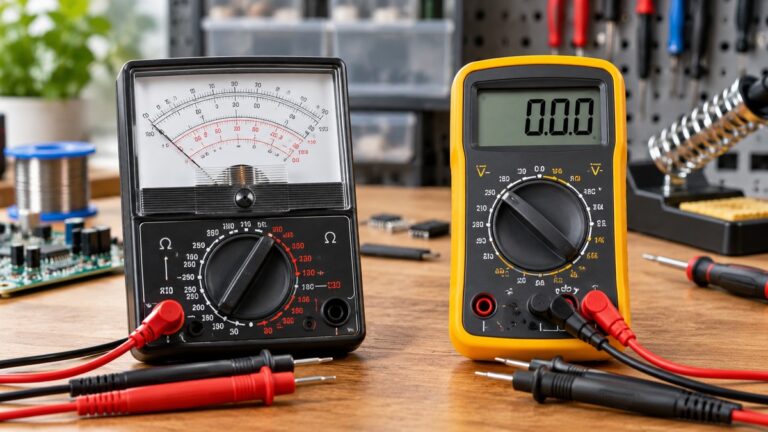
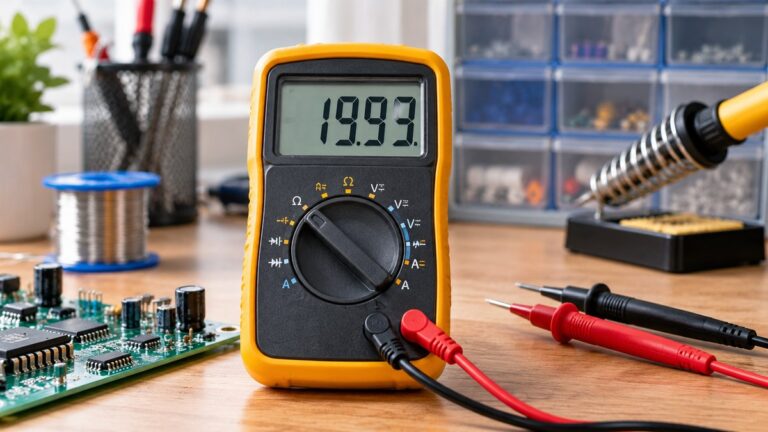
AstroAI multimeter: for when you need a number (not a pen)
This is a digital multimeter with 2000 counts, listed as a DC and AC voltmeter with ohm, volt and amp functions. The card here gives only the brand, battery power and compact style, so check the product page for its ranges and CAT rating before relying on it. It suits anyone who needs a numeric voltage reading instead of a presence alert.
Pros
- Gives a number, which a pen cannot
Cons
- Ranges and rating are not given on this card
Skip if: you only want a non-contact presence check.
AstroAI digital multimeter on Amazon (affiliate link)
Buying checklist
- Match the detection range to your checks. A higher start voltage can miss low-voltage AC.
- Prefer separate on and alarm signals if you are new. The Klein uses green for on and flashing red with a beep for voltage.
- Check the batteries and what ships in the box.
- Read the CAT wording in the listing and the manual. If the listing states none, do not call the tester safe for household mains.
- Compare size and weight with where you will carry it: the Klein is 5.5 inches and 22.68 g, the Neoteck is 6.3 inches and 65 g, the Weikani is 9.07 g.
- Use a meter, not a pen, when you need a number.
FAQ
Which pen should I start with if I want an easy Klein tester?
Start with the Klein Tools NCVT1P. Its listing states 50 to 1000V AC detection, a green operating LED, flashing red with a beep on voltage, auto power-off and 6.6-foot (2 m) drop protection, which makes the result easy to read for a first-time user.
How does the Klein NCVT1P differ from the other pens in this guide?
It starts at 50 to 1000V AC, where the Fluke starts nominally at 90 V AC and the Neoteck at 12 V AC, and it uses a separate green ready light and a flashing red detection signal. Its listing gives 22.68 g and 5.5 x 0.72 x 1 inches.
How does the Fluke 1AC II differ from the Klein pen?
The Fluke lists a nominal 90 V AC to 1000 V AC range, continuous self-test, an audible and silent mode and one high intensity red LED. It does not state a green power-on LED, so check the listing for exact CAT wording before mains use.
How does the Neoteck PM8908C differ from the Klein pen?
The Neoteck lists 12-1000V AC with graded beeps and LED levels, an emergency flashlight, 65 g and 2×1.5V AAA batteries. Its bullets say CE CAT III600V RoHS while Specification Met lists CE, so confirm the rating in the manual.
How does the NSi TES-111 differ from a non-contact pen?
The NSi TES-111 is a twin-probe neon tester for 80-250 VAC that needs contact on two points and gives only a presence indication. Its listing does not state a CAT rating, DC measurement, continuity or exact volts.
Should I use the AstroAI multimeter instead of a pen?
Use a multimeter when you need a numeric voltage reading, because a pen only signals presence. The AstroAI card lists only brand, battery power and compact style, so check the product page for its ranges and CAT rating before you rely on it.
Closing note
Choose the Klein Tools NCVT1P if you want a simple 50 to 1000V AC pen with a green ready light and flashing red detection. Move to the Neoteck if you need coverage from 12 V AC, and to the Fluke if continuous self-test matters more than a low threshold. Use a meter, not a pen, when you need a number, and prove any pen on a known live source before and after each check.
Sources
- Reference source: an overview of measurement categories and CAT ratings