Klein Non Contact Voltage Detector: Top 6 Picks Compared
As an Amazon Associate we earn from qualifying purchases. Details
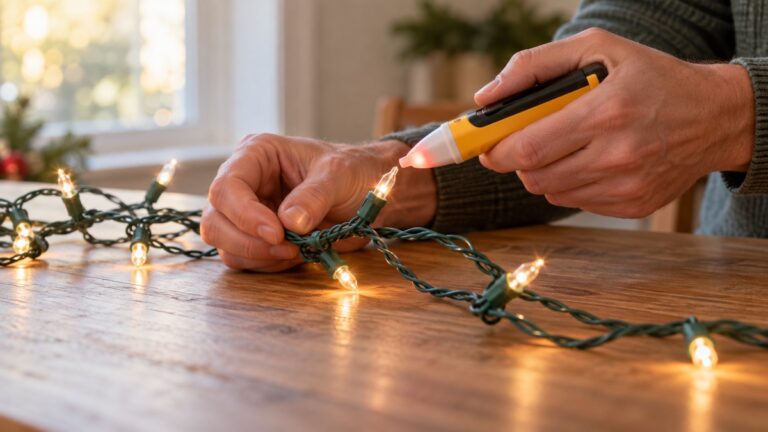
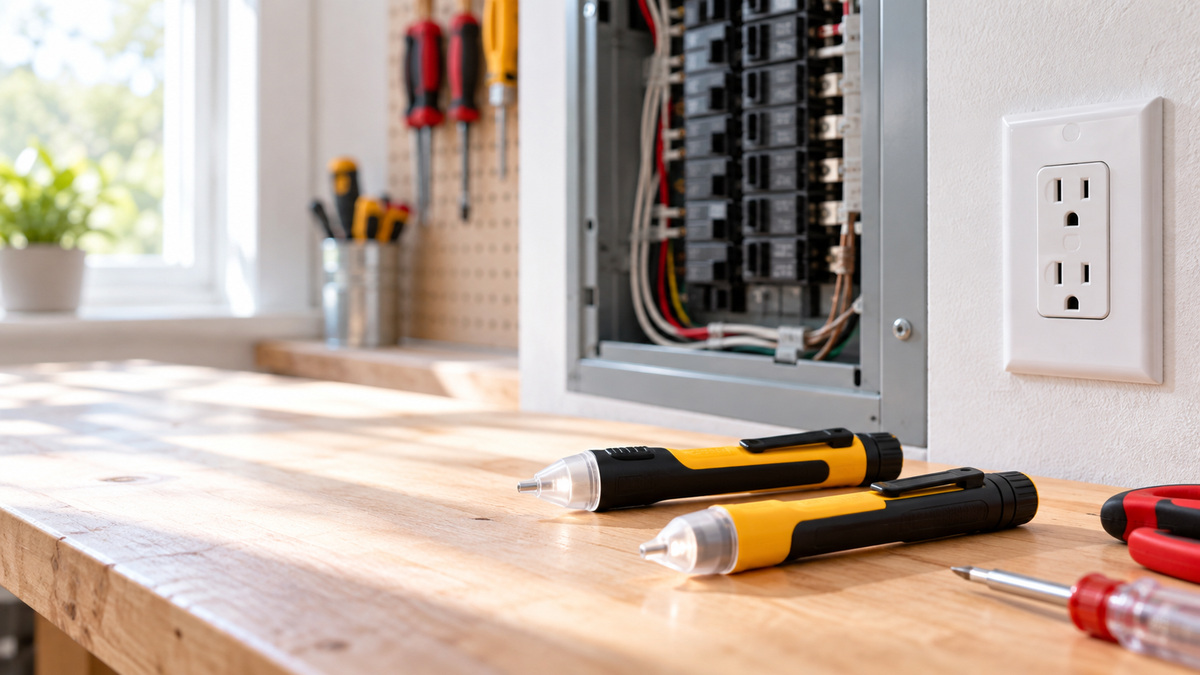
A Klein non contact voltage detector lets you check for AC voltage without touching bare conductors. You hold the tip near a wire, outlet or breaker and watch for lights and listen for a sound. This guide explains the ranges and CAT wording that matter, what the Klein NCVT7 listing states, and how five other detector pens and one carry case compare. Specs come from the product listings. Before you buy, confirm the range, CAT wording, batteries and included parts on the product page.
Quick answer
The Klein Tools NCVT7 is the direct match for this search. Its listing states detection of 12-1000V AC in cables, cords, circuit breakers, lighting fixtures, switches, outlets and wires, plus an LCD signal-strength display and a 3-color LED tip. It does not state a CAT rating. There is no product card for it in this guide, so the cards below cover other pens.
For a simple high-range check, the Fluke 1AC II detects nominally 90 V AC to 1000 V AC. The Santronics 3000 is always on and detects 50-1000VAC. The yowexa YW-322 and the Neoteck both start at 12V AC, and the yowexa has two sensitivity levels. Work on mains circuits can kill, so panel or service work belongs to a licensed electrician.
Comparison table
| Product | Stated AC range | CAT wording in the listing | Alerts and extras | Power |
|---|---|---|---|---|
| Klein Tools NCVT7 (no card here) | 12-1000V AC | Not stated | LCD bar graph, 3-color LED tip, pocket clip | Not stated |
| Fluke 1AC II VoltAlert | Nominally 90 V AC to 1000 V AC | CAT IV Rating | Red LED, beeper with silent mode, self-test | 2 AAA alkaline included |
| Santronics 3000 | 50-1000VAC | Described as CAT IV Certified | High-intensity LED, beep, always on | Battery type not stated |
| yowexa YW-322 | 12-1000V high and 48-1000V low sensitivity | CAT.III 1000V and CAT.IV 600V | Sound and light, flashlight, auto shutoff | 2 x 1.5V AAA included |
| Neoteck | 12-1000V AC | Not stated here | Not stated here | Battery powered |
| Weikani pen | Title names a 60V test range | Not stated | LED flashlight, buzzer alarm | Battery powered |
The worfty hard case is not a detector, so it is not in the table. It is covered in its own review below.
What matters in a non-contact voltage detector
AC range and low-end sensitivity
A pen may start at 90V, 60V, 50V, 48V or 12V. A higher low end means it can miss low-voltage AC. A lower start helps with doorbell transformers, thermostat circuits and broken-wire hunting, but it may also pick up more stray fields. If you only check standard outlets and breakers, a 50-1000V or 90-1000V pen can fit. If you want to trace lower-voltage AC wiring, choose a pen that states 12V. No pen here claims DC non-contact detection, so for DC consider a multimeter with non contact voltage detection.
Non-contact versus contact testing
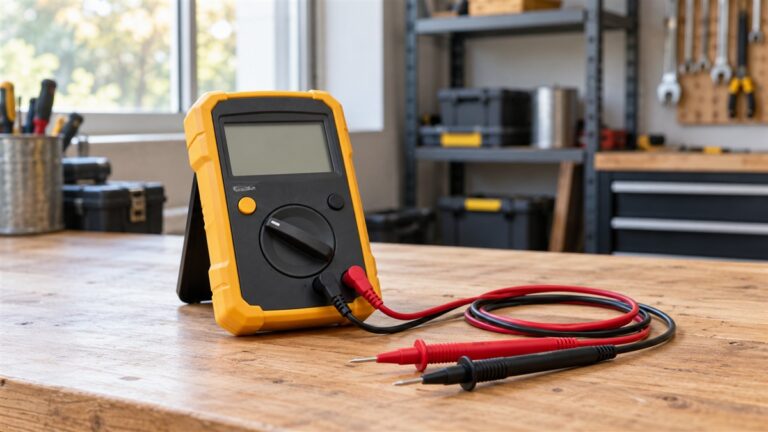
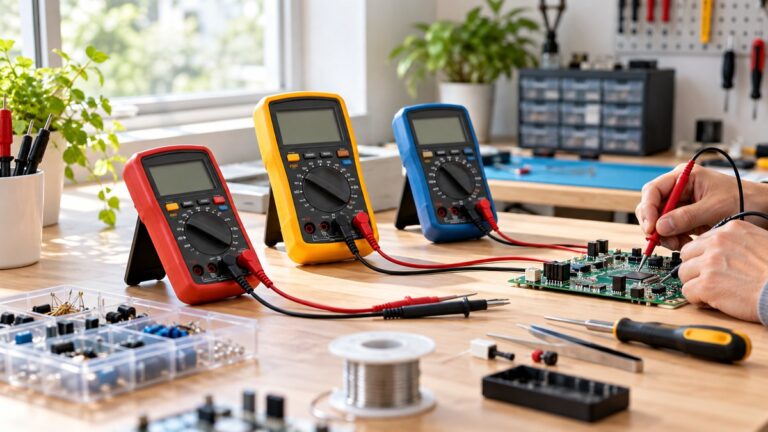
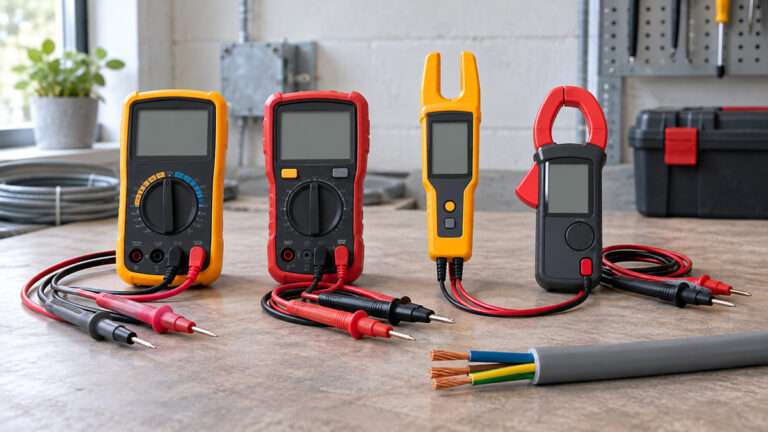
A non-contact pen only needs its tip near insulation, which makes it fast for a first presence check. A contact test with meter leads is needed for an actual voltage number, for DC, and for confirming zero energy. Many readers compare a non contact voltage tester vs multimeter. The short rule: use the pen to find a suspect wire and a proper meter to measure it. Read how to use a non contact voltage detector before you rely on one.
CAT rating
Measurement category, or CAT, is a classification by the International Electrotechnical Commission of live electric circuits used in measurement and testing. It considers the available energy and impulse voltages at that point in the system. In plain terms, CAT II covers circuits directly connected to a low-voltage installation, and CAT IV covers measurements at the source of the installation. Your tester’s CAT rating must suit the circuit, and the listing must state it. The Klein NCVT7 listing does not, so do not call it safe for household mains on CAT grounds alone.
Display and alerts
The pens with stated alerts use sound and light, while the Neoteck listing facts do not describe its alerts. The Klein NCVT7 adds an LCD bar graph and a 3-color LED tip: blue for low signal, red for high signal, green for no voltage detected. The yowexa adds a flashlight. The Fluke has one high-intensity red LED plus a beeper and silent mode. The Santronics has no on or off switch and stays ready.
Product reviews
Klein Tools NCVT7 Non-Contact Voltage Tester (no link in this guide)
What it is: The Klein pen this search is about. The listing states 12-1000V AC detection, dimensions of 5.7 x 1.14 x 0.93 inches and a weight of 1.6 ounces. The LCD shows signal strength as a bar graph, the audible alert changes rate with the bar graph, and the 3-color LED tip uses blue for low, red for high and green for no voltage.
Who it suits: People who want graded feedback when moving closer to a source or comparing two wires in a box.
Pros
- 12V low end
- Graded signal display and slim pocket clip
Cons
- The listing does not state a CAT rating, battery type, flashlight or auto-off time
Skip if: You need a stated CAT IV rating for service-area work or a built-in flashlight. See also best klein tools ncvt 5a voltage tester and best klein ncvt 2 dual range voltage tester.
Fluke 1AC II VoltAlert Non-Contact Voltage Tester
What it is: A pocket-sized detector with a nominal 90 V AC to 1000 V AC range, powered by alkaline batteries. The listing states a flat-tip probe, one high-intensity red LED, an audible beeper with silent mode, continuous self-test, and 2 AAA alkaline batteries included with typical battery life greater than 1 year. It mentions a CAT IV rating, but check the full manual for the voltage tied to that mark. The 10.24 x 7.5 x 1.46 inch dimensions appear to describe packaging, so check the listing for pocket size.
Who it suits: Homeowners who want a simple live-or-not check on standard home circuits.
Pros
- Simple, fixed range
- Silent mode and continuous self-test
Cons
- The 90V start means low-voltage AC is not covered
Skip if: You need low-voltage AC tracing or adjustable sensitivity. See best fluke non contact voltage tester.
View the Fluke 1AC II VoltAlert on Amazon (affiliate link)
Santronics 3000 Always-On Non-Contact Voltage Tester
What it is: An always-on AC detector for 50-1000VAC with no on or off switch, in a red polycarbonate body measuring 5.58 x 0.5 x 0.75 inches and weighing 46.2 g. The listing states a high-intensity LED and an audible beep, and describes it as CAT IV Certified and made in the USA. The maker describes calibration that separates hot from neutral without false positives from nearby wires.
Who it suits: People who forget switches or find buttons hard to use with gloves.
Pros
- Always ready, nothing to switch on
- Slim and light
Cons
- The 50V low end is not for low-voltage AC
- Battery type, flashlight and exact CAT voltage are not stated in the specs fields
Skip if: You need sensitivity below 50V or a flashlight in the same tool.
View the Santronics 3000 on Amazon (affiliate link)
yowexa YW-322 Non Contact Voltage Tester Pen, AC 12/48-1000V
What it is: An orange pen with dual sensitivity: high sensitivity 12-1000V and low sensitivity 48-1000V at 50Hz/60Hz. The listing states a sound and light alarm, 1-3 signal indicators, an LED flashlight, auto shutoff, a pocket clip, dimensions of 5.95 x 1 x 1.1 inches, 2 x 1.5V AAA batteries included, and a safety level of CAT.III 1000V and CAT.IV 600V. It weighs 45 g.
Who it suits: Wire sorting and breakpoint hunting. The listing explains finding live and neutral by comparing signal strength, with a stronger signal on live.
Pros
- Two sensitivity levels
- Flashlight and auto shutoff
- Batteries included
Cons
- The listing warns not to switch sensitivity during detection
- The listing warns that a missing alarm alone does not confirm absence of voltage
Skip if: You want one fixed range with fewer settings.
View the yowexa YW-322 on Amazon (affiliate link)
Neoteck Non Contact Voltage Detector 12-1000V AC
What it is: A battery-powered pen whose title and style field both state 12-1000V AC. The facts available for it are limited to the brand, power source and range, so confirm the CAT rating, alerts and size on the product page.
Who it suits: Readers who want a pen that starts at 12V AC.
Pros
- 12V AC low end
Cons
- No CAT rating, dimensions or alert details are given in the facts here
Skip if: You need a CAT rating you can verify from this guide.
View the Neoteck 12-1000V detector on Amazon (affiliate link)
Weikani Non-Contact Voltage Tester Pen with LED Flashlight and Buzzer
What it is: A battery-powered AC voltage detector pen. Its title names an LED flashlight, a buzzer alarm and a test range of 60V.
Who it suits: A shopper who wants a pen with a flashlight and buzzer, per its title.
Pros
- LED flashlight and buzzer alarm
Cons
- The 60V range is not as low as the 12V pens
- No CAT rating is stated
Skip if: You need detection below 60V or a stated CAT rating.
View the Weikani voltage tester pen on Amazon (affiliate link)
worfty Hard Voltage Tester Case
What it is: A hard carry case, not a detector. Its title says it is made for pens such as the Fluke 1AC II, Fluke 1LAC, Klein NCVT1XT, FLIR VP50-2, Santronics 3115 and Ideal models. The brand is worfty and the style is Classic.
Who it suits: Anyone who wants to protect a non-contact pen in a tool bag.
Pros
- Made for several pens, per the title
Cons
- It does not sense voltage and it is not listed for the Klein NCVT7
Skip if: You need a detector rather than a case.
View the worfty hard voltage tester case on Amazon (affiliate link)
Buying checklist
- Range: 12V if you trace low-voltage AC, 50V or 90V if you only check standard circuits.
- CAT: only trust a CAT rating that the listing states, and check the manual for the exact voltage.
- Alerts: a bright tip plus a display helps in a dim or loud space; a flashlight helps in attics and crawlspaces.
- Fixed or dual range: fixed is simpler, dual sensitivity helps separate hot from neutral in a crowded box.
- Size: the Klein NCVT7 lists 5.7 x 1.14 x 0.93 inches, the yowexa 5.95 x 1 x 1.1 inches and the Santronics 5.58 x 0.5 x 0.75 inches.
- Test on a known live source before and after checking a dead circuit.
Verifying a reading before you trust it
The “test on a known live source” checklist point above is the single most important habit with a non-contact tester. These steps expand on it into a repeatable routine, separate from the false-positive causes covered in this site’s dedicated guide on that topic.
- Test on a known live outlet or cord first, every time, before testing the unknown circuit. If the tester does not alert on a confirmed live source, do not trust a “no voltage” result on anything else until you know why.
- Test the target circuit and confirm the alert or silence makes sense given what you expect, such as a breaker you just switched off.
- Test the known live source again afterward. This step, often skipped, catches a tester that failed mid-use, such as from a dead or weak battery, rather than letting a false “safe” reading stand.
- Never treat a single non-contact pass as sufficient for panel or service work. A contact meter check, by a qualified person, is the appropriate next step before touching anything beyond a simple outlet or switch box.
For related reading, see how to use a non contact voltage tester on wires, best non contact voltage tester false positive, best voltage detector tester and best non contact voltage checker.
FAQ
Which Klein detection range fits household work?
The Klein NCVT7 listing states 12-1000V AC, which covers standard outlets and breakers and also lower-voltage AC wiring. Its listing does not state a CAT rating, so check the manual before using it near mains.
What does dual-range sensitivity change?
Dual-range pens such as the yowexa add a low-sensitivity mode (48-1000V AC) to cut false alarms near crowded wires, while the high mode starts at 12V AC. The listing warns not to switch sensitivity during detection.
Can a non-contact detector prove a wire is safe?
No. A pen only senses an electric field, and the yowexa listing warns that a missing alarm alone does not confirm absence of voltage. Test on a known live source first and use a proper meter to measure.
Which light and sound alerts help in a panel?
A bright tip plus a display helps most in a dim or loud panel. The Klein NCVT7 adds an LCD bar graph and a 3-color LED tip, the yowexa adds a flashlight, and the Fluke adds a silent mode. No pen here claims DC non-contact detection.
How should I compare Klein with the other voltage pens?
Start with range and CAT. The Klein NCVT7 detects 12-1000V AC but its listing does not state a CAT rating, while the yowexa, Fluke and Santronics listings state CAT language. Then compare alerts, size and power.
When should I replace or skip a voltage detector?
Skip a detector that fails a known-live check, behaves inconsistently or is damaged. Stop at the stated limit and consult the listing or manual when your use falls outside it.
Closing note
The Klein Tools NCVT7 is the pen to look at for an LCD bar graph and 12-1000V AC detection, as long as you check its CAT wording first. The Fluke 1AC II and Santronics 3000 are simple fixed-range pens, and the yowexa adds dual sensitivity. If a listing does not state the CAT rating you need, check the product page before using it near mains.