Fluke 771: The mA Loop Clamp Explained
As an Amazon Associate we earn from qualifying purchases.
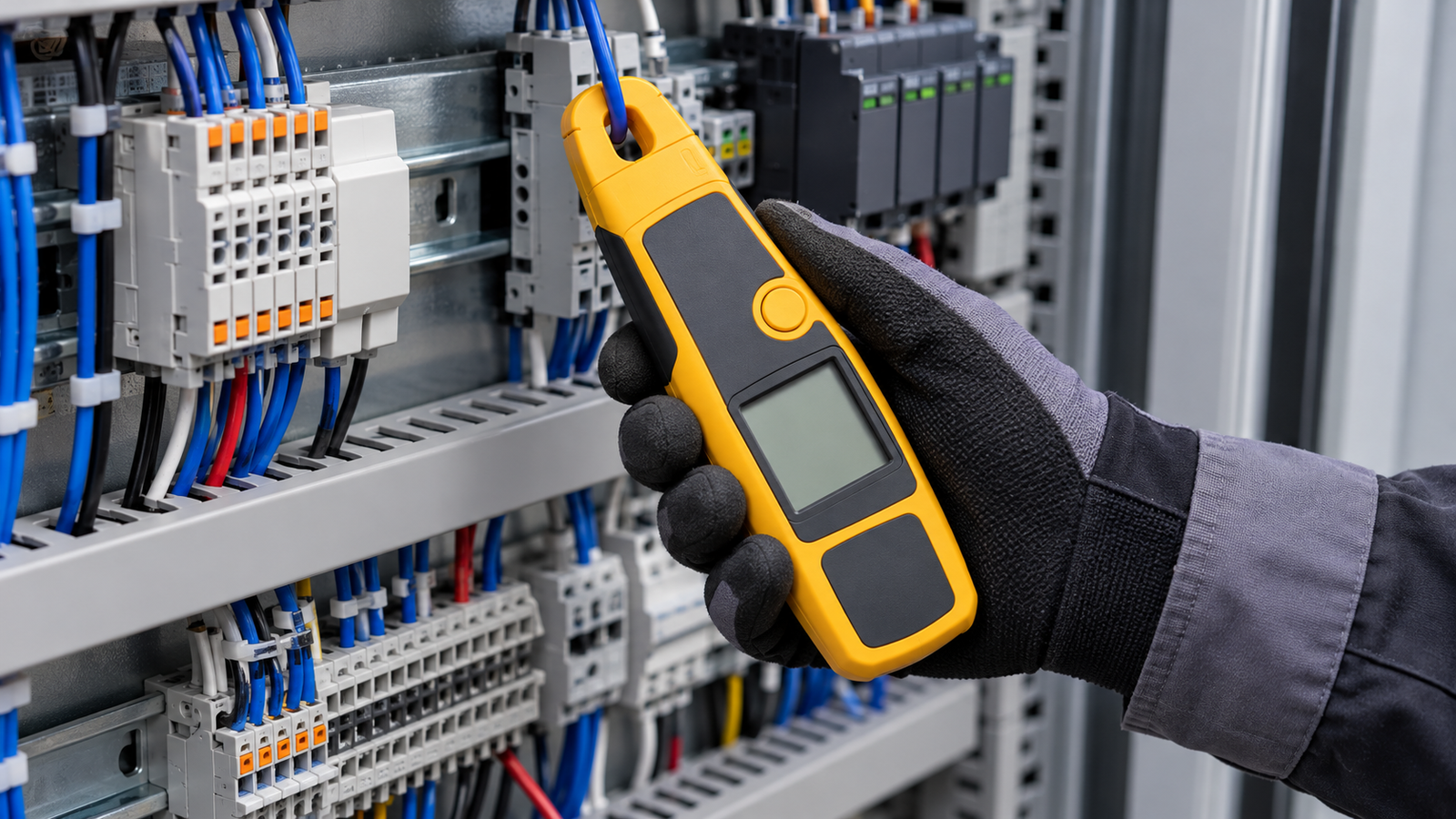
The Fluke 771 is a milliamp process clamp meter. It is built for current loops used in process control, not for mains wiring, and its rating and features reflect that purpose.
Quick answer
- Main use: measuring 4 to 20 mA signals, such as transmitter outputs in a control system, without breaking the loop.
- Range and resolution: the technical data lists current ranges of plus or minus 20.99 mA and plus or minus 99.9 mA, with resolution and sensitivity to 0.01 mA.
- Accuracy: the technical data states 0.2 percent of reading plus 5 counts on the 20.99 mA range. The product page gives 0.2 percent plus 2 counts. The two documents disagree, and this post reports both.
- Safety rating: the calibration manual states CAT II 300 V.
- Power: two AA 1.5 V alkaline batteries (IEC LR6).
What the 771 is for
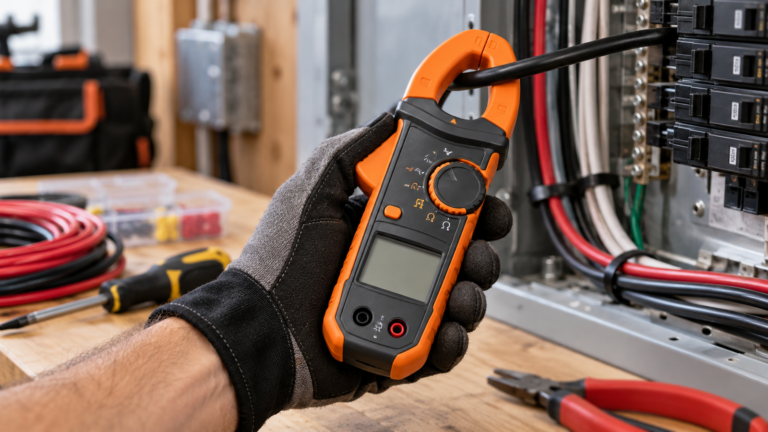
Most people who search for a clamp meter want to measure AC current in a wire without cutting it. The 771 is a different tool. The technical data describes it as a meter for measuring mA signals for PLC and control system analog input and output, and for measuring 4 to 20 mA output signals from transmitters without breaking the loop. The clamp goes around one conductor of the loop, and the meter reads the current flowing in it.
That use case matters because a 4 to 20 mA loop is a low-current signal that carries a reading from a sensor to a controller. A technician checks it to find out whether a pressure, flow or temperature transmitter is sending the value the control system expects. A reader who wants to measure household AC current, the current a motor draws, or the load on a circuit is looking for a different kind of clamp, one designed for mains currents and mains voltages.
The technical data also lists a 10 to 50 mA measurement on the 99.9 mA range, for older control systems that use signals in that band. The 99.9 mA range is the widest range the documents state.
Stated specifications
The table below uses figures printed in the documents opened for this post. Where a figure appears in one document and not the other, the table says so.
| Item | Stated figure | Source |
|---|---|---|
| Current range, fine | plus or minus 20.99 mA | technical data; calibration manual |
| Current range, wide | plus or minus 99.9 mA | technical data; calibration manual |
| Resolution and sensitivity | 0.01 mA | technical data; product page |
| Accuracy, 20.99 mA range | 0.2 % of reading + 5 counts (technical data); 0.2 % + 2 counts (product page) | technical data; product page |
| Accuracy, 21.0 to 99.9 mA | 1 % of reading + 5 digits | technical data; calibration manual |
| Measurement category | CAT II 300 V | calibration manual |
| Clamp opening | 0.177 in or 4.5 mm maximum conductor diameter | product page |
| Size | 59 x 38 x 212 mm | calibration manual; product page |
| Weight | 260 g including battery | calibration manual; product page |
| Battery | 2 x AA 1.5 V alkaline, IEC LR6 | calibration manual; product page |
| Battery life | 40 hours typical | product page |
| Operating temperature | -10 to 50 degrees C | calibration manual; product page |
| Ingress rating | IP 40 | product page |
| Warranty | 3 years electronics; 1 year cable and clamp | calibration manual; product page states 3 years for electronics |
The technical data lists the features of the meter in plain terms: a dual backlit display that shows the mA reading and the percent of the 4 to 20 mA span, a hold function, a measurement spotlight for dark enclosures, a detachable clamp with an extension cable for tight spaces, and automatic power-down. The technical data states that the meter powers down after 15 minutes, the backlight turns off after 2 minutes, and the spotlight turns off after 2 minutes, and that the automatic battery saving features can be disabled.
Why the two accuracy figures differ
The technical data and the product page disagree on the accuracy for the 20.99 mA range. The technical data states 0.2 percent of reading plus 5 counts. The product page states 0.2 percent plus 2 counts. A reader who needs a precise number for a loop check should use the figure from the manual that came with their unit, or confirm the figure with Fluke, rather than choosing one of these two figures from this post. The difference is small in absolute terms, but it is the kind of difference that decides whether a transmitter is inside tolerance on a tight check, so it should not be guessed.
Safety and use
The calibration manual states that the meter conforms to IEC 61010-1 (2nd edition) and is rated CAT II 300 V. That rating is about transient protection on a circuit that is supplied from a standard outlet or a similar source, not about mains distribution panels, service entrances or motor control centers. A reader should not use this meter on a panel, a breaker or a service conductor on the strength of its mA function.
The calibration manual also gives a caution that voltages above 33 V rms, 47 V peak or 70 V dc present a shock hazard, and it tells the user not to use the meter if the clamp or cable is damaged. Inspect the clamp and cable before each use. A cracked clamp will not close around a conductor properly, and a damaged cable is a shock risk.
Work on live process equipment should follow the site’s own isolation and permit procedure. The calibration manual’s shock caution applies whenever the loop is energized, and the meter does not replace that procedure.
Use the spotlight only when you need it. The documents state that the spotlight turns off after 2 minutes, which helps the battery, but the meter still needs a clear view of the display to read the mA figure safely.
Battery replacement is covered in the calibration manual. Replace the two AA cells when the low-battery indicator appears, and do not take a reading while the indicator is showing. Keep spare cells of the stated type.
Mistakes to avoid
- Expecting it to read mains current. The documents describe it for mA loop signals, with a CAT II 300 V rating. Mains current needs a different tool.
- Assuming the wide range is as accurate as the fine range. The fine range is stated at 0.2 percent. The 21.0 to 99.9 mA span is stated at 1 percent of reading plus 5 digits.
- Using a damaged clamp. The manual tells the user to stop using it if the clamp or cable is damaged.
- Missing the automatic power-down. The technical data states the meter powers down after 15 minutes. Check that the display is on before reading, or disable the battery saving features if the job needs a longer session, as the technical data says is possible.
How we chose
This post covers one model. It does not rank the 771 against other clamp meters or other loop testers. The three documents listed in Sources were opened on 27 October 2026. Where the documents disagree, the disagreement is reported in the post, and the figure from the technical data is used in the table with the product page figure shown beside it.
What we could not verify
- The documents opened do not give a CAT rating on the product page. The rating used in this post comes from the calibration manual.
- The documents opened do not give a figure for the accuracy of the 21.0 to 99.9 mA range on the product page. The figure comes from the technical data and the calibration manual.
- The calibration manual is written for qualified personnel, and its verification procedures are not covered here.
- The documents opened do not state how the meter performs in a loop with a particular transmitter or controller, and this post does not claim it does.
Buying checklist
- Confirm the job is a 4 to 20 mA or 0 to 99.9 mA loop, not mains current.
- Check that the conductor you need to clamp is within 4.5 mm.
- Check the CAT II 300 V rating against the environment you will work in.
- Decide which accuracy figure you need, and confirm it against the manual that ships with the unit.
- Keep two spare AA cells of the stated type on hand.
FAQ
What does the Fluke 771 measure?
According to Fluke’s technical data, it measures mA signals in control loops, including 4 to 20 mA transmitter outputs, without breaking the loop. The current ranges stated are plus or minus 20.99 mA and plus or minus 99.9 mA.
Is the Fluke 771 safe for household AC current?
Its documents do not describe it for household AC current. The calibration manual gives a CAT II 300 V rating and describes it for process loop work. For household current, use a meter with an appropriate category rating for that circuit.
What is the accuracy?
The technical data states 0.2 percent of reading plus 5 counts on the 20.99 mA range, and the product page states 0.2 percent plus 2 counts. Use the figure from the manual that ships with your unit.
What battery does it use?
Two AA 1.5 V alkaline batteries (IEC LR6). The product page gives 40 hours typical battery life.
How large a conductor fits the clamp?
The product page gives a maximum conductor diameter of 0.177 in or 4.5 mm.
Does the meter stay on?
The technical data states that the meter powers down after 15 minutes, and the backlight and spotlight turn off after 2 minutes. The battery saving features can be disabled.
Bottom line
The Fluke 771 is a loop meter. Use it for 4 to 20 mA and up to 99.9 mA process signals, check the CAT II 300 V rating against the job, and confirm the accuracy figure from the manual you receive. For mains current, choose a meter whose ratings match the circuit.
Related reading: for the wider Fluke clamp range, see Best Fluke 1000 Amp Clamp Meter. For a Fluke meter comparison by stated function, see Fluke Multimeter Lineup: 7 Meters Compared by Stated Function. For a carrying case, see Best Fluke 117 Case: 4 Hard Cases Compared.
Sources
- Fluke Corporation, “771 Milliamp Process Clamp Meter Technical Data”. https://media.fluke.com/d82f7318-b481-4feb-96d7-b106006737ea_original%20file.pdf (opened 2026-10-27)
- Fluke Corporation, “771 Milliamp Process Clamp Meter Calibration Manual”, Nov 2007, Rev.2 7/19. https://assets.fluke.com/manuals/771_____cmeng0000.pdf (opened 2026-10-27)
- Fluke Corporation, “Fluke 771 Milliamp Clamp Meter” product page. https://www.fluke.com/en-us/product/calibration-tools/ma-loop-calibrators/fluke-771 (opened 2026-10-27)