How Do Voltage Testers Work? Types and Principles
As an Amazon Associate we earn from qualifying purchases. Details
A voltage tester tells you whether a conductor is carrying voltage. Contact testers, such as a probe-type meter or a test lamp, touch the conductor and complete a path through the tip. Non-contact testers sense the electric field around an insulated wire and signal it with a light, a beep or both, without touching the metal. Because the two designs respond differently, you check any tester on a known live source before and after use.
Work on mains circuits can kill. Panel or service work belongs to a licensed electrician, and the tester’s CAT rating must suit the circuit.
Quick answer
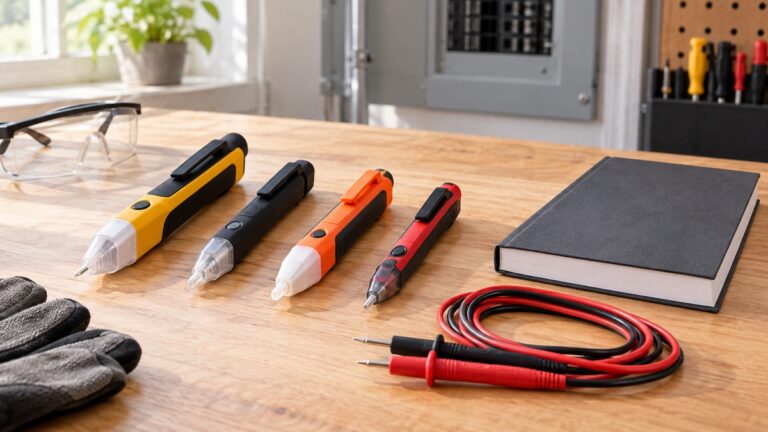
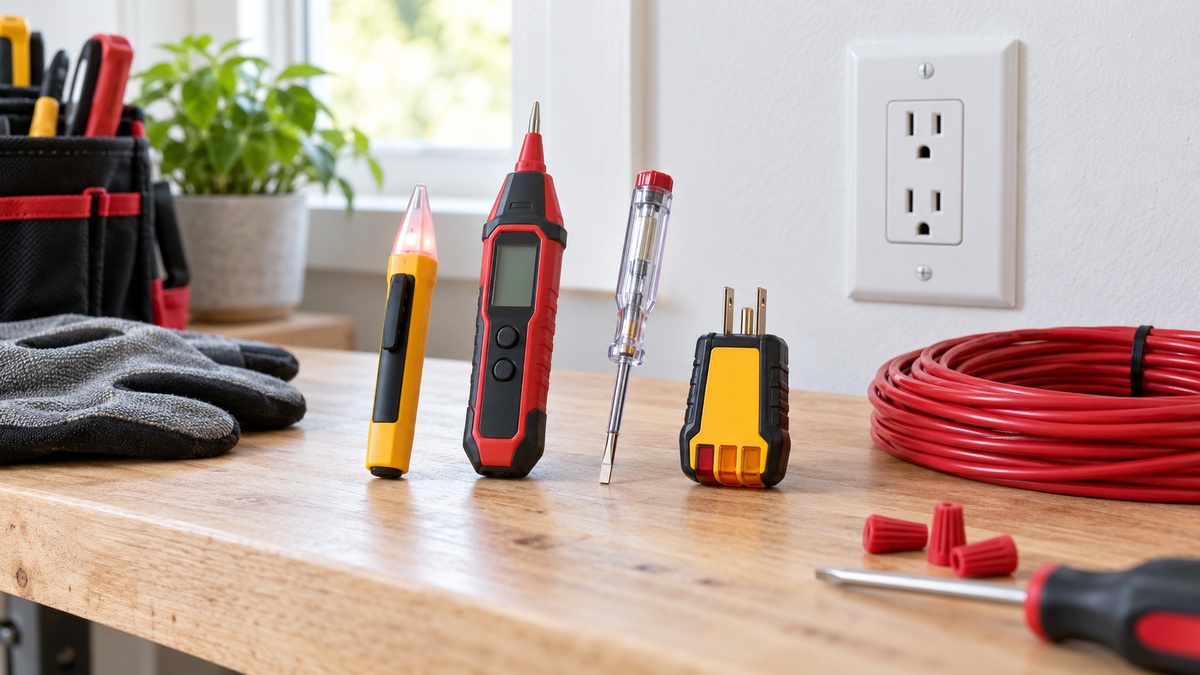
All six products below are non-contact AC testers, so they work by sensing the field around a live conductor. The Klein Tools NCVT1P is rated 50 to 1000V AC, the Neoteck detects 12 to 1000V AC, the Fluke 1AC II covers 90 to 1000V AC with a beeper, and the yowexa pen lists AC 12/48 to 1000V. The Southwire 40116N adds audible and visual alerts with auto power off. The Bosch GVD1000-17 is a pen for HVAC and electrician use, but its quoted details give no voltage range. Choose by the lowest voltage you need to detect, then by alerts and format.
How voltage testers work
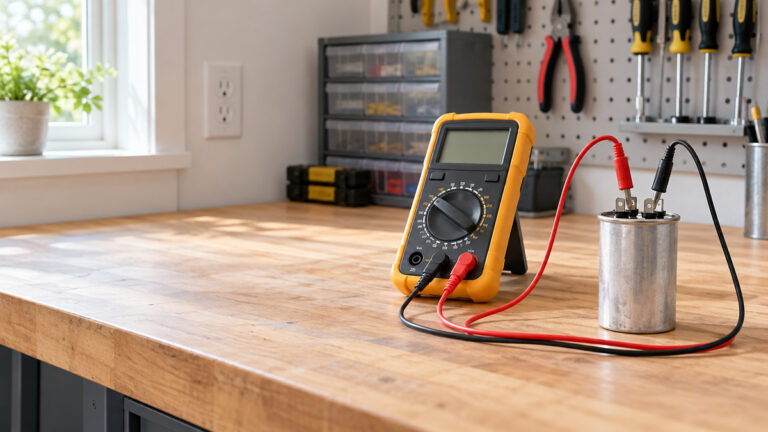
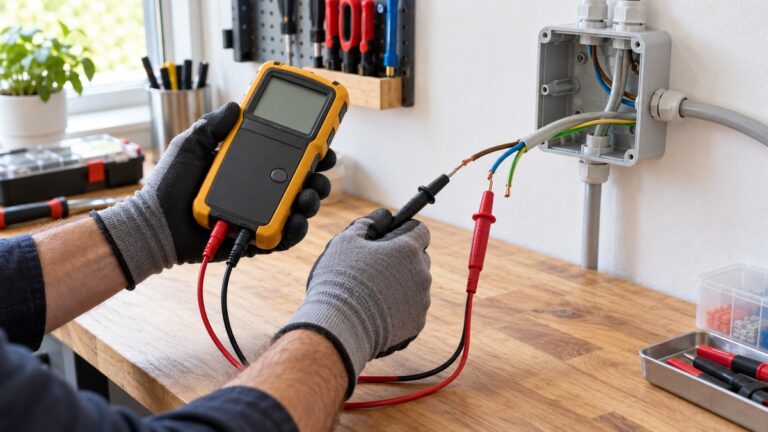
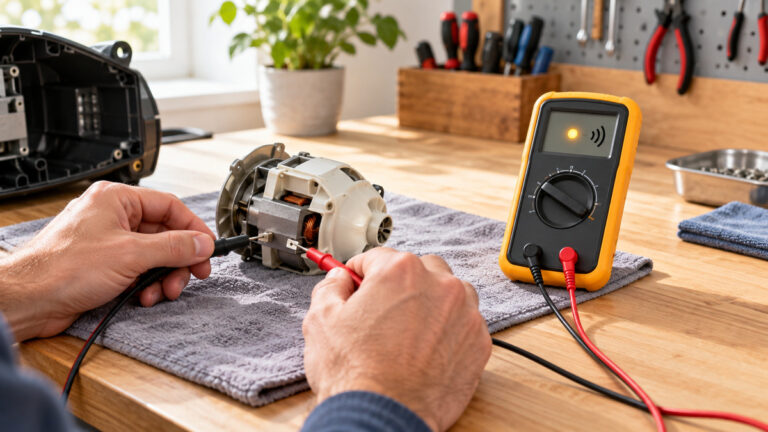
A contact tester, such as a multimeter or test lamp, is part of the circuit while you test. Probe tips touch the conductor and the meter or lamp responds to the voltage across them. A non-contact tester has no metal contact. It senses the electric field around a live AC conductor, so it can react through wire insulation, then it lights up or beeps. That is why the lower limit of the range matters. A pen with a 90V lower limit, such as the Fluke 1AC II, may stay quiet on a circuit well below that, while a pen that starts at 12V can respond to lower-voltage AC. The ranges quoted here are for AC; none of the quoted details mention DC detection.
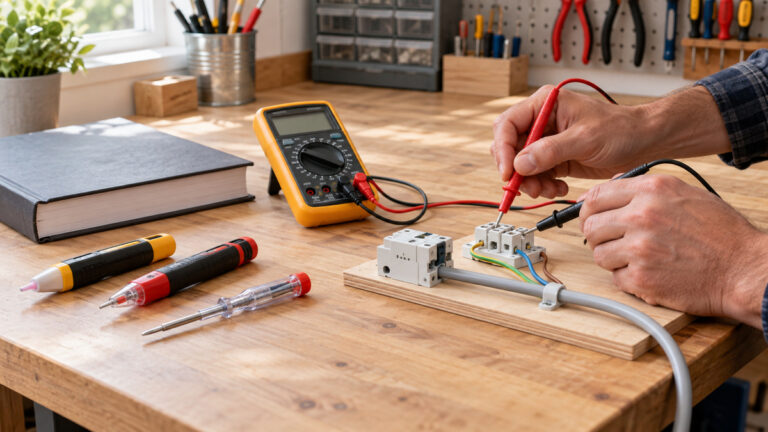
Whichever type you use, prove it first. Test it on a known live source, test the circuit you care about, then test the known source again. If it does not respond on the known source, do not trust a quiet result on the circuit. For step-by-step use, see how to use a non contact voltage detector and how to use a voltage tester safely.
Comparison table
| Tester | Stated AC range | Alerts or format | Power | Main limit |
|---|---|---|---|---|
| Klein Tools NCVT1P | 50 to 1000V AC | Non-contact pen | Battery | No test leads, higher lower limit than 12V pens |
| Neoteck | 12 to 1000V AC | Non-contact detector | Battery | Nothing below 12V |
| Fluke 1AC II VoltAlert | 90 to 1000V AC | Pocket sized, audible beeper | Alkaline | 90V lower limit |
| yowexa pen | AC 12/48 to 1000V | Dual sensitivity pen | Battery | You must choose the right sensitivity setting |
| Bosch GVD1000-17 | Not stated in the quoted details | Pen for HVAC and electrician use | Battery | Confirm the range on the product page |
| Southwire 40116N | Not stated in the quoted details | Audible and visual alerts, auto power off | Battery | Confirm the range and ratings on the product page |
The six testers
Klein Tools NCVT1P Voltage Tester Pen, 50 to 1000V AC
What it is: A battery-powered non-contact voltage tester pen in orange and black, with the title rating of 50 to 1000V AC.
Who it suits: Someone checking outlets and household wiring who wants a simple pen with a clear range.
- Pros: clear stated range, familiar pen format.
- Cons: it has no test leads, and its 50V lower limit is higher than the 12V pens.
Skip if: You need a contact tester with leads, or want to detect AC below 50V.
See the Klein NCVT1P on Amazon (affiliate link)
Neoteck Non Contact Voltage Detector, 12-1000V AC
What it is: An orange, battery-powered non-contact detector with a stated 12 to 1000V AC range.
Who it suits: A buyer who wants a non-contact detector that reaches down to low-voltage AC circuits.
- Pros: the lowest stated lower limit here, along with the yowexa.
- Cons: circuits below 12V fall outside its range.
Skip if: Your circuits sit below 12V.
See the Neoteck detector on Amazon (affiliate link)
Fluke 1AC II VoltAlert Non-Contact Voltage Tester, 90-1000V AC
What it is: A pocket-sized red non-contact tester with an audible beeper and a stated 90 to 1000V AC range, powered by alkaline batteries. The title also mentions a CAT rating, but the quoted details do not show which one, so check the product page.
Who it suits: Someone who wants a compact tester with an audible alert for mains-level checks.
- Pros: pocket size, beeper, 1000V upper limit.
- Cons: its 90V lower limit is higher than the 12V pens.
Skip if: You need a pen that starts under 90V.
See the Fluke 1AC II on Amazon (affiliate link)
Non Contact Voltage Tester Pen, AC 12/48-1000V (yowexa)
What it is: An orange, battery-powered non-contact pen listed for AC 12/48 to 1000V. The listing gives both 12V and 48V lower limits, which points to two sensitivity settings.
Who it suits: A buyer who wants a choice between a sensitive and a less sensitive setting from one pen.
- Pros: dual sensitivity, 12V lower limit.
- Cons: you have to choose the right setting for each check.
Skip if: You need a rating that the listing does not state.
See the yowexa pen on Amazon (affiliate link)
Bosch GVD1000-17 Non Contact Voltage Tester Pen
What it is: A blue, battery-powered non-contact pen described for HVAC and electrician use, with an industrial style.
Who it suits: A trade or HVAC user who will confirm the voltage range on the product page before buying.
- Pros: trade-focused pen from a known tool brand.
- Cons: the quoted details give no voltage range.
Skip if: You need to know the range from the listing details alone.
See the Bosch GVD1000-17 on Amazon (affiliate link)
Southwire 40116N Non-Contact AC Voltage Detector
What it is: A green and red battery-powered non-contact AC detector. The title lists audible and visual alerts and auto power off.
Who it suits: Someone who wants both a light and a sound, and a tester that turns itself off.
- Pros: two alert types, auto power off.
- Cons: the quoted details give no voltage range, and the title is cut off, so read the full listing.
Skip if: You want a tester with no auto power off. Check the alerts on a known live source before use.
See the Southwire 40116N on Amazon (affiliate link)
Buying checklist
- Decide the lowest AC voltage you need to detect, then check the stated lower limit.
- Check that the range is stated at all. Two of the six do not state one in the quoted details.
- Look for the CAT rating on the product page, since the quoted details for most of these do not give it.
- Choose the alert you want: light, beep or both.
- Remember that a non-contact pen has no leads and is not a replacement for a meter when you need a measured value.
- Always prove the tester on a known live source before and after each use.
FAQ
How does a non-contact voltage tester work?
It senses the electric field around a live AC conductor, so it can react through the wire insulation and then lights up or beeps. It does not touch the metal, so it does not give a measured voltage.
How does a contact voltage tester work?
A contact tester, such as a multimeter or test lamp, touches the conductor with probe tips and responds to the voltage across them. It can give a reading, but it needs correct leads and the correct meter function.
Why does the lower range limit matter?
A tester may not react to voltages below its stated lower limit. The Neoteck lists 12V, the Klein NCVT1P lists 50V and the Fluke 1AC II lists 90V, so choose by the lowest AC voltage you need to find.
What should I do before trusting a quiet result?
Test the tester on a known live source first, check the circuit, then test the known source again. If it does not respond on the known source, do not trust the result on the circuit.
Can a tester without a stated range be used?
Treat the range as unknown. The Bosch GVD1000-17 and Southwire 40116N quoted details give no range, so confirm it on the product page or with the maker before you rely on either.
When should I ask a professional?
Ask a licensed electrician for panel or service work, or whenever the maker’s directions do not cover your situation. Work on mains circuits can kill.
Closing note
A voltage tester is only as good as your habit of proving it first. For a clear range, the Klein NCVT1P, Neoteck, Fluke 1AC II and yowexa all state theirs; the Bosch and Southwire need a range check on the page. Pick the lower limit that fits your circuits, then the alert style you prefer.