Voltmeter to Measure Voltage: 6 Picks Compared by Job
As an Amazon Associate we earn from qualifying purchases. Details
A voltmeter is chosen by the job it has to do. The listings in this group serve different jobs: general bench testing, a 12 V car or boat battery, a panel reading on a mains supply, and a USB charger. This post picks one meter for each job, so the choice starts with the voltage you need to read. Figures were checked on 11 October 2026, except the Fluke 117, which was checked on 12 October 2026. They are shown as the sellers give them.
Quick answer: for general bench work, the AstroAI and Fluke 117 listings are the two general meters. For a 12 V car or boat battery, the MGI SpeedWare and HiLetgo listings cover that DC job. For a 120 V AC panel reading, the KETOTEK listing states an 80 to 300 V AC range with a current transformer.
The six meters by job
| Job | Meter | Voltage stated | Other figure stated |
|---|---|---|---|
| General bench | AstroAI 2000 Count (B01ISAMUA6) | DC up to 600 V; AC 200 V and 600 V ranges | 2000 counts |
| General bench, auto AC/DC | Fluke 117 (B000O3LUEI) | DC millivolt range 600.0 mV; automatic AC/DC selection | Non-contact AC detection |
| Car or boat, 12 V and 24 V | MGI SpeedWare 2-in-1 (B086RG8Z45) | 12 V and 24 V DC | Max 10 amps |
| DC battery monitor | HiLetgo 6.5 to 100 V (B079JVGRSL) | DC 6.5 to 100 V | 0 to 20 A with built-in shunt |
| AC panel | KETOTEK 2-in-1 (B01EWW1RJ4) | AC 80 to 300 V | 0 to 100 A with current transformer |
| USB charger | YOJOCK USB C tester (B09T3KHBFL) | 3.6 to 32 V | 0 to 8.0 A |
How we chose these six
We kept one meter for each job. The coczow and LJPXHHU multimeters in the file overlap with the bench pick, and the diymore and YEREADW items overlap with the panel and USB picks, so they are not repeated. The ChgImposs mini analog meter and the MakerHawk USB meter are not used because they do not match one of the six jobs. We did not test any of these meters, and nothing below reports personal use. Where a listing has two figures, both are shown.
1. AstroAI Digital Multimeter Tester 2000 Counts
The listing states DC voltage up to 600 V, and AC voltage on 200 V and 600 V ranges. The meter has 2000 counts, manual range selection and a CAT II 600 V rating. Its spec sheet gives a sample speed of 3 times per second, while a bullet says 2 times per second, and the listing does not say which is correct. Check the AstroAI 2000 Count on Amazon.
2. Fluke 117 Digital Multimeter
The Fluke listing describes AutoVolt automatic AC and DC selection, so the meter chooses the voltage type without a dial change. Its DC millivolt range is 600.0 mV with a 0.1 mV resolution. The listing says the meter has low input impedance to help prevent false readings caused by ghost voltage, and it includes VoltAlert non-contact AC detection. The listing gives a weight of 689 g. Check the Fluke 117 on Amazon.
3. MGI SpeedWare 2-in-1 Digital Voltmeter Ammeter
This gauge shows DC voltage and amperage on one display. The listing says it suits 12 V and 24 V DC supplies in cars, trucks, boats, ATVs, campers and trailers, and it gives a maximum of 10 amps. The listing states that the gauge does not measure battery charging current, so it cannot show a charge rate. The listing gives no size or weight in the text used here. Check the MGI SpeedWare gauge on Amazon.
4. HiLetgo DC 6.5 to 100 V Battery Monitor
The HiLetgo listing states a DC range of 6.5 to 100 V and a current range of 0 to 20 A through a built-in shunt. It measures voltage, current, power and energy, and it stores energy data when the power is off, which can be reset to zero. Its voltage alarm sets an over-voltage threshold, with a backlight and a flicker warning. The listing gives CE and RoHS marks. The listing is for a battery monitor, not a handheld meter. Check the HiLetgo battery monitor on Amazon.
5. KETOTEK 2-in-1 Panel Volt Amp Meter
The KETOTEK listing states AC voltage from 80 to 300 V and current from 0 to 100 A, read through a current transformer that the listing says is included. The LED shows voltage in red and current in green. The listing says the meter is for 110 V and 220 V panels, and it gives an accuracy of 1 percent plus 2 digits. It weighs 82 g and measures 2.7 inches by 1.5 inches by 1.7 inches. Panel meters are wired into a circuit, so follow the listing and a qualified electrician for that work. Check the KETOTEK panel meter on Amazon.
6. YOJOCK USB C Tester Power Meter
The YOJOCK listing gives a voltage range of 3.6 to 32.0 V and a current range of 0 to 8.0 A. It also lists a capacity range to 99999 mAh and a power range to 256 W. It says it reads USB charging with PD, QC and BC1.2 support. The tester reads a USB port, not a wall outlet, so it is the wrong tool for mains voltage. It weighs 40 g. Check the YOJOCK USB C tester on Amazon.
Worked example: which meter reads a 12 V battery and a 120 V outlet?
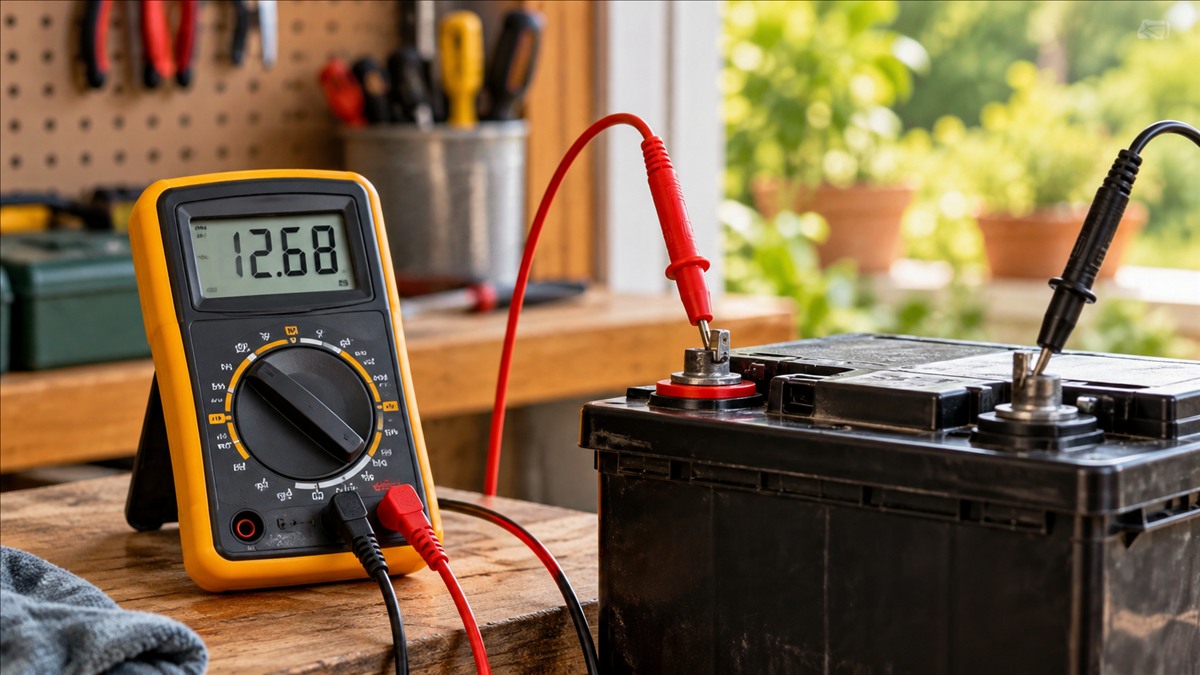
Take a 12 V car battery first. The MGI range of 12 V and 24 V covers it, and so does the HiLetgo range of 6.5 to 100 V. The 12 V figure sits 5.5 V above the HiLetgo floor and 88 V below its ceiling. The YOJOCK range of 3.6 to 32 V also covers the battery. Now take a 120 V outlet. The KETOTEK range of 80 to 300 V covers it, with 40 V above the floor and 180 V below the ceiling. The YOJOCK tops out at 32 V, so it cannot be used on the outlet. The meter must match the voltage, not only the function.
What the listings do not say
The Fluke 117 listing gives a DC millivolt range but no DC volt ceiling in the text used here. The KETOTEK and HiLetgo listings are for panel and monitor use rather than handheld checks, and their installation steps are not given in the listings. None of the six listings gives an independent accuracy test, and the figures above are the sellers’ own statements.
Frequently asked questions
Which meter in this list reads a 120 V wall outlet?
The KETOTEK panel meter states AC voltage from 80 to 300 V, which includes 120 V. The AstroAI lists AC ranges of 200 V and 600 V, so a 120 V reading sits inside its 200 V range.
Which meter reads a car battery?
The MGI SpeedWare states 12 V and 24 V DC for cars, trucks and boats, and the HiLetgo states DC 6.5 to 100 V. Both cover a car battery. The MGI listing says it does not measure battery charging current.
Can the YOJOCK measure a wall outlet?
No. Its listed voltage range tops out at 32 V, and the listing describes it as a USB charging tester, so a wall outlet is far above its range.
What is the Fluke 117 for?
Its listing describes automatic AC and DC selection and non-contact AC detection, so it suits general bench checks where you do not want to set the voltage type by hand.
Do the AstroAI sample speed figures agree?
They do not. The spec sheet says 3 times per second and a bullet says 2 times per second, so the listing contradicts itself on this point.
Conclusion
Choose the meter by the job. The AstroAI or the Fluke 117 suits bench work, the MGI SpeedWare or the HiLetgo suits a DC vehicle or battery, the KETOTEK suits an AC panel reading, and the YOJOCK suits a USB charger. For related reading, see best auto voltage tester, how to use a voltmeter, how do I use a voltage tester, best digital voltage meter for car, best battery voltage tester and best DC volt meter.
AstroAI 2000 Count on Amazon · Fluke 117 on Amazon · MGI SpeedWare on Amazon · HiLetgo battery monitor on Amazon · KETOTEK panel meter on Amazon · YOJOCK USB C tester on Amazon