Best Receptacle Tester for Outlets and GFCI Checks
As an Amazon Associate we earn from qualifying purchases. Details
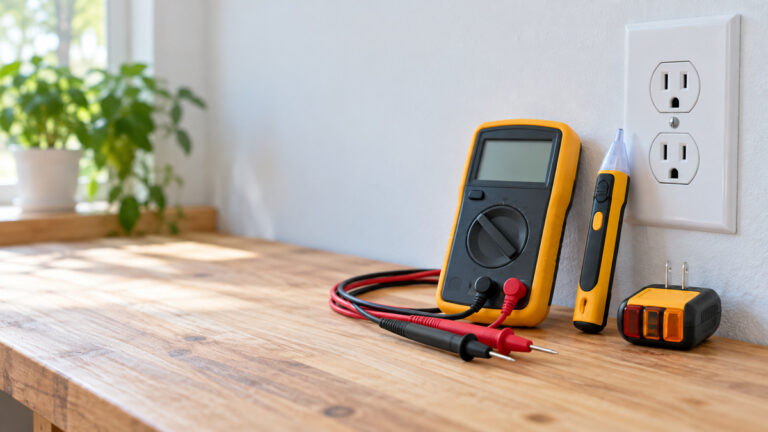
Receptacle tester buyers want a fast way to check if a standard wall outlet is wired correctly. This guide explains what a receptacle tester can and cannot tell you, then compares plug-in models for standard and GFCI outlets.
You will learn which wiring faults these tools flag, why GFCI test buttons matter, and when a reading means you should stop and call a licensed electrician. Work on mains circuits can kill. The meter CAT rating must suit the circuit, and panel or service work belongs to a licensed electrician. If you are unsure about any outlet, follow the instrument manual and local electrical rules.
Quick answer
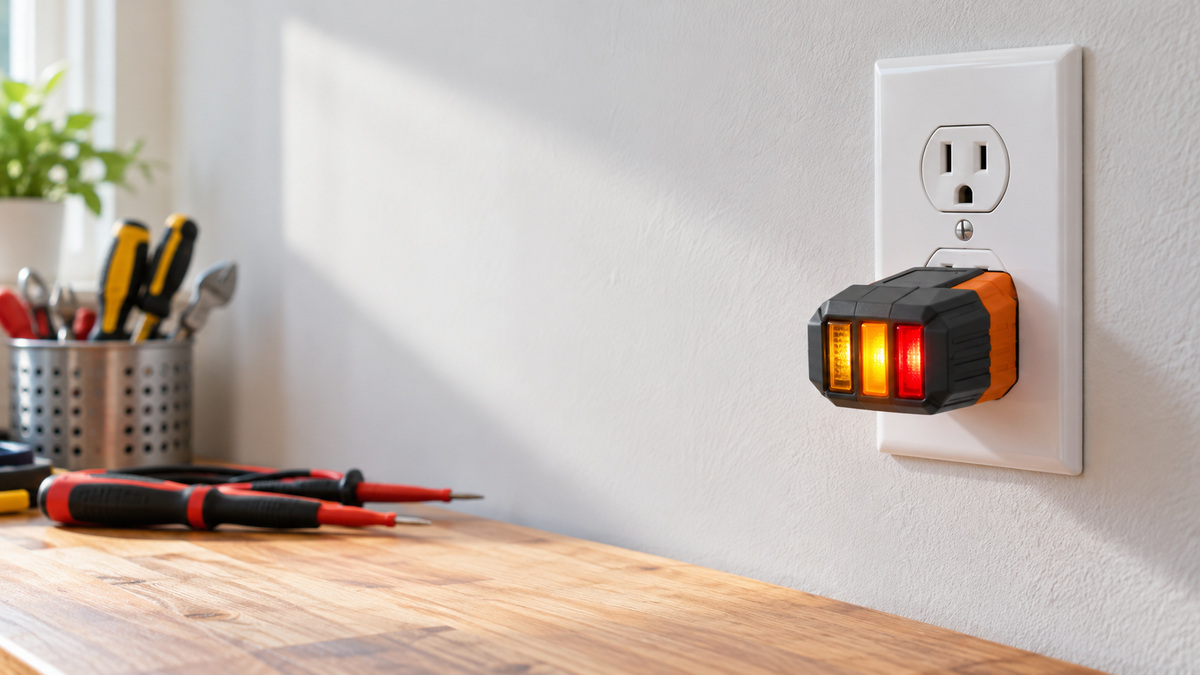
If you need one receptacle tester for basic checks around the house, choose a plug in receptacle tester with a GFCI test button and a clear light chart. A receptacle outlet tester with simple neon or LED lights covers correct wiring, open ground, open neutral, open hot, and hot and neutral or ground reversals on 3-wire North American outlets.
For a gfci receptacle tester that also trips a GFCI device for a function check, pick a model whose listing states GFCI testing, 120V AC or 110/125V AC operation, and 3-wire use. For a 3 prong receptacle tester without GFCI trip, a basic outlet-only model is enough for lamps, extension cords, and rental checks where you only need wiring indication.
Do not use any of these tools to open a panel, probe bare conductors, or confirm a circuit is dead before touching wires. The listing does not state a CAT rating for several picks below. Never call a meter safe for household mains unless the listing states the CAT and voltage rating. Stop and get a licensed electrician if you see burn marks, hear buzzing, find a hot and ground reversed reading, or the GFCI will not reset.
What matters in a receptacle tester
1. Outlet type and voltage it fits
Every pick here is made for standard North American AC 3-wire outlets. That means a grounded outlet with hot, neutral, and ground slots.
Check the listing for 120V AC, 125V AC, or 110/125V AC at 50/60Hz. Do not plug a 120V-class tester into a range or dryer outlet. For related high-voltage checks, see Best 220 Outlet Tester. If the listing does not state the voltage, do not buy it for home use.
2. GFCI test function or wiring-only indication
A wiring-only tester reads a light pattern. A receptacle tester gfci model adds a push button that creates a small ground fault to trip a GFCI outlet or breaker.
The GFCI button only works on a GFCI-protected circuit with correct wiring and ground. It will not test an AFCI-only breaker. It will not measure trip time. If you need AFCI indication as well, see Best Klein Tools Rt310 Afci Gfci Outlet Tester.
3. Light chart and readability
You read the outlet by matching lit lamps to a chart. Look for dual charts, bright LEDs, neon lenses, or an LCD that says good or fault in words.
Small print is hard to read behind furniture. A beeper, LCD, or bottom lamps help in dark or tight spots. For guidance on confusing reversed readings, see Best Outlet Tester Says Hot and Ground Reversed.
4. CAT rating and safety marking stated in the listing
Measurement category is a classification by the International Electrotechnical Commission of live electric circuits used in measurement and testing. The categories take into account the total continuous energy available at the given point of the circuit and the occurrence of impulse voltages.
A receptacle tester plugs into a live outlet, so its rating matters. Quote CAT and volts only from the listing or manual. If the listing does not state a CAT rating, say so and do not call the meter safe for household mains. For more on inspection use, see Best Outlet Tester for Home Inspectors.
5. Size, weight, grip, and drop tolerance
You will carry this tool in a pocket, pouch, or inspection bag. Weight around 1.9 ounces to 2.88 ounces is easy to carry. Larger housings with grips are easier to pull from tight outlets.
A stated drop withstand of 6.6-foot (2m) matters if you work on ladders or job sites. Check the product listing for Item Dimensions, Item Weight, and Included Components before you buy.
Picks at a glance
1. Klein Tools RT210 Outlet Tester, Receptacle Tester for GFCI / Standard North American AC Electrical (Best overall)
Specs from the listing (checked 2026-10-10):
- Specification Met: Cat Ii 300v
- Item Weight: 1.9 ounces
- Item Dimensions: 5.3 x 3.8 x 1.5 inches
Pros
- States Cat II 300V plus 110/125V AC 50/60Hz 3-wire use
- Built to withstand 6.6-foot (2m) drop for job-site carry
- Wide operating range from 32-Degree to 140-Degree Fahrenheit
Cons
- CAT II 300V is lower than CAT III options for fixed circuits
- No LCD voltage readout or beeper listed
Best for: homeowners wanting GFCI plus standard outlet checks in one tool
Skip if: you need CAT III marking or a numeric voltage display
View on Amazon (affiliate link)
2. Southwire GFCI Receptacle Tester – Push-Button Outlet Tester for Fast & Accurate Wiring Checks (Best compact)
Specs from the listing (checked 2026-10-10):
- Compatible Devices: Standard Electrical Outlets, 120V AC
- Item Dimensions: 1 x 1.7 x 3.6 inches
- Item Weight: 1.92 ounces
Pros
- Compact 1 x 1.7 x 3.6 inches housing at 1.92 ounces
- Push-button GFCI test with 7 test modes listed
- Lists 120V AC standard outlet compatibility
Cons
- Listing does not state a CAT rating
- No drop rating or display type stated in specs
Best for: inspectors and renovators wanting a pocket GFCI checker
Skip if: you require a stated CAT rating in the listing
View on Amazon (affiliate link)
3. Outlet Tester, Socket Tester for Standard North American AC Electrical Outlets, Receptacle Tester (Best simple)
Specs from the listing (checked 2026-10-10):
- Compatible Devices: Standard North American AC electrical outlets (125V AC, 50/60Hz, 3-wire)
- Specification Met: ETL, UL
- Style Name: Compact
Pros
- Lists 125V AC 50/60Hz 3-wire compatibility for standard outlets
- Lists ETL, UL specification met
- LED indicators with chart for quick wiring reads
Cons
- No GFCI test button stated in specs
- Listing does not state a CAT rating or size
Best for: landlords and renters needing basic wiring indication only
Skip if: you need GFCI trip testing
View on Amazon (affiliate link)
4. Goldeep GFCI Outlet Tester Plug in,Receptacle Tester Outlet Ground Tester (Best display)
Specs from the listing (checked 2026-10-10):
- Item Dimensions: 4.09 x 2.01 x 1.18 inches
- Item Weight: 2.88 ounces
- Included Components: GFCI Outlet Tester*1、battery*2、User Manual*1
Pros
- LCD shows good/fault colors plus real-time voltage
- Auto-hold locks data about 10 seconds after removal
- Includes tester, battery and User Manual
Cons
- Battery powered with auto shutdown needs battery management
Best for: beginners who prefer word and voltage readout over lamp codes
Skip if: you want a corded-only tool with no batteries
View on Amazon (affiliate link)
5. Fluke ST120+ GFCI Socket Tester with Audible Beeper (Best with beeper)
Specs from the listing (checked 2026-10-10):
- Specification Met: Cat Iii 300 V
- Item Dimensions: 2.28 x 2.9 x 0.98 inches
- Item Weight: 0.07 kg
Pros
- States Cat III 300 V marking
- Beeper helps identify if breaker is on or off
- Bright LEDs plus compact 2.28 x 2.9 x 0.98 inches body
Cons
- No numeric voltage display
- Plug-in tester cannot find bootleg grounds or load faults
Best for: DIYers tracing breakers alone without extra trips
Skip if: you need AFCI testing or numeric volts
View on Amazon (affiliate link)
6. Gardner Bender GRT-3500 Outlet Receptacle Tester & Circuit Analyzer, Indicates 5 Wiring Errors (Best for cords)
Specs from the listing (checked 2026-10-10):
- Item Dimensions: 1.5 x 2.7 x 5.7 inches
- Specification Met: Etl Approved
- Brand: Gardner Bender
Pros
- Tests both outlets and extension cords at 120 VAC
- Dual status chart plus integrated neon lenses
- Comfort grip housing 1.5 x 2.7 x 5.7 inches
Cons
- No GFCI test button listed
Best for: users checking cords and wall outlets with easy chart
Skip if: you need GFCI trip function
View on Amazon (affiliate link)
Klein Tools receptacle tester with GFCI test – for most homes
This klein tools receptacle tester is the Klein Tools RT210. The listing describes it as a receptacle tester for GFCI and standard North American AC outlets that detects common wiring problems. It suits homeowners, renters, and students who want one tool for both standard outlets and GFCI checks.
Three specifics from its listing shape the decision. It is designed for use with 110/125V AC at 50/60Hz in 3-wire outlets. Its specification is listed as Cat Ii 300v. It is built to withstand a 6.6-foot (2m) drop and lists an operating range from 32-Degree to 140-Degree Fahrenheit. The Item Weight is 1.9 ounces and Item Dimensions are 5.3 x 3.8 x 1.5 inches.
The limit is the CAT II 300V marking. That is lower than CAT III devices often used for fixed building circuits, so check the manual to see if it suits your task. Who should skip it: skip if you need CAT III 300 V marking, an LCD voltage readout, or a beeper for breaker finding.
Southwire receptacle tester with 7 test functions – for compact carry
This southwire receptacle tester is the Southwire model 40022S. The title calls it a GFCI receptacle tester with push-button testing and 7 test functions. It suits inspectors and renovators who want a small plug-in tool for fast wiring checks.
Three specifics from its listing matter. Compatible Devices are listed as Standard Electrical Outlets, 120V AC. Item Dimensions are 1 x 1.7 x 3.6 inches with an Item Weight of 1.92 ounces. Specification Met is listed as EN 61010-1. The bullets describe compact housing and push-button GFCI function testing.
The listing does not state a CAT rating, so do not call it safe for household mains based on CAT. The listing also does not state a drop distance or lamp type in the specs. Who should skip it: skip if you need a stated CAT rating, a voltage display, or full manual trip-time data.
Basic outlet tester without GFCI trip – for simple wiring checks
This pick is a yellow compact outlet tester for standard North American AC outlets with plug security test language in the title. It suits landlords and travelers who only need correct versus miswired indication on 3-wire outlets.
Three specifics from its listing matter. Compatible Devices are listed as Standard North American AC electrical outlets (125V AC, 50/60Hz, 3-wire). Specification Met is listed as ETL, UL. The bullets list open ground, open neutral, open hot, hot/ground reverse, hot/neutral reverse, and correct wiring with LED indicators.
The listing does not state a CAT rating and does not list a GFCI test button in the specs, so buyers who need a gfci receptacle tester should choose another pick. The listing also does not state Item Weight or Item Dimensions. Who should skip it: skip if you need GFCI trip testing, a voltage readout, or a stated CAT rating.
LCD receptacle tester with voltage readout – for easier reading
This is the Goldeep GFCI Outlet Tester model ST20 with LCD display and bottom indicators. It suits beginners who struggle to decode neon lamp charts and prefer green for good and red for fault wording on a screen.
Three specifics from its listing matter. It lists Item Dimensions of 4.09 x 2.01 x 1.18 inches and an Item Weight of 2.88 ounces. Included Components list GFCI Outlet Tester, battery, and User Manual. The GFCI bullet states short pressing the test key will generate 6mA~9mA leakage current to trip the protected circuit in about 3 seconds on a correctly wired line with breaker installed.
The listing does not state a CAT rating, so do not treat it as rated for mains distribution work. It uses battery power and lists automatic shutdown after about 3 minutes when idle, so keep spare cells for inspection days. Who should skip it: skip if you need a stated CAT rating, a corded-only tool with no batteries to manage, or a smaller pocket housing.
Fluke socket tester with beeper – for breaker identification
This is the Fluke ST120+ GFCI Socket Tester with audible beeper. It suits DIYers and maintenance staff who make many trips between outlet and panel and want sound to help tell if a breaker is on or off.
Three specifics from its listing matter. Specification Met is listed as Cat Iii 300 V. Item Dimensions are 2.28 x 2.9 x 0.98 inches with an Item Weight of 0.07 kg. Style is listed as SOCKET TESTER WITH LEDS, GFCI TEST, BEEPER, and bullets list an integrated GFCI test button and bright LEDs for miswired outlets.
The limit is that a plug-in tester still cannot diagnose bootleg grounds, shared neutrals, or high resistance. It also does not display volts in numbers. Who should skip it: skip if you need a numeric voltage readout, AFCI test, or testing of 2-wire ungrounded outlets.
Gardner Bender outlet tester for cords and outlets – for grip and chart
This Gardner Bender GRT-3500 is an outlet receptacle tester and circuit analyzer for 120 VAC use. It suits users who test both wall outlets and extension cords and want a large chart and comfort grip.
Three specifics from its listing matter. Item Dimensions are 1.5 x 2.7 x 5.7 inches. Specification Met is listed as Etl Approved. Bullets state indicating lamps reveal 5 common wiring errors, plus dual status chart for multiple position viewing and integrated neon lenses.
The listing does not state a CAT rating and does not list a GFCI test button, so it is not the pick for GFCI trip checks. It is also the tallest housing here, which can block the second outlet in a duplex. Who should skip it: skip if you need GFCI testing, a compact pocket body, or a stated CAT rating.
How to choose a receptacle tester for your house
Start with the outlet. If your home has grounded 3-prong outlets, any 3-wire model above fits. If you have older 2-slot outlets, a plug-in tester does not fit without an adapter, and the ground reading has no meaning. Do not force it. For background on that case, see Best 3 Prong Outlet Tester.
Decide if you need GFCI testing. Bathrooms, kitchens, garages, outdoors, and laundry areas often have GFCI protection. A GFCI outlet has Test and Reset buttons. A gfci receptacle tester with its own test button lets you trip it from the tester. A wiring-only model only reads the lamp pattern.
Match voltage and frequency. US homes use about 120V AC at 60Hz. The picks list 120V AC, 125V AC, or 110/125V AC at 50/60Hz. If your outlet feeds a large appliance, stop. That task needs different equipment and often a licensed electrician.
Read the safety marking. One pick lists Cat Ii 300v. One pick lists Cat Iii 300 V. The others list EN 61010-1, ETL, UL, or Etl Approved without a CAT class. The required impulse withstand voltage varies from 500 V to 12,000 V across CAT and voltage combinations, with higher categories at the same voltage demanding tougher protection. When the listing does not state a CAT rating, do not assume protection. Check the product listing and manual.
Think about reading the result. Neon lamps last long but can be dim in daylight. LEDs are bright. LCD models show voltage and hold the reading for about 10 seconds after removal on one model above. A beeper helps when you work alone. For more tester options, see Best Outlet and Gfci Tester.
Planning example: checking outlets before a move-in
This is our planning estimate for time and steps, not a measurement of your house. Suppose you want to check 12 duplex outlets in a small rental. You define 30 seconds per outlet to plug in, read lamps, and log the result. You define 60 seconds extra for each of 2 GFCI outlets to press the GFCI test button and reset.
Step 1: Base wiring check time = 12 outlets x 30 seconds = 360 seconds. Step 2: Convert to minutes: 360 seconds / 60 = 6 minutes. Step 3: GFCI trip time = 2 outlets x 60 seconds = 120 seconds = 2 minutes. Step 4: Total = 360 seconds + 120 seconds = 480 seconds. Step 5: Convert total: 480 seconds / 60 = 8 minutes.
Re-verify: 12 x 30 = 360, correct. 360 / 60 = 6, correct. 2 x 60 = 120, correct. 360 + 120 = 480, correct. 480 / 60 = 8, correct.
Add setup time for a flashlight, notepad, and access to the breaker panel door without opening it. If any outlet shows open ground, open neutral, open hot, or a reversal, do not open the device. Note the room, take a photo of the lamp pattern, and ask a licensed electrician. If a GFCI will not trip or will not reset, leave it tripped-safe and get help.
5 common mistakes with plug-in testers
1. Treating correct lights as proof the outlet is safe
A plug-in tester detects common patterns. It cannot detect a bootleg ground, where ground is jumpered to neutral, or a high-resistance joint that heats under load. It cannot measure current. If you need current without breaking the circuit, a clamp tool is the right class, but check DC capability in the listing.
2. Testing a GFCI from a bad wiring start
Press the GFCI button only after the lamp chart shows correct wiring. The Goldeep listing warns to test on the line with correct wiring and breaker installed. Testing from a miswired start can give a confusing no-trip result. Reset at the outlet, not at the panel interior.
3. Using the wrong outlet voltage
A 120V-class tester belongs only in a 120V-class 3-wire outlet. Never use it on a range, dryer, or welder outlet. When in doubt, read the receptacle face and the breaker directory, then check the product listing for Compatible Devices.
4. Ignoring a hot and ground reversed reading
This pattern can mean energized ground parts. Do not touch the cover screw or plug in equipment. For next steps, read Best Outlet Tester Says Hot and Ground Reversed and call a licensed electrician.
5. Opening the panel because the tester beeped or stayed dark
A dark tester can mean no power, a tripped GFCI upstream, or an open hot. A beeper only helps tell on from off. Neither result gives you permission to remove a panel cover. Panel or service work belongs to a licensed electrician. Follow the instrument manual and local electrical rules.
How to use a receptacle tester without touching live parts
Plug the tester fully into the outlet with dry hands. Keep fingers on the housing, away from the blades. Read the lamps without wiggling the tester.
Compare the lit lamps to the chart on the tester. Write down the room, outlet position, and pattern. Unplug by gripping the housing, not the cord of a neighboring plug.
For a GFCI check, first confirm correct wiring. Press the tester button briefly. The GFCI should trip within about 3 seconds on models that state 6mA~9mA test current. Then press Reset on the outlet. If it does not trip or reset, stop using that outlet for loads and get a licensed electrician.
Never probe the slots with multimeter leads as a beginner follow-up unless you are trained and your instrument manual allows it. For non-contact first checks, many readers also keep a voltage stick; see Best Klein Tools Ncvt 2 Dual Range Voltage Tester. If you need a Klein outlet guide, see Best Klein Outlet Tester.
FAQ
What does a receptacle tester actually test?
It checks the wiring pattern of a powered 3-wire outlet and reports common faults through lights or a display. It does not measure load capacity, insulation quality, or breaker trip time. Use it as a first screen, then get a licensed electrician for faults.
Do I need a gfci receptacle tester or a basic model?
Choose a GFCI model if you have GFCI outlets in kitchens, baths, garage, laundry, or outdoors and want to trip them from the tester. Choose a basic receptacle outlet tester if you only check bedrooms, living rooms, cords, and correct wiring patterns.
Will a plug in receptacle tester work on a 2-prong outlet?
No. These tools need hot, neutral, and ground to make a pattern. On a 2-wire outlet the ground reading has no meaning. Do not use cheater adapters to force a test. Ask a licensed electrician about grounding options.
Why does my new outlet show open ground on the tester?
The ground wire may be missing, loose, or not connected at the box. On old wiring the box itself may be ungrounded. Stop using the outlet for grounded equipment and get a licensed electrician. For related help, see Best Open Ground on Outlet Tester.
Why will my GFCI not trip when I press the tester button?
The circuit may lack ground, the wiring may be incorrect, or the GFCI device may be wired from the wrong terminals. Press the outlet’s own Test button once as a cross-check. If either test fails, stop and get a licensed electrician.
What CAT rating do I need for a receptacle tester?
The listing must state it. One pick here lists Cat Ii 300v and one lists Cat Iii 300 V. Others do not state a CAT rating. The transient withstand capability should be made known to the user under IEC 61010-1. If you cannot find the rating, check the product listing and manual before use on mains.
Can a receptacle tester find every wiring mistake?
No. It misses bootleg grounds, swapped neutrals from another circuit, and intermittent faults that only appear under load. It also cannot test small DC currents like a clamp meter question. Treat a correct reading as reassuring but not complete.
When should I call an electrician instead of retesting?
Call if you see scorch marks, melted plastic, buzzing, loose outlets, repeated GFCI trips, or any hot reversal pattern. Also call for panel, service, or aluminum-wire issues. Do not remove covers or tighten lugs yourself.
Bottom line
Choose the Klein GFCI model or the Fluke beeper model if you want a stated CAT marking and GFCI trip testing from this set. Choose the Southwire or Goldeep GFCI models if you want compact carry or an LCD readout and you accept that the listing does not state a CAT rating. Choose a wiring-only tester if you only check standard outlets and cords.
Decision rule: if the outlet has Test and Reset buttons, buy a GFCI tester; if not, a basic 3-wire tester is enough — but only plug into 120V-class 3-wire outlets, confirm the CAT and voltage in the listing, and call a licensed electrician for any fault, no-trip, or damage.
Sources
- Measurement category: CAT class definitions, energy and impulse basis, and withstand voltages