Klein MM720 Multimeter: Uses, Safe Use and Stated Specs
As an Amazon Associate we earn from qualifying purchases.
The Klein Tools MM720 is an auto-ranging True RMS digital multimeter. Klein’s US manual says it measures AC and DC voltage up to 1000 V, AC and DC current on a 10 A setting, and resistance up to 60 MΩ. It also reads temperature, capacitance, frequency, duty cycle, diodes and continuity. Klein rates it CAT IV 600 V and CAT III 1000 V. The US and EU manuals differ on a few figures, so this guide points those out where they matter.
Quick answer
- Measures: AC and DC volts to 1000 V, current on a 10 A setting, resistance to 60 MΩ, plus capacitance, frequency, diodes and continuity.
- Ratings stated by Klein: CAT IV 600 V and CAT III 1000 V, pollution degree 2, indoor use.
- Fuses named in the US manual: 800 mA/1000 V and 10 A/1000 V.
- Check before buying: which regional manual matches your unit, and which category your work needs.
How we chose
This is an explainer about one model, not a ranking. We opened three Klein documents on 2026-10-27 and used only what they state. The US manual is the main reference. The EU manual is used to show where regional figures differ. We did not compare the MM720 with other meters for this post.
What the MM720 is used for
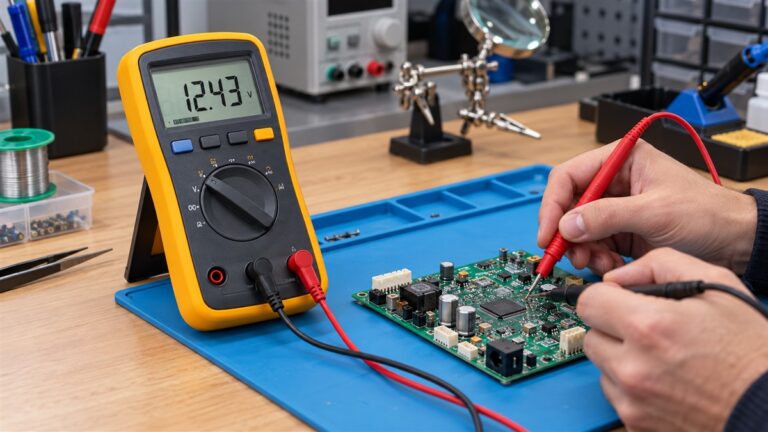
Most of the MM720’s functions are the standard jobs of a handheld multimeter. You can check whether a voltage is present, read a load’s current on the 10 A setting, measure resistance and continuity, test a diode, and read capacitance or frequency. The manual adds temperature readings through a thermocouple, and the product page lists a thermocouple with adapter in the box.
The meter starts in auto-ranging mode, which picks the measurement range for you. The manual says to press and hold the RANGE button to return to auto-ranging after you have switched to a manual range. The manual also describes a low-impedance voltage function for readings under 600 V. It is useful for checking whether a reading is real or a phantom voltage from a nearby conductor. The sources do not describe a specific trade use, so this post does not claim one.
The product page describes a high-visibility display, and the manual’s front panel lists a backlight and hold button and a min and max function. Those features are for reading the display, not for changing the meter’s rating.
Stated specifications
The table below lists only figures stated in the Klein documents we opened. A blank cell means that figure is not stated in those documents.
| Item | What Klein states | Where stated |
|---|---|---|
| AC and DC voltage | Up to 1000 V; input impedance 10 MΩ | US manual |
| AC and DC current | 10 A setting; µA/mA input up to 600 mA (US manual) and 800 mA (EU manual) | US and EU manuals |
| Fuses | 800 mA/1000 V and 10 A/1000 V | US manual |
| Resistance | Up to 60 MΩ; maximum input 600 V | Product page; US manual |
| Capacitance | 60 nF to 6000 µF | US manual |
| Frequency | 9.999 Hz to 500 kHz | US manual |
| Display | 6000 count LCD | Product page |
| Safety rating | CAT IV 600 V; CAT III 1000 V; pollution degree 2 | US manual |
| Standards | UL 61010-1, 61010-2-030, 61010-2-033; CSA; EN 61010 | US manual |
| Ingress and drop | IP42; 2 m drop protection | US manual; product page |
| Operating temperature | -10 to 50 °C; under 90% relative humidity, non-condensing | US manual |
| Storage temperature | -30 to 60 °C | US manual |
| Altitude | 2000 m | US manual |
| Environment | Indoor; keep away from moisture, rain and snow | US manual |
| Batteries | 2 AAA | Product page |
| Weight | 12.2 oz (345 g) in the US manual; 346 g on the product page; 12.98 oz (368 g) in the EU manual | US manual; product page; EU manual |
The weight figures differ between Klein’s own documents, so treat the weight as approximate. The same applies to the µA/mA input limit, where the two manuals disagree.
How to use it safely
These steps follow Klein’s warnings and general electrical safety practice. They do not replace the manual.
- Read the warnings before the first use. Klein’s warnings say not to use the meter in electrical storms or in wet weather, and not to use it if the meter or the test leads look damaged.
- Use test leads rated for the job. The warnings say to use only CAT IV rated test leads with this meter.
- Seat the leads fully in the jacks. The manual says not to test if the leads are not properly seated, because the result can be wrong.
- Use the shield in CAT III and CAT IV locations. The manual says to press the test lead shield firmly in place for those locations, and that failure to use it increases arc-flash risk.
- Do not measure resistance or continuity on a live circuit. The warnings state this directly.
- Replace the batteries when the low battery indicator appears. The warnings say a low battery can produce false readings that lead to shock. Do not open the meter to change batteries while the probes are connected.
- Respect the voltage rating. The meter’s maximum input is 1000 V AC or DC on the voltage jack. Do not use it on a circuit that exceeds its category or rating.
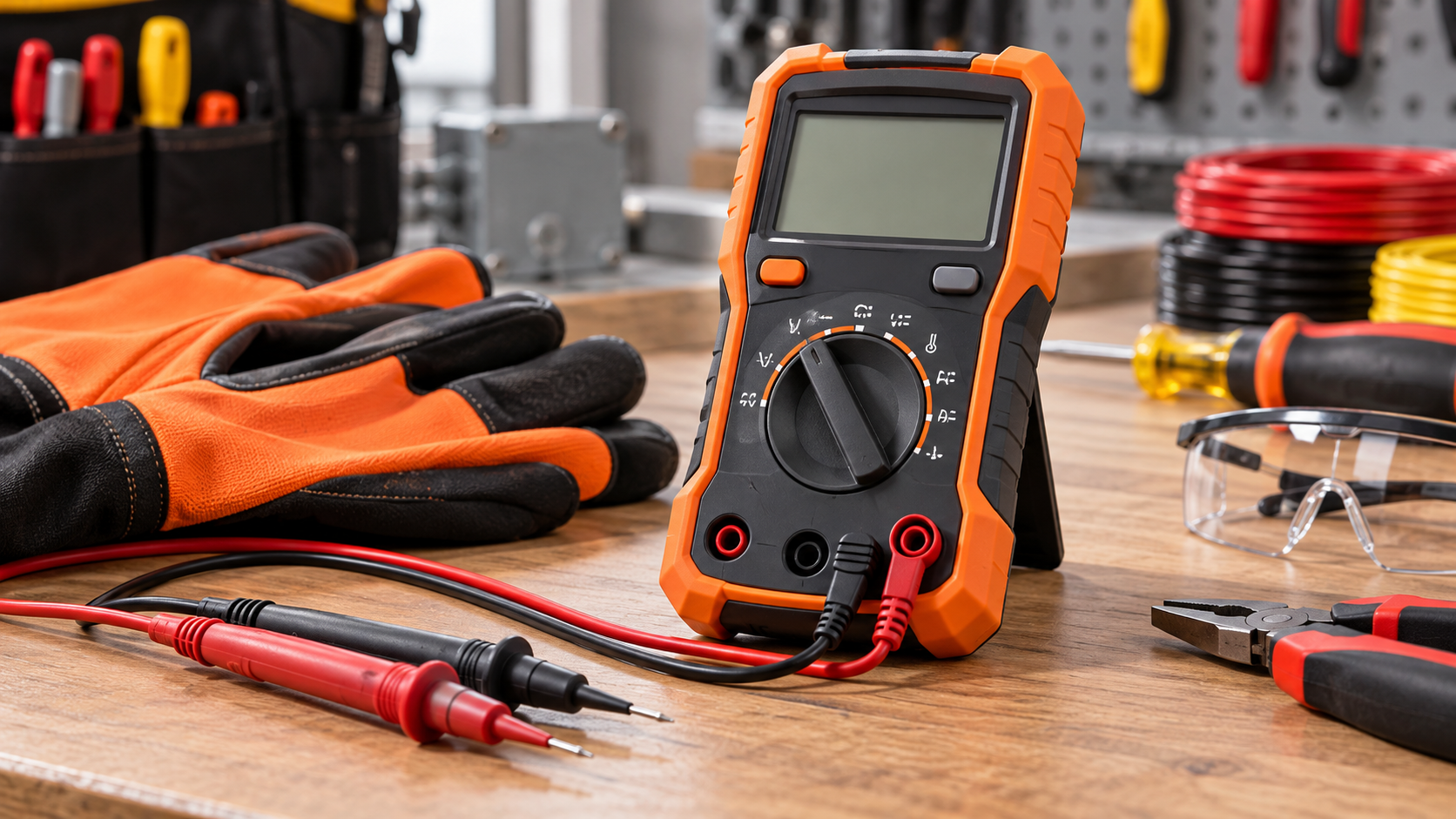
- Choose the current jack for the current. The manual shows a separate 10 A jack and a µA/mA jack. Use the 10 A jack for currents above 600 mA, and the µA/mA jack for currents below 600 mA.
- Replace fuses only with the rating printed in the manual. The fuse ratings are listed in the sections below, and a wrong fuse can leave the meter unprotected.
- Leave panel and service work to a licensed electrician. A handheld meter is not a reason to open live equipment.
Points to check before you buy
- The category for your work. The MM720 is rated CAT IV 600 V and CAT III 1000 V. These are different ratings for different voltages and locations, so match the one your job needs rather than the higher number.
- Which manual matches your unit. The US manual gives a 600 mA limit on the µA/mA input, and the EU manual gives 800 mA. The EU manual also gives a different weight and different AC voltage accuracy figures. Check the manual that came with your unit.
- The current ceiling. The 10 A setting is the highest current range in these documents. A job above 10 A needs a different tool.
- What is in the box. The product page lists a carrying pouch, test leads, a thermocouple with adapter, and batteries. Confirm the contents when the meter arrives.
- Fuse access. The product page describes an accessible battery and fuse compartment. Make sure you can get the fuse ratings named in the manual before you need them.
Mistakes to avoid
- Setting the meter to current on a circuit that may exceed 10 A.
- Measuring resistance or continuity on a live circuit.
- Ignoring a low battery indicator. Klein ties low battery to false readings.
- Applying the EU manual’s figures to a US unit, or the reverse, without checking the manual.
- Skipping the test lead shield in CAT III or CAT IV locations.
Frequently asked questions
Is the MM720 CAT IV?
Klein states CAT IV 600 V and CAT III 1000 V. Those are two separate ratings, so check which one covers the circuit you will measure.
What is the maximum voltage the MM720 can measure?
The US manual gives a maximum input of 1000 V AC or DC on the voltage jack.
Can the MM720 measure 10 A?
Yes. The US manual and the product page both list a 10 A current setting. Use the 10 A jack for currents above 600 mA.
Does it measure temperature?
The product page and the manual both list temperature measurement. The product page lists a thermocouple with adapter in the box.
Which fuses does it use?
The US manual names 800 mA/1000 V and 10 A/1000 V fuses. Replace fuses only with those ratings.
What batteries does it take?
The product page lists two AAA batteries.
Bottom line
Match the MM720’s stated CAT IV 600 V or CAT III 1000 V rating to the job, follow the lead and battery warnings, and confirm which regional manual matches your unit before you rely on any figure.
Related guides
For a plain-language look at the category ratings, read What Is a CAT Rating on a Multimeter and What a 600V CAT III Rating Means on a Multimeter. To see other Klein meters side by side, read Klein Tools Multimeter Lineup.
What we could not verify
- Accuracy by range. The US and EU manuals give different AC voltage accuracy figures, and the text we extracted from the tables was not reliable enough to quote every range.
- The temperature measurement range. We did not confirm the figure in a Klein manual, so this post does not state one.
- Battery life. The documents we opened do not state it.
- Which manual version a given retail unit ships with. The MM720EU manual is a separate document from the US manual.
Sources
- Klein Tools, “Digital Multimeter, TRMS Auto-Ranging, 1000V, Temp, Low Impedance – MM720” (product page). https://www.kleintools.com/catalog/multimeters/digital-multimeter-trms-auto-ranging-1000v-temp-low-impedance (opened 2026-10-27)
- Klein Tools, “MM720 Instruction Manual,” English, US version. https://data.kleintools.com/sites/all/product_assets/documents/instructions/klein/MM720_Manual_Web.pdf (opened 2026-10-27)
- Klein Tools, “MM720EU Instructions,” EU version. https://data.kleintools.com/sites/all/product_assets/documents/instructions/klein/MM720EU_Instructions.pdf (opened 2026-10-27)