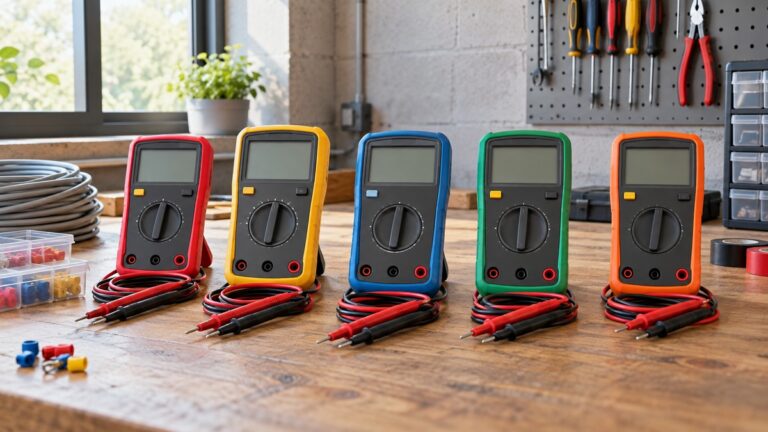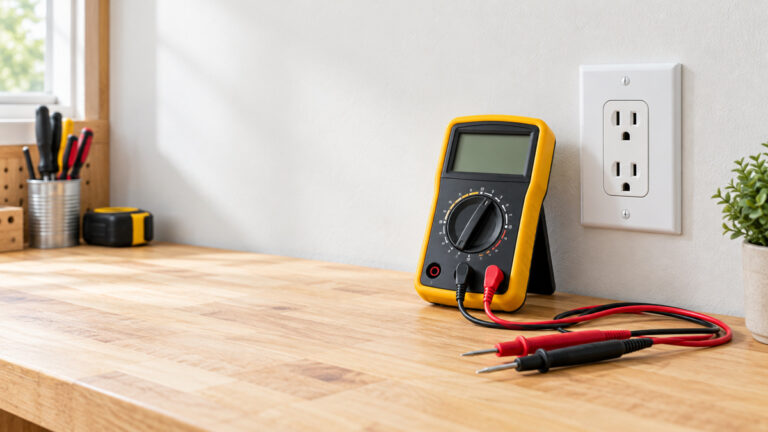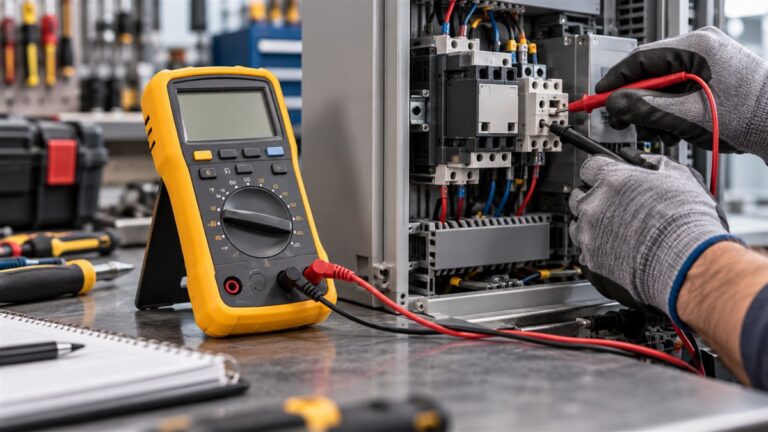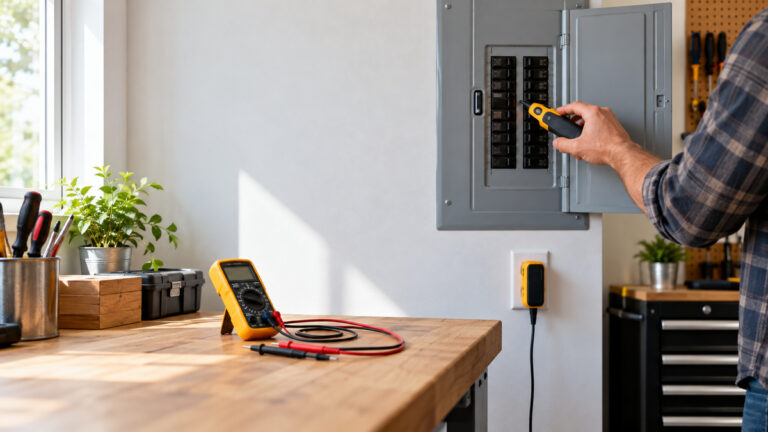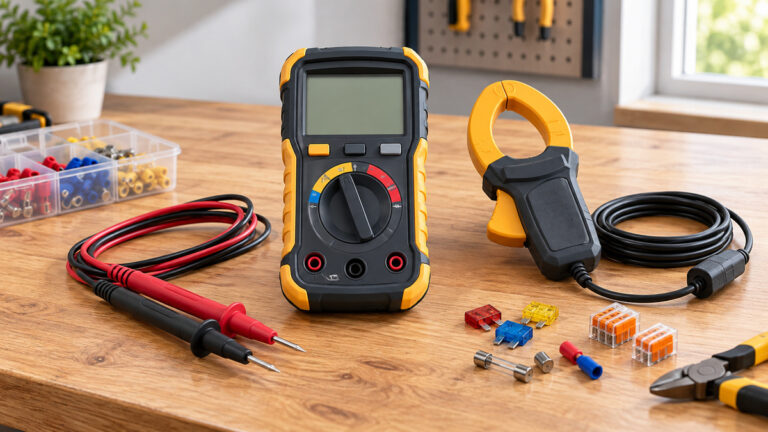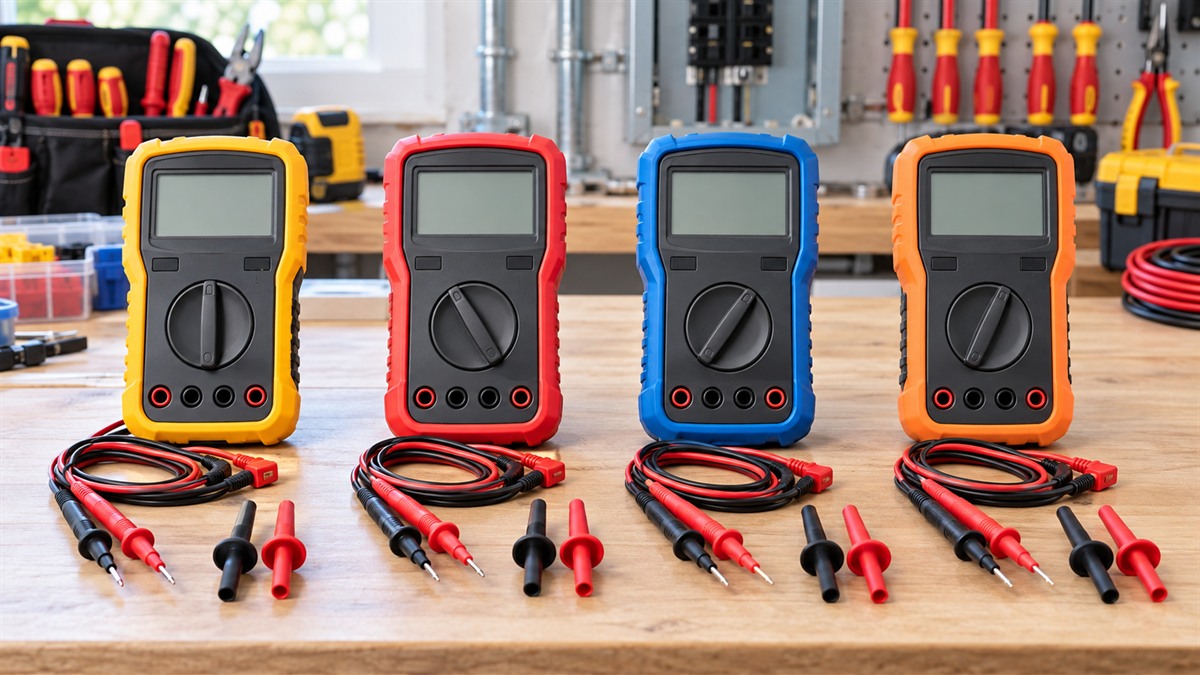
Best CAT III 600V Digital Multimeters
As an Amazon Associate we earn from qualifying purchases. Details
This guide is for the reader who searches for a CAT III 600V digital multimeter and wants meters whose Amazon listings actually state that rating. Our research file holds 12 listings. Only five of them state CAT III at 600V or higher, so those five are the picks. The other seven are left out because their listings do not state the rating. Every figure below comes from the listings (checked 2026-10-11) or from a university safety document we opened, and where a listing conflicts with itself we show both numbers.
Quick answer
If the stated rating is what matters most, the UNI-T UT161E is our top pick. Its listing gives “CAT III 1000V / CAT IV 600V” in both the specification field and a bullet, plus 22,000 counts and true RMS. The Fluke 87V states the same two ratings and a 10-year warranty, but its specification field reads “(Unset)”, so the rating rests on a listing bullet alone. If you only need CAT III 600V, the DEASOMIYE T21D, Neoteck VC746A and AstroAI clamp meter all state exactly that.
A listing states a rating. It does not prove one. Work on mains circuits can kill, and panel or service work belongs to a licensed electrician.
What the person typing “cat 3 600v digital multimeter” wants
That reader wants a hand-held meter that is rated for fixed building wiring (CAT III) at up to 600 volts, usually for household or light commercial checks. The rating decides whether the meter is built for the circuit, so it comes before counts, screen size or extras.
How we chose
We started from 12 Amazon listings, each with a specification table and bullets. We kept a listing only if it states CAT III at 600V or higher. The criteria:
- CAT III 600V (or a higher stated rating) appears in the listing’s specification fields, title, highlight or bullets.
- The product measures voltage with a hand-held meter body and test leads (one pick is a clamp meter, and we say so).
- The listing gives enough specs to compare: counts, ranges, included accessories.
What the listings do not state: none of the five names an independent test lab and a certificate number. Only some list true RMS, and only some give accuracy figures. Where a figure is missing we write “not stated.”
We left out seven listings: Lscsdf FS899L, NJTY T3, TESMEN TSM-599, ANENG, Innova 3340, QCL-TECH QF-954 and Hioki 3244-60. Their listings state no CAT rating. The NJTY lists “UL 61010-1, IEC 61010-2-030″ and the TESMEN lists “CSA, ETL,” but neither is a CAT rating. The QCL-TECH AC range tops out at 250V and the Hioki card meter at 500V, both under 600V. A meter with no stated CAT rating should not be treated as safe for household mains.
Comparison table
All figures are from the listings in the research file (checked 2026-10-11). “Not stated” means the listing does not say.
| Product | Type | CAT rating stated | Counts | True RMS | Max voltage stated | Current, per listing |
|---|---|---|---|---|---|---|
| UNI-T UT161E | Hand-held multimeter | CAT III 1000V / CAT IV 600V | 22,000 | Yes (bullet) | 1000V AC/DC | AC/DC up to 20A |
| Fluke 87V | Hand-held multimeter | CAT III 1000V, CAT IV 600V (bullet only; spec field “(Unset)”) | 6000 to 20,000 switchable | Yes (style field) | 1000V AC/DC | Not stated |
| DEASOMIYE T21D | Hand-held multimeter | Category III 600V (bullet) | 6000 | Yes (title, bullet) | “up to 600V/10A” (style field) | 10A (style field) |
| Neoteck VC746A | Hand-held multimeter | CAT III 600V (highlight, bullet) | 2000 | Not stated | Not stated | AC/DC current listed, range not stated |
| AstroAI CM2K0R | Clamp meter with multimeter functions | CAT.III 600V (spec field, bullet) | 2000 | Not stated | 600V AC/DC | AC to 400A; cannot test DC current |
Product cards
1. UNI-T UT161E: best for a consistent stated rating and the most specs
Specs (from the listing, checked 2026-10-11): Specification Met field: “Cat Iii 1000v/Cat Iv 600v” (with CE, RoHS, Cetlus). Bullets: 22,000 counts; true RMS; AC/DC voltage up to 1000V; AC/DC current up to 20A; resistance up to 220M; capacitance up to 220mF; frequency up to 220MHz; duty cycle 0.1% to 99.9%; hFE test; NCV detection; data hold, backlight, Max/Min, relative mode; USB data transmission. Weight 1.5 pounds. Included: test leads, USB cable, screwdriver, manual, software, iDMM app.
Pros: The rating appears in the specification field and the bullet, and the listing is the most detailed of the five. Cons: The Compatible Devices field mentions Bluetooth with an adapter (UT-D07B), while a bullet describes USB data transmission, so check which connection comes in the box. The listing gives no accuracy figures.
Best for: buyers who want a stated CAT III 1000V / CAT IV 600V and a large feature list. Skip if: you only need a basic voltage check, or want accuracy figures printed in the listing.
View on Amazon (affiliate link)
2. Fluke 87V: best for a long stated warranty and 1000V range
Specs (from the listing, checked 2026-10-11): Style field: “Industrial True RMS Multimeter.” Bullets: CAT III 1000V, CAT IV 600V safety rated; measures up to 1000 VAC and DC; switchable display resolution from 6000 to 20,000 counts; Peak Capture for intermittents as fast as 250 µS; low-pass filter for adjustable speed drives; operating altitude 2000 m. Warranty: 10 years. Weight 1.3 pounds. Included: TL75 leads, AC175 alligator clips, holster, temperature probe.
Pros: The listing names the leads and probe in the box and states a long warranty. Cons: The Specification Met field reads “(Unset),” so the CAT rating is in the bullets only. The Model field reads “FLUKE-87-5,” which the listing does not explain. The listing states no current range, so the listing does not say what it measures in amps.
Best for: buyers who want the high voltage range and long warranty, after confirming the rating on the meter or manual. Skip if: you need a stated current range from the listing before you buy.
View on Amazon (affiliate link)
3. DEASOMIYE T21D: best for household checks with fuse protection stated
Specs (from the listing, checked 2026-10-11): Model T21D; style “up to 600V/10A”; 6000 counts; true RMS; auto-ranging; NCV with sound and light alarm; AC/DC voltage, current, resistance, continuity, frequency, capacitance, diode, temperature; data hold, backlight, flashlight. A bullet says it “passed overvoltage category III 600V safety standards” and has a double ceramic fuse and thermistor protection. Specification Met field: “UL.” Weight 300 g. Included: test leads, thermocouple, safety tubes, batteries. A bullet gives 3 AAA batteries.
Pros: True RMS, auto-ranging and a stated double ceramic fuse at a stated 600V category. Cons: The rating is in a bullet and not in the specification field, which shows only “UL.” The listing does not say which UL standard applies or who tested it. It gives no accuracy figures. The bullet claims it “passed” safety standards; the listing names none.
Best for: home use where you want true RMS and auto-ranging at CAT III 600V. Skip if: you need the rating confirmed by a named test lab.
View on Amazon (affiliate link)
4. Neoteck VC746A: best for a stated accuracy on a 2000-count meter
Specs (from the listing, checked 2026-10-11): Model VC746A; 2000 counts; CAT III 600V in the highlight field and a bullet; Specification Met: CE, RoHS. DC voltage accuracy “±(0.5%+4)” and AC voltage accuracy “±(0.8%+6)” (bullet). Manual and automatic ranging; data hold; low-battery indicator; auto shutdown after 15 minutes; flashlight; measures resistance, capacitance, frequency, duty cycle, temperature, continuity, diode, live wire and NCV. Weight 195 g. Included: test probe, temperature probe, alligator clip, cloth pouch.
Pros: The listing gives voltage accuracy figures and a lot of functions on a small meter. Cons: The Specification Met field lists only CE and RoHS, not a CAT standard, so the rating rests on the highlight and bullet. True RMS is not stated, and the listing gives no current ranges or maximum voltage.
Best for: students and DIYers who want a stated CAT III 600V and printed voltage accuracy. Skip if: you need true RMS or a stated current range.
View on Amazon (affiliate link)
5. AstroAI CM2K0R clamp meter: best if you want to measure AC current without breaking the circuit
Specs (from the listing, checked 2026-10-11): Model ABCMCM2KORBK-US; 2000 counts; auto or manual range; Safety/Compliances field: “CAT.III 600V; Pollution Level: 2; Altitude <2000m.” DC voltage 2V to 600V, accuracy ±(0.5%+5); AC voltage 2V to 600V, ±(1.0%+5); AC current 2A to 400A; resistance up to 20MΩ; capacitance 2nF to 2mF; NCV; live wire test; data hold, Max/Min, flashlight. Specification Met: EMC, EN 61010-1, FCC, IEC 61010-1, IP 40, RoHS, UKCA. Weight about 203 g. Included: meter, test leads, manual, storage bag.
Pros: The CAT rating is in a specification field and a bullet, and the listing names EN 61010-1 and IEC 61010-1. Cons: A bullet says plainly that it cannot test DC current. The Storage Temperature field reads “14°F~122°F (-10°C~6°C),” and 6°C does not match 122°F, so the listing conflicts with itself. It is a clamp meter, so it is not a drop-in swap for a plain multimeter.
Best for: checking AC current on a wire the clamp can enclose. Skip if: you need to measure DC current.
View on Amazon (affiliate link)
What the rating means, and a worked example
A University of Washington Facilities Services safety practice on electrical test equipment (dated 12/05, so older than most listings) explains the system. It says IEC overvoltage categories rise as you get closer to the power source, and that test equipment must be rated for the category of the work “or higher.” Its table of examples puts these in the categories below:
- CAT II: single-phase receptacle loads, such as appliances and portable tools, and outlets on long branch circuits.
- CAT III: fixed installations, including feeders and short branch circuits and distribution panel devices.
- CAT IV: the origin of the installation, such as the service entrance and the run between meter and panel.
Worked example: a US household branch circuit runs at 120V, and the two legs of a 240V circuit read 240V between them. Against a 600V meter, 240V is 40% of the stated working voltage (240 / 600 = 0.4). Against a 1000V meter it is 24% (240 / 1000 = 0.24). The voltage margin is not the same as the category, though. Per the UW table, a CAT III meter covers branch circuits and panel devices, while the service entrance is CAT IV. A CAT III 1000V meter does not cover CAT IV work, which is why the UNI-T and Fluke listings state both “CAT III 1000V” and “CAT IV 600V.” The same table lists a 600V CAT IV impulse test at 8000V peak and a 600V CAT III test at 6000V peak, so the two are not interchangeable even at the same voltage number. Service entrance work is for a licensed electrician either way.
The same UW document says the CE mark is not a guarantee of independent testing, and tells buyers to look for a symbol from a recognized lab such as UL, CSA or TUV. In our five listings, the DEASOMIYE shows “UL,” the UNI-T shows “Cetlus,” and the Neoteck shows only CE and RoHS. We cannot verify any of these marks from a listing.
One simplification: a true RMS meter reads AC waveforms that are not clean sine waves more accurately than an average-responding meter. Only the UNI-T, Fluke and DEASOMIYE listings state true RMS.
Which one fits the job
- Highest stated ratings, with the most features: UNI-T UT161E.
- High voltage range and a 10-year warranty: Fluke 87V, after you confirm the rating on the meter.
- Household checks with true RMS at CAT III 600V: DEASOMIYE T21D.
- Small meter with printed voltage accuracy: Neoteck VC746A.
- AC current without touching the wire: AstroAI CM2K0R.
Safety first
Work on mains circuits can kill. A meter’s CAT rating must suit the circuit, and a listing that does not state a CAT rating does not make a meter safe for household mains. Do not work on live panels or service equipment as a beginner; that work belongs to a licensed electrician. Inspect leads and the case before every use, and use only leads with a CAT rating that meets or exceeds the meter’s rating, as the UW document advises.
Mistakes to avoid
- Buying on the voltage number alone. The category (II, III, IV) matters as much as the 600V or 1000V.
- Treating a listing statement as a certificate. None of these listings names a test lab and report.
- Assuming the CE mark means independent testing. The UW document says it does not.
- Using the AstroAI for DC current. Its listing says it cannot test it.
- Using cheap leads that carry no CAT rating on a rated meter.
Who should skip buying
- Anyone who plans to work inside a panel or at the service entrance without a licensed electrician.
- Anyone who needs a rating confirmed by a named test lab. None of the five listings provides that.
- Buyers who only need to check a battery or a low-voltage hobby circuit. A CAT III rating is not needed for that.
Frequently asked questions
What does CAT III 600V mean on a multimeter?
CAT III is the overvoltage category for fixed building wiring such as feeders, short branch circuits and distribution panel devices, per the UW safety document. The 600V is the working voltage limit tied to that category. Higher categories sit closer to the power source and need more protection.
Is a CAT III 600V meter enough for household outlets?
By the UW table, appliance outlets are CAT II and panel devices are CAT III, and the rule is to use equipment rated for the category “or higher.” A CAT III meter therefore covers both on paper. A listing statement is not proof, so confirm the rating printed on the meter. Panel work still belongs to an electrician.
Is a CE mark enough proof of safety?
No. The UW document says the CE mark is not a guarantee of independent testing and advises looking for a recognized lab symbol such as UL, CSA or TUV. Our listings show UL, Cetlus or only CE, and we cannot check any of them from a listing.
Do all five meters measure DC current?
No. The AstroAI listing says it cannot test DC current. The UNI-T lists AC/DC current up to 20A, and the DEASOMIYE and Neoteck list current without a clear AC or DC range in the bullets we read. The Fluke listing states no current range.
Why were seven listings left out?
Their listings do not state a CAT III 600V or higher rating, or their ranges top out below 600V. The listing for those meters does not say they are safe for household mains, so we did not include them.