Best Amp Clamp: 5 Picks for AC, DC and Automotive Use
As an Amazon Associate we earn from qualifying purchases. Details
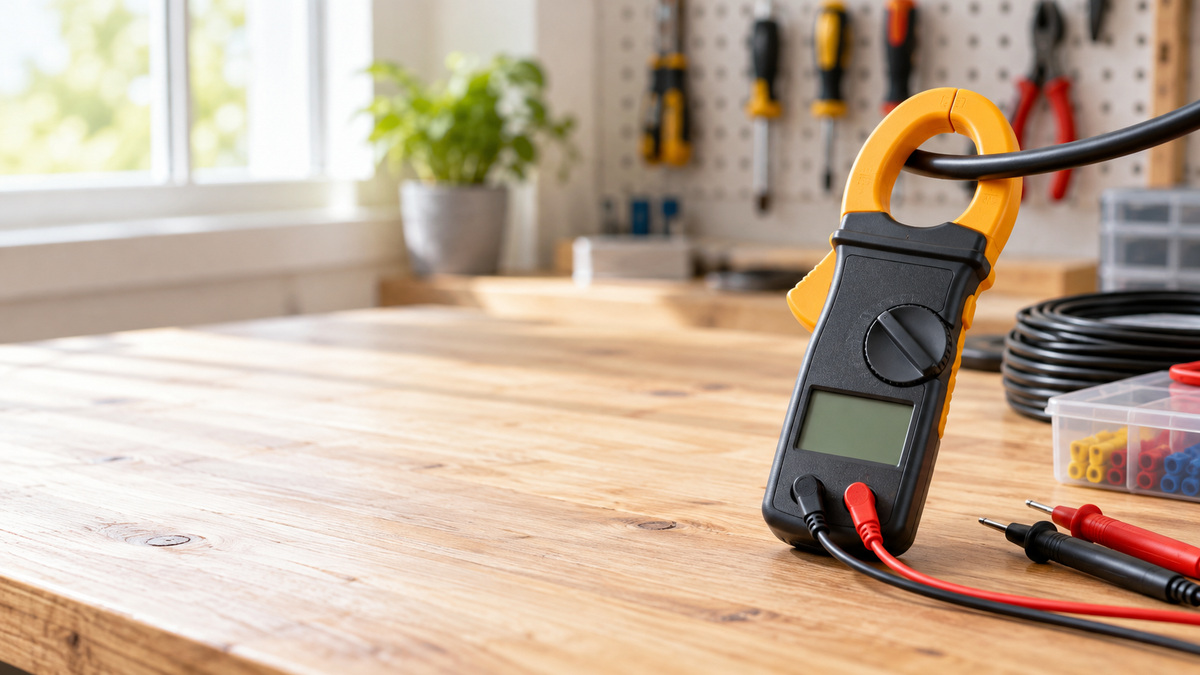
An amp clamp lets you measure current by clamping around a single conductor. You do not need to break the circuit or place probes in series with the load. This guide helps you decide between a full clamp meter and a probe-style amp clamp, and between AC-only and AC/DC models.
You will learn what matters for home troubleshooting, automotive work, and oscilloscope measurements. Specs below come from the product listings. Work on mains circuits can kill. The meter CAT rating must suit the circuit, and panel or service work belongs to a licensed electrician. Follow the instrument manual and local electrical rules.
Quick answer
If you want one tool for house wiring checks, choose an AC clamp meter with voltage, resistance, continuity, and non-contact voltage detection through test leads and the jaw. If you need amp clamp DC current ability for vehicles, RV systems, or solar, choose only a model whose listing states AC/DC current through the clamp, because many clamps measure AC current only.
For oscilloscope or multimeter expansion, choose a probe-style current clamp with a millivolt or BNC output. For an amp clamp for parasitic draw or battery drain tracking, you need DC response down to low currents and a stable zero. Check the listing for DC range, jaw size, output type, CAT rating, counts, and what is included before you buy.
What matters for an amp clamp
1. AC-only clamp versus DC amp clamp
This choice changes everything. Many shoppers search for dc amp clamp when they need automotive or solar work, but most low-cost clamp meters measure AC current through the jaw and measure DC voltage only through test leads.
The Klein Tools CL120 listing states it measures AC current via the clamp. The AstroAI listing states it cannot test DC current. The FNIRSI listing states AC/DC current up to 600A. The Hantek listing states an effective range of 20mA to 650A DC. Read the current section carefully. If the listing does not state DC current by clamp, assume it does not do it.
Choose AC-only if you check lamps, heaters, fans, and branch circuits. Choose AC/DC if you check vehicles, RV house batteries, solar DC strings, or power electronics. Our What Are Clamp Meters Used for guide explains typical jobs.
2. How the reading leaves the tool
A clamp meter has its own display and test-lead jacks. A probe-style amp clamp has no display and must connect to another instrument.
The ZIBOO unit is an AC current clamp with 4mm banana plug output for multimeters and millivolt AC tools. The Hantek unit is a current clamp with BNC output for oscilloscopes and multimeters. Both let you take current readings without breaking the circuit, but you must have a compatible meter or scope. If you want a standalone tool, choose a clamp meter instead. Our Best Current Clamp for Oscilloscope page covers scope use.
3. Range, counts, resolution, and true RMS
Range tells you the largest current you can clamp. Counts tell you display resolution. True RMS matters for distorted waveforms, which is a simplification of a wider power-quality topic.
Listings in this guide state 400 Amp AC, 400A AC current ranges, 600A AC/DC, 650A, and 600Amp AC. Counts stated include 2000 Counts and 9999 Count. The FNIRSI listing states TRMS measurement. The other clamp-meter listings in this group do not state true RMS, so check the listing if you need it for variable-speed drives or electronic loads. See also Best Ac Dc Current Clamp Meter for AC/DC comparisons.
4. Jaw use, conductor position, and accessories
You must clamp around one conductor, not a whole power cord. The AstroAI bullets explain that you need to clamp around one wire with the conductor centered in the clamp head. The clamp jaw is only used to measure current. Voltage measurement must be performed with test leads.
Check jaw opening and what ships in the box. Listings here mention a 30mm jaw, test leads with CAT III/CAT IV safety caps, a carrying case, a storage bag, a temperature probe, and a Type-C charging cable. If you work in panels or tight engine bays, jaw size and lead length control whether you can isolate one wire. An Best Ac Line Splitter for Clamp Meter can help on two-wire cords where you cannot separate conductors.
5. Safety rating and category
Measurement category is a method of classification by the International Electrotechnical Commission of live electric circuits used in measurement and testing. Categories take into account total continuous energy and impulse voltages. Measurement category II covers circuits directly connected to the low-voltage installation. Measurement category IV covers measurements at the source of the high-voltage installation.
The required impulse withstand voltage varies from 500 V to 12,000 V across categories and voltages. IEC 61010-1 requires that transient withstand capability is made known to the user.
Apply that here: quote CAT only if the listing states it. The AstroAI listing states CAT.III 600V. The ZIBOO bullets state CAT III 600 V safety rating. The Klein listing mentions test leads with CAT III/CAT IV safety caps but does not state a meter CAT rating in the fields provided, so the listing does not state a CAT rating for the meter itself. The FNIRSI and Hantek fields provided do not state a CAT rating in the same clear form, so check the listing and manual before mains use. Never call a meter safe for household mains unless its CAT and voltage rating suit the circuit.
6. Automotive and low-current behavior
Shoppers searching for automotive amp clamp or amp clamp for parasitic draw need small DC stability, not a large AC range. A 600A jaw can still miss a 30mA drain if resolution and zero drift are poor.
The Hantek listing states 20mA to 650A DC effective range with dual sensitivity and frequency range up to 400Hz, which fits scope-based drain and ripple checks. The FNIRSI listing describes vehicle battery drain tracking and RV DC system analysis. AC-only clamps cannot do this job through the jaw. For battery work, disconnect and handle batteries safely, keep metal tools clear of terminals, follow the vehicle manual, and never probe airbag circuits or high-voltage hybrid and EV systems. Our How to Measure Amps with a Clamp Meter page shows the single-conductor method.
Picks at a glance
| Pick | Type | Current by clamp | Display / output | Listing states |
|---|---|---|---|---|
| Klein Tools CL120 | Clamp meter | AC current via clamp | LCD with backlight, test leads | 8.45 x 3.51 x 1.51 inches, 9.76 ounces, auto-ranging |
| AstroAI CM2K0R | Clamp meter, 2000 Counts | AC current, cannot test DC current | 35 x 25mm LCD, test leads | 2.68 x 1.14 x 7.67 inches, CAT.III 600V, 2 x AAA included |
| FNIRSI DMC-100 | Clamp meter, 9999 Count TRMS | 600A AC/DC | 2-inch TFT, rechargeable | 7.7 x 2.91 x 1.14 inches, 6.72 ounces, 1500mAh lithium battery |
| Hantek CC-650 | Current clamp probe | 20mA to 650A DC, up to 400Hz | BNC output | 30mm jaw, 250 g, for oscilloscopes and multimeters |
| ZIBOO i600E | AC current clamp attachment | 600Amp AC | 1 mV/A AC output, banana plug | CAT III 600 V safety rating, compact shape |
Shoppers who arrive looking for fluke amp clamp, fluke with amp clamp, klein amp clamp, or fluke dc amp clamp often want the same decision: a trusted clamp shape with the right current type. Use the table to match current type first, then display type. For Fluke-specific shapes, see Best Fluke Ac Dc Amp Clamp and Best Klein Tools Digital Clamp Meter.
1. Klein Tools CL120 Digital Clamp Meter, Auto-Ranging 400 Amp AC (Best for home AC checks)
Specs from the listing (checked 2026-10-10):
- Brand: KLEIN TOOLS
- Model: CL120
- Style: Clamp Meter
- Measurement Type: Ammeter, Voltmeter, Ohmmeter
- Item Weight: 9.76 ounces
- Item Dimensions: 8.45 x 3.51 x 1.51 inches
- Power Source: Battery Powered
Pros
- Measures AC current and non-contact voltage via clamp plus AC/DC voltage, resistance and continuity via test-leads
- Auto-ranging with backlit LCD plus Max and Data Hold
- Includes carrying case, test leads with CAT III/CAT IV safety caps and 3 x AAA batteries
Cons
- Listing describes AC current via clamp, so DC-current users should skip it
- Listing does not state a meter CAT rating, only safety caps on leads
Best for: Homeowners checking AC loads, voltage, resistance and continuity with one clamp meter
Skip if: You need DC current through the jaw or a stated meter CAT rating for mains decisions
View on Amazon (affiliate link)
2. AstroAI Digital Clamp Meter Multimeter 2000 Counts Amp Voltage Tester Auto-ranging with AC/DC (Best compact AC meter)
Specs from the listing (checked 2026-10-10):
- Brand: AstroAI
- Model: CM2K0R
- Style: 2000 Counts AC Current
- Digital Display: 3,½, 2000
- Safety/Compliances: CAT.III 600V; Pollution Level: 2; Altitude <2000m
- AC Current: 2A/20A/200A/400A, 50~60Hz : ±(2.5 +5), Other : ±(3.0% +10)
- Power: 1.5V AAA Batteries x 2 Included
Pros
- Measures AC current to 400A plus AC/DC voltage, capacitance, resistance, diode and live-wire tests
- 2000-count display with 35 x 25mm LCD, backlight, flashlight, Data Hold and Max/Min
- States CAT.III 600V compliance and includes test leads, manual, storage bag and 2 AAA batteries
Cons
- Cannot test DC current, so vehicle drain and solar DC users should skip it
- AC current accuracy varies by frequency, so check the listing for your load
Best for: DIYers who want a small AC clamp meter for household electrical issues
Skip if: You need DC amps, high counts, or true RMS stated in the listing
View on Amazon (affiliate link)
3. FNIRSI DMC-100 Clamp Meter 9999 Counts TRMS, 600A AC/DC Amp Meter (Best overall)
Specs from the listing (checked 2026-10-10):
- Brand: FNIRSI
- Model: FNIRSI-DMC-100
- Unit Count: 9999 Count
- Measurement Type: Ammeter, Multimeter, Ohmmeter, Voltmeter
- Item Dimensions: 7.7 x 2.91 x 1.14 inches
- Item Weight: 6.72 ounces
- Included Components: Clamp Meter*1, Multimeter Pen*2, Temperture Probe*1, Type-C Charging Cable*1
Pros
- States TRMS AC/DC current up to 600A plus voltage, resistance, capacitance, frequency and temperature
- 2-inch TFT display with voltage and current shown together and real-time curve recording
- Built-in 1500mAh lithium battery with Type-C charging plus temperature probe and leads included
Cons
- Voltage measurement must be performed with the test leads, not the jaws
- Listing fields provided do not state a CAT rating, so mains users must check the manual
Best for: Users who need one AC/DC clamp meter for auto, RV and home troubleshooting
Skip if: You need a stated CAT rating up front or a banana/BNC probe for another instrument
View on Amazon (affiliate link)
4. Hantek CC-650 AC/DC Current Clamp 400Hz 650A BNC Output (Best for oscilloscope use)
Specs from the listing (checked 2026-10-10):
- Brand: Hantek
- Model: CC-650
- Style: Current Clamp
- Measurement Type: Multimeter
- Compatible Devices: Oscilloscopes, Multimeters
- Item Weight: 250 g
- Specification Met: CE, CSA, ETL, FCC
Pros
- Measures AC/DC current for scope and meter diagnostics with BNC output and dual sensitivity
- States 20mA to 650A DC range with frequency range up to 400Hz and 30mm jaw
- Suits power-circuit, motor-drive and power-electronics waveform analysis
Cons
- Has no display and needs a compatible oscilloscope or multimeter, so standalone users should skip it
- Listing does not state counts or true RMS because it is a probe, not a meter
Best for: Scope owners checking current waveforms, ripple, and DC draws
Skip if: You want a standalone meter or a banana-plug attachment
View on Amazon (affiliate link)
5. ZIBOO i600E 600Amp AC Current Clamp,4mm Banana Plug for Multimeters/mV AC Measurement Tools Perfect (Best clamp attachment)
Specs from the listing (checked 2026-10-10):
- Brand: ZIBOO
- Model: ZIBOO i600E
- Style: universal
- Measurement Type: Ammeter
- Compatible Devices: Multimeters, mV AC measurement tools
- Specification Met: IEC 61010-1:2000-1
- Included Components: 1pcs AC Current Clamp
Pros
- Adds 600Amp AC clamp readings to multimeters or millivolt AC tools without breaking the circuit
- 1 mV/A AC output with 4mm banana plug and compact shape for tight spots
- States CAT III 600 V safety rating and IEC 61010-1:2000-1
Cons
- AC-only attachment with no display, so DC and standalone users should skip it
- Ships as clamp only, so you must already own a compatible meter
Best for: Multimeter owners who want AC current without buying another full meter
Skip if: You need DC current, a display, or BNC output for a scope
View on Amazon (affiliate link)
How to choose an amp clamp step by step
Start with the circuit. Home AC branch work needs AC current, AC/DC voltage, resistance, continuity, and non-contact voltage. Vehicle, RV, marine, and solar DC work needs a stated DC amp clamp function. Scope diagnostics need a probe with correct output and bandwidth.
Next, confirm the clamp method. You must isolate one conductor. You cannot clamp a flat lamp cord containing hot and neutral together and expect a load reading. Center the wire in the jaw. Keep the jaw faces clean and fully closed. If you cannot separate wires, use a line splitter made for clamp meters.
Next, confirm compatibility. A clamp meter reads on its own screen. A banana-plug clamp needs a multimeter with a millivolt AC range. A BNC clamp needs a scope or meter input that accepts its signal. The ZIBOO listing names compatibility with most multimeters or millivolt AC tools. The Hantek listing names oscilloscopes and multimeters. Check plug type, output scaling, power source, and manual zero procedure.
Next, confirm safety and limits. Check CAT, voltage, max amps, fuse ratings where stated, working environment, and pollution degree. The AstroAI listing states working environment 32°F~104°F and storage temperature 14°F~122°F. If the listing does not state a CAT rating, do not assume mains suitability. Panel, meter-base, and service-entrance work belongs to a licensed electrician.
Finally, confirm power and daily use details. Listings here state 3 x AAA batteries, 1.5V AAA Batteries x 2 Included, and a built-in 1500mAh lithium battery with Type-C charging. Check auto power-off time, data hold, max/min, backlight, flashlight, and case. The Klein listing states auto-power off after 10 minutes. Small details matter when you work overhead or in a dark furnace cabinet.
Worked planning example for wire checks and battery drain
This example is our planning estimate for choosing range and resolution. It does not describe a live measurement. Numbers below are assumed for planning only, with arithmetic shown step by step.
Assume you have two jobs. Job A is a 120 V portable heater you expect to draw about 12 A AC. Job B is a vehicle with a possible 85 mA parasitic drain, which equals 0.085 A DC.
Step 1: state assumed currents. Heater = 12 A AC. Drain = 0.085 A DC.
Step 2: compare heater current to a 400 A AC range. Headroom = 400 A minus 12 A = 388 A. The heater uses 12 A divided by 400 A = 0.03, or 3% of full range. A 400 Amp AC clamp covers it.
Step 3: compare drain to a low-current floor of 20 mA, which equals 0.02 A. Drain divided by floor = 0.085 A divided by 0.02 A = 4.25 times the floor. The drain sits above the stated floor, so a probe rated from 20mA upward can show it in theory.
Step 4: compare drain to a 600 A DC full range. Share of range = 0.085 A divided by 600 A = 0.0001417, or about 0.014%. That is a tiny share of a large range, so stable zero, low range selection, and correct sensitivity setting matter more than max amps.
Step 5: re-verify sums and products twice. 400 minus 12 = 388, checked twice. 12 divided by 400 = 0.03, checked twice. 0.085 divided by 0.02 = 4.25, checked twice. 0.085 divided by 600 = 0.0001417, checked twice.
Decision: for Job A, an AC clamp meter with a 400A range works. For Job B, you need a stated DC amp clamp with low-current response and a manual zero, such as a DC-capable meter or a scope probe, plus safe battery practices. If you only own an AC-only clamp, you cannot measure the DC drain through the jaw.
Five common mistakes with an amp clamp
1. Clamping a whole cord
Clamping hot and neutral together cancels the magnetic field and reads near zero. Isolate one conductor. Center it in the jaw. Close the jaw fully. If the cord does not split, use a splitter accessory rated for the job.
2. Buying AC-only for DC work
AC current ability does not imply DC current ability. The AstroAI tip states it cannot test DC current. The Klein description states AC current via clamp plus AC/DC voltage via leads. Those are different functions. If you need amp clamp DC current, the clamp section must say AC/DC.
3. Expecting voltage from the jaw
Jaws sense current. Voltage needs leads in the correct jacks. The FNIRSI note states voltage measurement must be performed with test leads. Never touch exposed metal with the jaw as if it were a voltage probe.
4. Ignoring output type on probe clamps
A banana-plug attachment and a BNC scope probe are not interchangeable without the right input. Check scaling such as 1 mV/A AC output, input impedance, range switch, battery, and zero control. The ZIBOO listing states 1 mV/A AC output. The Hantek listing states BNC output with dual sensitivity.
5. Assuming a CAT rating that is not stated
Caps on test leads are not the same as a meter CAT rating. The Klein package includes test leads with CAT III/CAT IV safety caps, but the fields provided do not state a meter CAT rating, so check the listing and manual. The ZIBOO and AstroAI listings state CAT III 600V in the fields provided. When in doubt, limit work to low-energy circuits and ask a licensed electrician about mains, panel, or service work.
Care, storage, and safe handling
Store the meter dry and within the stated storage temperature. The AstroAI listing states storage temperature 14°F~122°F with humidity below 70% RH. Do not exceed working limits such as 32°F~104°F and humidity below 80% RH where stated.
Keep jaw faces clean and free of grit. A chipped or dirty jaw may not close fully. Check leads for cuts, cracked probes, and loose caps before each use. Remove batteries for long storage on disposable-battery models. Recharge lithium models before they sit empty for months.
Auto power-off helps, but it does not replace switching the dial off. The AstroAI listing includes auto shut-off and low-battery indication. Replace weak batteries before critical checks, because low voltage can affect operation. Follow the manual for fuse replacement, cleaning, calibration intervals, and disposal. If a tool was overloaded, dropped, or exposed to water, stop using it until it is checked.
FAQ
Does an amp clamp measure voltage too?
Many clamp meters do, but only through test leads. The jaw measures current. The listings here describe AC/DC voltage, resistance, continuity, capacitance, diode, temperature, or non-contact voltage as lead or sensor functions. Check which functions use leads and which use the jaw.
What is the difference between an AC amp clamp and a DC amp clamp?
An AC-only clamp senses alternating current through the jaw. A DC-capable clamp also senses direct current, usually with a Hall sensor and a zero adjustment. If you need vehicle, RV, or solar DC work, the listing must state AC/DC current. An AC/DC voltage spec alone does not prove DC current ability.
Can I use an amp clamp for parasitic draw?
Only with a DC-capable clamp that can resolve small currents. You must isolate one battery cable, select the low range, zero the probe away from magnetic fields, and follow safe battery handling. Never work on airbag wiring or high-voltage hybrid and EV systems. If readings drift, check zero, cable position, nearby magnets, and battery charge in the probe.
Do I need true RMS?
It depends on the load. Heating and incandescent loads look close to sine waves. Variable-speed motors, dimmers, computers, and some LED drivers distort the waveform. True RMS meters state TRMS in the listing. As a simplification, true RMS follows heating effect better than averaging on distorted waves. If the listing does not state true RMS, check the listing before judging distorted loads.
Why does my clamp read zero on a power cord?
You likely clamped both conductors at once. Split the cord so only one current-carrying wire passes through the jaw. Keep the wire centered. Use a line splitter for molded cords. The AstroAI guidance states to clamp one wire, not the whole power cord.
What CAT rating do I need?
Match the CAT and voltage to the circuit location and energy level. Category II, III, and IV describe different points in an installation, from utilization circuits toward the source. Quote only what the manual and listing state. If the listing does not state a CAT rating, do not use the tool on household mains. Panel and service work belongs to a licensed electrician. For background, see Best How Does a Current Clamp Work.
Can a current clamp attachment work with my multimeter?
Sometimes. You need the right plug, the right input range, and the right scaling. The ZIBOO attachment uses banana plugs and 1 mV/A AC output for multimeters or millivolt AC tools. Confirm your meter has a suitable millivolt AC range and enough resolution. For scope probes, confirm BNC input, coupling, and bandwidth. When in doubt, check both manuals.
Bottom line
Match current type first, then tool form. Choose an AC clamp meter for basic home AC checks. Choose a stated AC/DC clamp meter or DC-capable probe for automotive and RV DC work. Choose a banana-plug or BNC probe only if you already own a compatible meter or scope. Before you buy, confirm clamp current type, max amps, output scaling, jaw size, CAT rating, counts, power source, and included leads. If the listing does not state it, assume it is not included.
Sources
- Measurement category – Wikipedia: supports CAT definitions, impulse withstand range, and IEC 61010-1 disclosure rule