Klein RT250 GFCI Receptacle Tester: What It Checks and Its Stated Limits
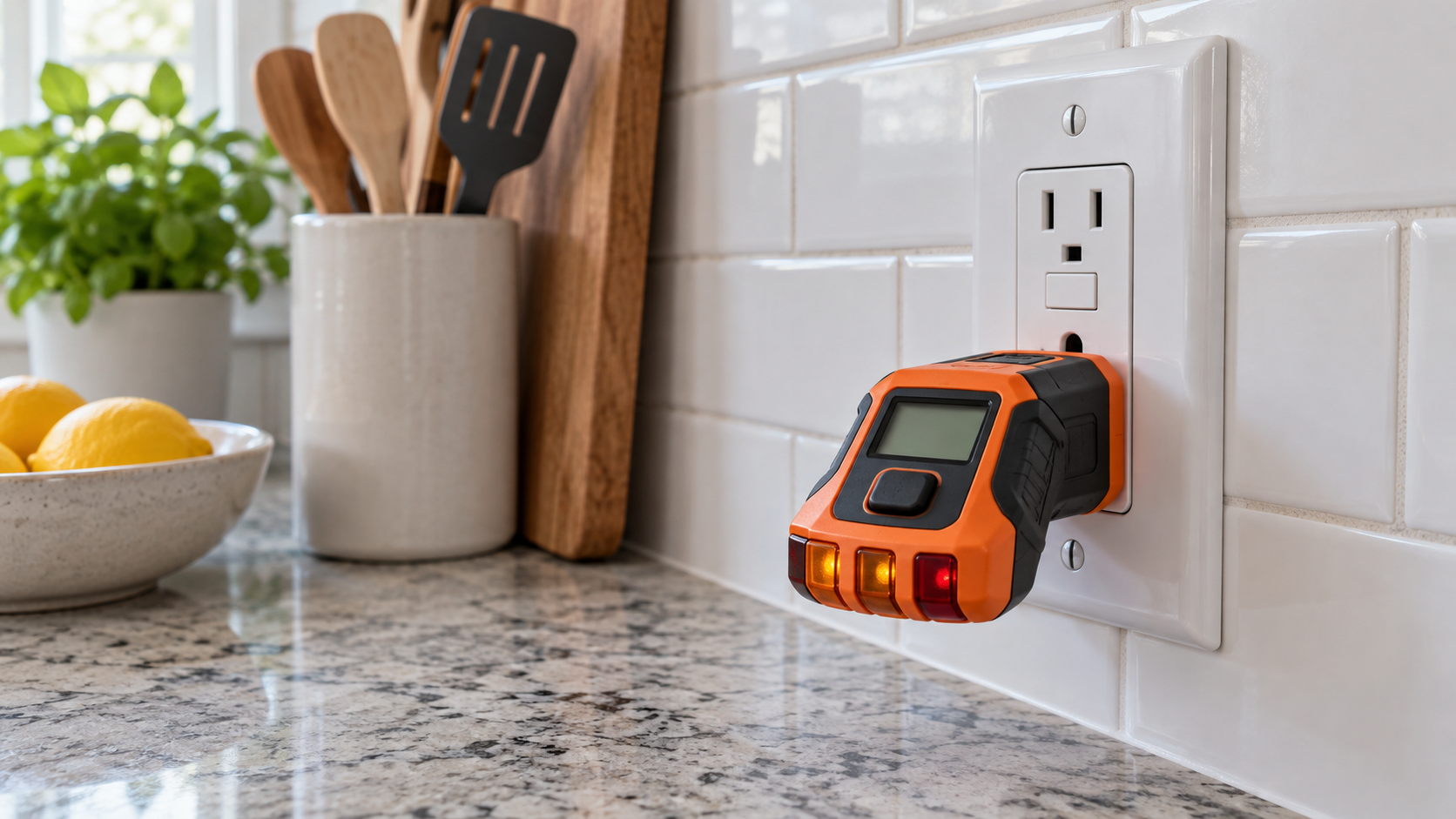
The Klein RT250 is a plug-in receptacle tester for three-wire, 120 V North American outlets. Klein’s product page says it detects and identifies common wiring faults and shows the time a GFCI device takes to trip. The sections below set out what the Klein pages state, what the tester can and cannot show, and the safety points to read before use. As an Amazon Associate we earn from qualifying purchases.
Quick answer
- The RT250 is for three-wire, 120 V North American outlets only, according to Klein’s product page.
- Klein states a CAT II 135 V safety rating and two AAA alkaline batteries.
- Klein states that the LCD shows voltage, wiring condition and the time a GFCI takes to trip, with green and red LEDs.
- Klein’s product page says the tester does not test AFCI devices (“AFCI: No”). It is a receptacle and GFCI check, not an arc-fault check.
- Klein’s pages say to consult a qualified electrician to resolve wiring problems. The tester identifies a condition; it does not repair one.
What a receptacle tester checks
A receptacle tester plugs into an outlet and uses the outlet’s contacts to show how the wiring is arranged. It is a quick way to see whether an outlet is wired correctly and whether a GFCI outlet responds to its test function. It does not measure current, resistance or load, and it is not a substitute for a multimeter.
Klein describes the RT250 as able to “detect and identify common wiring faults.” The product page also refers to a patent-pending detection of an open neutral and open ground condition. Klein’s page does not list every fault the tester can miss, so do not read a clear display as a guarantee that the whole circuit is correct.
The RT250 is also used to check a GFCI device. Klein’s page says the LCD displays “the time required to trip a GFCI device.” That reading helps you judge whether a GFCI responds within a time window, but the exact trip limits belong to the GFCI manufacturer’s documents and your local code.
How to use it, step by step
Follow the general sequence below. Your tester’s own instructions, and the warnings in the manual, come first.
- Confirm the outlet is a three-wire, 120 V North American receptacle. Klein states the RT250 is for those outlets only.
- Unplug or switch off anything connected to the outlet. Klein’s warnings tell you to read all warnings, cautions and instructions in the manual before use, and an appliance on the circuit can affect the reading.
- Plug the tester fully into the receptacle. Do not force it, and do not use it on a damaged plug or on a cord that is not firmly seated.
- Read the LCD and the green and red LEDs. Compare the display with the manual’s table for that condition.
- If you are checking a GFCI, press its test button and watch the trip time on the LCD. Reset the GFCI as its own manual directs.
- Unplug the tester, and act on the result only within the limits your work rules allow.
If the display shows a wiring fault, do not open the outlet or the panel to fix it unless you are trained and authorized. Klein states that a qualified electrician should resolve wiring problems.
What Klein’s pages state
The table uses only the figures and statements on the Klein pages we opened on 2026-10-27. Where a page does not state a figure, the table says so.
| Item | What the Klein pages state |
|---|---|
| Intended outlets | Three-wire, 120 V North American outlets only |
| Safety rating | CAT II 135 V |
| Power | Two AAA alkaline batteries (product page spec sheet) |
| Display | Large backlit LCD showing voltage, wiring condition and GFCI trip time |
| Indicators | Green and red LEDs |
| Fault detection | Common wiring faults; patent-pending detection of open neutral and open ground |
| AFCI | “AFCI: No” (product page spec sheet) |
| Wiring-condition table, full list of faults | Not stated on the pages we opened; check the manual |
| Operating temperature, altitude, dimensions, weight, drop rating | Not stated on the pages we opened; check the manual |
The table lists the number of batteries and the safety rating as Klein states them. A low battery can change what the display shows, so replace batteries as the manual directs before you rely on a reading.
Safety points Klein’s pages raise
- Read the manual first. The product page tells the user to read and follow “all warnings, cautions, safety information, and instructions in the manual” before use.
- Use only where it is rated. The tester is for three-wire, 120 V North American outlets. A different outlet type, such as a four-wire or a 240 V receptacle, is outside the stated use.
- Get an electrician for wiring. Klein says to “consult a qualified electrician to resolve wiring problems.”
- Stop if the tester shows a fault you cannot explain. Do not keep plugging it in to see a different result.
Electrical work can kill. Do not open a panel or work on a live circuit unless you are trained and authorized to do so. A receptacle tester is a check, not a permit to work on wiring.
Where the RT250 fits compared with other testers
A receptacle tester answers a narrow question about a plug-in outlet. A multimeter answers a wider question, such as voltage, current or resistance, but it needs more setup and training. A non-contact voltage tester checks whether a wire is energized without contact, but it does not describe how an outlet is wired. Pick the tool that matches the question you need answered, and read each tool’s stated ratings before use.
For a wider look at the category, see our guides to non-contact voltage testers and to Klein voltage detectors listed in the related guides below.
How we chose
This is an explainer about one model, not a ranking. We opened three Klein Tools pages on 2026-10-27 and used only the figures and statements they print. The third page, the RT250 model page, identifies the model but does not list specifications. We did not use retailer listings, third-party manuals or customer ratings for any figure in this post, and we did not consider other GFCI testers for this post.
What we could not verify
- The full list of wiring conditions the LCD can show. The Klein pages we opened name the general categories, not every display message.
- Operating temperature, altitude, dimensions, weight and drop rating. The Klein pages we opened do not state them.
- Whether the tester is compatible with every GFCI brand. The pages do not say, so check the GFCI device’s own manual.
- The trip-time limits a GFCI should meet. Those limits come from the GFCI manufacturer and local code, not from the RT250 pages.
Buying checklist
- Confirm the outlets you will check are three-wire, 120 V North American receptacles.
- Confirm the tester’s CAT II 135 V rating fits the work you plan to do.
- Plan to replace the two AAA batteries when the manual says.
- Check whether you need a separate tester for AFCI devices, since Klein’s page says the RT250 does not test AFCI.
Mistakes to avoid
- Testing an outlet that is not three-wire 120 V. Klein’s stated use does not cover it.
- Reading the display without the manual. The manual’s table gives the meaning of each condition. Do not guess.
- Treating a clear display as a full safety check. The tester identifies common faults and does not cover every condition.
FAQ
What does the Klein RT250 do?
The RT250 checks a three-wire, 120 V North American outlet and shows wiring conditions on its LCD. Klein’s pages also say it shows the time a GFCI takes to trip.
Does the RT250 test AFCI breakers or outlets?
No. Klein’s product page spec sheet states “AFCI: No.”
What batteries does it use?
Klein’s page states two AAA alkaline batteries.
What is the RT250’s safety rating?
Klein states CAT II 135 V.
Can I use the RT250 on a 240 V outlet?
No. Klein’s pages state it is for three-wire, 120 V North American outlets only.
What should I do if the tester shows a wiring fault?
Stop, follow the manual’s guidance for that condition, and have a qualified electrician resolve the wiring problem.
Related guides
- Klein Non Contact Voltage Detector: Top 6 Picks Compared covers the non-contact check that often comes before an outlet check.
- Best Digital Clamp Meters: 4 Picks Compared covers current measurement, a different job from a receptacle check.
- Best Klein Tools Voltage Detector: 5 Safe Picks Compared covers voltage detection for Klein’s other testers.
Bottom line
Use the Klein RT250 for a quick, rated check of a three-wire, 120 V North American outlet and its GFCI, and follow the manual before you act on any display. For any wiring fault or AFCI question, rely on a qualified electrician and a different tool.
Sources
- Klein Tools. “GFCI Receptacle Tester with LCD (RT250).” Product page. https://www.kleintools.com/catalog/electrical-testers/gfci-receptacle-tester-lcd. Opened 2026-10-27.
- Klein Tools. “Klein Tools Launches GFCI Receptacle Tester with LCD.” Press release. https://www.kleintools.com/content/klein-tools-launches-gfci-receptacle-tester-lcd. Opened 2026-10-27.
- Klein Tools. “GFCI Receptacle Tester with LCD, RT250.” Model page. https://www.kleintools.com/buy-now/trusted-pros/RT250. Opened 2026-10-27.