Best Good Voltmeter
As an Amazon Associate we earn from qualifying purchases. Details
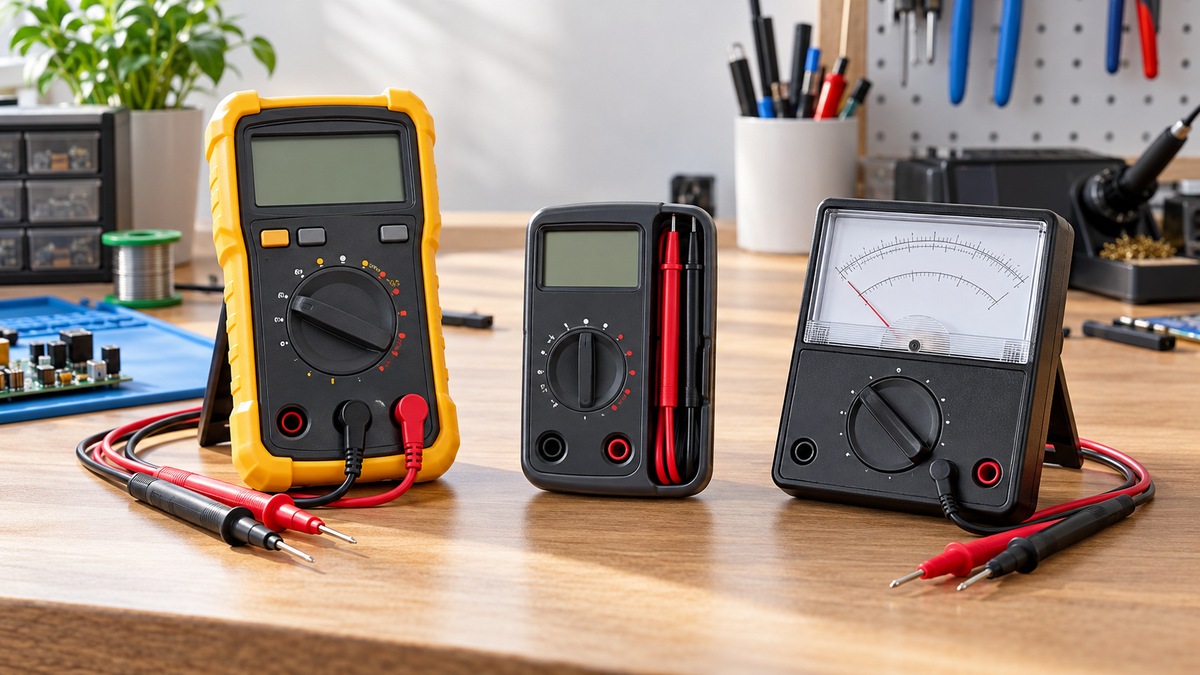
A good voltmeter, for most home and workshop checks, is a digital multimeter whose listing states AC and DC voltage ranges, a clear display and a safety rating. The research set for this keyword includes about a dozen listings, and six of them are general digital meters that measure voltage. This roundup covers those six: the LJPXHHU, AstroAI 2000, ANENG, TESMEN TM-510, Lscsdf FS899L and the SNAKOL pen tester. The listing data was checked on 11 and 13 October 2026.
Quick answer: for a bench or a home workshop, a 4000 or 6000 count meter with a stated DC voltage accuracy is the most useful kind of listing. For a quick pocket check, the SNAKOL pen covers 2 V to 600 V. The AstroAI and TESMEN listings give the most specific accuracy figures in this set.
The six picks at a glance
The table gives the figures each seller states, shown as written. Where a listing gives no voltage range, the cell says so.
| Meter | Voltage ranges (as listed) | Accuracy or count (as listed) | Power and size (as listed) |
|---|---|---|---|
| LJPXHHU 2000 count (B0CXM242J1) | AC and DC voltage (no range stated) | 2000 count display | Battery powered; 166 g; 5.51 x 2.56 x 1.18 inches |
| AstroAI 2000 count (B01ISAMUA6) | DC 200 mV, 2 V, 20 V, 200 V, 600 V; AC 200 V, 600 V | DC ±(0.5%+3); AC ±(0.8%+5) | 2 x 1.5 V AAA; 0.15 kg |
| ANENG multimeter (B0BYD32JZV) | DC and AC 200 mV to 600 V | DC ±(1%+5); AC ±(2.0%+10) | Battery powered; case included |
| TESMEN TM-510 (B0BLZ7GN2X) | AC and DC 0.8 V to 600 V | DC ±(1.0%+5); AC ±(1.2%+5); 4000 counts | Battery powered; 0.1 kg; CAT II 600 V |
| Lscsdf FS899L (B0FR9BY1K3) | AC and DC voltage (no range stated) | 6000 counts; 4.8-inch color screen | USB rechargeable; 5.98 x 2.87 x 0.79 inches |
| SNAKOL pen tester (B0D69TGPHS) | DC and AC 2 V to 600 V | Not stated; LCD backlit | Battery powered; 7.28 x 1 x 1.2 inches |
LJPXHHU 2000 count: a broad meter with an overload guard
The LJPXHHU listing covers AC and DC voltage, DC current, resistance, continuity, diode and battery checks. Its bullets describe overload protection on all ranges, a low battery indication, an audible continuity sensor and a double insulated body with a stand for hands-free use. The display is a backlit LCD, which the seller gives as 2.7 inches in one bullet. The listing does not give a voltage range or an accuracy figure, so a comparison of voltage performance is not possible from this listing alone.
The listing’s weight is 166 g. Its dimensions are 5.51 x 2.56 x 1.18 inches. Those are the figures a buyer needs to judge whether the meter fits a tool bag.
AstroAI 2000 count: the most specific voltage figures
The AstroAI listing gives the most detail of the six. Its DC voltage ranges are 200 mV, 2 V, 20 V, 200 V and 600 V, with an accuracy of ±(0.5%+3). Its AC voltage ranges are 200 V and 600 V, with an accuracy of ±(0.8%+5). It is a manual-range meter, and the listing gives an overload indication of “OL” on the display. Its fuses are a 250 mA and a 10 A, both rated 250 V. The listed operating range is 0 to 40 °C.
The sample speed is where the listing conflicts with itself. The specification table says 3 times per second, while a bullet says the meter has a sampling speed of 2 times per second. Both figures are as the seller states them, and the listing does not say which one is correct. Treat the sample speed as unconfirmed until the printed manual is checked.
ANENG multimeter: a case and a wide DC current span
The ANENG listing includes a carrying case, and its specification table gives DC voltage from 200 mV to 600 V with an accuracy of ±(1%+5). Its AC voltage accuracy is ±(2.0%+10), which is looser than its DC figure. The same listing gives DC current from 2 mA to 10 A and resistance from 0 Ω to 200 MΩ. The bullets are general and describe a multimeter that measures a range of electrical properties, so use the specification table as the reliable source.
TESMEN TM-510: a 4000 count meter with non-contact voltage
The TESMEN TM-510 lists 4000 counts and an auto-ranging smart mode. Its AC and DC voltage range is 0.8 V to 600 V, with DC accuracy of ±(1.0%+5) and AC accuracy of ±(1.2%+5). The listing says it is True RMS, with a frequency response of 40 Hz to 1 kHz. It includes non-contact voltage detection with a visual and audible alarm, and it is rated CAT II 600 V. The listed weight is 0.1 kg.
Lscsdf FS899L: a 6000 count color meter
The Lscsdf listing covers AC and DC voltage and current, capacitance, resistance, non-contact voltage and temperature. It has a 4.8-inch color screen, a backlight and a USB rechargeable battery that the listing gives as a 200 mA cell. The listing does not state a voltage range or a CAT rating.
A second listing, from ZMIWNIED, uses the same FS899L model code and states CAT III 1000 V and CAT IV 600 V. The two listings describe the same model in different terms. The safety rating appears only in the ZMIWNIED listing, so check the rating on the tester you receive before using it on a high-energy circuit.
SNAKOL pen tester: a pocket check with continuity
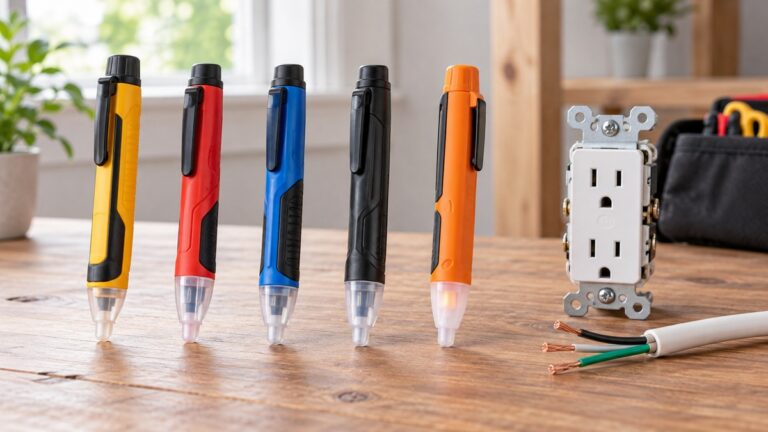
The SNAKOL listing is a pen-style tester with a backlit LCD. Its bullets give DC and AC voltage from 2 V to 600 V, resistance from 4 kΩ to 40 MΩ, a continuity buzzer that sounds below 50 Ω, and an NCV function that shows an analog bar and beeps when AC voltage is near. The pen measures 7.28 x 1 x 1.2 inches. The listing does not give an accuracy figure, so use it for a quick check rather than a measured value.
How we chose these six
These six are the listings in the research set that state they measure voltage as a main function. The Young Dance listing is a set of test leads, not a meter, and the YOJOCK and YEREADW listings are USB testers that read 4 V to 30 V on USB lines. The automotive test lights (WINAMOO, JASTIND, FEAOXYO and ATOBLIN) read 3 V to 48 V or 1 V to 72 V on DC circuits, and they are a different job. We left those out.
- Voltage range: the AC and DC span the listing states.
- Accuracy: the percentage and count figure, where the listing gives one.
- Power and size: the battery or USB power source, with weight or dimensions as listed.
Worked example: how far a 12.6 V reading can drift
Take a car battery reading of 12.6 V. The AstroAI DC accuracy of ±(0.5%+3) on the 20 V range gives a percentage error of 0.5 percent of 12.6 V, which is 0.063 V. The listing’s “+3″ term is 3 counts. On a 20 V range with 2000 counts, one count is 0.01 V (our arithmetic from the stated range and count figures), so 3 counts add 0.03 V. The total is about ±0.09 V.
The ANENG DC accuracy of ±(1%+5) gives 1 percent of 12.6 V, which is 0.126 V, plus 5 counts. The TESMEN DC accuracy of ±(1.0%+5) gives the same 0.126 V, plus 5 counts. The listing does not give a count size for those two meters on the 20 V range, so their totals are shown as a percentage plus counts rather than a single figure. The AstroAI result is the tightest of the three on paper, but the difference is small enough that the listing data alone cannot settle which meter reads a battery more accurately.
What the listings do not say
Most of the listings give no voltage range, no accuracy and no CAT rating. The LJPXHHU, Lscsdf and SNAKOL listings state no accuracy figure. The AstroAI sample speed conflicts within its own listing, and the Lscsdf and ZMIWNIED listings give different safety information for the same model code. None of the listings describes how the meters compare when measuring the same signal, and none reports a bench check of the figures.
The weight of the AstroAI, 0.15 kg, is close to the LJPXHHU weight of 166 g, but the two sizes differ, so neither listing can be used to predict the size of the other. Check the dimensions before you buy a case or pouch.
Frequently asked questions
Which of these meters gives the most detailed voltage figures?
The AstroAI listing gives the most detail. It states DC voltage ranges up to 600 V with an accuracy of ±(0.5%+3), and AC ranges up to 600 V.
Can a voltmeter in this set read a 12 V battery?
Yes, on the listed ranges. The AstroAI DC 20 V range and the ANENG and TESMEN DC ranges all cover 12 V. The SNAKOL pen starts at 2 V.
Does the Lscsdf FS899L have a CAT rating?
The Lscsdf listing does not state one. The ZMIWNIED listing for the same model code states CAT III 1000 V and CAT IV 600 V.
Is the SNAKOL pen accurate enough for measurement?
The listing gives no accuracy figure. Use it for a quick check, and use a meter with a stated accuracy for any reading you need to record.
What is the difference between a count and a range?
A range is the span of voltages a setting can read, such as 20 V or 600 V. A count is the number of steps the display can show within that range, so a 4000 count meter shows finer steps than a 2000 count meter on the same range.
Conclusion
For the most detailed voltage figures, the AstroAI 2000 count listing is the strongest of the six. The TESMEN TM-510 is the choice if you want non-contact detection and a 4000 count display with a CAT II 600 V rating. The SNAKOL pen suits a quick pocket check, and the LJPXHHU suits a general kit. Confirm the safety rating and the sample speed on the printed label and manual before you buy. For more on meter choice, see best digital volt meter, best DC volt meter, and best auto-ranging digital multimeter. For a wider view of multimeters, see best multimeter, and for a simple voltmeter, see digital voltmeter.
LJPXHHU 2000 count on Amazon · AstroAI 2000 count on Amazon · ANENG multimeter on Amazon · TESMEN TM-510 on Amazon · Lscsdf FS899L on Amazon · SNAKOL pen tester on Amazon