GFCI Open Neutral
As an Amazon Associate we earn from qualifying purchases. Details
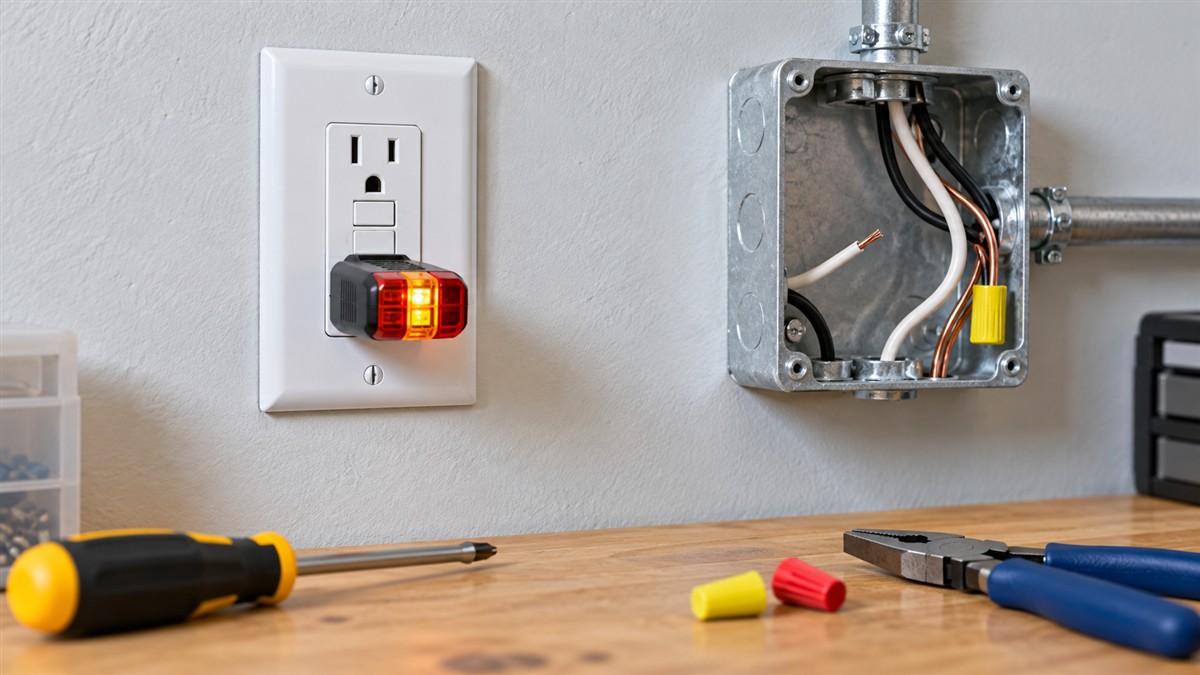
An open neutral is a break or other failure in the neutral conductor, and it matters for a GFCI because many GFCIs take their operating power through that same conductor. This guide explains what an open neutral is, why it can stop a GFCI from tripping, and what a plug-in outlet tester can and cannot tell you about it. The technical statements come from an OSHA standard interpretation letter that I opened and read. The tester details come from two Amazon listings opened on 2026-10-17, and I keep the two sources apart so you can see which claim comes from where.
Quick answer
An open neutral means the neutral conductor is broken or has failed somewhere between the panel and the outlet. OSHA’s interpretation letter says a GFCI that is powered through that conductor may not trip unless it was specifically designed to trip in that situation. A plug-in tester with an open-neutral indication can flag the wiring fault at an outlet, but a tester is a screening tool. If one reports open neutral, stop relying on that outlet and have a licensed electrician trace the break.
What an open neutral is
OSHA’s interpretation letter, dated July 7, 2003, defines the condition plainly: an open neutral occurs when there is a break or other failure in the neutral conductor. The letter was written by the director of OSHA’s construction directorate in reply to a question about whether GFCIs that lack open-neutral protection must be replaced on construction sites, and it discusses 29 CFR 1926.404 and 1926.449. It is a workplace document, so treat it as an authoritative description of the condition rather than as instructions for a home.
The letter adds a detail that explains why this fault gets its own name. Depending on the extent and location of the failure, the neutral conductor, or a portion of it, can stay energized. So a broken neutral is not simply “no power”: the letter says there is a danger of a ground fault during an open-neutral condition. You cannot assume that the part of the circuit past the break is dead.
Why a GFCI may not trip
The same OSHA letter states the key point for GFCI owners. A GFCI powered through the affected conductor may not operate, meaning it may not trip, unless it is specifically designed to trip even if there is an open-neutral condition. The letter calls that design feature open-neutral protection: the ability of a GFCI to trip even if there is an open-neutral condition.
That produces an uncomfortable situation. The device that is supposed to protect against a ground fault can be part of the problem if its own power path is the part that has failed. The letter does not give a list of symptoms, and neither do I. The only safe conclusion is the one in the letter: whether a particular GFCI protects you here depends on whether it was designed with open-neutral protection.
Cord-connected versus outlet-type GFCIs
The OSHA letter draws a distinction that is easy to miss. It says Underwriters Laboratories (UL) had for a number of years required cord-connected GFCIs to be able to operate in the presence of an open-neutral condition. For permanently connected, outlet-type GFCIs, the letter says that open-neutral protection was not, and had not been, a requirement for UL approval, as far as OSHA could determine.
The letter also separates open neutral from a related miswiring. It notes that UL had amended UL 943 so GFCIs must work in the presence of a reverse line-load miswire, and it states that this is not the equivalent of an open-neutral condition. Two cautions follow. First, the letter is from 2003, and product standards change, so a 2003 statement about UL approval is not a guarantee about a GFCI you buy today. Second, I did not find or open the current text of UL 943 for this guide, so I make no claim about what it requires now. Read the label and manual of your own device for its protection features.
What a plug-in tester can tell you
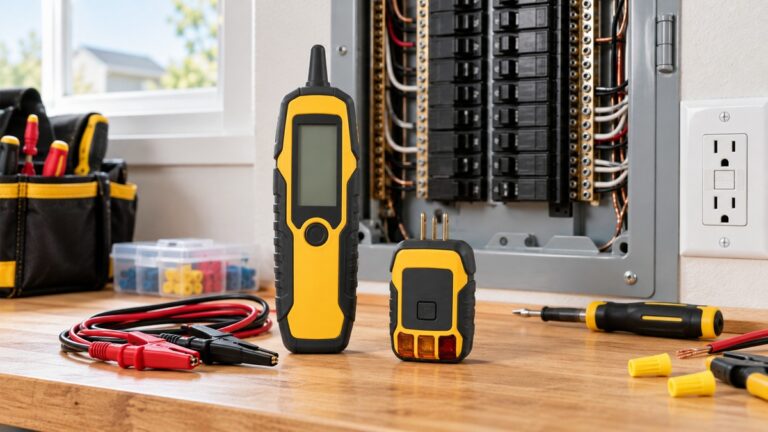
A plug-in outlet tester shows a wiring condition at one outlet. Several breaker finder kits bundle an outlet tester, and two of the kits I opened name open neutral among the faults their testers identify. The table shows what each listing states and what it leaves out.
| Listing | Open neutral named? | Other faults named | GFCI trip test stated? | Listing safety wording |
|---|---|---|---|---|
| KUYTN 3-piece kit (circuit breaker finder, GFCI outlet tester, digital multimeter) | Yes | Open ground, open hot, reversed polarity, hot/ground reversal | Not stated in the text I read | Outlet tester detection “max 300V”; multimeter “up to 600V” |
| Goldeep circuit breaker finder with GFCI outlet tester | Yes | Open hot, open ground, hot/ground reverse, hot/neutral reverse (plus “correct”) | Yes, an automatic trip testing feature | “Certified CAT II 135V Safety Rating with ETL Compliance” |
Everything in the table is the listing’s own wording, not a result from my bench. Neither listing says how the tester behaves on an outlet that has a GFCI with or without open-neutral protection, and neither says that a clean result proves the circuit is safe. Read the tester’s instructions for its light and screen patterns instead of guessing from the fault list, because patterns differ by model.
KUYTN Circuit Breaker Finder Kit with Digital Multimeter and GFCI Outlet Tester (Names open neutral; includes a multimeter)
Specs from the listing (checked 2026-10-17):
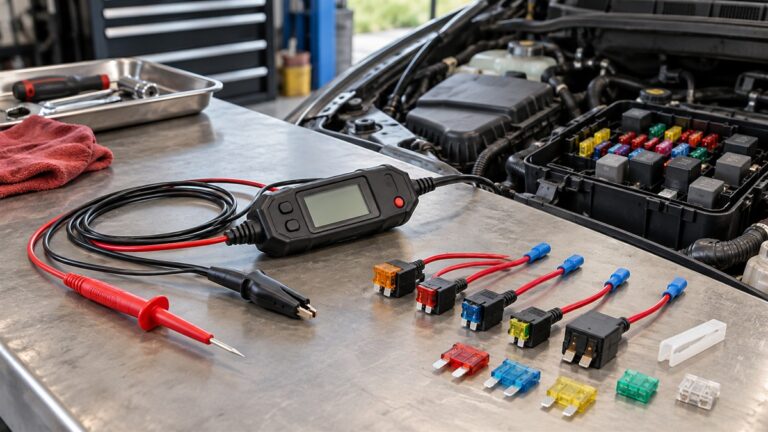
- Kit: circuit breaker finder, GFCI outlet tester and digital multimeter in one carrying case
- Outlet faults named: open ground, open neutral, open hot, reversed polarity, hot/ground reversal
- Outlet tester detection: max 300V for the upgraded Model 2027
- Multimeter: up to 600V detection; AC/DC voltage, resistance, capacitance, diodes, transistors, continuity, battery voltage and NCV
- Item Weight: 2.02 pounds
- Included Components (as listed): adapter
The “Included Components” field lists only “adapter,” while the bullets describe a three-piece kit in a carrying case. Treat the box contents as unconfirmed and check the listing’s “what’s in the box” before buying.
View on Amazon (affiliate link)
Goldeep Circuit Breaker Finder with GFCI Outlet Tester (Names open neutral; states an automatic GFCI trip test)
Specs from the listing (checked 2026-10-17):
- Faults identified: 6 conditions, listed as correct, open hot, open neutral, open ground, hot/ground reverse and hot/neutral reverse
- GFCI function: the transmitter has an automatic trip testing feature to verify GFCI protection
- Display: red/green LEDs plus an LCD; a 10-second auto-hold keeps the last result
- Voltage range in the title: 90-135V; safety wording: Certified CAT II 135V with ETL compliance
- Item Weight: 1.12 pounds
- Batteries and adapters: 2x AAA and 2x 9V batteries, a 3-to-2 prong adapter, a light socket adapter and an alligator clip adapter
The listing title gives 90-135V as the circuit range, and the safety wording is CAT II 135V. The listing does not describe use on circuits above that range, so do not stretch it to higher-voltage equipment.
View on Amazon (affiliate link)
Worked example: reading a tester report
For example, you plug a tester into a bathroom outlet that is protected by a GFCI, and the tester’s chart shows open neutral. Here is how I would think about it, keeping to what the sources support.
- Do not treat the GFCI as protection for that outlet. The OSHA letter says a GFCI powered through the failed conductor may not trip unless it has open-neutral protection, and you do not know whether yours does.
- Do not assume the circuit past the break is dead. The letter says the neutral, or part of it, can remain energized.
- Check the tester’s own manual to confirm that the pattern you read really means open neutral on that model.
- Have a licensed electrician find where the neutral is broken. The tester tells you a fault exists at that outlet; it does not tell you where.
If the same tester reports open ground or reversed polarity instead, the fault is a different one, and the OSHA letter’s open-neutral discussion does not apply to it. For that case, see the guides linked below.
What to do before you buy a tester
Decide whether you want an outlet-only tester or a kit with a breaker finder and multimeter. A kit gives more tools, but the listings above show that bundled items can have conflicting or thin details, such as the contents field on the KUYTN listing. Check that the listing names open neutral in its fault list, check the stated voltage range against the circuit you plan to test, and read the instructions on how to interpret the lights. Weight is one visible difference: the KUYTN kit is listed at 2.02 pounds and the Goldeep at 1.12 pounds, so the multimeter kit is about 0.9 pounds (roughly 14 ounces) heavier. Whatever you choose, a tester is a first check, not a repair. Wiring faults inside walls and panels belong to a qualified electrician.
Related guides
For nearby wiring faults, see the GFCI open ground guide, the open ground outlet tester guide and the receptacle tester guide.
Frequently asked questions
What is an open neutral?
It is a break or other failure in the neutral conductor, which is how OSHA’s July 7, 2003 interpretation letter defines it.
Can a GFCI still trip with an open neutral?
Only if it was designed to. The OSHA letter says a GFCI may not trip in an open-neutral condition unless it is specifically designed to trip even then. That design feature is called open-neutral protection.
Does the neutral conductor go dead when it breaks?
Not necessarily. The letter says that in some situations, depending on the extent and location of the failure, the neutral or a portion of it continues to be energized.
Do cord-connected and outlet-type GFCIs differ?
The 2003 letter says UL required cord-connected GFCIs to operate with an open neutral, while open-neutral protection was not a UL approval requirement for permanently connected outlet-type GFCIs. That was true as OSHA understood it in 2003, so confirm the current position on your own device’s label and manual.
Can a plug-in tester find an open neutral?
Two listings I opened state that their tester names open neutral among the faults it identifies: the KUYTN kit and the Goldeep kit. Neither listing promises that the tester can judge whether a GFCI has open-neutral protection.
Sources
OSHA standard interpretation letter, July 7, 2003, on GFCIs and open-neutral protection: OSHA interpretation 2003-07-07-1. Product details come from the Amazon listings linked in the cards above, opened on 2026-10-17.