Fluke 8508A Reference Multimeter: Specs and Buying Checks
As an Amazon Associate we earn from qualifying purchases.
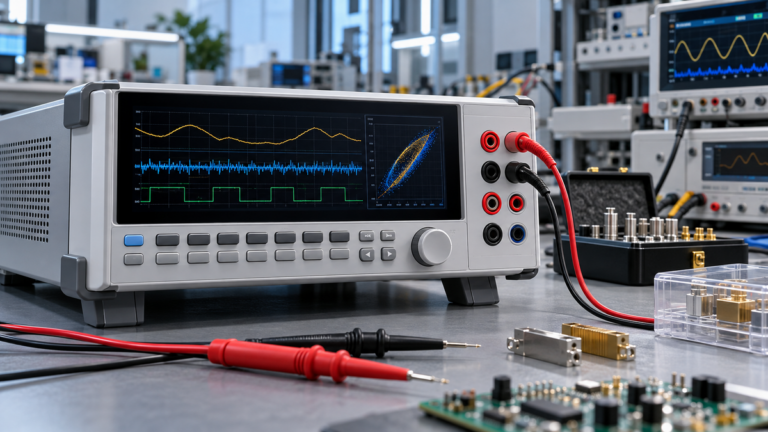
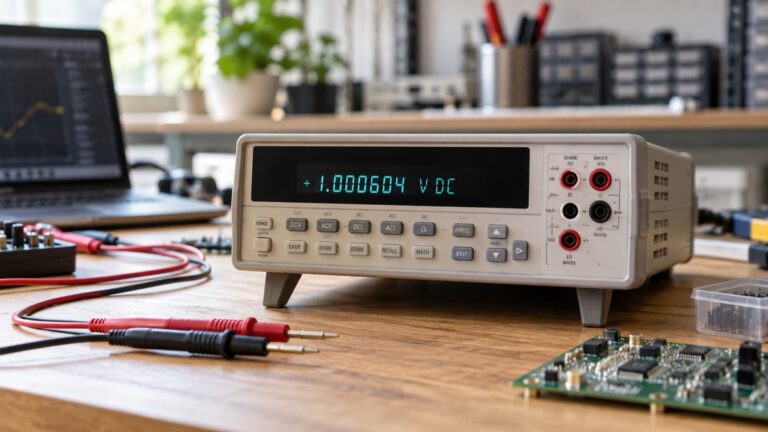
The Fluke 8508A is an 8.5-digit bench reference multimeter, not a handheld meter for everyday electrical work. Fluke’s product page describes it as an “8.5-digit resolution multi-meter” for metrologists, and its brochure lists DC and AC ranges from 200 mV to 1 kV. If you need to check outlets, car batteries or household circuits, the 8508A is the wrong class of instrument. This article explains what Fluke’s documents state so you can decide whether a reference-grade instrument fits your bench.
Quick answer
- Fluke’s product page calls the 8508A an 8.5-digit resolution multimeter for metrologists and calibration work.
- The Fluke brochure lists DC and AC ranges from 200 mV to 1 kV and says full 8.5-digit resolution is available on all ranges.
- The Users Manual lists the instrument as Installation Category II and Pollution Degree 2.
- The product page says the 8508A replaces the former Wavetek 1281.
- Choose it only for reference-level measurement work inside a lab that can maintain that level of control. For general electrical work, a handheld meter with the CAT rating that matches the circuit is the better fit.
What “8.5 digits” means
Digits describe how finely a display can show a reading. Resolution and accuracy are separate things. Resolution is how many digits the display shows. Accuracy is how close the reading is to the true value, and manufacturers state it as a tolerance for each function and range. A display can show many digits and still be less accurate than those digits suggest, so the accuracy tables matter more than the digit count.
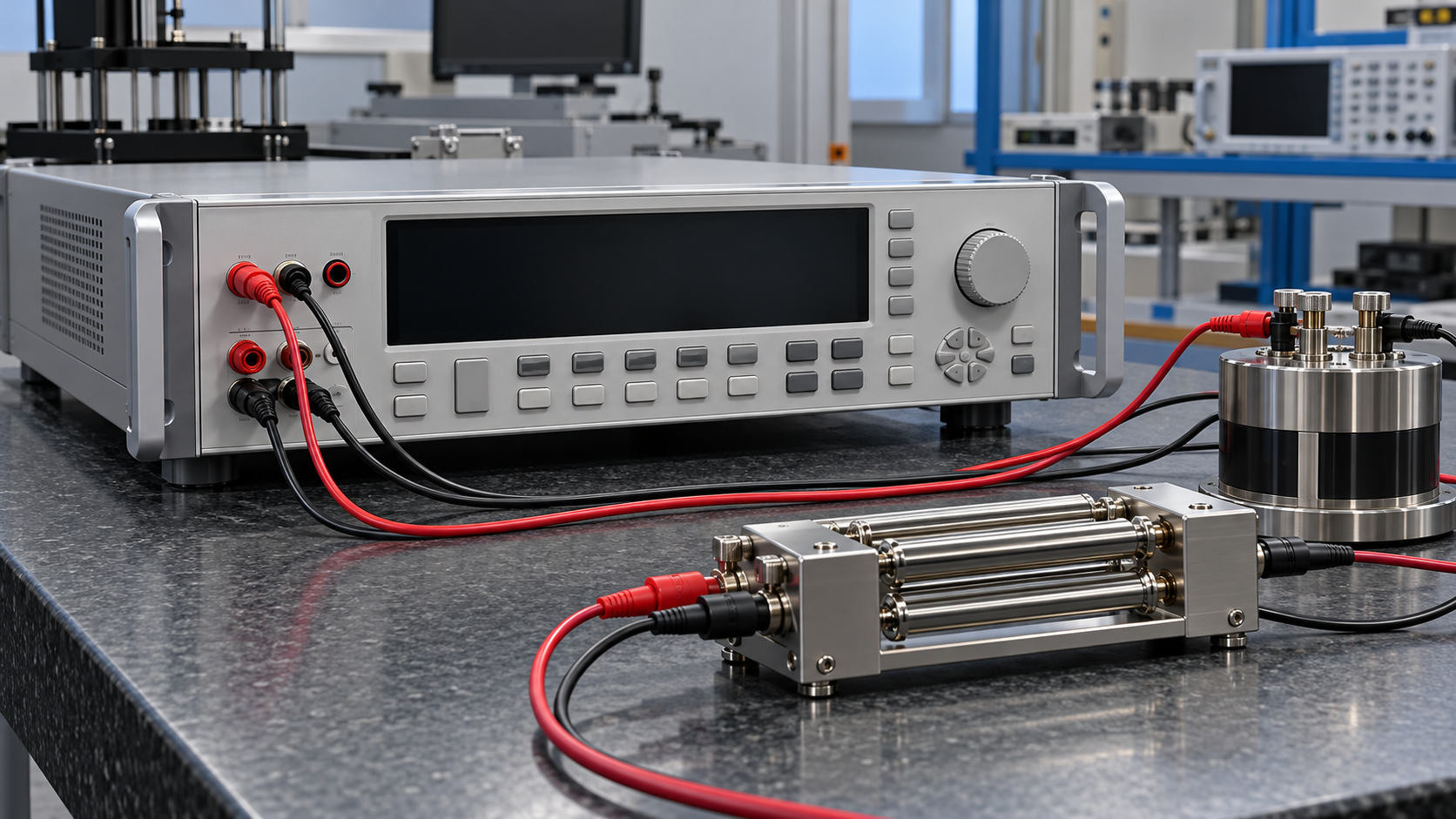
Fluke’s brochure frames the 8508A around accuracy and stability, presenting it as a reference standard. That is the context for the high resolution: the instrument is meant to be the reference against which other instruments are calibrated. For that reason, reference multimeters are usually used in calibration and standards labs, where their readings are compared against traceable standards.
Ranges and resolution
The brochure says that, with DC and AC ranges from 200 mV to 1 kV, the 8508A covers the voltage measurement needs of a calibration lab. It also says full 8.5-digit resolution is available on all ranges, down to 1 nV. A resolution figure is not an accuracy figure. Read the accuracy tables in the Users Manual before comparing this meter with any other instrument, and check the function and range you plan to use.
The brochure also says the 8508A can replace Kelvin-Varley dividers and AC/DC voltage transfer standards in some setups. That is Fluke’s description of what the instrument can do in a calibration workflow. Treat it as the manufacturer’s claim and check it against your own procedure.
Safety category: what the manual says
The Users Manual lists the 8508A as Pollution Degree 2 and Installation Category II. Its safety section also defines the IEC measurement categories. Category II applies to test and measuring circuits connected directly to utilization points, such as socket outlets and similar points, of the low-voltage mains installation. Category III applies to the distribution part of the building’s mains installation, and Category IV applies at the source of that installation.
In practice, the 8508A’s rating is for work at utilization-point level. It is not a rating for the building’s distribution panel, the service entrance or any point at the source of supply. Work on mains distribution belongs to a licensed electrician, and the meter’s category must match the circuit you measure. If you are unsure which category a circuit falls into, stop and ask a qualified person before you connect anything.
Documents to read before you buy
Fluke publishes several documents for this model. The Getting Started Manual is a shorter introductory guide. The Users Manual is the full operating document and includes the safety section that governs safe use. The Service Manual is aimed at repair and calibration staff. Read the Users Manual first, because it sets out the safety category and the operating limits that apply to every function.
Fluke also publishes application notes on topics such as measurement uncertainty and how cables and connectors affect it. These are general metrology documents rather than product specifications. They explain why the stated accuracy of a reference meter only means something when the whole measurement setup is controlled.
How we chose the sources
This article uses four documents from Fluke: the product page on fluke.com, the Users Manual (PN 1673798, Rev. 6, 3/13), the 8508A product brochure, and the Getting Started Manual (Rev. 2, 4/12). We opened each one on 2026-10-27 and confirmed its text can be read. We quote only figures and statements that appear in those documents. We did not use retailers, resellers or third-party manual archives for any specification in this article.
Who the 8508A suits
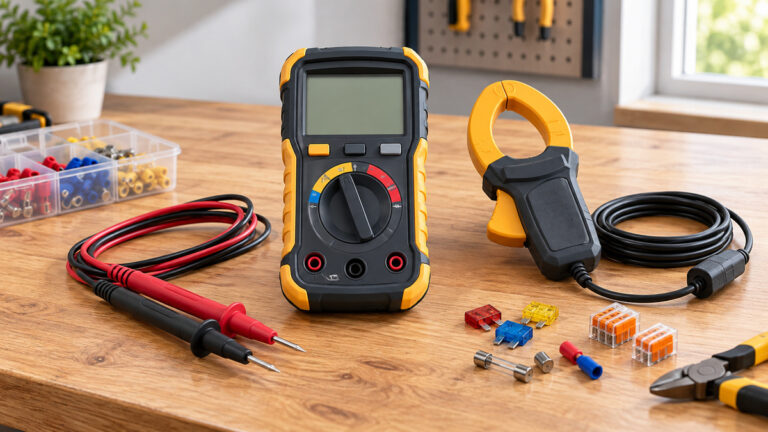
The 8508A fits calibration laboratories, standards labs and metrology teams that need a reference-grade voltage measurement. It is a bench instrument. It does not fit a homeowner checking a light fixture, a student building a circuit, or a car owner testing a battery. For those jobs, a handheld digital multimeter with a CAT rating that matches the circuit is the appropriate tool. Our guide to the functions and types of digital multimeters covers those meters in plain terms.
If your work sits between those two worlds, such as an electronics lab that needs a high-resolution bench meter, compare the 8508A with other bench meters before you decide. The Keysight 34461A is another bench digital multimeter. Check its own documents, and the 8508A’s, against the functions and accuracy you need.
Buying checklist
- Confirm the voltage ranges you need fall within 200 mV to 1 kV for DC and AC, as stated in Fluke’s brochure.
- Read the accuracy tables for each function in the Users Manual. Do not rely on resolution alone.
- Check the installation category in the safety section and match it to the circuits you will measure.
- Decide whether your lab needs traceable calibration documentation, and confirm what Fluke supports for your region.
- Choose leads and cables with care. Fluke’s application note on cables and connectors discusses how they affect measurement uncertainty.
Mistakes to avoid
- Do not use the 8508A to check household mains outlets as if it were a handheld tester. Its rating is Category II for bench use, and the terminal and fusing rules in the manual are part of the safe-use instructions.
- Do not read the 8.5-digit display as a claim about accuracy. The resolution is high, but the accuracy is set by the tolerance tables for each function.
- Do not assume that the Wavetek 1281 name tells you the specifications. Fluke states the 8508A replaces that model, but the figures for your use case come from the 8508A documents.
FAQ
Is the Fluke 8508A a handheld multimeter?
No. Fluke describes it as a bench reference multimeter for metrologists and calibration work. It is designed for controlled laboratory measurements, not field electrical work.
What does 8.5-digit resolution mean?
It means the display shows values with 8.5 digits of resolution on all ranges, according to Fluke’s brochure. Resolution is not the same as accuracy. Check the accuracy tables for the specific function and range you need.
What voltage ranges does the 8508A cover?
Fluke’s brochure states DC and AC ranges from 200 mV to 1 kV. The Users Manual gives the full list of functions and how each range is used.
What installation category is the 8508A?
The Users Manual lists it as Installation Category II and Pollution Degree 2. Category II applies to circuits connected at utilization points such as socket outlets. It does not cover the building’s distribution panel or service entrance.
Can a homeowner use the 8508A?
The documents we opened describe the 8508A for laboratory and calibration work. For home electrical checks, use a handheld meter with a CAT rating that matches the circuit, and call a licensed electrician for panel or service work.
What we could not verify
The sources we opened do not give a price, a shipping time or current availability, and this article does not state them. We did not extract every accuracy table from the Users Manual, so this article quotes none of them. For a purchase decision, read the accuracy section for each function you need.
Bottom line
The Fluke 8508A is a bench reference multimeter with 8.5-digit resolution and a Category II rating for bench use. It suits reference-level work inside a lab that can maintain that level of control. For electrical work on mains circuits, use a handheld meter with the correct CAT rating, and leave panel and service work to a licensed electrician.
Sources
- Fluke, “8508A 8.5 Digit Reference Multimeter” product page, https://www.fluke.com/en-us/product/calibration-tools/electrical-calibration/bench-multimeters/8508a (opened 2026-10-27)
- Fluke, 8508A Reference Multimeter Users Manual, PN 1673798, July 2002, Rev. 6, 3/13, https://media.fluke.com/23bc1914-2376-416e-8752-b10800c2afed_original%20file.pdf (opened 2026-10-27)
- Fluke, 8508A Reference Multimeter product brochure, https://media.fluke.com/b543c701-76cb-4b8c-9fcb-b2e300ade278_original%20file.pdf (opened 2026-10-27)
- Fluke, 8508A Reference Multimeter Getting Started Manual, Rev. 2, 4/12, https://media.fluke.com/cecc705b-580c-4c35-bae8-b109004e3aea_original%20file.pdf (opened 2026-10-27)
As an Amazon Associate we earn from qualifying purchases.