How to Choose a Multimeter for Car Audio
As an Amazon Associate we earn from qualifying purchases.
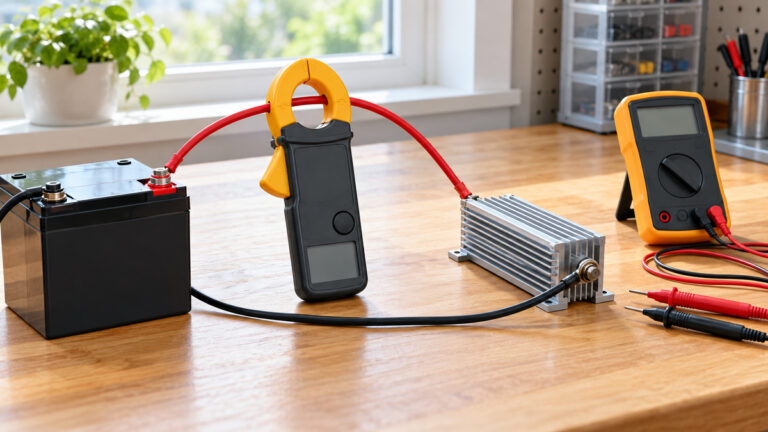
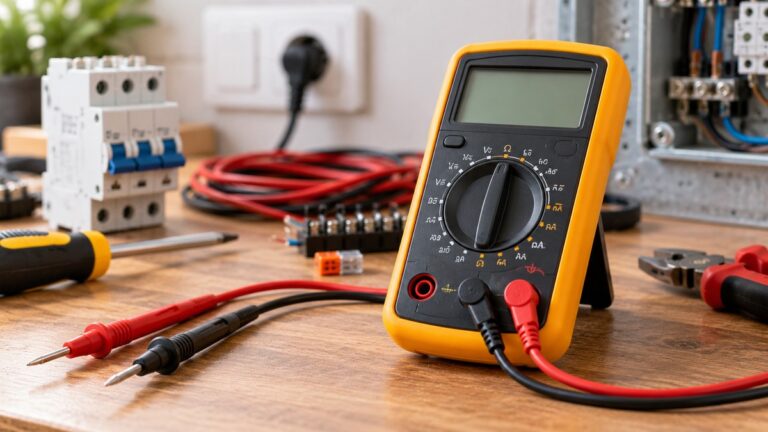
How to choose a multimeter for car audio comes down to four checks: a DC volts range that covers a 12-volt battery, a continuity mode with an audible beep for fuses and wiring, a CAT rating that you confirm on the listing or the manual, and a stated DC current limit. Car audio work is low-voltage work on the battery, the fuses and the cables, so each of those checks matters. This guide explains the four checks, sets out the procedures the sources describe, and says what the sources do not cover.
Electrical safety first
Work on mains circuits can kill. Before you measure anything, check that the meter’s CAT rating suits the circuit you are testing, and read the rating from the listing or the manufacturer’s manual. Panel and service work belongs to a licensed electrician.
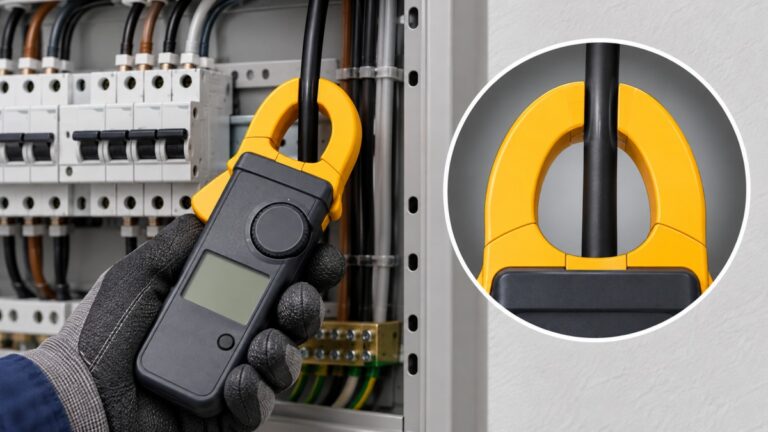
CAT ratings are overvoltage categories, which describe the electrical environments in which a test instrument can be used safely (tester.co.uk). The Triplett guide places CAT III at distribution panels and circuit breakers, CAT IV at the point where electricity enters a facility, and CAT I at low-energy electronic circuits that are not connected directly to the mains. The sources we opened do not assign a CAT level to 12-volt battery work, so the rating on the listing or the manual has to answer that question for the meter you choose.
Fluke’s guidance on test probes adds a second point. The probes connected to the meter should carry a CAT rating equal to or greater than the meter’s rating (Fluke, clamp ruggedness guide).
Quick answer
- Pick a meter with a DC volts range that covers a 12-volt battery.
- Pick a meter with a continuity mode that beeps, for fuse and wire checks.
- Confirm the CAT rating and probe rating on the listing or the manual.
- Confirm the stated DC current limit before you measure any current.
This guide covers bench and low-voltage checks only: a 12-volt battery, its fuses, and the wiring between them. It does not describe checks on household outlets, panels or service wiring. If a car audio job appears to need work on mains power, stop and bring in a licensed electrician.
What the four checks look like on a listing
Each check uses a different part of the meter, so a buying decision starts with the list of checks you expect to make. The table below pairs each check with the feature it needs and the source that describes the procedure. The listing or manual is still the place to confirm each feature on a specific model.
| Check | Feature the procedure uses | Source for the procedure |
|---|---|---|
| Battery resting voltage | DC volts (VDC) with a 6 V or 60 V range | Fluke battery guide |
| Fuse check | Continuity mode with an audible beep, or ohms mode | Fluke fuse guide |
| Wire or ground continuity | Continuity mode, with the circuit not live | Fluke automotive continuity guide |
| Current limit | DC current range, as stated on the listing | Klein MM325 listing |
| Probe and meter rating | CAT rating on the meter and on the probes | Fluke clamp ruggedness guide |
How we chose
The criteria in this guide come from the procedures and ratings in the pages we opened on 2026-10-21. We kept a feature only when one of those pages describes a procedure that uses it, or when a listing or manufacturer page states it. We considered eight pages: five Fluke guides and articles, two CAT rating explainers, and one Klein listing. We did not compare prices, star ratings or sales data, and we did not rank products.
The four checks are our own framing, built from those pages. Each one answers a question a buyer can check on a listing: can the meter read the voltage the battery needs, can it beep for a fuse, is its category rating stated, and is its current limit stated.
Check the DC volts range
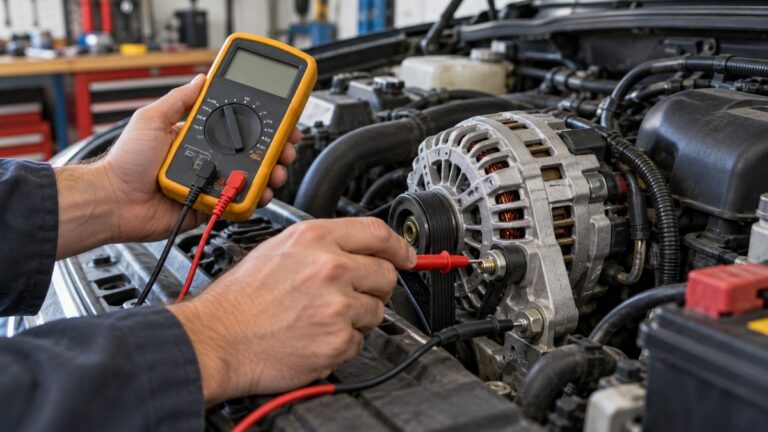
A car audio check starts with the battery. The Fluke battery guide sets the dial to VDC, which means DC volts. It puts the red lead in the V/Ω jack and the black lead in COM, and it tells the reader to use the 6 V or 60 V range depending on battery condition. A meter with a DC volts function and a range that covers a 12-volt battery meets the first check.
The sources we opened do not give a voltage for a running charging system, so this guide does not state one. Check that the DC voltage rating on the listing exceeds the highest voltage you expect on the circuit. Our own assumption is that a 60 V DC range leaves headroom above a 12-volt system. That assumption is ours, not a figure from the sources.
The battery guide also includes a preparation step. If the vehicle was recently running, turn on the headlights for about one minute, then turn them off, to remove surface charge before the reading. The guide marks this step as optional.
For background on how a voltage tester differs from a full multimeter, read our explainer on how voltage testers work.
Check continuity mode and the beep
The second check is continuity mode. The Fluke fuse guide says that continuity mode is generally preferred for fuse testing, because it gives a clear, audible signal. Its setup has the reader turn the meter on, select continuity or ohms mode, and touch the probes together to confirm that the meter beeps before testing a fuse.
The fuse guide gives the result rule. In continuity mode, a beep means the fuse is good, and no beep means the fuse is blown. In ohms mode, a reading near zero means the fuse is intact, and an open-loop reading such as OL or 1 means it is blown. The guide tells the reader to place one probe on each end of the fuse and hold firm contact with the terminals.
The Fluke automotive continuity guide adds two points for car work. First, it says that power disconnection is not required when the component under test is a removed fuse. Second, it gives a typical beep threshold of about 25 to 50 ohms. That figure is Fluke’s typical value, and the sources we opened do not explain how each meter sets its own threshold. Check the threshold in the manual for any meter you consider.
For a plain explanation of continuity testing, read our guide on how to use a continuity tester before you run the fuse check.
Check the CAT rating and the probe rating
The third check is the CAT rating. The Klein MM325 listing states a CAT III 600V safety rating and says the meter comes with test leads that carry CAT III and CAT IV safety caps. The same listing states a current range of 10A DC and an ohms range of 2 MΩ. Those are listing facts, and a buyer can compare them directly with the job at hand.
Check the probes as well as the meter. The Fluke ruggedness guide says that probes should carry an equal or greater CAT rating than the meter. A listing describes one model, so confirm the rating for each meter and each set of leads separately.
Check the stated current limit
The fourth check is the current limit. A car audio job can involve current readings, such as checking how much a component draws. The Klein listing states 10A DC as the current range of the meter. Treat that figure as a ceiling. Do not connect a meter to a current path that you expect to exceed the stated range.
The sources we opened do not give typical current draw for car audio amplifiers, subwoofers or head units. This guide therefore sets no current figure for any system. Estimate the current for your own system from its manual, and compare the estimate with the limit on the listing before you take a current reading. If the estimate is close to the limit, choose a meter with a higher stated current range.
Battery voltage check, step by step
The Fluke battery guide gives a short sequence for a resting voltage check. Use it as a reference, and read the manual for your own meter before you start.
- Turn off the accessories. The guide says to turn off all accessories before a resting voltage measurement.
- Inspect the terminals. The guide says to inspect battery terminals for corrosion or looseness before testing.
- Set the dial to DC volts. Put the red lead in the V/Ω jack and the black lead in COM, then select the 6 V or 60 V range depending on battery condition.
- Remove surface charge if the vehicle was running. Turn on the headlights for about one minute, then turn them off. This step is optional.
- Measure across the battery terminals. Read the voltage with the probes on the two terminals.
The guide also warns about the battery itself. It says to use caution around lead-acid batteries, because they can emit explosive gas and contain acid.
Fuse and wire check, step by step
- Power off the circuit. The fuse guide says to power off the circuit and disconnect it from any source before testing.
- Set the meter to continuity. Turn on the meter, select continuity mode, and touch the probes together to confirm the beep.
- Place the probes on the fuse ends. Put one probe on each end of the fuse and hold firm contact with the terminals.
- Read the result. A beep means the fuse is good. No beep means the fuse is blown.
For a wire or ground path, the automotive continuity guide says to disconnect the battery negative terminal or to make sure the circuit is not live before you test. A beep in continuity mode indicates continuity through the path under test.
Reading the results
The sources we opened do not say which resting voltage is normal for a car battery, so this guide does not set a pass or fail value. If a reading looks low, the sources do not say what to do next. Use the vehicle’s manual or a qualified technician for that decision.
For a fuse, the result rule is simple: a beep in continuity mode means the path through the fuse is complete. An unclear result is a reason to repeat the check with clean probes and firm contact.
For a wire, a beep suggests a complete path. The sources we opened do not set a resistance limit for a wire or a ground connection in a car audio system, so do not treat a particular number as a pass mark unless the vehicle or the equipment manufacturer states one.
Common mistakes
- Testing a fuse with the power on. The Fluke fuse guide says to power off the circuit first.
- Using the wrong jack. The battery guide places the red lead in the V/Ω jack and the black lead in COM.
- Trusting a beep without firm contact. The fuse guide says to hold firm contact with the terminals.
- Ignoring the probe rating. The Fluke ruggedness guide says probes should carry an equal or greater CAT rating.
- Measuring current above the stated range. The Klein listing states 10A DC as the range, so a reading above that range is outside the stated limit.
- Leaving accessories on. The battery guide says to turn off accessories before a resting voltage measurement.
Frequently asked questions
Does a car battery check need a CAT III meter?
The sources we opened do not assign a CAT level to 12-volt battery work. The Triplett guide places CAT III at distribution panels and circuit breakers. Check the rating on the listing and on the probes, and do not assume a category from the job alone.
Can I check a fuse without removing it?
The fuse guide describes the test with one probe on each end of the fuse, so the fuse must be reached by the probes. The sources we opened do not describe a test that leaves the fuse in place, so this guide does not describe one.
What does a beep mean on a fuse?
The fuse guide reads a beep as a good fuse in continuity mode, and a silent meter as a blown one. The sources we opened do not describe a case where the beep and the reading disagree.
Does the Klein listing state a current limit?
Yes. The listing states a current range of 10A DC. The listing also states a CAT III 600V safety rating.
Is a car audio multimeter safe for household outlets?
This guide does not cover outlets. The listing does not state a CAT rating that makes a meter safe for household mains, and this guide does not claim one. Outlet and panel work belongs to a licensed electrician.
Bottom line
Choose a car audio multimeter that has a DC volts range for a 12-volt battery, a continuity mode with a clear beep, a CAT rating and probe rating you have confirmed on the listing, and a stated current limit above the current you expect to measure.
What we could not verify
The sources we opened do not give a resting voltage that counts as normal for a car battery. They do not assign a CAT level to 12-volt battery work, they do not give typical current draw for car audio amplifiers, subwoofers or head units, and they do not set a resistance limit for a car audio ground connection. The Fluke beep threshold of about 25 to 50 ohms is a typical figure, and the sources do not say how each meter sets its threshold. The listing does not state a CAT rating for any accessory other than the leads it includes. Nothing in this guide is a product claim, and no model is recommended.
Sources
- https://www.fluke.com/en-us/learn/blog/digital-multimeters/how-to-test-a-battery-with-a-multimeter (opened 2026-10-21)
- https://www.fluke.com/en-us/learn/blog/digital-multimeters/how-to-check-fuse-with-multimeter (opened 2026-10-21)
- https://www.fluke.com/en-us/learn/blog/digital-multimeters/how-to-perform-automotive-continuity-checks-with-a-multimeter (opened 2026-10-21)
- https://www.fluke.com/en-us/learn/blog/clamps/why-ruggedness-matters (opened 2026-10-21)
- https://www.fluke.com/en-us/learn/blog/safety/how-to-go-home-safely-at-the-end-of-the-day (opened 2026-10-21)
- https://www.triplett.com/blogs/news/understanding-cat-ratings-in-electrical-test-instruments (opened 2026-10-21)
- https://tester.co.uk/advice/what-are-cat-ratings (opened 2026-10-21)
- https://www.kleintools.com/catalog/multimeters/digital-multimeter-manual-ranging-600v-0 (opened 2026-10-21)
As an Amazon Associate we earn from qualifying purchases.