Best Wire Insulation Tester: The One Megohmmeter Option Here
As an Amazon Associate we earn from qualifying purchases. Details
A wire insulation tester is a megohmmeter, an instrument that measures the resistance of insulation, which is a different question from whether a wire carries voltage. Only one listing in this guide is an insulation tester, so this roundup covers that one pick and explains what the other wire items do instead. It also shows why a conflicting voltage label needs checking before you rely on it. Treat the guide as a buying aid. Any insulation work on equipment should follow the maker’s manual and local rules, and panel or service work belongs to a licensed electrician.
Quick answer
Choose the M500 only if you need a megohmmeter for HVAC compressor or motor insulation checks, which is the work its listing names. Its title and bullets give a top reading of 1000 megohms, but the title says 500V DC while one bullet says 500V AC. The listing contradicts itself on current type, so rely on neither label until the maker confirms it. For wire tracing, voltage detection or continuity, the other items in this set are different tools and do not measure insulation resistance.
What matters for this keyword
What an insulation tester measures
A megohmmeter measures the resistance of insulators, and facts describe insulating components as needing insulation strength tests during commissioning and maintenance of high-voltage equipment. Megohmmeters provide high DC voltages, typically from 500 V to 5 kV, and some go up to 15 kV. That description gives you a reference point. When a listing describes its test voltage as AC, the mismatch is a reason to check the listing, not a detail to skip.
The voltage label conflict
The M500 title says it measures up to 1000 megohms at 500V DC. A bullet in the same listing says it measures up to 1000 megohms at 500V AC. Both labels use the same voltage and the same top reading, but they disagree on the type of current. A tool that gets the current type wrong is not the tool you want for a test where the voltage type matters, so do not rely on either label until the maker confirms it in writing or in the manual.
Where a test light or tracer fits
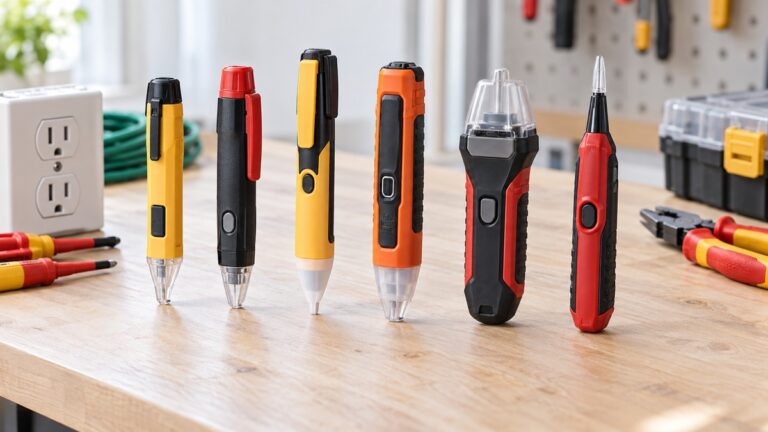
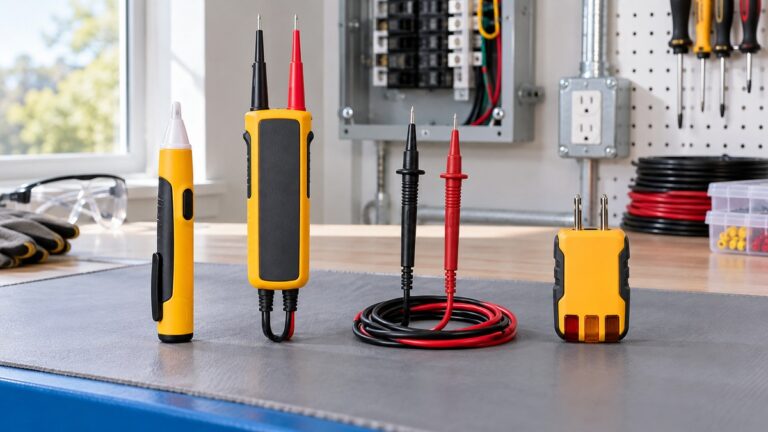
A test light checks for the presence of electricity, and facts describe it as simpler and less costly than a measuring instrument such as a multimeter. A test light does not tell you insulation resistance. The other wire items in this set, including a wire tracer for following a cable’s path and an automotive voltage pen for detecting voltage, answer different questions. Pick the tool that matches the question you need answered. For a wire-tester pen, see wire tester pen options, and for live-wire checks, see the live wire tester guide.
Power, accessories and warranty
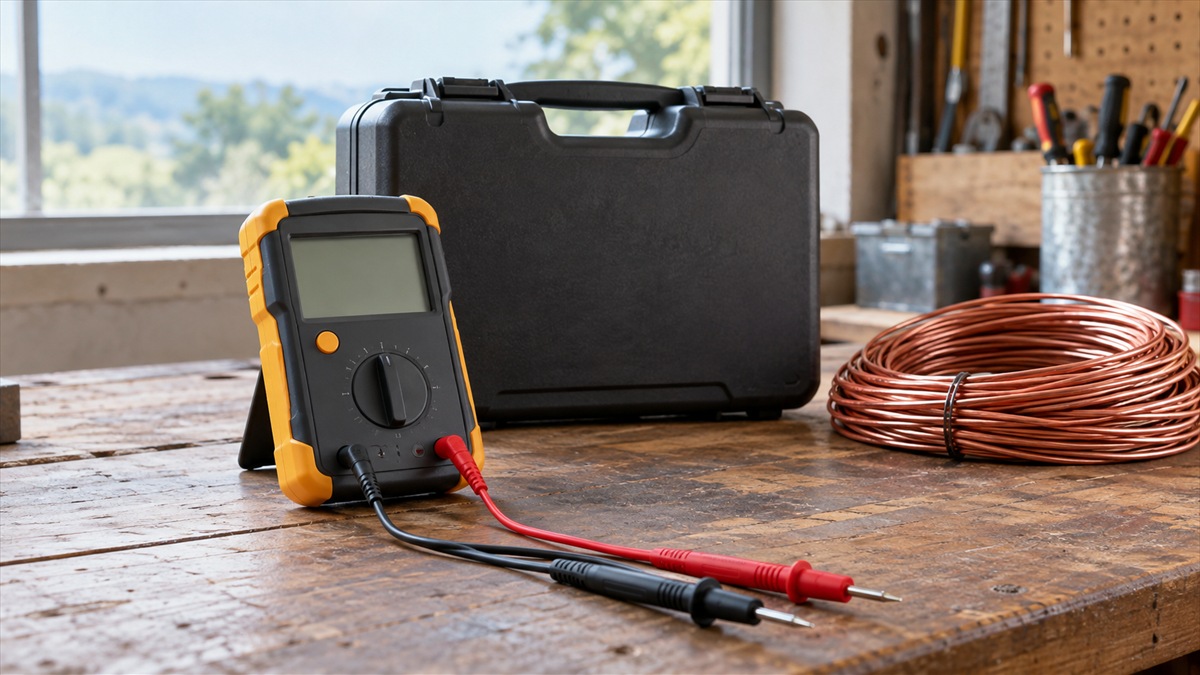
The M500 listing says it uses two C batteries, which are not included. It lists a heavy-duty carrying case and test leads, and it gives a 2-year limited warranty with support that responds within 12 hours. Those are the seller’s terms, so read the warranty on your order before you buy.
LED indicators
The listing says its LED indicators give an instant status result, so a user without a long training background can read a basic verdict. The listing does not explain what each LED status means or what reading counts as a pass. Read the manual before you judge any result, and keep the manual with the tool.
1. M500 Megohmmeter Insulation Tester, HVAC Compressor & ECM Motor Tester up to 1000 Megohms at 500V (Insulation tester match)
Specs from the listing (checked 2026-10-13):
- Style: M500 INSULATION TESTER MEGOHMMETER
- Measurement Type: Ohmmeter
- Compatible Devices: M500 Megohmmeter Insulation Tester
- Included Components: M500 Megohmmeter
- Specification Met: CE, UL
Pros
- The listing describes a megohmmeter that measures up to 1000 megohms.
- The listing names motors, compressors, control boards and transformers as test targets.
- The listing says it comes with a heavy-duty carrying case and test leads.
Cons
- The title says 500V DC while a bullet says 500V AC, so the listing contradicts itself on current type.
- The listing says it uses two C batteries, which are not included.
- The listing does not explain what each LED status means.
Best for: Readers who need a megohmmeter for HVAC compressor or motor insulation work.
Skip if: Skip it if you need wire tracing, voltage detection or continuity, since this is an insulation tester.
View on Amazon (affiliate link)
How to choose
Choose this pick if the work is megohmmeter work on HVAC compressors, ECM motors or similar equipment, since its listing names those uses. Check the current type with the maker before you run any test that depends on it.
Choose a different tool if you need wire tracing, voltage detection or continuity. If you want a dedicated insulation resistance instrument to compare against, the best insulation resistance tester guide is the place to start. The other wire items in this set do those jobs, and they do not measure insulation resistance.
Do not choose on the voltage label alone. The title and a bullet disagree on current type, so the label is the first thing to verify.
One megohm equals 1000000 ohms, so 1000 times 1000000 equals 1000000000 ohms. Check: 1000000000 divided by 1000000 equals 1000, which matches the 1000 megohms in the listing. The arithmetic only shows the scale of the number. It does not show how the meter behaves at that top reading.
Worked example: 500 V against the typical range
Typical megohmmeters provide high DC voltages from 500 V to 5 kV, and 5 kV is 5000 V. The M500’s 500 V test is 500 V divided by 5000 V, which equals one tenth of the top of that range. The M500 therefore covers only the bottom of the typical span, so check the voltage your equipment needs before you pick it.
Mistakes to avoid
- Trusting the voltage label. The listing gives both 500V DC and 500V AC, so the current type is unresolved.
- Using a wire tracer as an insulation tester. A tracer follows a path, and it does not measure insulation resistance.
- Skipping the manual. The listing says the LEDs give a status, but it does not say what each status means.
- Assuming batteries are in the box. The listing says two C batteries are not included.
- Working on live equipment without a plan. Follow the maker’s manual and local rules, and ask a licensed electrician for panel or service work.
FAQ
What is a megohmmeter?
A megohmmeter is an insulation resistance tester. It applies a high test voltage and measures how well an insulator resists current. The facts describe megohmmeters as providing high DC voltages, typically from 500 V to 5 kV.
Why does the test voltage type matter?
Insulation tests are designed around a specific voltage type, so a listing that gives both DC and AC for the same meter needs checking. Confirm which type the M500 produces before you rely on a reading for a job.
Can a wire tracer test insulation?
No. A wire tracer follows the path of a cable, and it does not measure insulation resistance. Use an insulation tester for insulation and a tracer for locating a path.
Do I need batteries for this tool?
Yes. The listing says it uses two C batteries, and that the batteries are not included. Buy them before you plan a test.
What does the 12-hour support promise cover?
The listing says the seller commits to responding within 12 hours. Read the warranty terms on your order, since the listing gives a 2-year limited warranty but no other support detail.
What do the LEDs mean?
The listing says the LED indicators give an instant status result, but it does not explain each status. Read the manual before you act on any LED.
Is this tool for home wiring?
The listing names HVAC compressor and motor work. Panel and service work belongs to a licensed electrician, whatever tool you use.
Bottom line
Choose the M500 only for the megohmmeter work its listing names, and only after you confirm the current type with the maker, since the listing says DC in one place and AC in another. For wire tracing, voltage detection or continuity, pick a different tool. Follow the manual, keep the leads and batteries sorted before you start, and ask a licensed electrician for any panel or service work.
Sources
- Megohmmeter, Wikipedia: megohmmeters measure insulation resistance and provide high DC voltages, typically from 500 V to 5 kV.
- Test light, Wikipedia: a test light checks for the presence of electricity and is simpler than a multimeter.
- OSHA electrical safety: the most frequent causes of electrical injuries and the ways to reduce the risk.