Best Auto Ranging Digital Clamp Meter for Your Work
As an Amazon Associate we earn from qualifying purchases. Details
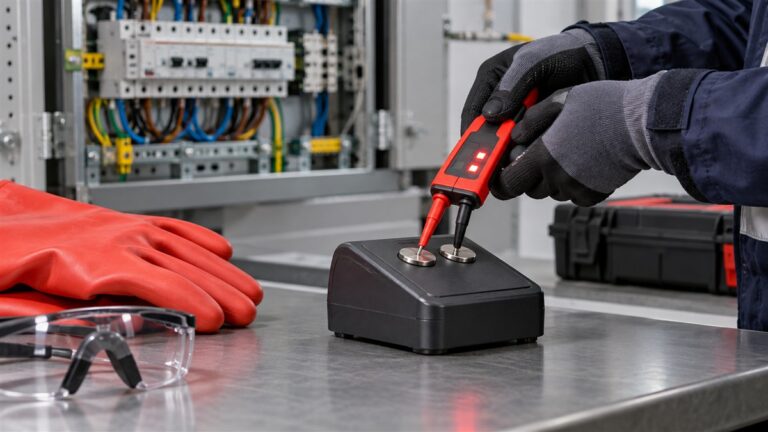
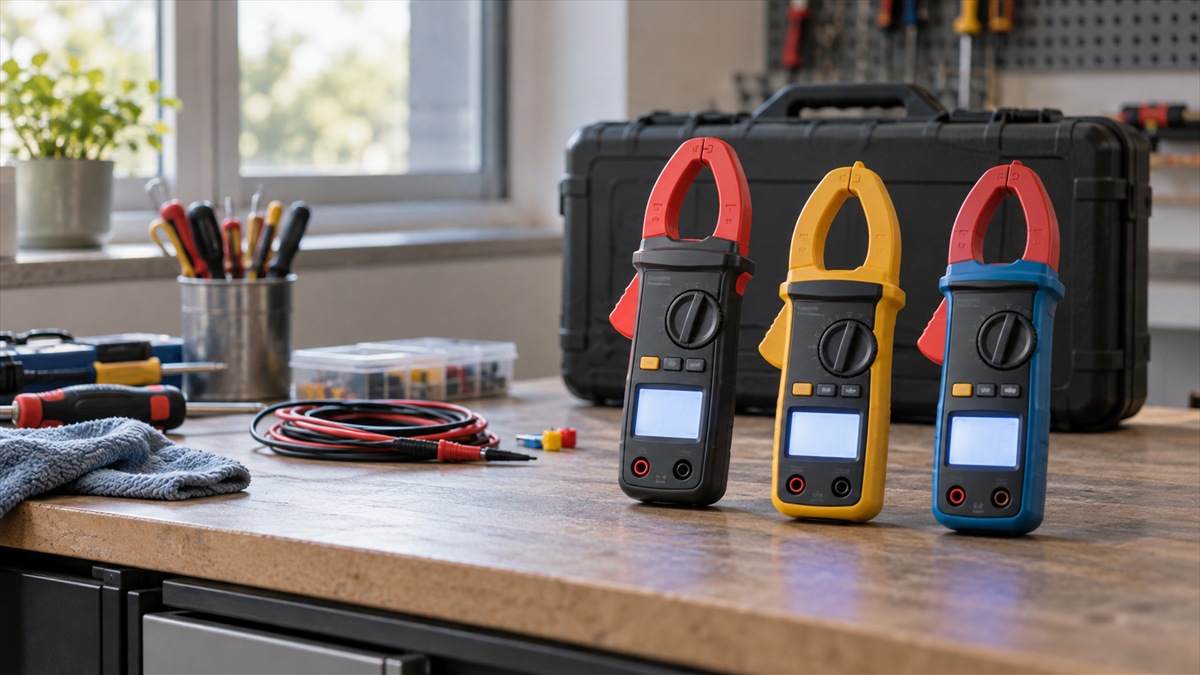
What is the best auto ranging digital clamp meter for your work? An auto-ranging clamp meter picks the measurement range for you, so you spend less time on the dial and more time on the reading. It still needs the right current type, a CAT rating that suits the point you measure, and a jaw that fits the cable. This guide sets out the criteria that change with this keyword, then compares five auto-ranging models using only what each listing states. Use the picks as a shortlist, and check the listing before you buy. For a broader look at clamp-style options, see Best Digital Clamp Meters Compared.
At a glance: the 5 picks, by their own spec fields
| Pick | Current type | CAT rating | Jaw/cable limit | Flag |
|---|---|---|---|---|
| Klein Tools CL120 | AC only (DC not stated) | Double Insulation, CE; CAT III/IV marked on lead safety caps, not the meter itself | Not stated | — |
| AstroAI CM2K0R | AC only — listing states it cannot test DC | CAT III 600V | Not stated | Weight conflicts: 415g in one field, ~203g in another |
| TEMIRUP CM87C (inrush) | Inrush measurement; DC requires zeroing first per bullets | 600V overload protection (display turns red above 600V) | 30mm jaw — narrow | May ship without battery — verify |
| MY2610D TRMS 6000 Counts | AC/DC | CAT III 600V, Pollution Degree 2 | 1.02 inch jaw | Remove protective cap from leads before first use |
| Westinghouse 600A True RMS | AC/DC, 1000V range per bullets | Style field says “1000V Clamp” but bullets state CAT III 600V | Not stated | Rating conflict — confirm before mains use; 6.5ft drop resistance |
Specs are from each product’s Amazon listing, checked 2026-10-11/13 (full citations in this guide’s sources section). Two listings have real conflicts: AstroAI’s weight fields disagree, and the Westinghouse’s style field (1000V) conflicts with its own CAT rating (600V). Jaw width limits the cable size you can clamp — check that against your cable before buying.
Quick answer
Choose an auto-ranging clamp meter if you want the range set for you on each reading. Choose one with True RMS if your circuits may carry distorted waveforms. Confirm the current type, whether AC only or AC and DC, before you buy, because clamps differ on DC. Check the CAT rating and the jaw size against the cable and the point you measure. For motor-start or inrush work, look for an inrush function. Read the manual before any mains use, and stop at any panel or service job.
What matters for an auto-ranging clamp
Five criteria change the choice for this keyword:
- Ranging. Auto-ranging means the meter selects the range itself. Some listings name auto or manual selection, and that lets you switch when you need to.
- Current type. Some clamps read AC only. Others read AC and DC. Check the listing’s current types, because a clamp that reads AC only cannot give a DC reading.
- True RMS. A true RMS converter gives a more correct value than an averaging meter. Averaging meters use a correction factor valid only when the input is sinusoidal, so distortion or offsets lead to errors. Look for True RMS if your loads are non-linear.
- CAT rating and overload protection. Category II covers circuits directly connected to the low-voltage installation, and category IV covers measurements at the source. The rating must suit the point you measure, and a rating on the test leads is not the same as a rating for the meter.
- Jaw size. The jaw must enclose the conductor. A jaw that is too small will not close around a thick cable, and the listing gives the jaw size for each model.
How to choose
Start with the current you need to read. If your work is AC only, an AC clamp with auto-ranging is enough. If you need DC current, check that the listing names DC current through the jaws, because many clamps do not. For inrush or motor-start work, look for an inrush function and a range high enough for the start current.
Next, check the protection and the rating. Look for a CAT rating in the specs, and confirm it in the manual. Then check the jaw size against your cable. Finally, compare the extras you will use every day: a backlit display, data hold, max readings, a flashlight, and auto power-off.
Where each model fits
The five models below show the range of this group: an auto-ranging AC clamp with a backlit display, a clamp that offers auto or manual range selection, an inrush clamp with a 600A range, a True RMS clamp with CAT III 600V, and a 1000V-class True RMS clamp. Each write-up relies on that listing’s own wording.
1. Klein Tools CL120 Digital Clamp Meter, Auto-Ranging 400 Amp AC (Auto-ranging AC clamp with backlight)
Specs from the listing (checked 2026-10-11):
- Model: CL120
- Measurement Type: Ammeter, Voltmeter, Ohmmeter
- Item Highlight: AC/DC Voltage, Resistance, Continuity, Non-Contact Voltage Tester Detection
- Specification Met: Double Insulation Safety Rating, Ce Certified
Pros
- Auto-ranging selects the range for you, as its bullets state
- A backlit LCD and a test lead holder on the side of the clamp are listed
- Max, Data Hold and auto power-off after 10 minutes are listed
Cons
- It names AC current for the clamp, so DC current through the jaws is not stated
- CAT III and CAT IV apply to the safety caps on its test leads, not as a rating for the meter itself
Best for: Electrical work that needs an auto-ranging AC clamp with a backlit display and a voltage function in one unit.
Skip if: You need DC current through the jaws.
View on Amazon (affiliate link)
2. AstroAI Digital Clamp Meter Multimeter 2000 Counts Amp Voltage Tester Auto-ranging with AC/DC (Auto or manual range AC clamp)
Specs from the listing (checked 2026-10-11):
- Model: CM2K0R
- Range Selection: Auto or Manual
- Safety/Compliances: CAT.III 600V; Pollution Level: 2; Altitude <2000m
- Measurement Type: Multimeter
Pros
- Range Selection is listed as Auto or Manual, so you can choose either
- The safety line states CAT.III 600V with pollution level 2
- A non-contact voltage alarm and a flashlight are listed
Cons
- The listing states it cannot test DC current, so DC work is out
- Its weight is listed as 415 g in one field and approximately 203g in another, so confirm the weight before carrying it
Best for: AC current work where auto or manual ranging, a non-contact alarm and a flashlight help.
Skip if: You need DC current.
View on Amazon (affiliate link)
3. Digital Inrush Clamp Meter Multimeter, TEMIRUP T-RMS 6000 Counts 600A Current Amp Volt Meter (Inrush clamp with 600A range)
Specs from the listing (checked 2026-10-13):
- Model: CM87C
- Automatic measuring range: Yes
- Maximum display value: 5999
- Full range overload protection: 600V
Pros
- Its automatic measuring range is listed as Yes
- The inrush function measures the maximum current at machine start, as its bullets state
- Full range overload protection at 600V is listed, with the display turning red above 600V
Cons
- Its bullets say to clamp around a single live wire and zero the meter before DC current, so the procedure needs care
- Its specs list a 30mm jaw, which limits the cable size you can clamp
Best for: Motor-start checks where the inrush reading and a 600A range matter.
Skip if: Your cable is wider than the 30mm jaw.
Check the listing before buying: the text suggests this item may be sold without a battery and/or charger.
View on Amazon (affiliate link)
4. Digital Clamp Meter, Multimeter TRMS 6000 Counts Amp Volt Meter Auto-ranging Measures AC/DC (Auto-ranging TRMS clamp, CAT III 600V)
Specs from the listing (checked 2026-10-13):
- Model: MY2610D
- Specification Met: Cat Iii 600v, Pollution Degree 2
- Measurement Type: Multimeter
- Included Components: 1 Digital Clamp Meter,2 Test Pens,1 Pouch,1 User Manual, 2 Battery
Pros
- TRMS 6000 counts and auto-ranging are both in its title
- Its specification lists Cat III 600V and Pollution Degree 2
- The bullets list a backlit LCD, a built-in flashlight, data hold and 15-minute auto power-off
Cons
- Its bullets say to remove the protective cap before using the test leads, so check the leads before each use
- Its bullets state a 1.02 inch wide jaw, which limits the cable size; check the cable before clamping
Best for: Electrical and automotive current checks where a backlit auto-ranging True RMS clamp is wanted.
Skip if: Your cable is wider than the 1.02 inch jaw.
View on Amazon (affiliate link)
5. Westinghouse Auto-Ranging True RMS Digital Clamp Meter, Non-Contact Multimeter, 600A Current (Auto-ranging True RMS, 600A)
Specs from the listing (checked 2026-10-13):
- Model: 850024390034
- Measurement Type: Multimeter
- Style: 1000V Clamp
- Specification Met: CSA, EN 61010-1, IEC 61010-1:2000-1, UL
Pros
- The title states auto-ranging, True RMS and a 600 amp current range
- The bullets list a backlit LCD with a 6000-count display
- A 6.5 Feet (2 Meter) drop resistance rating is listed, per its bullets
Cons
- Its Style field reads 1000V Clamp while its bullets state CAT III 600V, so confirm the rating before mains use
- Its bullets give a 1000 Volt AC/DC range, but the CAT rating it states is 600V
Best for: Work where auto-ranging True RMS and a backlit 6000-count display matter, at CAT III 600V.
Skip if: You need a CAT rating above 600V for the meter.
View on Amazon (affiliate link)
Common mistakes
- Trusting auto-ranging to fix the current type. Auto-ranging picks a range, but it does not change whether the clamp reads DC.
- Choosing a jaw that is too small. Check the jaw size against the cable before you clamp.
- Assuming the CAT rating covers the whole kit. A rating on the test leads does not make the meter rated. Look for the meter’s own rating.
- Ignoring the rating above 600V. A 1000V-class listing does not change a CAT III 600V rating. Read the rating the listing states.
- Clamping the whole cable. Clamp around a single conductor, as the manual directs, and not the whole power cord.
- Forgetting to zero the meter. Some models ask you to press a zero or REL button before a DC reading.
Worked example: a motor start on one conductor
The difference is 40 minus 10 equals 30 A. Check the arithmetic: 10 plus 30 equals 40, so the two readings agree. An auto-ranging meter does not need a range setting for each reading, which saves a step while you watch the start-up peak. The peak still needs a range that covers it, so check the listing’s range before you rely on the reading.
FAQ
Does auto-ranging mean the meter reads DC too?
No. Auto-ranging chooses the range, not the current type. Some clamps read AC only, and others read AC and DC. Check the listing’s current types.
What is the difference between auto-ranging and manual ranging?
Auto-ranging picks the range for you. Manual ranging means you choose the range on the dial or menu. Some listings offer both, so you can pick the mode you need.
Is True RMS worth it on an auto-ranging clamp?
It is worth it when the waveform may be distorted. True RMS is the more correct method in that case. If your work is mostly on clean sinusoidal circuits, the difference may be small, but the listing should still name the method.
Can I measure a 400 A cable with a clamp?
Some models in this group state a 400 A AC range, and the jaw must enclose the cable. Check the listing’s current range and jaw size before you clamp.
Do I need a CAT rating on a clamp meter?
Yes, if you measure on mains or distribution circuits. The category must suit the point you measure. Look for the rating in the specs or manual, and do not rely on a rating for the test leads alone.
Can a clamp meter measure voltage?
Some models do. Many read voltage through the test leads, not the jaws. Check the function list and the manual for your model. For a related read, see Best True Rms Digital Clamp Meter.
Which clamp should I buy first?
Start with the current type and the rating you need. Then pick the jaw size and the features you use each day. For a closer look at DC clamps, see Can Clamp Meter Measure Dc Current.
Bottom line
An auto-ranging digital clamp meter saves you a range step on every reading. Choose one whose listing states the current type you need, a rating that suits your circuits, and a jaw that fits your cable. Add True RMS if your loads are distorted.
Sources
- Measurement category, Wikipedia: CAT II and CAT IV definitions and impulse voltages
- Current clamp, Wikipedia: AC-only current transformer clamps and Hall effect clamps for DC and AC
- True RMS converter, Wikipedia: averaging meters and distorted waveforms
- OSHA electrical safety: most frequent causes of electrical injuries and ways to reduce risk
- 29 CFR 1910.303, Cornell LII: equipment used per the listing or label instructions