Best 110 220 Voltage Tester Options for Mains Checks
As an Amazon Associate we earn from qualifying purchases. Details
A 110 220 voltage tester tells you whether a household outlet, switch or cord carries AC voltage, and some models also give a reading in volts. Household mains circuits can kill, so the tester’s rating must suit the circuit you touch. The six options below are compared on the details their listings state, including AC range, detection style, CAT rating and battery information. This guide helps you decide between a pen-style detector and a meter, and it explains the safety limits that apply to both.
Quick answer
Choose a non-contact pen when you need a fast check on whether an outlet, switch or cord is live. Choose a meter when you need a reading. Start with the bottom of the AC range. The Klein pen starts at 50 V AC, the Fluke pen at 90 V AC, and the Neoteck and MXCOIRTP pens reach down to 12 V. Check the CAT rating against the circuit, and leave panel and service work to a licensed electrician.
What matters for a 110 220 voltage tester
Five details decide which tool fits, so compare them in this order.
- AC range. Look at the bottom and top of the stated range. Pens from Klein and Fluke state ranges that start at 50 V and 90 V AC and reach 1000 V AC. The Neoteck and MXCOIRTP pens state ranges that start at 12 V.
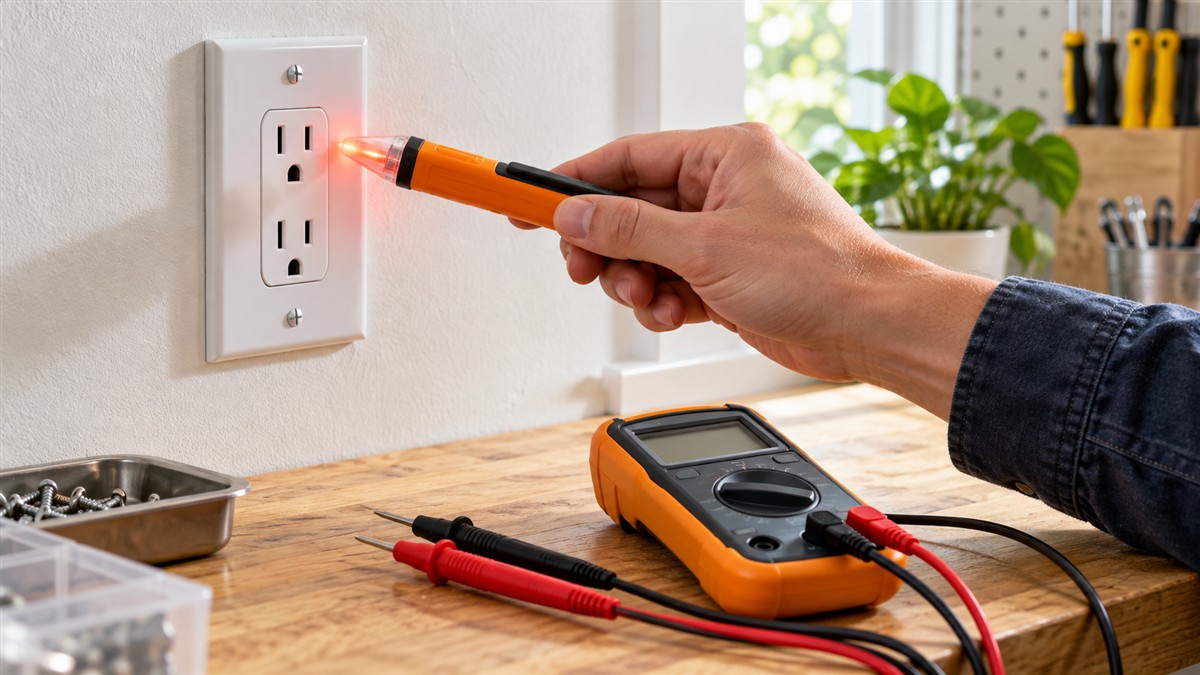
- Detection style. A non-contact pen signals that AC voltage is present. It does not give a number, and a signal does not prove a circuit is dead. A meter gives a reading, but you must connect its leads to the circuit.
- Sensitivity and alerts. The MXCOIRTP pen has three sensitivity modes signaled by one, two or three buzzer beeps. The Fluke pen offers audible and silent modes. The Klein pen uses a bright LED and flashing alarms.
- CAT rating. The Klein specs field lists Cat Iv 1000v, and the Fluke title names a CAT IV rating. The Neoteck bullets name CAT III600V. The ZMIWNIED and TESMEN listings also state CAT ratings. The MXCOIRTP listing shows no CAT rating.
- Batteries and warranty. Klein and Fluke list AAA batteries, and Neoteck lists 2×1.5V AAA batteries. Warranty fields differ across the group, so confirm the term on the listing you choose.
The six options compared
Klein Tools NCVT1P pen
The Klein pen covers a 50 to 1000V AC detection range, and its bullets say that it detects AC voltage in cables, cords, breakers, switches, outlets and wires. Its Specification Met field lists Cat Iv 1000v. The LED glows green when the tester works and flashes red with a beep when it detects voltage. The included items list two AAA batteries and instructions. The Item Highlight calls it a low voltage tester pen, which conflicts with the 50 to 1000V title and bullets, so rely on the range. Skip it if you need a numeric reading, because a pen only signals presence.
Fluke 1AC II VoltAlert
Fluke’s pen lists a nominal 90 V AC to 1000 V AC sensing range and names a CAT IV rating in its title. Its bullets describe a red tip that glows with a beeper, a continuous self-test and an audible or silent mode. The listing includes two AAA alkaline batteries and gives a typical battery life of greater than 1-year. The bullets also give a 200 V to 1000 V AC range, and nothing in the listing explains how that second range relates to the first. Ask the seller before you rely on the lower figure. Its warranty field reads 2 years.
Neoteck PM8908C pen
The Neoteck pen states a 12-1000V AC range and includes 2×1.5V AAA batteries. Its bullets name CE CAT III600V and RoHS certificates. The bullets also warn that the pen is not suitable for Christmas light testing, which is useful to know before you buy. The Item Highlight adds live and null wire identification with audible beeps and LED alerts, and a flashlight for outlets, switches and breakers. Its warranty field reads 18 Months. Skip it if you need a CAT IV rating, since the rating its bullets name is CAT III.
MXCOIRTP MT01 pen
The MXCOIRTP pen lists three ranges, AC 12V/48V/70V-1000V, and three sensitivity modes. The buzzer signals each mode with one, two or three beeps. The tail flashlight works only when the tester is off, which the bullets state. The bullets say the power indicator flashes when battery voltage falls below 2.5V, and the buzzer then shuts off. Its warranty field reads 1 year warranty. No CAT rating appears in its specs or bullets. Skip it if you need a rated tool for mains work, or if you want a meter reading.
TESMEN TM-510 multimeter
The TESMEN TM-510 is a multimeter with a non-contact voltage function. Its specs give a measurable voltage of 0.8 to 600 v and a 4000-count display, and its Safety Guarantee bullet names CAT II 600V. The Note field says it can’t measure current. Its bullets describe a visual and audible non-contact alarm and an automatic mode that switches between tasks. Skip it if you need a meter that reads above 600 V, since the listed ceiling is 600 V.
ZMIWNIED FS899L multimeter
The FS899L is a 6000-count true RMS meter with an NCV function and a color screen. Its Specification Met field reads Cat.iii 1000v, Cat.iv 600v, and its bullets repeat CAT III 1000V and CAT IV 600V. The bullets describe a USB-C rechargeable design with a 2-hour charge, a 4.8-inch screen and a worklight. The included items name only an instruction manual, but the bullets describe alligator clips that snap onto test leads. Check the kit contents before you buy. Skip it if you want a small pen, since this is a full meter.
1. Klein Tools NCVT1P Voltage Tester, NCVT Pen, 50 to 1000V AC (Pen with 50-1000V AC range)
Specs from the listing (checked 2026-10-11):
- Specification Met: Cat Iv 1000v
- Item Weight: 22.68 g
- Item Dimensions: 5.5 x 0.72 x 1 inches
- Warranty Description: See Manufacturer Website
Pros
- Title and bullets state a 50 to 1000V AC detection range
- Specification Met field lists Cat Iv 1000v
Cons
- Item Highlight calls it a low voltage tester pen, which conflicts with the stated range
- Warranty field points to the manufacturer website rather than a term
Best for: Homeowners who want a fast presence check at outlets and switches
Skip if: You need a numeric reading in volts
View on Amazon (affiliate link)
2. Fluke 1AC II VoltAlert Non-Contact Voltage Tester, Pocket-Sized, 90-1000V AC, Audible Beeper, CAT (Pen with 90-1000V range and self-test)
Specs from the listing (checked 2026-10-11):
- Voltage sensing ranges: Nominally, 90 V AC to 1000 V AC
- Batteries: 2 AAA alkaline batteries included; Typical battery life of greater than 1-year
- Warranty Description: 2 years
- Item Weight: 59 g
Pros
- Bullets give a 90 V to 1000 V AC range and a 200 V to 1000 V AC range
- Audible and silent modes plus a continuous self-test
Cons
- The 200 V range is not explained, so the two ranges need a seller answer
- Warranty field reads 2 years, while the battery line gives a typical life
Best for: Electricians and homeowners who want a self-test and audible or silent modes
Skip if: You need a numeric reading in volts
View on Amazon (affiliate link)
3. Neoteck Non Contact Voltage Detector 12-1000V AC Voltage Tester (Pen with CAT III label and flashlight)
Specs from the listing (checked 2026-10-11):
- Style: AC 12-1000V
- Included Components: 2×1.5V AAA batteries
- Warranty Description: 18 Months
- Specification Met: CE
Pros
- Bullets state a 12-1000V AC range and include a flashlight for outlets and breakers
- Included items list 2×1.5V AAA batteries
Cons
- Its bullets name CAT III, not CAT IV, for the rating
- Bullets say the pen is not suitable for Christmas light testing
Best for: DIY users who want a pen with a flashlight for outlets and breakers
Skip if: You need a CAT IV rating for the circuits you test
View on Amazon (affiliate link)
4. MXCOIRTP Voltage Tester, Non-Contact Voltage Detector, Electrical Tester, 3 Ranges AC (Three-mode pen with no CAT rating)
Specs from the listing (checked 2026-10-11):
- Style: Compact
- Warranty Description: 1 year warranty
- Included Components: Voltage Tester
- Power Source: Battery Powered
Pros
- Three sensitivity modes signaled by one, two or three buzzer beeps
- Bullets say the pen warns when battery voltage falls below 2.5V
Cons
- No CAT rating appears in its specs or bullets
- Tail flashlight works only when the tester is off
Best for: Users who want adjustable sensitivity for presence checks
Skip if: You need a rated tool for mains work or a meter reading
View on Amazon (affiliate link)
5. TM-510 Digital Multimeter, 4000 Counts, Smart Measurement, Auto-Ranging Voltmeter; Voltage Tester (Multimeter with non-contact function)
Specs from the listing (checked 2026-10-11):
- Measurable Voltage: 0.8 ~ 600 v
- Certification: CE, UKCA, RoHS
- Note: CAN'T MEASURE CURRENT
- Display: 4000 counts
Pros
- Specs give a measurable voltage of 0.8 to 600 v and a 4000-count display
- Bullets describe a visual and audible non-contact alarm with automatic mode switching
Cons
- The Note field says it cannot measure current
- Its listed voltage ceiling is 600 V, below the 1000 V range of the pens
Best for: Owners who want a meter that also detects voltage without contact
Skip if: You need readings above 600 V
View on Amazon (affiliate link)
6. 2026 Upgraded FS899L Digital Multimeter, 6000 Counts True RMS Auto-Ranging AC/DC Voltage Tester (Full true RMS meter with CAT labels)
Specs from the listing (checked 2026-10-11):
- Specification Met: Cat.iii 1000v, Cat.iv 600v
- Included Components: Instruction manual
- Measurement Type: Multimeter
- Brand: ZMIWNIED
Pros
- Specification Met field lists Cat.iii 1000v and Cat.iv 600v
- Bullets describe a USB-C rechargeable design with a 2-hour charge
Cons
- Included items name only an instruction manual, although bullets describe alligator clips
- Its 4.8-inch screen makes it a full meter rather than a pen
Best for: Pros and home users who want a true RMS meter with CAT labels
Skip if: You want a small pen for quick presence checks
View on Amazon (affiliate link)
How to choose
Use these rules to narrow the six options to the one that fits your job.
Household outlets carry AC mains voltage, and the exact figure depends on your region and the circuit you test. Compare each listing’s range with the voltage you expect, rather than matching the keyword alone. A tester whose range starts at 50 V or 90 V AC covers that job, and a range that starts at 12 V gives more margin at the low end.
- Choose a non-contact pen, such as the Klein or Fluke, for a quick presence check at an outlet, switch or cord. Both state AC ranges that cover household mains voltages.
- Choose a meter, such as the TESMEN or ZMIWNIED, when you need a reading. Check the rating field before you connect leads.
- Choose a pen with clear alerts if you work in a loud space. The Klein and Fluke bullets describe both lights and beeps.
- Choose the MXCOIRTP pen only if its 12-volt bottom end and three sensitivity modes suit your work, and remember that it lists no CAT rating.
- Skip any tool whose range stops short of household mains voltages.
Match the rating to the circuit. The CAT system ranks circuits by where they sit in the installation. Measurement category II is for circuits directly connected to the low-voltage installation, and category IV is for measurements at the source of the installation. A tester rated for a lower category should not be used where a higher one is needed. Follow the instrument manual and local electrical rules for every test.
Some common mistakes start with the wrong tool. A pen cannot tell you the voltage on a wire, and a meter needs a safe connection point. Use the pen first to find live conductors, then use a rated meter for a reading if your work needs one. For more on this style of tool, read the Fluke non-contact tester guide and the contactless voltage tester guide. If your main use is at home, the home voltage tester guide compares similar choices for household work.
Worked example
Here is one planning scenario. A typical room has a 110 V outlet and a 220 V outlet, and you test both with the pen before you touch the cover plate. In three rooms, that is 3 times 5 = 15 checks. If each check takes about 20 seconds, then 15 times 20 = 300 seconds, which is 5 minutes. Real times depend on the layout, the sensitivity setting and how many circuits you need to trace. Plan for a licensed electrician if the panel itself needs work.
Mistakes to avoid
- Assuming a pen proves a circuit is dead. A non-contact pen signals presence. It does not confirm that a circuit is safe to touch, so follow your local rules and lockout practice.
- Choosing a tool whose CAT rating is lower than the circuit needs. Match the category to where you test, and follow the instrument manual.
- Testing mains with a tool that has no CAT rating. The MXCOIRTP listing shows no CAT rating, so use it for presence checks only if you accept that limit.
- Opening the panel to test. Panel and service work belongs to a licensed electrician. A beginner should not work on live panels.
- Ignoring the battery alert. The MXCOIRTP bullets describe a low battery shutoff. Replace the batteries before you rely on a check.
FAQ
Does a 110 220 voltage tester work on a wall outlet?
Yes, if it is a tester rated for AC voltage at outlets. The pen options here state ranges that start at 12 V, 50 V or 90 V AC and reach 1000 V AC. Confirm the range and CAT rating on the listing you choose.
Can a pen tell me the exact voltage?
No. The pen only flags that AC voltage is present. A meter gives a reading, and the TESMEN and ZMIWNIED listings describe meter functions.
What is a CAT rating?
A CAT rating describes the category of circuit a tester is built for. The IEC classification considers the energy available at the test point and the impulse voltages that can occur there. Match the rating to the circuit you test.
Why does the CAT rating matter for mains?
Measurement category IV covers measurements at the source of a high-voltage installation, and category II covers circuits connected to the low-voltage installation. A tester with a lower category rating should not be used where a higher one is needed.
Can I test a switch or cord with a pen?
A pen can indicate whether AC voltage is present near the switch or cord. Follow the instrument manual and local rules, and do not open a switch box or panel unless a licensed electrician does the work.
Do these testers work on Christmas lights?
The Neoteck bullets say that pen is not suitable for Christmas light testing. Check the listing for each tool before you use it on decorative lighting.
What should I check on the listing before I buy?
Check the AC range, the detection style, the CAT rating field, the battery type and the warranty term. If a field is missing or contradicts the bullets, rely on the field that states the rating or range and confirm the rest with the seller.
Who should not buy a pen-style tester?
Anyone who needs a numeric voltage reading should not rely on a pen alone. A meter with a rated CAT category suits that job better, and it should be used by someone trained in electrical testing.
Bottom line
For a fast presence check at outlets, switches and cords, choose a non-contact pen with a range that starts low and reaches 1000 V AC. The Klein and Fluke pens cover that job with clear alerts. For a numeric reading, choose a meter whose CAT rating suits the circuit you test, such as the ZMIWNIED or TESMEN options. Keep panel and service work with a licensed electrician, and follow the instrument manual for every test.
Sources
- Measurement category, Wikipedia: category II covers circuits connected to the low-voltage installation, and category IV covers measurements at the source of the high-voltage installation.
- OSHA electrical safety, osha.gov: lists the most frequent causes of electrical injuries, including contact with power lines and a missing ground path.
- Test light, Wikipedia: a non-contact test light can detect voltage on insulated conductors, and properly designed test lights protect the user from accidental shock.