Best Voltage Test Plug
Before you plug in a space heater, a fridge or an RV hookup, you want a quick answer to one question: is the power there, and is it wired the way it should be? A voltage test plug, or an outlet tester, is built for that moment. A meter does more, and it costs more time to learn. This set of twelve listings mixes both kinds of tool, so the first job is sorting them by what they are.
Product details in this guide come from the product listings and seller descriptions supplied for this article.Confirm measurement ranges, safety ratings and included parts on the product page before you buy, and follow the manual that comes with the tool you choose.
The short answer
If you need to check a wall outlet, the three plug-in listings in this set are the direct matches. The YEREADW listing is an AC-powered outlet tester with a clear LCD and a GFCI test. The uyled listing is a battery-powered GFCI outlet tester for standard 3-prong outlets. The Journeyman-Pro listing is a plug adapter for RV and EV power sources, and its amperage coverage is Not confirmed, so read that section before you buy.
If you need a meter that measures voltage, current and resistance, the AstroAI, Klein, LJPXHHU and Proster listings are the closest matches. AstroAI has a weight conflict in its listing, so check it before relying on the figure. If your work is around cars, the WINAMOO and ATOBLIN listings are built for vehicle voltage, and the ATOBLIN listing covers a 5 to 60 volt DC range.
Safety ratings matter more than most buyers expect. Several listings give a CAT rating, and those ratings describe the environments the tool was designed for. Check the rating against the work you plan to do before you choose.
What kind of tool is this?
The set falls into four groups. The first is plug-in outlet testers, which go straight into a receptacle and show the wiring status on a display. The YEREADW and uyled listings are in this group, and the Journeyman-Pro listing is a plug adapter for RV or EV power sources.
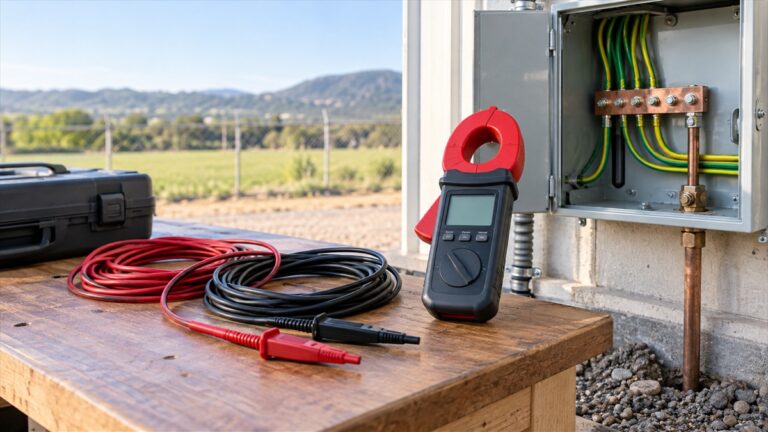
The second group is handheld meters. These include the AstroAI clamp meter, the Klein clamp meter kit, the LJPXHHU digital multimeter, the ChgImposs pocket analog multimeter and the Proster clamp meter with a voltage pen. A meter can measure many values, but it asks you to set the range and read the display.
The third group is vehicle testers. The WINAMOO test light and the ATOBLIN power probe are built for car and truck electrical systems. Their ranges are listed in volts DC, and they are meant for testing circuits, fuses and relays in a vehicle.
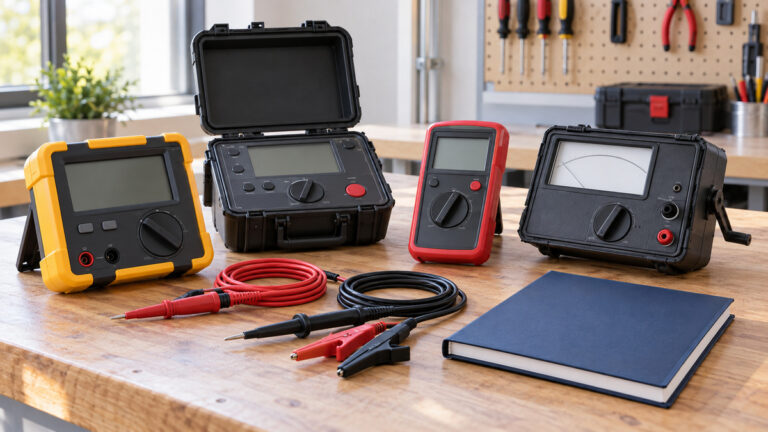
The fourth group covers specialized tools. The Fluke 1507 is an insulation tester, which measures resistance at higher test voltages, and the intendvision listing is a circuit analyzer for line faults and voltage drop.
Products at a glance
The table uses the figures and features from each listing. Where a listing gives two values that disagree, the cell reads Not confirmed. The product sections explain each conflict once, where it appears.
| Product | Type | Power | What it measures or tests | Included | Listed weight |
|---|---|---|---|---|---|
| AstroAI 2000-count clamp meter | Clamp meter | Battery (two AAA) | AC and DC voltage, AC current, resistance, capacitance, continuity, non-contact voltage | Meter, test leads, manual, storage bag | Not confirmed (415 g or 203 g) |
| Fluke 1507 megohmmeter | Insulation tester | Alkaline | Insulation resistance at 50 to 1000 V | Remote probe, test leads, probes, alligator clips | 500 g |
| Klein CL120VP test kit | Clamp meter kit | Battery | AC current, voltage, resistance, continuity, receptacle wiring, non-contact voltage | Clamp meter, receptacle tester, voltage detector, voltmeter, leads, pouch, batteries | 1.8 lb |
| LJPXHHU 2000-count multimeter | Digital multimeter | Battery | AC and DC voltage, DC current, resistance, continuity, diodes | Multimeter, leads, 9V battery | 166 g |
| WINAMOO automotive test light | Voltage test pen | Corded electric field, product description silent on battery | 3 to 48 V vehicle voltage | Test light | 200 g |
| ChgImposs mini analog multimeter | Pocket analog meter | Not stated in the listing (AA battery per title) | AC and DC voltage, DC current, ohms, decibels | Test leads | Not stated in the listing |
| intendvision circuit analyzer | Circuit analyzer | Battery | AC voltage, voltage drop, RCD and GFCI tests | Circuit analyzer | 16 oz |
| Journeyman-Pro RV circuit tester | Plug adapter | Corded electric | Power source wiring at TT-30 and NEMA 14-50 | Adapter with LED chart | Not stated in the listing |
| ATOBLIN power circuit probe | Automotive probe tester | Battery | 5 to 60 V DC voltage, resistance, frequency, continuity | Test light | 0.4 kg |
| YEREADW outlet tester | Plug-in outlet tester | AC | Outlet wiring, GFCI, 90 to 250 V | Outlet tester | Not stated in the listing |
| uyled GFCI outlet tester | Plug-in outlet tester | Battery | Outlet wiring, GFCI, voltage | GFCI outlet tester | Not stated in the listing |
| Proster TRMS clamp meter and pen | Clamp meter with pen | Battery | AC and DC voltage, current up to 800 A, non-contact voltage, continuity | Multimeter set | Not stated in the listing |
How to choose a voltage tester
Start with the job. If you want to know whether a wall outlet is wired correctly or has a ground fault protection feature, a plug-in outlet tester is the most direct tool. If you want to measure a live circuit’s voltage or current, you need a meter. If you are working on a car, a vehicle-rated tester is the better match, because its range is written for 12-volt and similar systems.
Next, check the measurement range. A tester with a range of 3 to 48 volts is built for vehicle work. A plug-in tester rated for 90 to 250 volts is built for household outlets. Where a listing gives a range that does not match its use, treat the mismatch as a question to answer before ordering.
Then read the safety rating. CAT ratings describe the environment a meter is rated for, and the higher the rating, the more demanding the environment it was designed for. The AstroAI listing gives CAT III 600 volts, the YEREADW listing gives CAT II 300 volts, and the uyled listing gives CAT III 300 volts. Use the rating that matches your work.
Consider the power source. Battery tools are easy to carry, but you need to replace or recharge the battery. AC-powered tools and corded adapters depend on an outlet, which may not be close to the work area. The Journeyman-Pro and YEREADW listings both depend on an outlet or power source to run.
Finally, decide how much detail you need. A simple outlet tester gives a few clear status lights or a display showing the wiring. A clamp meter gives you current and voltage readings, plus extra features such as non-contact voltage detection. The more features a tool has, the more you need to learn before using it safely.
Safety first
Any tool in this group works around live electricity, and the listings are not a substitute for training. If you are unsure about a wiring problem, a fault or a high-voltage task, stop and call a licensed electrician. Read the manual before you test anything, and follow the instructions on the tool.
Check the tool before each use. Look for cracks in the housing, damaged leads or probes, and a battery that is weak or leaking. The listings describe protective features such as overload protection and sleeves on probes. Those features help, but they do not replace careful use.
Do not use a tool outside its listed range or rating. The Journeyman-Pro listing shows two amperage figures in its title, and the AstroAI listing warns that it cannot test DC current. Use each tool for the job its listing describes.
The 12 products, one by one
AstroAI 2000-Count Digital Clamp Meter
AstroAI Digital Clamp Meter Multimeter 2000 Counts Amp Voltage Tester Auto-ranging with AC/DC Voltage, AC Current, Resistance, Capacitance, Continuity, Live Wire Test, NCV is a battery-powered clamp meter with auto-ranging and a 2000-count display. The listing gives AC and DC voltage ranges up to 600 volts, AC current up to 400 amps, and resistance up to 20 megaohms. It includes two 1.5-volt AAA batteries, test leads, a user manual and a storage bag.
The weight field conflicts with the weight line in the same listing. The item weight reads 415 grams, while the weight field reads approximately 203 grams. The weight is Not confirmed, so measure the tool or check the product page before you plan around it.
The storage temperature range also looks wrong. The listing gives 14 to 122 degrees Fahrenheit, which is about negative 10 to 50 degrees Celsius, but the metric figure reads negative 10 to 6 degrees. Use the manual for the storage range before you store the meter in a cold garage or hot car.
The listing states that the meter cannot measure DC current. For AC current, you clamp the meter around one wire rather than the whole power cord. The safety rating is CAT III 600 volts and pollution degree 2, which the listing describes as a meter designed for that environment.
This meter suits a homeowner or DIY worker who wants voltage, current and resistance in one handheld tool, and who will follow the clamping instructions. It is a weaker match for DC current work, and the weight conflict means you should confirm the size and weight before relying on either figure.
Fluke 1507 Digital Megohmmeter
Fluke 1507 Digital Megohmmeter Resistance Tester for Advanced Industrial and Electrical Testing, Test Voltages: 50V, 100V, 250V, 500V, 1000V is an insulation tester. It is not a plug tester or a simple voltage meter, and it is built for measuring insulation resistance at test voltages from 50 to 1000 volts. The listing gives an alkaline power source, a weight of 500 grams and an item size of about 11.8 by 15.2 by 3.1 inches.
The included parts are a remote probe, test leads, test probes, alligator clips and a one-year warranty. The unit comes with a NIST-traceable calibration certificate, which is a seller statement that you can confirm in the box.
Live circuit detection stops the insulation test if voltage greater than 30 volts is detected, which is a protective feature. It also describes a large backlit display and a remote probe for hard-to-reach testing.
This tester suits an industrial or electrical professional who needs insulation resistance readings at higher test voltages. It is a poor fit for a homeowner who only needs to check an outlet, because the job it is built for is different.
Klein Tools CL120VP Electrical Voltage Test Kit
Klein Tools CL120VP Electrical Voltage Test Kit with Clamp Meter is a battery-powered kit built around a clamp meter. The kit includes a clamp meter, a receptacle tester, a non-contact voltage detector, a voltmeter, test leads, a pouch and batteries. The listing gives an item weight of 1.8 pounds.
The clamp measures AC current and works as a non-contact voltage detector through the clamp. The test leads measure AC and DC voltage, resistance and continuity. Auto-ranging picks the measurement range automatically, which saves time when you move between readings.
The receptacle tester, sold as catalog number RT210, detects common wiring issues in standard and GFCI receptacles, including open ground and reverse polarity. The non-contact voltage detector, catalog number NCVT3P, covers a range of AC voltages. The bullets also mention an optional magnetic hanger for hands-free use.
This kit suits a buyer who wants a full set of testers from one brand and a pouch to carry them. It is a good match for an electrician’s bag or a homeowner’s toolkit, provided the buyer is comfortable with a kit that is heavier than a single outlet tester.
LJPXHHU 2000-Count Digital Multimeter
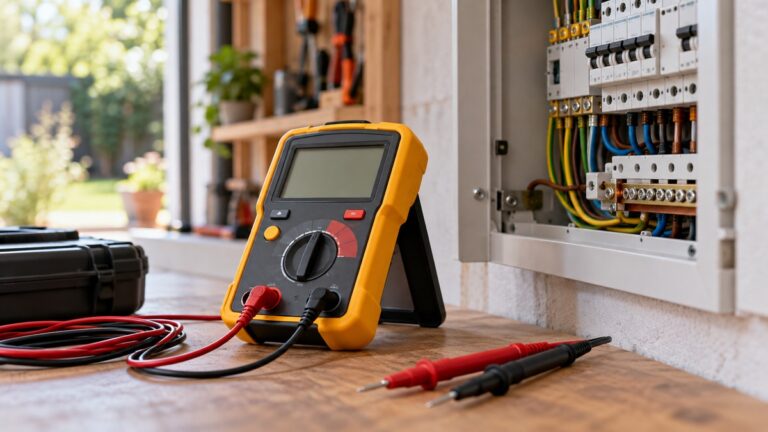
Digital Multimeter Voltmeter Battery Voltage Multi Tester Continuity Ohm Volt Amp DC AC Current Resistance Diodes 2000 Counts Electrical Test Meter with Leads Backlight LCD Display is a handheld multimeter with a 2000-count display and a backlight. The listing gives AC and DC voltage, DC current, resistance, continuity, diode tests and battery testing. The weight is 166 grams, and the item measures about 5.5 by 2.6 by 1.2 inches.
The bullets describe a 2.7-inch backlit LCD and a data hold feature, and they mention a fold-out stand and a removable rubber cover. The compartment lid gives access to the battery, and a 9-volt battery is included.
The included components field reads “multimter,” which is a typo for multimeter. The listing includes test leads and a user manual, according to the bullets. The bullets also describe overload protection, which is a feature to check against the manual.
This meter suits a homeowner or car owner who wants a simple, affordable multimeter with a backlight, and who will read the manual before testing. It is a weaker match for high-current work, because the listing does not give a current range for the AC current function.
WINAMOO Automotive Test Light with Digital Voltage Display
WINAMOO Automotive Test Light with 3-48V LED Digital Voltage Display, Auto Circuit Tester with Voltmeter and Dual Color Polarity Indicate is a vehicle voltage tester with a 3 to 48 volt range. The listing describes a bright LED display with 0.1-volt resolution, dual-color polarity indicators and a stainless steel probe. The item weighs 200 grams and measures about 11.1 by 4.2 by 1.4 inches.
The power source field reads corded electric. The product description does not describe a battery, and the included components field lists only the automotive test light. The power source is Not confirmed, so check the product page before you buy if you need to know how it runs.
The listing gives a 96-inch spring wire with a large alligator clip. The extended wire helps reach across a wide engine bay or a vehicle frame, and the anti-lost sleeve protects the probe when it is not in use.
The bullets state the tester can check car battery voltage and diagnose issues in 3 to 48 volt systems, including alternator tests. Those are the seller’s uses, and the listing does not show test results.
This tester suits a car or truck owner who wants a bright display and a long lead. It is a weaker match for a homeowner who needs to test an outlet, because the design is for vehicle systems.
ChgImposs Mini Analog Multimeter
ChgImposs Mini Analog Multimeter Electric AC/DC Current OHM Decibels Voltage Voltmeter Ammeter with Test Leads, AA Battery Included is a pocket analog meter with a dial and needle rather than a digital display. The listing gives DC voltage ranges up to 1000 volts, AC voltage ranges up to 1000 volts, DC current ranges up to 500 milliamps, three ohm ranges and a decibel range starting at negative 20.
The item measures about 3.9 by 3.2 by 1.2 inches. The title says an AA battery is included, but the power source field is missing, so the power source is Not stated in the listing. Confirm the battery type on the product page.
The bullets describe overvoltage and overcurrent self-fusing protection, a light and easy-to-carry body and a wire test pen that resists breaking. The seller also suggests the meter for student experiments, maintenance and communication work.
This meter suits a buyer who wants a small analog meter for learning, simple checks or a bag of hand tools. It is a weaker match for a buyer who wants a backlit digital readout, because the display is an analog dial.
intendvision Digital Circuit Analyzer
Digital Circuit Analyzer True RMS AC Voltage RCD GFCI, Voltage Drop Electrical Tester Line Fault Test Device with LCD Backlight, Data Hold, US Plug, Storage Bag is a circuit analyzer for line-fault testing. It measures true RMS AC voltage, phase, neutral and ground voltage, peak voltage and frequency. It also tests RCD and GFCI devices and measures voltage drop under load.
The item weighs 16 ounces and is battery powered. The listing gives a three-year warranty from the seller, and the bullets describe a dummy load for measuring voltage drop. The voltage drop method depends on a load in the circuit, which the listing describes as the way to calculate the drop.
The listing is clear about its use. It describes a tool for locating faults on an AC low-voltage distribution line. That is a more specialized job than checking a wall outlet, so read the full description before buying.
This analyzer suits a buyer who needs to test line faults, voltage drop and RCD or GFCI behavior, and who understands the circuit being tested. It is a weaker match for a homeowner who only needs a quick outlet check.
Journeyman-Pro RV Circuit Tester Adapter
Journeyman-Pro 30/50 Amp RV – Portable Circuit Tester Analyzer Adapter, Male Plug w/LED Test Indicator TT-30 NEMA 14-50 is a plug adapter that connects to an RV or EV power source and shows the wiring status through LED indicators. The power source field reads corded electric, and the adapter is ETL certified and comes with a lifetime warranty.
The amperage is Not confirmed. The title names both 30 amps and 50 amps, with TT-30 and NEMA 14-50 plug types. The bullets describe a 30-amp circuit analyzer. The product matches TT-30 or NEMA 14-50 plug types according to the compatibility field, but only the 30-amp description is clear in the bullets. Confirm the amp rating on the product page before you use the adapter with a 50-amp source.
The bullets describe an LED chart for common wiring faults, a flame-retardant body with a bright yellow finish and an anti-slip design for plugging and unplugging. The yellow finish is meant to make the adapter easy to spot so you do not leave it behind.
This adapter suits an RV owner or EV owner who wants to check a power source before connecting. It is a weaker match for a buyer who needs a single rating across both 30 and 50 amps, because the listing does not confirm that coverage.
ATOBLIN Power Circuit Probe Tester
Power Circuit Probe Tester, 5-60V DC LCD Digital Automotive Test Light, Auto Voltage Tester with Voltmeter and Illumination is a battery-powered automotive probe tester. The listing gives a 5 to 60 volt DC range, and it describes three working modes: voltage, resistance and frequency. The weight is 0.4 kilograms.
The bullets describe component activation for testing items inside or outside a vehicle’s electrical system, continuity tests for broken wires and open circuits, and a voltage and polarity test with an LCD backlit display and red and green LED indicators. The tool can test fuses, relays and switches.
The included parts are a test light. The listing does not describe a separate probe set, so check the product page if you need extra leads or accessories.
This probe tester suits a car owner or DIY mechanic who needs DC voltage and continuity checks across a 5 to 60 volt range. It is a poor fit for household AC outlets, because the listing’s range is for DC vehicle systems.
YEREADW Outlet Tester with GFCI Receptacle Detector
Outlet Tester Electrical GFCI Receptacle Detector, 90-250V Ground Fault Receptacle Tester and Circuit Analyzer, Circuit Polarity Voltage Detector, Plug Tester Breaker Finder is an AC-powered outlet tester that plugs into a receptacle and shows the result on an LCD. The listing gives a range of 90 to 250 volts AC, and it is built for standard three-wire outlets and RCD-protected outlets.
The display shows a green screen for correct wiring and an orange screen for faults. The bullets describe a one-touch GFCI test that trips the outlet to confirm the protection works. The tester is compliant with CAT II 300 volts and CE standards and includes a one-year warranty.
The power source field reads AC, which fits a plug-in outlet tester. The included components field lists only the outlet tester, so there is no separate manual or extra leads in the listing.
This tester suits a homeowner who wants a quick check of outlet wiring and GFCI function. It is a weaker match for work in a higher-voltage or industrial setting, because its rating is CAT II 300 volts.
uyled GFCI Outlet Tester with LCD Display
GFCI Outlet Tester with LCD Display, Standard 3-Prong Receptacle, Voltage Socket Checker, Circuit Finder, Electrical Outlet Tester Plug in for 110-250V AC is a battery-powered outlet tester for standard 3-prong receptacles and GFCI outlets. The listing gives a 110 to 250 volt AC range, a CAT II and CAT III 300-volt rating, and an impact-resistant ABS housing.
The bullets describe a clear LCD display for socket voltage and wiring status, and a GFCI wiring test that checks common problems in standard and GFCI sockets. The tester is designed for three-wire 120-volt outlets.
The power source field reads battery powered, but the included components field lists one GFCI outlet tester and does not name a battery. The battery type and whether one is included are Not stated in the listing, so check the product page before you order.
This tester suits a homeowner who wants a battery-powered, portable outlet check with a display, and who wants a GFCI test built in. It is a weaker match for a buyer who wants a battery that is clearly included in the box.
Proster TRMS Clamp Meter and Voltage Pen
Proster Electrical Test Tool TRMS Clamp Meter 6000 and NCV Voltage Tester Pen is a two-part kit with a true RMS clamp meter and a voltage tester pen. The listing gives an 800-ampere AC and DC clamp, auto-ranging, non-contact voltage detection and an adjustable sensitivity on the pen. The included components field reads multimeter set.
The clamp measures AC and DC voltage, current, resistance, capacitance, frequency, temperature, diodes and continuity. The bullets say the meter selects the range automatically and gives a low-voltage indication and overload protection.
The non-contact voltage detector is described as detecting AC voltage in walls and cables. The default range is 48 to 1000 volts, and the sensitivity can be adjusted to measure from 12 to 1000 volts. The listing does not state the battery type for the kit.
This kit suits a buyer who wants a clamp meter and a non-contact pen together, and who wants both in one order. It is a good fit for a shop or home workbench, provided the buyer follows the safety instructions for clamp and pen work.
Who should buy these testers
These testers suit a homeowner who wants to check outlets, a car owner who wants to test a vehicle circuit, an RV or EV owner who wants to check a power source, and a DIY worker who needs a meter for basic voltage and current readings. The YEREADW and uyled outlet testers suit a quick outlet check. The WINAMOO and ATOBLIN testers suit vehicle work. The AstroAI, Klein, LJPXHHU and Proster kits suit a broader set of measurements.
A buyer with a larger electrical job, such as line-fault analysis, should look at the intendvision analyzer. A buyer who needs insulation resistance readings at higher test voltages should look at the Fluke 1507.
Who should skip these testers
Skip any tool whose range does not match your work. Outlet testers are not vehicle testers, vehicle testers are not outlet testers, and insulation testers serve a different purpose from both.
Skip any listing where the power source or amperage is unclear if you depend on that detail. The WINAMOO power source, the uyled battery and the Journeyman-Pro amperage are all Not confirmed, so confirm them before ordering.
Skip a meter with a conflicting weight or specification unless you can verify the figure. The AstroAI listing gives two weights and two storage ranges that do not agree.
Skip a tool if you do not understand the safety rating. Several listings give CAT ratings, and those ratings are the best guide to the environment the tool is meant for.
Use cases
For a quick check of a wall outlet at home, the YEREADW and uyled plug-in testers show the wiring status in one step, and the uyled listing names three-wire 120-volt outlets.
For a power check before connecting an RV, the Journeyman-Pro adapter shows wiring status at a TT-30 or NEMA 14-50 plug. Confirm the amperage first.
For vehicle battery and circuit checks, the WINAMOO and ATOBLIN testers cover 3 to 48 volts and 5 to 60 volts DC.
For a general-purpose voltage, current and resistance meter, the AstroAI, Klein, LJPXHHU and Proster listings each give a range of measurements in one handheld tool.
For a learning or hobby bench, the ChgImposs analog meter gives a dial-style display and a range of AC, DC and ohm functions.
For line-fault work and voltage drop, the intendvision analyzer describes the functions that match that job.
For insulation work at higher test voltages, the Fluke 1507 is the only insulation tester in this set.
Checks to run before you buy
Confirm the tool type. Plug-in outlet testers, meters, vehicle testers and insulation testers do different jobs, and this set includes all four.
Confirm the measurement range. Match the voltage range to your work, and confirm the amperage for any plug adapter.
Confirm the power source. The WINAMOO, ChgImposs, uyled and Proster listings leave the power source unclear or conflicting, so check the battery type or cord before you order.
Confirm the safety rating. Read the CAT category and compare it with the environment where you will use the tool.
Confirm the weight and size if you plan to carry the tool in a bag or pouch. The AstroAI weight conflict and the blank size fields on several listings mean you should check the figures on the product page.
Confirm the included parts. The uyled and YEREADW listings include only the tester, while the Klein and Proster kits include more parts.
Common mistakes
The most common mistake is buying a vehicle tester for household outlets, or an outlet tester for a car. Each one is built for a different range and environment.
A second mistake is ignoring the amperage on a plug adapter. The Journeyman-Pro title names both 30 and 50 amps, so confirm the amperage that matches your RV or EV source before connecting.
A third mistake is trusting a single conflicting number. The AstroAI weight, the ATOBLIN weight and the storage temperature do not match on the same listing, so check the figure on the product page.
A fourth mistake is skipping the manual. Each listing describes features that depend on correct use, such as clamping around one wire, running a GFCI test or stopping an insulation test when live voltage is present.
A fifth mistake is using a tool outside its rating. The CAT ratings are the safety limits the listings state, and the environment you work in should match them.
Quick answers
Which listing is an outlet tester? The YEREADW and uyled listings are plug-in outlet testers, and the Journeyman-Pro is a plug adapter for RV and EV sources.
Which listing covers the widest voltage range? The Proster kit gives a range of 12 to 1000 volts for its non-contact function, and the ChgImposs meter lists up to 1000 volts DC and AC. The Fluke 1507 covers test voltages from 50 to 1000 volts for insulation work.
Which listing has a power-source conflict? The WINAMOO listing, which gives a corded field with no battery described.
Which listing has a weight conflict? The AstroAI clamp meter.
Which listing has an amperage question? The Journeyman-Pro adapter.
Outlet and receptacle checkers in this set
A plug-in outlet checker answers a different question from a meter. It tells you whether a socket is wired correctly, not what the voltage is. The YEREADW HT107B listing covers standard three-wire and RCD-protected outlets at 90 to 250 volts AC, with a CAT II 300 V rating and a one-year warranty. Its listing says a green screen confirms correct wiring and an orange screen flags a fault, and that the GFCI test can affect outlets that do not have GFCI protection.
The uyled HY-106 listing describes a 110 to 250 volt AC tester with CAT II and CAT III 300 V ratings. It detects seven common wiring faults, and the listing says a GFCI check uses a button held for two seconds. Its warranty is two years. The Klein CL120VP kit includes an RT210 receptacle tester that the listing describes as detecting open ground and reverse polarity on standard and GFCI receptacles.
The Journeyman-Pro adapter is a different design. It plugs into a TT-30 or NEMA 14-50 socket and shows wiring faults with an LED chart, so it suits checking a 30 amp RV or EV supply before you connect. Its listing states ETL approval and a lifetime warranty.
Voltage probes and pen testers
The Power Circuit Probe Tester from ATOBLIN is a DC automotive tool. Its listing gives a 5 to 60 V DC range for vehicles, three working modes for voltage, resistance and frequency, and a resolution of 0.1 V. The WINAMOO test light covers 3 to 48 V with 0.1 V resolution and a 96-inch spring wire, so it reaches a battery or fuse from a distance.
The Klein NCVT3P is a non-contact detector that the listing describes as having dual-range capability for a wide range of AC voltages. Non-contact detectors are useful for a first check, but they do not replace a probe reading, because they do not show a value.
Live-circuit safety for resistance tests
Some testers refuse to run when the circuit is live. The Fluke 1507 listing says its live-circuit detection stops an insulation test if more than 30 volts is present. This protects the user and the instrument, and it is a useful feature to look for in any insulation or megohm tester. The listing also says the unit is calibrated before shipment with a NIST-traceable certificate.
Circuit analysis for voltage drop
The intendvision circuit analyzer is built for line faults. Its listing describes a voltage-drop test under 5 A, 8 A and 10 A loads, using a dummy load in the circuit, and an RCD and GFCI test with response-time readings. The listing offers a three-year warranty. A tool like this suits a line check on a long run of wire, where a voltage drop under load is the real question.
Choosing between a checker and a tester
- Use an outlet checker when you need to know whether the wiring is right. The YEREADW listing covers 90 to 250 volts AC and the uyled listing covers 110 to 250 volts AC.
- Use a DC probe or test light when you work on a vehicle. The ATOBLIN range of 5 to 60 V DC covers vehicles with a 5 to 60 V DC electrical system.
- Use a circuit analyzer when a voltage drop under load matters, such as a long extension run.
- Check the warranty and the approval marks on the listing. The Journeyman-Pro lists ETL approval, and the intendvision and YEREADW listings state three-year and one-year warranties.
Final take
If you want to check a wall outlet, start with the YEREADW listing for an AC-powered tester, or the uyled listing for a battery-powered one. If you need a meter for voltage, current and resistance, compare the AstroAI, Klein, LJPXHHU and Proster kits, and resolve the AstroAI weight conflict first. If you work on vehicles, look at the WINAMOO and ATOBLIN testers, and check the power source on WINAMOO.
Match the tool to the job, check the rating and range, confirm the conflicting figures, and read the manual before you test. Those four steps are the ones that matter most with live electricity.