Temirup Infrared Thermometer Gun Review
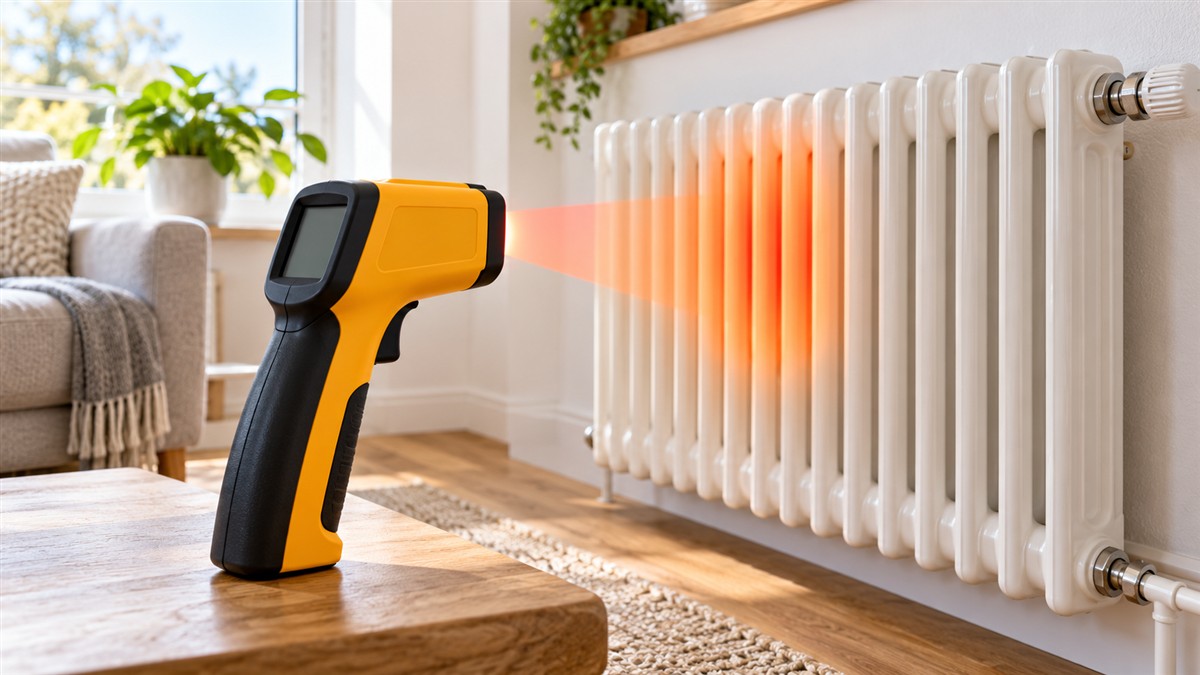
Do you really need to touch a pan to know whether it is hot enough? Most cooks and home fixers do not. A non-contact infrared thermometer reads surface temperature from a distance, which is handy for a pizza stone, a griddle, a radiator, a pipe or a grill grate. The Temirup infrared thermometer gun is aimed at that kind of quick check. This review explains what the product details describe, where those details leave gaps, and what to confirm before you buy.
Product details in this review come from the Amazon product listing and the seller’s description.You can view the product page here: Temirup infrared thermometer gun on Amazon.
The Short Verdict
The Temirup suits a home user who wants a simple, battery-powered gun for spot-checking surface temperatures across a range from well below freezing to 800°C. It makes the most sense for cooking, household maintenance and quick comparisons around the house. It is a weaker choice when you need a published accuracy figure, a documented distance-to-spot ratio, an emissivity range or a device that stores or syncs readings. Several phrases in the title, including high accuracy, adjustable emissivity and humidity measurement, are not backed by a specific figure in the product details, so treat them as questions to answer before you buy.
Who Should Buy and Who Should Skip
Who Should Consider This Gun
- Home cooks who want to check a pizza stone, a griddle, a cast-iron pan or a grill grate before cooking.
- Homeowners who want a quick surface reading on a radiator, a hot-water pipe or an air vent.
- DIY users who want a low-cost, battery-powered tool for spot checks around the house.
- Buyers who want the alarm feature named in the product details, as long as they confirm how it works first.
Who Should Skip It
- Anyone who needs a documented accuracy figure for work, food-safety records or any process that requires a stated tolerance. No accuracy percentage is given.
- Anyone who measures small targets from a distance. No distance-to-spot ratio is listed for this model, so you cannot judge how large an area the gun averages.
- Anyone who wants to log readings or connect the gun to an app. No data output is described.
- Anyone who needs temperatures above 800°C or below -50°C, which sit outside the stated range.
Key Specifications in Plain Terms
| Specification | Listed value | What it means for you |
|—|—|—|
| Temperature range | -58°F to 1472°F (-50°C to 800°C) | Wide enough for cooking, household repairs and most surface checks around the home. |
| Response time | 0.5 seconds | Readings appear quickly after you aim and pull the trigger. |
| Accuracy | Not stated in the listing | The title uses the phrase high accuracy, but no figure is given. Ask the seller or check the manual before you rely on a number. |
| Emissivity | Adjustable, per the title; the adjustment range is Not stated in the listing | Emissivity changes how a shiny surface and a matte surface read. Without the range, you cannot tell how far you can adjust it. |
| Distance-to-spot ratio | Not stated in the listing | Without this figure, you cannot judge how large an area the gun averages at a given distance. |
| Display | Color LCD; display type digital | A color screen is easier to read than a basic display in a dim kitchen or garage. |
| Battery | Battery powered; two AAA batteries required; a battery is listed as included, with the count Not stated in the listing | Keep spare AAA cells on hand so the gun does not stop in the middle of a job. |
| Battery life | 8 hours | The conditions behind this figure are Not stated in the listing, so treat it as a general guide. |
| Low battery indicator | Included | Shows a warning before the battery runs out. |
| Humidity measurement | Named in the title only; Not confirmed | The specification fields list no humidity sensor. Do not buy this gun for humidity readings. |
| Outer material | Wood; Not confirmed | The field reads wood, which is unusual for a handheld electronic gun and is not described elsewhere. Check the body when it arrives. |
| Size and weight | About 6 inches long; 5.6 ounces | Compact and light for one-hand use. |
| Warranty | Two-year manufacturer warranty | Keep proof of purchase. |
| Model and part number | Model IR02C-OR; part number IR02CNEW | Check that the model number on the box matches the one on the product page. |
| Use | Indoor and outdoor | Indoor and outdoor use are both listed. Follow the manual for conditions such as steam or wet surfaces. |
| Care | Wipe clean | Keep the lens clean and wipe the body as the care field suggests. |
What an Infrared Reading Actually Shows
An infrared thermometer measures the heat radiating from the surface it is aimed at. It does not show the temperature inside a pan of oil, a loaf of bread or a wall cavity. A pan base can read hot while the oil above it is cooler, and the reverse can also happen. Treat any reading as a surface reading and use it as a guide for the next step.
Surface finish matters. Polished metal reflects heat radiation and can read lower than its true temperature. Matte, dark or painted surfaces usually read more reliably. Adjustable emissivity is the feature that lets you tune the gun for different materials, which is why the title mentions it. The product details do not give the adjustment range, so confirm it before you plan to measure shiny surfaces.
Infrared readings describe whatever is in the aim point. Glass or clear plastic can reflect the surface you are measuring rather than the object behind it. Steam, dust and a dirty lens can also distort readings. Aim at a flat, clean area and keep the gun at a steady angle while you read. These are general measurement habits that apply to most infrared guns, not claims about this model.
Practical Use Cases
Preheating a pizza stone or griddle. A surface reading gives you a sense of where the heat sits across the stone or plate. Check two or three spots and compare them, because a single reading can miss a cool corner.
Checking a grill grate before searing. A quick reading of the grate helps you decide whether it is ready for meat or whether it needs more time. The reading tells you about the grate surface, not the air inside the grill.
Estimating the heat in a pan. Aim at the pan base, not the cooking oil. Use the reading to judge how the pan is heating, and rely on your recipe for the oil or food temperature you need.
Looking for cold spots around a room. Walk along a window frame, a wall corner or a pipe run and compare surface readings. Differences can point to areas to check for drafts or insulation gaps. This is a diagnostic habit, not a guaranteed diagnosis.
Checking a radiator or pipe. A quick reading on a radiator or hot-water pipe tells you whether the surface is warm, which can help when you are testing a heating circuit. Treat the reading as a surface indication and follow your heating system guidance for anything more serious.
Setup, Handling and Fit
Insert the two AAA batteries. The product details say a battery is included but do not state how many, so confirm the count when you unpack the gun. The aiming method is Not stated in the listing, and so are the steps to set emissivity and the alarm threshold, so read the user manual before you rely on those features.
Hold the gun steady, aim at the target surface and read the color LCD. Keep the lens clean, and wipe the body as the care field recommends. Because the product is listed for indoor and outdoor use, keep it dry, and avoid aiming it through steam or into a wet surface unless the manual says that is safe.
Fit is simple. The gun is handheld, with no wall mount, stand or case described. If you carry it in a toolbox, put it in a protective pouch to keep dust off the lens.
Strengths and Limitations
Strengths Worth Weighing
- A wide temperature range, from -58°F to 1472°F, covers most household and cooking tasks.
- A response time of 0.5 seconds keeps quick checks quick.
- A color LCD makes the reading easier to see in a bright or dim space.
- A low battery indicator warns you before the batteries run out.
- The alarm feature named in the product details may help you watch for a target temperature, once you confirm how it works.
- A compact, light body, about 6 inches long and 5.6 ounces, suits one-hand use.
- A two-year manufacturer warranty, listed in the product details.
- The model is reusable and battery powered, with no consumables described.
Limitations and Open Questions
- Accuracy is Not stated in the listing. The title uses the phrase high accuracy, but the product details give no figure.
- The distance-to-spot ratio is Not stated in the listing, which limits how confidently you can aim at small or distant targets.
- The emissivity adjustment range is Not stated in the listing, even though the title names adjustable emissivity.
- Humidity measurement appears only in the title. Because the specifications list no humidity sensor, the claim is Not confirmed.
- The outer material field reads wood, which is Not confirmed for a handheld electronic gun.
- The alarm feature is named without details about the trigger or threshold setting.
- Battery life of 8 hours is listed without the test conditions.
- No data output, memory or app connection is described.
How It Compares With Other Category Options
Comparing infrared guns is easiest when you use the same checklist for each model. In this category, the most useful criteria are the accuracy figure, the emissivity range, the distance-to-spot ratio, the response time, the display, the battery arrangement and the warranty.
One comparison point in the same research set is a TempPro TempScan infrared gun aimed at pizza ovens, griddles and HVAC work. Its published details list an emissivity range of 0.1 to 1.0, a distance-to-spot ratio of 12:1, a response time under 500 milliseconds, an accuracy band of plus or minus 1.5% and a rechargeable reusability field. Those figures belong to the TempPro model, not the Temirup, and they show what a buyer can ask for when a listing is vague. A second comparison point is a KNINE OUTDOORS infrared gun, whose details name a large display as a feature. That tells you display size is a real selling point in this category, and a color LCD on the Temirup is worth comparing against a larger screen if you read from a distance.
If you find the Temirup’s accuracy and emissivity figures in the manual, compare them against the TempPro numbers above. If the Temirup cannot provide those numbers, a model that lists them may suit you better for technical work.
Decision Checklist and Pre-Purchase Checks
Decision Checklist
- Do you need a published accuracy figure? If yes, the Temirup is not a match until the seller provides one.
- Will you measure small or distant targets? If yes, confirm the distance-to-spot ratio first.
- Do you need to adjust emissivity for shiny metals? If yes, confirm the range before you buy.
- Do you need data logging or an app? If yes, look elsewhere.
- Is the -58°F to 1472°F range enough for your tasks?
- Are two AAA batteries, a two-year warranty and a color LCD the right fit for your use?
Before You Buy: Checks
- Confirm the model number IR02C-OR and the ASIN B0BCQ9WLC3 on the box and product page, using the link at Temirup infrared thermometer gun on Amazon.
- Ask the seller for the accuracy figure, the emissivity adjustment range and the distance-to-spot ratio, and save the reply.
- Check the battery count and whether the battery is included, since the count is Not stated in the listing.
- Read the outer material when the gun arrives. The field says wood, which is Not confirmed.
- Compare readings with a second thermometer you already trust, such as a probe thermometer for food, to see whether the gun’s surface readings make sense for your tasks.
- Keep the proof of purchase for the two-year warranty.
Frequently Asked Questions
Is the Temirup accurate enough for professional work?
The accuracy figure is Not stated in the listing. Without a published figure, the gun is not a good match for work that requires a documented tolerance.
Does it measure humidity?
The title mentions humidity measurement, but the specification fields list no humidity sensor. The humidity claim is Not confirmed, so do not buy the gun for humidity readings.
Can it read temperature through glass?
Infrared readings describe the surface being aimed at. Through glass or clear plastic, the reading can reflect the glass itself rather than the object behind it.
How long does the warranty run?
The listing gives a two-year manufacturer warranty. Keep your proof of purchase in case you need it.
Final Verdict
The Temirup infrared thermometer gun is a practical, compact choice for home cooks and homeowners who want fast surface readings across a wide range, with a color display, a low battery indicator and a two-year warranty. Its open questions are the ones that matter most for technical use: the accuracy figure, the emissivity range, the distance-to-spot ratio and the humidity claim.
Buy it for quick, friendly checks around the kitchen, the grill and the home, and confirm the missing details before you rely on it for anything that needs a documented number. You can see the full product details on Amazon at Temirup infrared thermometer gun on Amazon.