Hantek USB Oscilloscopes Compared by Listed Specs
As an Amazon Associate we earn from qualifying purchases.
This roundup covers only two brands, Hantek and OWON, because the research set holds only those two. It reads nine listings and does not survey the wider market.
Quick answer
- If you want two channels and the lowest bandwidth in this set, the Hantek 6022BE listing (ASIN B0728HBNDV) states 20 MHz, 48 MSa/s and USB power.
- If you need four channels, the listings range from 70 MHz (6074BC) to 250 MHz (6254BD), but the 6074BE listing gives two different bandwidth figures.
- For general-purpose USB scopes that list USB isolation, the OWON VDS1022I listing (ASIN B07PRT5WMJ) is the only Hantek-or-OWON entry that names isolation. Read its conflicting bandwidth figures before buying.
- Do not use any scope in this list on mains wiring unless the listing states a CAT rating that covers the circuit. None of the nine listings states one.
Why two brands only
A roundup normally needs products from at least three manufacturers so the reader can see real trade-offs. This set has seven Hantek listings and two OWON listings, and that is all the research file holds. The table and picks below are therefore a comparison inside one brand family plus two OWON models. If a reader wants a view across brands, this post does not provide it, and the sources linked below describe general scope behaviour only.
What the numbers mean before you compare
Four figures decide most of the choice in this list. Channels set how many signals you can watch at once. Bandwidth sets the highest frequency the front end passes with usable accuracy. Sample rate sets how often the scope takes a reading, and it matters most for fast edges. Memory depth sets how long a capture can run at a given rate. The Tektronix primer on evaluating oscilloscopes, which we opened on 2026-10-27, describes bandwidth as a figure to match to the signal you measure. It cites a “5 Times Rule” that it says keeps measurement error below 2 percent, and it notes that this rule of thumb can become hard to meet as signal speeds rise. The same primer gives a rise-time constant K between 0.35 and 0.45, and says scopes below 1 GHz typically use 0.35.
Sample rate has its own rule. The Tektronix primer states that for sin(x)/x interpolation the sample rate should be at least 2.5 times the highest frequency component of the signal, and for linear interpolation at least 10 times. The Keysight application note 5989-5733, “Evaluating Oscilloscope Bandwidths for Your Application,” which we opened on 2026-10-27, frames the bandwidth choice as an application question: how much bandwidth the work needs depends on the signals in that work. The note we opened is a page-level summary, so we do not quote a specific multiplier from it.
Put simply, a scope with a 20 MHz front end is not the right tool for a 100 MHz clock. The rule of thumb in the Tektronix primer says to pick bandwidth about five times the fastest signal you care about, with the caveat that this is a rule and not a guarantee. Under that rule, a 4 MHz signal points to a scope with about 20 MHz bandwidth, and a 20 MHz signal points to about 100 MHz.
How we chose
We worked from the nine listings in the research file, checked on 2026-10-27. The criteria were simple: the listing must name a USB-connected scope, the listing must state at least a channel count, and the listing must be a distinct product or model. We kept every listing that met those rules and used the stated figures only. We did not rank the scopes by quality or by any sales measure, and we did not rely on star ratings or review counts, which are not part of this post.
Two listings describe the same Hantek 6022BE model. ASIN B0728HBNDV is the one with the model number in its specification table, so it is the one in the comparison table. The second ASIN, B0B686H8ZT, is titled as the same 6022BE model and states 20 MHz and 48 MS/s in its own list. We mention it here as a second listing, not as a separate product, and we do not give it a second row.
We left out no listing for brand reasons. Where a listing gives two figures for the same spec, we show both and label the conflict. We did not choose the figure that fits a neater story.
Comparison table
Every cell below is taken from the listing text or the specification table. “Not stated” means the listing does not give that figure. The bandwidth for the 1008C is written in kHz because the listing gives it as 100kHz; it is not a typo for MHz.
| Model (ASIN) | Channels (as listed) | Bandwidth (as listed) | Sample rate (as listed) | Connection and power | Other listed points |
|---|---|---|---|---|---|
| Hantek 6022BE (B0728HBNDV) | 2 | 20 MHz | 48 MSa/s real-time | USB 2.0, powered over USB | Memory up to 1 M per channel; 20 automatic measurements; FFT; two passive probes |
| Hantek 6022BE, second listing (B0B686H8ZT) | 2 | 20MHz | 48MS/s | USB 2.0, no extra power supply | 23 measurement functions; same model number as above. Not a separate product. |
| Hantek 6074BE (B01FDI8FTQ) | 4 | Conflict: 20MHz in spec table, 70MHz in bullet | 1GSa/s real-time | Spec table says “Corded Electric”; bullet says no extra power supply | Native resolution 1600×1200; 20 automatic measurements; pass/fail check |
| Hantek 6074BC (B07D9H2KHC) | 4 analog | 70MHz | 1GSa/s | Spec table says “Corded Electric” | Minimum operating voltage 2 mV; over 20 functions; DLL for LabVIEW, VC and VB |
| Hantek 6254BD (B0789DR8XD) | 4 analog plus 1 arbitrary waveform generator | 250MHz | 1GSa/s | Powered by computer USB ports | AWG sample rate 200MSa/s DDS; vertical resolution 12 bits (listing text) |
| Hantek 1008C (B07DKYR9X6) | 8 | 100 kHz (listing states it in kHz) | 2.4MSa/s | USB 2.0, no extra power supply | Signal generation 250kHz; automotive diagnostic functions; listing states Windows 7, 8 and 10 |
| Hantek 6022BL (B01M74UKKC) | 2 analog plus 16 logic | 20MHz; the logic section is listed at 10MHz in one feature line | 48MSa/s; one feature line also states 8MSa/s | USB 2.0, powered from PC | Manufacturer field reads Labloot Toos Store; brand field reads Hantek |
| OWON VDS1022I (B07PRT5WMJ) | 2 plus 1 (multi) | Conflict: 25 MHz in spec table, up to 100 MHz in bullet | Conflict: 100 MS/s in spec table, max 1 GS/s real-time in bullet | USB bus powering; USB isolation; LAN remote control (optional) | Record length conflict: 5K in table, 10M in bullet; rise time 14 ns or less |
| OWON VDS6102 (B0C2YWSH9V) | 2 analog plus 1 signal source | 100MHz; bandwidth limitation 20 MHz | 1GSa/s | USB Type-C; listing says it can run from a 5V/2A power bank | 8-bit ADC; signal source 5MHz sine, 0.1Hz to 5MHz; SCPI protocol supported |
Reading the conflicts
Several listings give two different figures for the same spec. We report both, and we do not decide which one is right. This matters most for three models.
Hantek 6074BE (B01FDI8FTQ). The specification table says 20 MHz bandwidth, while the first feature bullet says 70 MHz. The power line also conflicts: the table says corded electric, the bullet says no extra power supply is needed. A buyer who needs 70 MHz or USB-only power should check the manufacturer’s manual or confirm with the seller before relying on either figure.
OWON VDS1022I (B07PRT5WMJ). The specification table gives 25 MHz bandwidth and 100 MS/s sample rate. The feature bullets give up to 100 MHz and a maximum of 1 GS/s real-time. The record length also differs, 5K in the table and 10M in a bullet. The model is the only entry in the set that lists USB isolation, but the listing does not say what isolation rating applies, so isolation alone should not be read as mains safety.
Hantek 6022BL (B01M74UKKC). The title says 16 channels, but the analog count is 2 and the 16 are logic channels in the listing text. The bandwidth is 20MHz, with a separate line giving 10MHz for the logic section. One feature line gives sample rate as 8MSa/s and the main table as 48MSa/s. The manufacturer field names a different company from the brand field.
The Hantek 6022BE pair (B0728HBNDV and B0B686H8ZT) do not conflict on bandwidth or sample rate, but the two listings name the software and the power source differently. Neither listing gives a CAT rating.
Where each model fits
Two channels, basic checks. The Hantek 6022BE (B0728HBNDV) is the simplest fit in the list. It has two channels, 20 MHz bandwidth, 48 MSa/s, and USB power, and the listing names two passive probes and a USB cable. For reading a sensor output, a PWM signal at a modest frequency, or a sensor on an automotive wire, that spec is often enough. Confirm the rest against your own signal before buying.
Eight channels, automotive. The Hantek 1008C (B07DKYR9X6) gives 8 channels, but its bandwidth is 100 kHz and its sample rate is 2.4 MSa/s, both listed. That is a low bandwidth for fast ignition or injector edges, although the listing describes its diagnostic functions in automotive terms. It fits slow sensor and wiring checks well. It does not fit fast edge work.
Four channels, higher bandwidth. The Hantek 6074BC (B07D9H2KHC) gives four channels at 70 MHz and 1 GSa/s, and the listing states a minimum operating voltage of 2 mV. The Hantek 6254BD (B0789DR8XD) is the highest bandwidth in the list at 250 MHz, with four channels, 1 GSa/s and an arbitrary waveform generator. Its listing gives a 12-bit vertical resolution. Its bandwidth is the largest among these models, so it suits faster signals, but it also has the most features to learn.
Mixed signals. The Hantek 6022BL (B01M74UKKC) combines two analog channels with 16 logic channels, which suits a reader who wants to watch digital lines alongside an analog signal. Its logic section figures conflict in the listing, so check the logic bandwidth and sample rate before you buy it for timing work.
Two channels, 100 MHz with USB-C. The OWON VDS6102 (B0C2YWSH9V) gives 100 MHz, 1 GSa/s, and 8-bit ADC, with a USB Type-C port and a listed signal source. The listing says it can run from a 5V/2A power bank. The bandwidth limitation to 20 MHz is also stated, so the full 100 MHz is not always available.
Two channels, 25 or 100 MHz, USB isolation. The OWON VDS1022I (B07PRT5WMJ) names USB isolation and LAN remote control as options. Its listing is the one that most needs a careful read, because bandwidth and sample rate are given with two different figures in different parts of the page.
Buying checklist
- Write down the highest frequency or fastest edge you need to see. Compare it with the bandwidth stated in the specification table, not the bullet, and note any conflict.
- Check the channel count you need. The Hantek 6022BL lists 2 analog channels with 16 logic channels; the 1008C lists 8 analog channels.
- Check the power line in the listing. Several listings give corded electric and USB power in different places.
- Confirm the operating system. The 1008C lists Windows 7, 8 and 10. The 6022BE second listing lists Windows 11, 10, 8, 7, NT, XP and Vista. Other models name fewer systems.
- Look for a safety rating before any mains use. The listings do not state a CAT rating for any model here.
- Keep the probes you receive and check their rating. Probe ratings are not given in the listing text we used.
Mistakes to avoid
- Using the bandwidth bullet without checking the table. Three models in this set give two bandwidth figures. Pick the lower figure for planning until you check the manual.
- Assuming USB power means mains safe. A USB power connection and an isolation feature are not a CAT rating. The OWON VDS1022I names isolation, but the listing does not give a rating that covers a mains circuit.
- Measuring fast edges with a low-bandwidth model. The 1008C at 100 kHz and the 2.4 MSa/s sample rate cannot show fast transitions in detail. The Tektronix primer’s sample-rate guidance applies here.
- Treating the 16 logic channels as analog channels. The 6022BL listing gives 2 analog channels. The 16 channels are logic inputs with their own bandwidth and sample figures.
- Buying two listings of the same model. The Hantek 6022BE appears under two ASINs in this research set. Buy one listing, not both, unless you need a spare.
How the specs connect to real use
Bandwidth and sample rate are linked. A scope with a high bandwidth but a low sample rate can miss detail in fast signals, and a high sample rate does not fix a low bandwidth front end. The Tektronix primer’s two sample-rate figures, 2.5 times and 10 times, are rules about reconstructing a signal, and they apply to any sampled instrument, including the USB units here. For a signal at 1 MHz, the primer’s sin(x)/x rule points to a sample rate of at least 2.5 MS/s. The 1008C at 2.4 MSa/s falls just below that line for a 1 MHz signal, so it would be a poor choice for that signal even though its channel count is high. For a 10 MHz signal the same rule asks for at least 25 MS/s, which excludes the 1008C and the 6022BL’s 8MSa/s line, and leaves the 48 MSa/s listings within the rule. These figures are arithmetic from the stated rules.
Memory depth is the other half of the picture. The 6022BE lists up to 1 M per channel. The OWON VDS1022I lists 5K in its table and 10M in a bullet. A long capture at a high sample rate needs deep memory, while a short capture of a fast event needs a high sample rate. The listings give enough information to ask the right question, but not enough to answer it for every model, so check the memory figure in the manual for the model you choose.
Frequently asked questions
Which Hantek USB oscilloscope has the most channels?
The Hantek 1008C (B07DKYR9X6) lists 8 analog channels. Its bandwidth is 100 kHz, so it suits slow signals and wiring checks rather than fast edges. The four-channel models in this set are the 6074BC, 6074BE and 6254BD.
Which model has the highest bandwidth in this set?
The Hantek 6254BD (B0789DR8XD) lists 250 MHz. The OWON VDS6102 lists 100 MHz, and the Hantek 6074BC lists 70 MHz. The 6074BE and OWON VDS1022I listings give conflicting bandwidth figures, so check their manuals.
Can I use a USB oscilloscope to measure mains voltage?
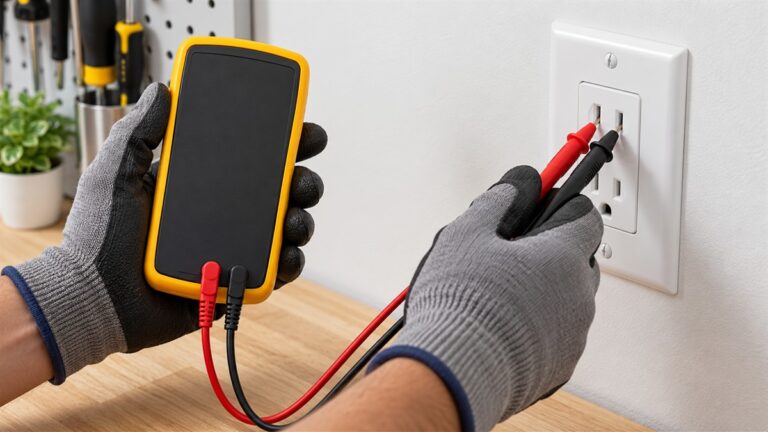
Not on the strength of these listings. None of the nine listings states a CAT rating, and USB power or isolation is not the same as a rating for a mains circuit. Fluke’s IEC category explainer, which we opened on 2026-10-27, places CAT II at single-phase receptacle-connected loads such as appliances and portable tools, and places CAT III and CAT IV at fixed distribution and the utility connection. Panel and service work belongs to a licensed electrician. Use a meter with a stated CAT rating for mains voltage, and keep any scope away from live mains connections.
Why do the listings give different bandwidth figures?
The listings are written by the sellers and sometimes copy text from other products or from different model variants. We report the figures exactly as written. The manufacturer manual or a direct question to the seller is the only way to settle a conflict, and this post does not do that for you.
Do the two 6022BE listings differ?
The two ASINs, B0728HBNDV and B0B686H8ZT, are titled as the same 6022BE model. Their bandwidth and sample rate match, but the software and power text differs. We show one of them in the table and name the second without a separate row.
Does the bandwidth I need depend on the work?
Yes. The Keysight application note we opened frames the bandwidth choice as an application question, and the Tektronix primer gives a rule of thumb of about five times the highest signal frequency with a caveat. A slow sensor and a fast switching circuit need very different scopes.
Bottom line
Choose the lowest bandwidth that covers your fastest signal, check the sample rate against the sampling rule, and read the conflicting figures in the listing before you buy. For two channels and modest signals, the Hantek 6022BE listing is the simplest starting point. For four channels, the 6074BC and 6254BD give the clearest bandwidth figures in this set. Do not use any of these scopes on mains wiring unless a rating you can read covers the circuit.
Internal reading
If you are choosing a multimeter alongside a scope, see our guide to the best DMM for the meter side of the bench. For clamp current work, the best clamp meter roundup compares tools that measure current without breaking the circuit. If your work is on power circuits, the electricians’ multimeter guide covers CAT ratings in more depth, and the auto-ranging multimeter guide explains how range selection differs between meters and scopes.
Products in this roundup
{{PICKS}}
-
Hantek 6022BE USB Oscilloscope (B0728HBNDV)
The listing states 2 channels, 20 MHz, 48 MSa/s and USB power. Reason for inclusion: the simplest two-channel listing in the set with a stated sample rate and memory depth. Skip if: you need more than 20 MHz. Limitation: the listing does not state a CAT rating or isolation.
-
Hantek 6074BE Digital Oscilloscope (B01FDI8FTQ)
The listing states 4 channels and 1 GSa/s. Reason for inclusion: four channels with a stated high sample rate. Skip if: you need a single confirmed bandwidth, because the listing gives 20 MHz and 70 MHz. Limitation: the power line conflicts within the listing.
-
Hantek 6074BC 4-CH Oscilloscope (B07D9H2KHC)
The listing states 4 channels, 70 MHz and 1 GSa/s, with a 2 mV minimum operating voltage. Reason for inclusion: a consistent bandwidth figure across the listing for a four-channel model. Skip if: you need 100 MHz or more. Limitation: the listing gives corded electric power in the specification table.
-
Hantek 6254BD 4-CH Oscilloscope with AWG (B0789DR8XD)
The listing states 4 channels, 250 MHz, 1 GSa/s and an arbitrary waveform generator at 200 MSa/s. Reason for inclusion: the highest bandwidth in the set. Skip if: you only need two channels or basic checks. Limitation: no CAT rating appears in the listing text.
-
Hantek 1008C 8-CH Automotive USB Oscilloscope (B07DKYR9X6)
The listing states 8 channels, 100 kHz bandwidth, 2.4 MSa/s and 250 kHz signal generation. Reason for inclusion: the only eight-channel model in the set, with automotive diagnostic functions listed. Skip if: you need fast edges or megahertz bandwidth. Limitation: the bandwidth is 100 kHz as the listing states it, and the sample rate is low for that work.
-
Hantek 6022BL USB Oscilloscope with Logic Channels (B01M74UKKC)
The listing states 2 analog channels and 16 logic channels. Reason for inclusion: the only mixed analog and logic model in the set. Skip if: you need timing analysis at high speed, because the logic figures conflict. Limitation: the manufacturer and brand fields name different companies.
-
OWON VDS1022I USB PC Oscilloscope (B07PRT5WMJ)
The listing states 2 channels plus one, USB isolation and optional LAN remote control. Reason for inclusion: the only model in the set that names USB isolation. Skip if: you need a single confirmed bandwidth, because the listing gives 25 MHz and 100 MHz. Limitation: the listing does not state a CAT rating for mains work.
-
OWON VDS6102 USB PC Virtual Oscilloscope (B0C2YWSH9V)
The listing states 2 analog channels plus one signal source, 100 MHz bandwidth, 1 GSa/s and a USB Type-C connection. Reason for inclusion: the highest stated bandwidth among the two-channel models with a USB-C connection. Skip if: you need the full 100 MHz without a limit, because the listing states a 20 MHz bandwidth limitation. Limitation: the listing text has no mains rating to read.
What we could not verify
- The listings do not state a CAT rating for any model, so this post makes no mains-safety claim for any scope.
- Where a listing gives two figures for bandwidth, sample rate, memory depth or power, we could not settle which one is correct from the listing alone.
- The sources we opened describe general oscilloscope behaviour. They do not describe these particular models, so no model-specific claim rests on them.
- We did not check current availability, and we do not comment on price or on any seller.
- The probes supplied with each model, and their ratings, are not described in the listing text we used.
Sources
- Tektronix, “Evaluating Oscilloscope Bandwidth, Sample Rate, and Key Specifications” (primer), https://tek.com/en/documents/primer/evaluating-oscilloscopes. Opened 2026-10-27. Used for the 5 Times Rule, the rise-time constant K, and the sample-rate interpolation rules.
- Fluke Corporation, “IEC Category Ratings: Use the Right Tools for the Job,” https://fluke.com/en-in/learn/blog/safety/iec-category-ratings-use-the-right-tools-for-the-job. Opened 2026-10-27. Used for the CAT I to CAT IV definitions: CAT II covers single-phase receptacle-connected loads such as appliances and portable tools, CAT III covers fixed distribution equipment, and CAT IV covers the utility connection and service entrance.
- Keysight Technologies, application note 5989-5733, “Evaluating Oscilloscope Bandwidths for Your Application,” https://www.keysight.com/ru/ru/assets/7018-01455/application-notes/5989-5733.pdf. Opened 2026-10-27. Used for the framing of bandwidth as an application question. The page we opened is a summary and states no publication date.
Affiliate disclosure: as an Amazon Associate this site earns from qualifying purchases. The links above are Amazon links with our tracking tag.