GFCI Self Test: What the Button Does and What to Do Next
GFCI Self Test: What the Button Does and What to Do Next
As an Amazon Associate we earn from qualifying purchases.
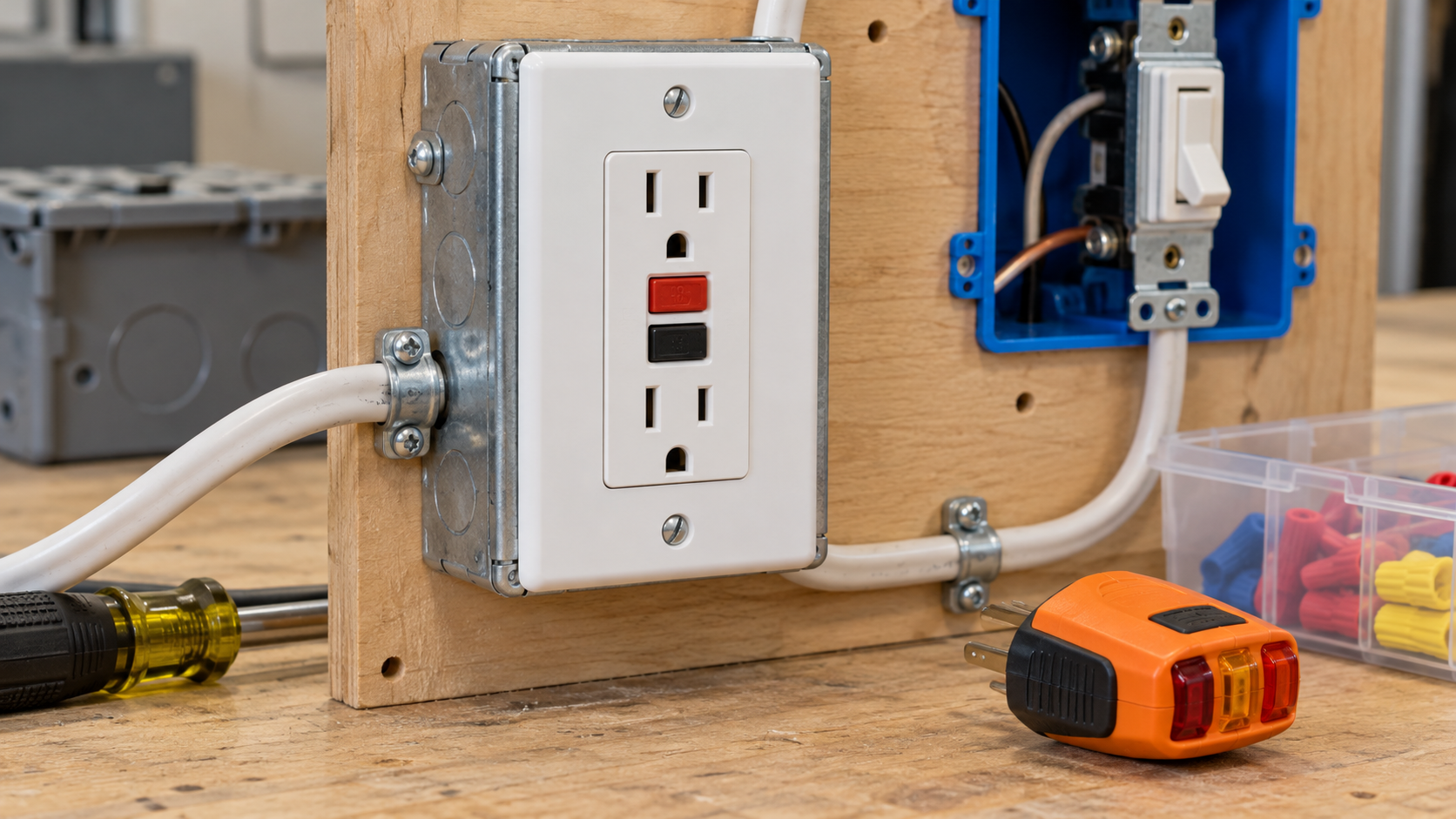
A GFCI self test is the check you run with the TEST and RESET buttons on a ground fault circuit interrupter receptacle. Pressing TEST should trip the device and cut power to the outlet; pressing RESET should restore it. The manufacturers we opened say to run this check monthly, and some newer models also run an automatic self-test on their own. The sources do not say the button replaces a plug-in tester, a wiring check, or a licensed electrician’s inspection.
Quick answer
- Press TEST once. The GFCI should trip, and the RESET button should pop out.
- Press RESET to restore power only if the device is working. Leviton’s support page says the device is working only if RESET restores power.
- Test monthly. Leviton’s support page recommends a monthly test for standard GFCIs and for self-test models.
- If RESET does not pop out, or the device does not trip, stop using that outlet and contact the manufacturer or a licensed electrician.
How to run the manual test
Hubbell’s GFCI test instructions, which we opened as a third-party copy, describe the same basic sequence. The steps below follow that sequence and the Leviton pages.
- Confirm the outlet has power. Hubbell’s instructions say to verify the power is on at the service panel before testing. If you are not sure how to check that, leave the panel alone and ask a licensed electrician.
- Press and release TEST. Press it briefly, not held down. The device should trip. On Hubbell’s device, the RESET button should pop out.
- Check the result. If RESET popped out, the device is responding to the test. Leviton’s lamp-or-radio method works the same way: plug in a lamp or radio, turn it on, press TEST, and confirm the load goes off.
- Press RESET. Press RESET until it clicks to restore power. If power does not come back, the device may be faulty, or another device on the same circuit may have tripped the protection.
- Record the date. Monthly testing only helps if you do it on a schedule. A note on the cover plate or in a home maintenance log is enough.
What a self-test GFCI tells you
Some Leviton receptacles are described as Self-Test GFCI receptacles. Leviton’s page says these have the same protection features as a conventional GFCI and add two indicator lights on the face. The page says the status indicator should be green when the device is wired properly. It says a status indicator that is red, beeping, or not lit means a problem may exist. The page also says the status indicator may flash red at power on and at reset.
The same Leviton page says Self-Test GFCI receptacles should still be tested every month. An automatic self-test does not replace the manual TEST button. It only tells you the device’s electronics passed their internal check.
How to tell which kind you have
Leviton’s self-test indicator page describes two indicator lights on the face of a Self-Test model. The page we opened does not give a step-by-step method for telling the two kinds apart, so check the label on your device or its printed instructions before you rely on the lights.
The label on the device usually shows the model number. Look that number up on the manufacturer’s site and read the instructions for that model. Do not assume a model from one brand works the same way as another brand’s model.
What a failed test means
There are three common outcomes. Each one has a different next step.
- The device trips and RESET restores power. The device responded to the test. Keep testing monthly.
- The device does not trip when TEST is pressed. Leviton’s page says a GFCI that does not respond to the TEST button should be replaced by a licensed electrician. Do not rely on that outlet for protection.
- RESET does not pop out or does not stay in. Hubbell’s instructions say to stop using the device immediately and contact the manufacturer. Hubbell’s notice describes a free replacement program for affected units.
A failed test is a sign the device needs attention. It is not a repair procedure. Do not open the device, change its wiring, or work inside the wall box while the circuit is live.
Plug-in testers and the button
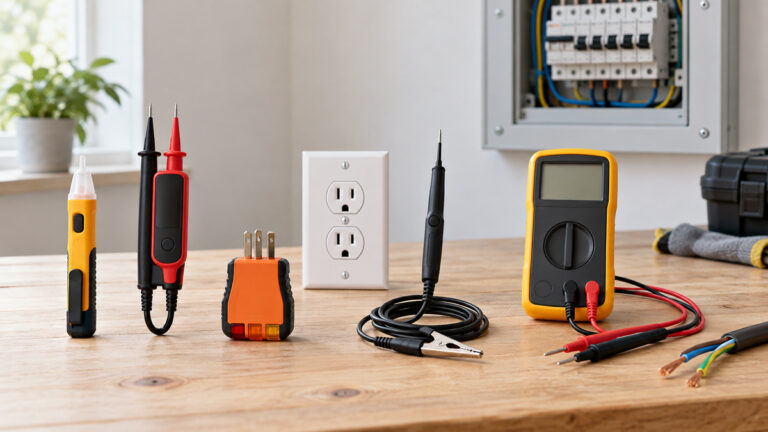
A plug-in GFCI tester is a separate tool that checks the GFCI from the outlet face. The TEST button on the receptacle checks the device itself. Neither method checks everything about the wiring. The Leviton pages we opened do not compare plug-in testers with the button, so this article does not rank them. For a comparison of tester types, read our post on how to use a multimeter on an outlet, which covers the measurements a meter can and cannot tell you.
If you already own a plug-in tester, follow its own instructions. Leviton’s page advises that a GFCI tested with a lamp or radio should trip and then reset. That is a manual check, not a diagnosis of the wiring.
What the button does not tell you
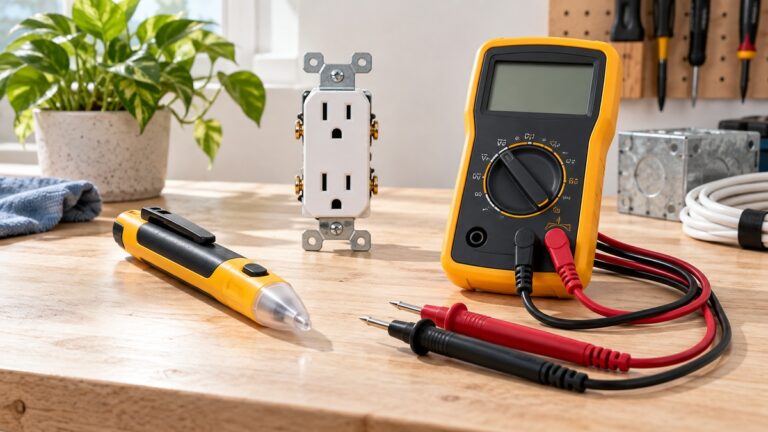
The self test does not confirm that the outlet is wired correctly. A GFCI installed with reversed line and load wires, a missing ground, or an open neutral may still look normal at the TEST step, or it may not work at all. For that, a dedicated receptacle tester or a qualified inspection is more useful. Our post on non-contact voltage testers and multimeters explains why a voltage tester alone does not confirm a safe outlet.
A voltage tester can show that voltage is present. It cannot show that a GFCI will trip when it should. Those are two different questions, and a single tool rarely answers both.
When to stop and call an electrician
Call a licensed electrician if the device fails the TEST step, if RESET does not stay in, if the outlet is warm or smells of burning, or if you see scorching on the face plate. Also call if you are unsure whether the outlet is wired to a GFCI at all. Work on mains wiring, service panels, and breakers can cause serious injury or death. Hubbell’s notice and the Leviton pages both point to a qualified person for replacement and repair.
Do not use a meter or tester to check mains wiring if you do not know how to do it safely. A tool with the wrong category rating or a worn lead can fail when it is needed most. Check the CAT rating of any tester you use, and use it only for the job its rating supports.
How we chose
This article is about the general GFCI self test, not one model. We looked for manufacturer pages that describe how the TEST and RESET buttons work and how often to test. We opened three Leviton support pages and one copy of a Hubbell notice that describes the same test sequence. We did not use retail listings, forums, or general home-improvement articles as sources for safety steps.
What we could not verify
The sources we opened do not give a trip time, a trip threshold, or the testing standard the device was certified to. The Leviton pages do not show a publication date. The Hubbell copy is a third-party copy, hosted on the Fine Homebuilding site, and its document code and date are not visible in the copy we opened. The sources do not cover every GFCI brand, and the self-test behavior described applies to the Leviton models named on those pages, not to every device on the market.
FAQ
How often should I do a GFCI self test?
Leviton’s support page says to test GFCIs monthly. Its self-test indicator page says self-test models should still be tested every month. Hubbell’s notice also recommends a monthly test.
What does it mean if RESET will not pop out?
Hubbell’s instructions say the device should be taken out of use and the manufacturer contacted. Do not keep using that outlet on the assumption it is still protected.
Does the self-test light mean the GFCI is fine?
A green status light means the device is wired properly, according to the Leviton page. It does not replace the monthly manual TEST.
Can I test a GFCI with a multimeter?
The sources we opened do not describe a multimeter method for a GFCI self test. Use the TEST and RESET buttons as the manufacturer describes, and use a multimeter only for measurements its CAT rating supports.
Is a GFCI self test the same as a GFCI tester?
No. The self test is the TEST button on the receptacle. A GFCI tester is a separate tool. The sources do not compare the two in detail.
What if my outlet has no TEST button?
The sources do not cover that case. Check the device label, and ask a licensed electrician if you are not sure what the outlet is.
Bottom line
Press TEST monthly. If the GFCI trips and RESET restores power, it passed that check. If it does not trip, or RESET will not hold, stop using the outlet and call a licensed electrician or the manufacturer.
Sources
- Leviton, “How to test a Leviton GFCI (Ground Fault Circuit Interrupter)”, https://leviton.com/support/literature/blogs/how-test-leviton-gfci-ground-fault-circuit-interrupter (opened 2026-10-27; no publication date shown)
- Leviton, “Self-Test GFCI Indicators”, https://leviton.com/support/literature/blogs/self-test-gfci-indicators (opened 2026-10-27; no publication date shown)
- Leviton, “Do I Need to Test My GFCIs Monthly”, https://leviton.com/support/resources/product-support/protection-devices-and-receptacles/gfci/do-i-need-to-test-my-gfcis-monthly (opened 2026-10-27; page footer copyright 2026)
- Hubbell Wiring Device-Kellems, “Instructions for Testing GFCI Receptacles” (third-party copy hosted by Fine Homebuilding, https://images.finehomebuilding.com/app/uploads/2007/11/29013643/hubbell_safety_alert.pdf; opened 2026-10-27; no document code or date visible in this copy)