Fluke 772
As an Amazon Associate we earn from qualifying purchases.
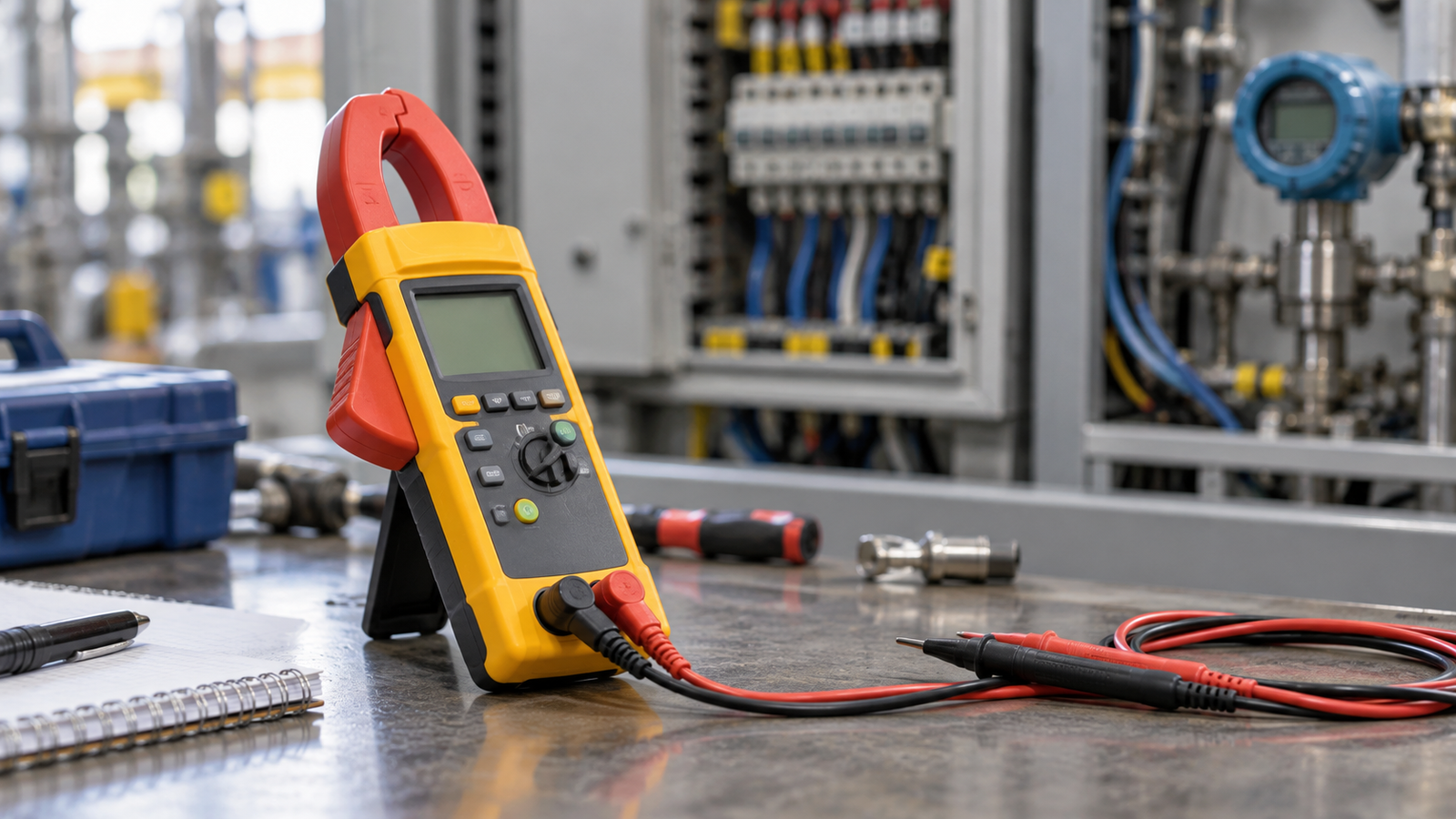
The Fluke 772 is not a general-purpose multimeter. It is a milliamp clamp loop meter for 4-20 mA process signals, the current loops that carry readings from transmitters, valves and sensors into control systems. Someone who searches for a Fluke 772 is usually working on instrumentation, not on household wiring. This explainer describes what the meter does, how to use it safely, and which specifications Fluke publishes, using only the Fluke product page, the instruction sheet and the calibration manual we opened on 27 October 2026.
Quick answer
- The 772 measures 4-20 mA signals in-circuit through a detachable clamp, sources and simulates 4-20 mA signals, and supplies 24 V loop power, according to Fluke’s product page and instruction sheet.
- It is built for testing control system I/O and I/Ps, and it measures current without breaking the loop, as the product page describes.
- The meter does not read general DC voltage in the way a multimeter does. The instruction sheet lists the 0 V to 30 V dc measurement and the 0 V to 10 V dc sourcing as features of the 773 and 773-II, not the 772.
- Fluke’s instruction sheet warns against use in CAT III or CAT IV environments without the protective cap on the test probe, and it asks you not to touch voltages above 30 V ac rms, 42 V ac peak or 60 V dc.
What the Fluke 772 measures and sources
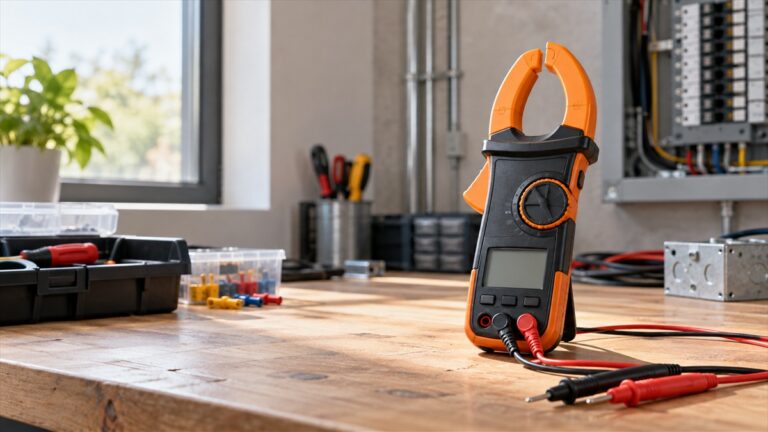
The product page describes the 772 as a loop meter that measures, sources and simulates 4-20 mA signals. In practice that means three jobs. It reads the current in a loop without breaking the circuit, using the clamp. It can drive a known current into a control input, which lets a technician check the receiving end of a loop without a transmitter. And it can supply 24 V dc to power a transmitter while you measure, which the instruction sheet lists as a loop power supply output.
The clamp reads in-circuit current. The instruction sheet describes in-circuit measurement of 0 mA to 24 mA dc, and up to 99.9 mA dc, using a remotely connected clamp on an extension cable. The product page says the clamp is detachable and that the extension cable lets you reach measurements in tight locations. Fluke says the meter can measure 10 to 50 mA signals in older control systems using the 99.9 mA range, which matters if your loops are older than the standard 4-20 mA scale.
Sourcing works the other way. The 772 can source and simulate 0 mA to 24 mA dc, and it includes an automatic ramp or 25% step output. The product page says it can ramp or step the 4-20 mA output for remote testing. The instruction sheet also lists a 250 ohm HART resistor that can be engaged for the mA source.
The display shows the milliamp reading and, according to the product page, a percentage of the 4-20 mA span on a dual backlit display. Other display features in the instruction sheet include hold, electronic zero, percentage span, a backlight, and a measurement spotlight LED for dark enclosures.
Specifications Fluke publishes
The table below uses the figures printed on Fluke’s product page for the 772 and in its calibration manual where the page is silent. The manufacturer’s figures describe the meter under the conditions the company states.
| Item | Figure Fluke publishes |
|---|---|
| Measurable conductor diameter | 4.5 mm maximum (0.177 in) |
| mA measurement by clamp | 0 to 20.99 mA, accuracy 0.2% + 5 counts; 21.0 mA to 100.0 mA, accuracy 1% + 5 counts |
| mA measurement in series with test jacks | 0 to 24.00 mA range (the accuracy figure for this row was not read in full; see Fluke’s product page) |
| Loop power | 24 V dc output (instruction sheet) |
| Operating temperature | -10 °C to 50 °C |
| Storage temperature | -25 °C to 60 °C |
| Operating altitude | 0 to 2000 m |
| IP rating | IP40 |
| Size | 44 mm x 70 mm x 246 mm |
| Weight | 410 g |
| Power | 4 AA 1.5 V alkaline (IEC LR6); about 12 hours in mA source into 500 ohms |
| Warranty | Three years for electronics; one year for the cable and clamp assembly |
| In the box | TL75 test leads, AC72 detachable clips, TL940 mini hook test leads, soft carrying case, magnetic hanging strap, quick reference guide |
Two rows need a note. The product page gives the 12-hour battery figure for sourcing into a 500 ohm load, and that figure will shorten under heavier loads or with the backlight on. The accuracy rows are Fluke’s stated figures for the clamp and the series jacks. They do not describe how the meter performs when the loop is in an unusual electrical environment, which the product page does not cover in detail.
How to use it safely
Start with the battery door and the probes. The instruction sheet says the battery door must be closed and locked before you operate the meter, and that you must remove probes, test leads and accessories that are not needed for the measurement. Replace the batteries when the low battery indicator shows. Remove the batteries if the meter will be stored for a long time, or if it will be kept above 50 °C, because battery leakage can damage the unit.
Voltage limits come next. The instruction sheet says not to touch voltages above 30 V ac rms, 42 V ac peak or 60 V dc. It also says not to exceed the measurement category rating of the lowest-rated individual component of the meter, probe or accessory. Make sure every probe and clip you use carries the rating you need.
Protect the probe in CAT III and CAT IV settings. The instruction sheet says not to use the meter in CAT III or CAT IV environments without the protective cap installed on the test probe. The cap reduces the exposed probe metal to less than 4 mm, which the manual says lowers the possibility of an arc flash from a short circuit. Do not make connections on hazardous live conductors in damp or wet environments.
Wear the protection the situation calls for. The instruction sheet says to comply with local and national safety codes, and to use personal protective equipment, including approved rubber gloves, face protection and flame-resistant clothing, where hazardous live conductors are exposed. It also says to take care around bare conductors and bus bars.
Understand the measurement categories. The instruction sheet explains that Measurement Category II applies to circuits connected directly to utilization points such as socket outlets, Category III applies to the distribution part of the building’s low-voltage mains, and Category IV applies at the source of that installation. The category your meter and accessories carry sets the places where you can use them, so match the category to the point you are measuring.
Do not use a damaged meter. The instruction sheet says not to use the product if it operates incorrectly, and to disable it if it is damaged. Inspect the test leads for insulation damage or exposed metal, and replace them if they show wear.
Mind the clamp jaws. The instruction sheet says to make sure the clamp jaws are closed before you use the electronic zero function. The product page says the clamp is detachable, and it describes the extension cable as the way to reach tight spots.
Features that change how you work
The 772 has three features that save time on a live loop. The first is the in-circuit measurement, which lets you read the current without opening the loop. The second is the 250 ohm HART resistor that can be engaged for the mA source. The third is the ramp and step function, which changes the output automatically so that you can test a receiver across its range without manual adjustment. The product page says these features let you test 4-20 mA signals faster than with a traditional DMM, and it says that is without breaking the loop.
The product page also describes the dual display, which shows both the milliamp reading and the percentage of span. That display is useful when you need to compare a signal against its scale. The measurement spotlight LED helps when you work in a dark enclosure, and the backlight and auto power-off settings extend battery life.
Checks before you buy
Confirm that a loop meter is the tool you need. The 772 measures and sources milliamp signals. It does not appear in the sources we opened as a general voltage meter, and the instruction sheet lists the dc voltage features under the 773 and 773-II. If your work needs voltage, resistance or capacitance across a wide range, a multimeter is the better fit, and our guide to true-rms multimeters covers that format.
Check the conductor size. The product page gives a 4.5 mm maximum conductor diameter for the clamp. A thicker cable will not close in the jaw.
Check the category rating for your location. The instruction sheet’s category warnings and the protective cap rule apply in CAT III and CAT IV settings. The sources we opened do not give a single numeric category rating for the 772 itself, so read the label on the unit you buy and the instruction sheet that comes with it.
Check the model line. Fluke sells the 772 alongside the 773 and 773-II. The instruction sheet covers all three, and it marks several features, including the 0 V to 30 V dc measurement, the 0 V to 10 V dc sourcing and the scaled mA output, as belonging to the 773 and 773-II. Confirm which of those features you need before you order.
For work that includes electrical testing of motors or panels, the clamp meter formats in our guide to AC clamp meters may be a better starting point, because they are built for AC current on mains conductors.
How we chose
This explainer uses three criteria. The figures had to appear in Fluke’s product page, instruction sheet or calibration manual, all opened on 27 October 2026. The safety advice had to come from the instruction sheet’s own warnings. Every statement about what the meter does had to match a feature Fluke lists for the 772 or the 772/773 family. We did not rank the 772 against other loop meters, and this article does not claim it is the best tool for any process.
What we could not verify
The sources we opened do not give a single numeric measurement category for the 772. They describe the categories in general and give the protective cap rule, but they do not state the rating of the unit itself.
The accuracy figure for the series-jack range is cut off in our reading, so the table shows only the range. Check the full table on the manufacturer’s page before you rely on it for a calibration record.
The calibration manual is for qualified personnel. It covers verification and adjustment, and the sources we opened do not describe a field procedure for checking the 772 against a reference in your plant. We did not write one.
The sources we opened do not describe how the 772 performs on a loop with an unusual electrical environment, such as strong electromagnetic fields, beyond the EMC note on the product page.
The sources we opened do not say how long the battery lasts under your duty cycle. The 12-hour figure is for sourcing into a 500 ohm load, as Fluke states it.
FAQ
What does the Fluke 772 do?
It measures 4-20 mA signals through a detachable clamp, sources and simulates them, and supplies 24 V loop power. Fluke says it is built for testing control system I/O and I/Ps.
Can the 772 measure voltage like a multimeter?
The instruction sheet lists the 0 V to 30 V dc measurement as a feature of the 773 and 773-II. The sources we opened do not show a general dc voltage function for the 772, so check the model before you buy.
What is the largest conductor the clamp will take?
Fluke publishes a 4.5 mm maximum conductor diameter for the clamp.
Does it need to break the loop?
Fluke’s product page says the meter measures 4-20 mA signals without breaking the loop. The series-jack measurement is a different method and needs the test jacks connected.
Is the 772 rated for CAT III or CAT IV work?
The instruction sheet warns against use in CAT III or CAT IV environments without the protective cap on the probe. The sources we opened do not give a numeric rating for the 772, so read the label on your unit.
What is the warranty?
Fluke’s product page lists three years for electronics and one year for the cable and clamp assembly.
Bottom line
The Fluke 772 is a loop meter for 4-20 mA work. It reads loop current without breaking the circuit, sources signals for testing the receiving end, and supplies loop power. Before you buy, confirm that you need a loop meter rather than a multimeter, check the clamp size, and read the category warnings in the instruction sheet for the places you will work.
Sources
- Fluke Corporation, “Fluke 772 Milliamp Process Clamp Loop Meter,” product page. https://www.fluke.com/en-us/product/calibration-tools/ma-loop-calibrators/fluke-772 (opened 2026-10-27)
- Fluke Corporation, “772/773/773-II Milliamp Process Clamp Meter, Instruction Sheet,” PDF, Rev. 2, 6/23. https://media.fluke.com/f8269a72-a3bf-4d6d-b3b8-b10800c282d2_original%20file.pdf (opened 2026-10-27)
- Fluke Corporation, “772/773 Milliamp Process Clamp Meter, Calibration Manual,” PDF, Rev. 1, 5/19. https://media.fluke.com/32d30255-4e7f-40ea-adc2-b10800c28141_original%20file.pdf (opened 2026-10-27)