Solenoid Tester Pens Compared: 2 Listings
As an Amazon Associate we earn from qualifying purchases.
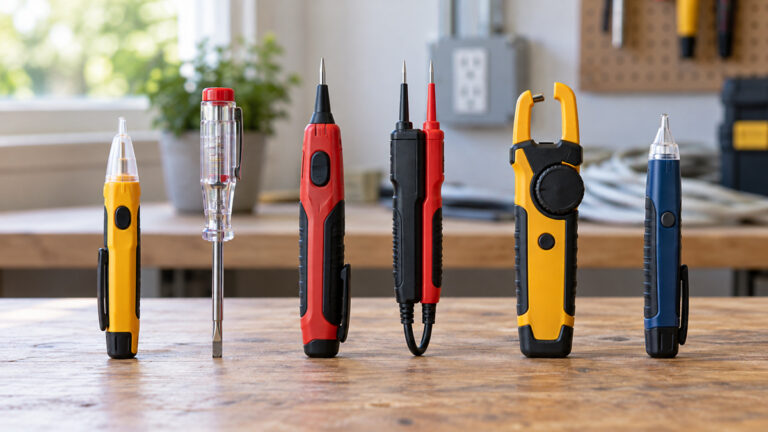
Solenoid tester pens are small voltage pens sold under the solenoid name. This page looks at the two listings in this set whose products are pen-style voltage testers. It reports what each listing states about voltage range, category rating, power and build, and it notes where the listings are silent.
Two other products carry the solenoid name but are a different kind of tool, and they are covered in the section on how the listings were chosen. Listing data was checked on 2026-10-13 for the first listing and 2026-10-20 for the second.
Quick answer
If you need a solenoid-style pen with a stated voltage span and a stated safety category, the first listing is the one that gives both. The Ideal Electrical Vol-Con pen states AC and DC detection from 100 to 600 V and a CAT III 600V rating. The second listing, a JTLB pencil, states a minimum operating voltage of 90 volts and gives no category rating.
The second listing names no maximum voltage, and neither listing states a response time, so the first listing is the stronger match on stated figures alone.
Comparison table
| Listing | Stated voltage | Stated safety rating | Power | Indicators and build |
|---|---|---|---|---|
| Ideal Electrical Vol-Con Solenoid Voltage Tester, LED, CAT III 600V (first listing) | AC and DC detection, 100 to 600 V (bullets) | CAT III 600V, UL-certified (bullets) | Power source field reads “Lamp”; no battery type named | Bright LED and neon indicators; vibrating alert; replaceable shielded leads; low-impedance design |
| Pencil Solenoid Coil Tester JTLB Red Test Pencil (second listing) | Minimum operating voltage 90 volts (specification field); no range in the bullets | None named | Battery powered (specification field) | Red pencil with LED light; ABS housing; fully insulated, no exposed metal (bullets) |
The first listing: Ideal Electrical Vol-Con solenoid voltage tester
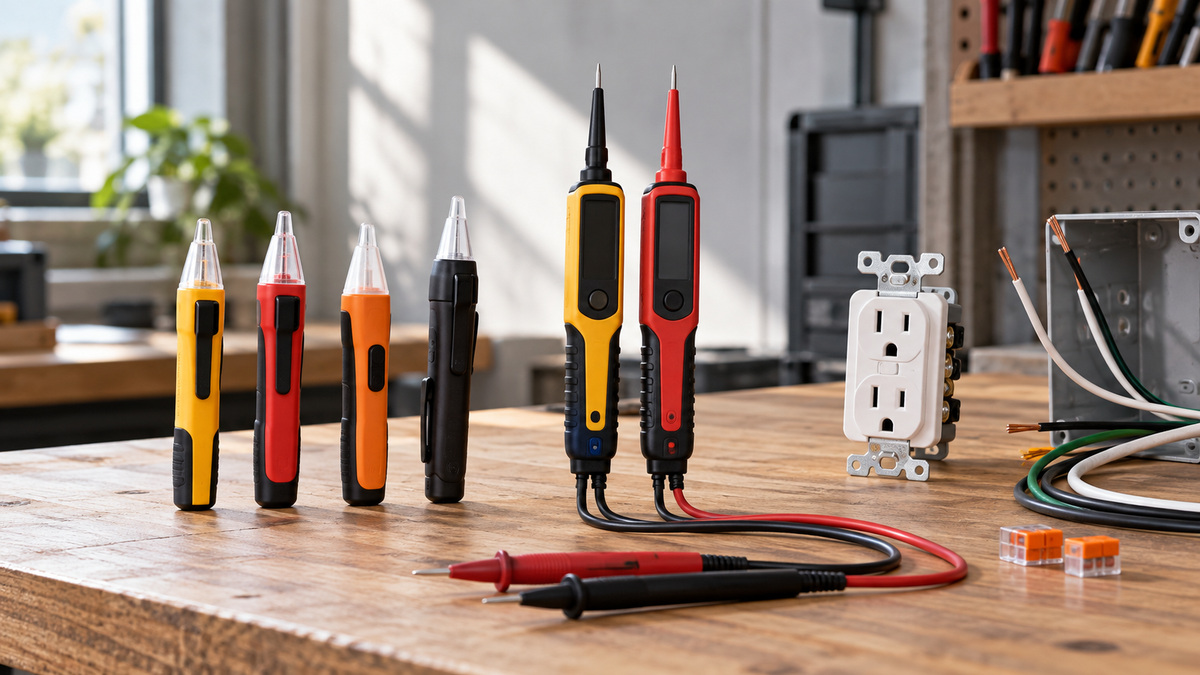
The listing names Ideal Industries and model 61-065 and describes a yellow voltage tester with AC and DC detection, a vibrating alert and a low-impedance design. The specification fields give an item weight of 5.28 ounces and dimensions of 7 x 2.38 x 1.5 inches. The measurement type is listed as voltmeter, the warranty as a 2 year manufacturer warranty, and the included components as a unit and an instruction guide.
The bullets say the tester is UL-certified for CAT III 600V circuits, measures voltage from 100 to 600 V with a vibrating alert for live AC, and uses replaceable shielded leads that the listing says comply with IEC61010-031. They describe bright LED and neon indicators, and they say the low-impedance design removes false readings caused by ghost voltages.
- Stated voltage span: 100 to 600 V, AC and DC (bullets)
- Category rating: CAT III 600V (bullets and item highlight field)
- Leads: replaceable, shielded, IEC61010-031 (bullets)
- Warranty: 2 year manufacturer (specification field)
The power source field reads “Lamp”, which does not name a battery type. Check the product page if you need to know how the unit is powered.
The second listing: JTLB pencil solenoid coil tester
The second listing is a red pencil with an LED light, sold under a title that calls it a solenoid coil tester and an electricity voltage tester. Its specification fields list battery power, a minimum operating voltage of 90 volts, a style name of Protection, an item weight of 0.704 ounces and two colors, red and white. The brand field reads JTLB.
The bullets describe an ABS body that is completely insulated with no exposed metal or conductive parts. They say the pencil is suited to checking power cables, circuit breakers, wall-mounted sockets, junction boxes and fuses, and they describe it as compact and reusable. The bullets give no voltage span, no category rating and no indicator description beyond the title’s reference to an LED light.
- Stated minimum operating voltage: 90 volts (specification field)
- Power: battery powered (specification field)
- Build: ABS, fully insulated, no exposed metal (bullets)
- Weight: 0.704 ounces (specification field)
This listing suits a shopper who wants a light, insulated pencil for checking outlets and breakers, provided the 90 volt minimum is acceptable for the circuits involved. The listing does not say what the maximum is, so the pencil should not be read as covering a full range.
How these two were chosen
The keyword names a pen-style solenoid tester. The results for this keyword also include a solenoid valve tool that opens valve stems with a magnet, and an AC magnetic field detector that shows motor rotation direction. Those two are different tools from a voltage pen, so they are left out of this comparison. The two listings above are the ones whose function is voltage detection in a pen or pencil form.
Listing figures come from each listing’s own specification fields and bullet points. No figure was taken from a different listing.
Worked example: a 480 V check against each listing
Take a 480 V circuit as an illustration. The first listing states detection from 100 to 600 V, so a 480 V reading falls inside its stated span with 120 V to spare below the top of the range. The second listing states a minimum operating voltage of 90 volts and no upper limit, so the same circuit is above its minimum, but the listing does not say the pencil’s accuracy or response at that level.
The arithmetic is simple, but it shows the difference in what each listing states. The first gives a bounded span that a buyer can check against the circuit. The second gives a single lower figure and leaves the upper end unstated.
What the listings do not say
- Neither listing states a response time or a sampling rate for its indicator.
- The first listing’s power field reads “Lamp”, and no battery type is named anywhere in its text.
- The second listing gives no safety category, so its suitability for a given installation category cannot be read from the listing.
- Neither listing states a test lead length or a probe tip dimension.
Related buying guides
For a wider view of pen-style checks, the pen voltage detector guide covers the category, the electrical tester guide covers multi-purpose testers, and the circuit tester guide covers devices that check continuity and polarity along a circuit.
FAQ
Are both listings for voltage detection?
Yes. The first listing describes AC and DC voltage detection from 100 to 600 V. The second is a voltage pencil with a stated minimum operating voltage of 90 volts.
Which listing states a safety category?
The first listing states CAT III 600V in its bullets and item highlight. The second listing states no safety category.
How is each pen powered?
The second listing states battery power. The first listing’s power source field reads Lamp and does not name a battery type, so check the product page before buying.
Why are the other solenoid-named products not included?
They are a magnetic valve-opening tool and an AC magnetic field detector for motor rotation. Their function differs from a voltage pen, so they do not match this comparison.
What should I confirm before buying?
Confirm the voltage range and category rating your circuits need, and check the current listing for the power type and lead details. Do not assume a pencil listing covers the same span as a pen listing.
Bottom line
Between these two listings, the Ideal Electrical Vol-Con pen gives the clearer set of stated figures: a bounded 100 to 600 V span, a CAT III 600V rating and replaceable shielded leads. The JTLB pencil is a lighter insulated option with a stated 90 volt minimum and no category rating. Choose by the voltage span and the rating your work requires, and confirm the rest on the product page.