AstroAI DM200M Multimeter Review: 2000 Counts, CAT III 600 Volts and Fuses
As an Amazon Associate we earn from qualifying purchases. Details
If you are considering the AstroAI DM200M multimeter, the first question is whether its ranges and its CAT III 600 volt rating suit the circuits you plan to measure. A multimeter that is rated lower than the circuit is a safety risk, and a range that is too small gives no useful reading. This review covers only what the listing states about ranges, rating, fuses, display, battery, features and included parts. It does not report any test of the meter, and it does not describe how to measure any circuit. Use the listing to decide whether the meter matches your work, and follow the manual and your local electrical rules.
Quick answer
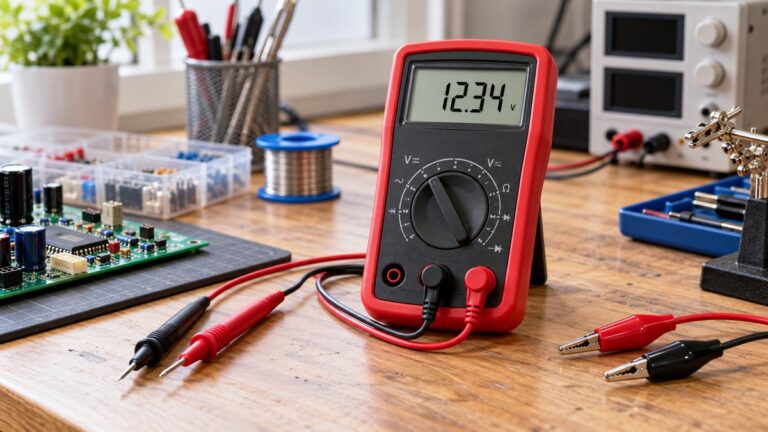
The AstroAI DM200M is a black, battery-powered digital multimeter with a 2000-count display, which shows readings up to 1999. The listing gives a CAT III 600 volt rating, with DC voltage to 600 volts, AC voltage to 600 volts, AC and DC current to 10 amps, and resistance to 20 megohms. The meter uses one 9-volt battery and has manual range selection. The listing gives two fuses, a 250-milliamp fuse rated 250 volts and a 10-amp fuse rated 250 volts. The bullets describe a 15-minute auto power-off, data hold, max value recording, a backlit display and a kickstand. The listing gives no warranty term.
What to check in a multimeter
Four details decide whether this meter fits. Each one can rule it in or out.
1. Ranges. The specs list DC voltage ranges of 200 millivolts, 2 volts, 20 volts, 200 volts and 600 volts, and AC voltage ranges of 200 volts and 600 volts. The current ranges are 20 milliamps and 200 milliamps for AC and DC, and 10 amps. Resistance runs from 200 ohms to 20 megohms. The range selection is manual, so you set the range yourself before each reading.
2. Rating. The specs field reads “Cat Iii 600v,” and the environmental field reads “CAT III 600 V.” The CAT system classifies live circuits used in measurement, and the source describes CAT II as circuits directly connected to the low-voltage installation and CAT IV as the source of the high-voltage installation. A CAT III 600 volt rating covers that category and voltage only, so check it against the circuit you plan to measure.
3. Fuses. The listing gives a 250-milliamp fuse rated 250 volts and a 10-amp fuse rated 250 volts. The bullets describe the fuses as ceramic and say they protect the meter from overloading. A fuse rated at 250 volts is a different rating from the 600-volt measurement range, so read the fuse ratings on the product page before you rely on them for a high-voltage reading.
4. Power, display and kit. The meter uses one 9-volt 6F22 battery, and the display shows up to 1999 with a 3-times-per-second sample rate. The bullets describe the display as backlit, with a low battery indicator and a 15-minute auto power-off. The included components are a multimeter, a pair of test leads and a manual. The bullets mention a silicone protective case, which the included components field does not list, so check the box.
Use these rules to choose:
- Choose this meter if you need a CAT III 600 volt rated handheld multimeter with 2000 counts and manual ranges, and you will confirm the fuse ratings for your work.
- Choose a different meter if you need a 600-volt fuse rating, because the listing gives 250 volts for both fuses.
- Choose a different meter if you need an auto-ranging meter, because this one is manual.
For a broader look at handheld meters, the best hand held digital multimeter guide covers that category, and the testing AC voltage with a multimeter guide covers how the voltage ranges are used.
1. AstroAI Digital Multimeter Voltage Tester, TRMS 2000 Counts Volt Meter; Fast and Accurately (Review verdict)
Specs from the listing (checked 2026-10-13):
- Specification Met: Cat Iii 600v
- Max Display: 1999
- DC Voltage: 200mV/2V/20V/200V/600V ±(1.0%+5)
- AC Voltage: 200V/600V ±(1.2%+5)
- Fuse Protection: mA: F250 mA/250 V Fuse;10 A: F10 A/250 V Fuse
- Power: 1 x 9 V 6F22 Battery
Pros
- 2000-count display with a max reading of 1999, per the title and specs
- CAT III 600 volt rating, per the specs
- Data hold, max value and 15-minute auto power-off, per the bullets
Cons
- Fuses are rated 250 volts while the voltage ranges go to 600 volts
- Range selection is manual, not automatic
- Case mentioned in the bullets is not in the included components
Best for: A reader who wants a compact CAT III 600 volt multimeter with manual ranges for home and car checks.
Skip if: Skip if you need auto ranging, a 600-volt fuse rating, or a stated warranty.
View on Amazon (affiliate link)
The AstroAI DM200M multimeter
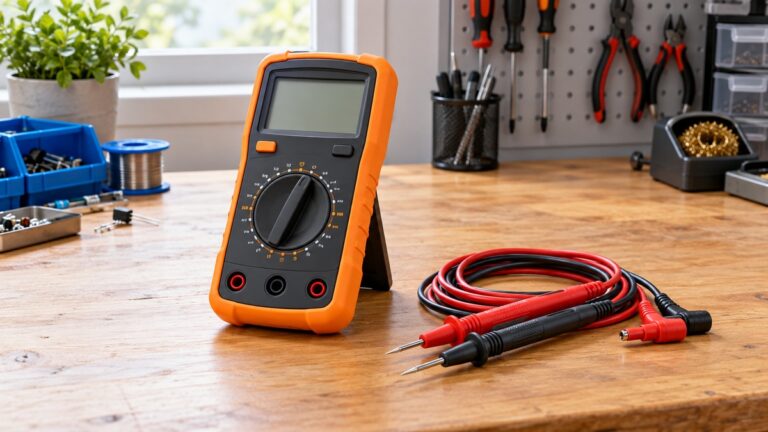
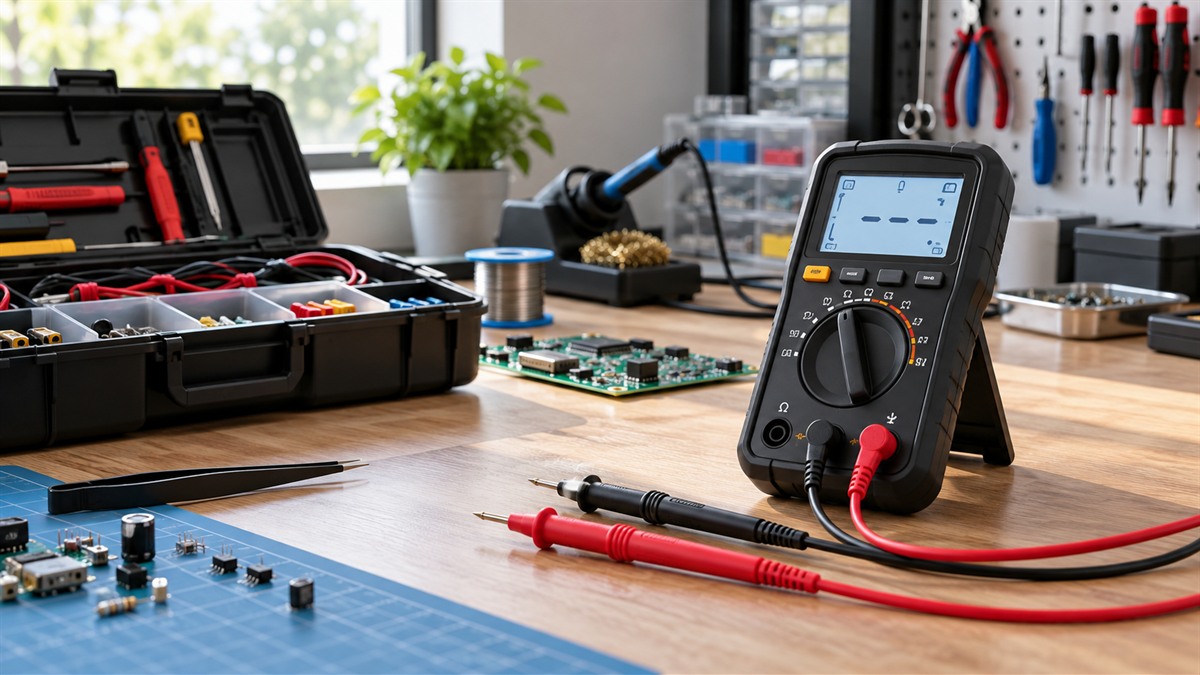
The DM200M is a pocket-sized, black multimeter with a model label of DM200M and a part number that includes DM200M. The item measures 5.91 by 3.94 by 1.97 inches. The listing gives a pollution level of 2 and names the measurement type as multimeter. The compatible devices field lists most electrical devices.
The meter fits a reader who wants a compact, handheld meter for home troubleshooting, car checks and basic electrical work, and who will set the range by hand. The bullets describe a data hold and a max value function, which hold a reading or record the highest value.
The listing has several things to check. The bullets describe a silicone protective case and kickstand, but the included components field lists only the meter, the test leads and the manual. The fuse ratings are 250 volts, while the voltage ranges go to 600 volts. The listing gives no warranty term. The bullets name automotive and electrical engineering uses, which are the maker’s descriptions.
Who should skip it: a reader who needs auto ranging, a reader who needs a 600-volt fuse rating, and a reader who needs a stated warranty.
Measuring with a manual range
A manual-range meter depends on the user choosing the right range before the reading. The listing gives the ranges in the specs, and the bullets say the meter has data hold and max value recording. Choose the range that covers the expected reading, and use the data hold to keep a reading on the display while you check the connection.
The Wikipedia overview of the multimeter says digital multimeters have numeric displays and are more precise than analog meters, and that they offer some intrinsic safety features to protect the operator if connected to voltages above their measuring capability. The overview does not describe how much protection a given model offers, so the fuse ratings and the CAT rating on the listing are the figures to check.
Electrical hazards to plan around
The U.S. Occupational Safety and Health Administration lists the most frequent causes of electrical injury as contact with power lines, a lack of ground-fault protection, a path to ground that is missing or discontinuous, equipment not used in the manner prescribed, and improper use of extension and flexible cords. The OSHA page lists insulation, guarding, grounding, electrical protective devices and safe work practices as ways to reduce the risk.
A multimeter does not supply those protections. The meter’s rating, your work practice and the circuit’s own protection all matter. If the circuit is outside your training, a licensed electrician should handle it.
Worked example: how a 120-volt reading sits below the 600-volt range
Compare that reading with the top of the AC voltage range, so you can see the margin the range leaves.
- Top of the AC voltage range: 600 volts, from the specs.
- Reading in this example: 120 volts.
- Margin below the top of the range: 600 minus 120 = 480 volts.
Check the arithmetic again. 600 minus 120 is 480. The example shows that a 120-volt reading sits well inside the 600-volt range. The range is the meter’s limit, not a guarantee, and the CAT rating for the circuit still has to suit the meter.
What the fuses do
The listing gives two fuses, a 250-milliamp fuse and a 10-amp fuse, both rated 250 volts. The Wikipedia overview of fuses says a fuse is a sacrificial device: a metal wire or strip melts when too much current flows, and once it has operated it must be replaced. Fuses have specific current and voltage ratings and a breaking capacity, so a blown fuse is a sign to find the overload before you replace it.
Resistance and what the ohm measures
The specs list resistance ranges from 200 ohms to 20 megohms. The Wikipedia overview of electrical resistance says resistance is an object’s opposition to electric current, measured in ohms, and that it depends in large part on the material. The meter reads resistance across a component or a circuit with the power off, so check that the circuit is de-energized before you measure resistance.
Ground-fault protection is also worth knowing. The Wikipedia overview of residual-current devices says an RCD or GFCI interrupts a circuit when current leaks to ground, so a meter reading is not a substitute for that protection.
Listed equipment and the manual
OSHA’s general electrical requirements say that listed or labeled equipment must be installed and used in accordance with the instructions in the listing or labeling. The DM200M listing gives a CAT III 600 volt rating and two fuses rated 250 volts. Use the meter as its manual describes, and check the listing for the category and the fuse ratings before each circuit you measure.
Five common mistakes
- Trusting the 600-volt range as the fuse rating. The listing gives 250 volts for both fuses.
- Skipping the range setting. The meter is manual, so set the range before each reading.
- Expecting a case. The listing does not include the silicone case in the component list.
- Ignoring the CAT rating. The rating is CAT III 600 volts and must suit the circuit.
- Assuming a warranty. The listing gives no warranty term.
FAQ
How many counts does it show?
The title says 2000 counts, and the max display is 1999.
What is the voltage range?
The specs give DC voltage up to 600 volts and AC voltage up to 600 volts.
What is the CAT rating?
The listing says CAT III 600 volts.
What fuses does it have?
A 250-milliamp fuse rated 250 volts and a 10-amp fuse rated 250 volts.
What battery does it use?
One 9-volt 6F22 battery.
Does it come with a warranty?
The listing gives no warranty term.
Bottom line
The AstroAI DM200M suits a reader who wants a compact handheld multimeter with 2000 counts, a CAT III 600 volt rating and manual ranges for home or car checks. The listing gives 250-volt fuses, a 9-volt battery and no warranty term, and its included components do not list the case the bullets mention. Confirm the fuse ratings for your work, set the range by hand, and check the CAT rating against each circuit before you measure.
Sources
- Multimeter, Wikipedia: what a multimeter measures, digital versus analog precision, and built-in protection.
- Measurement category, Wikipedia: CAT II for circuits directly connected to the low-voltage installation, and CAT IV for the source of the high-voltage installation.
- OSHA, Electrical overview: the most frequent causes of electrical injury and the ways to reduce the risk.
- Fuse (electrical), Wikipedia): a fuse melts under overcurrent, is sacrificial, and has specific current and voltage ratings.
- Electrical resistance and conductance, Wikipedia: resistance is opposition to current, measured in ohms, and depends on the material.
- Residual-current device, Wikipedia: an RCD or GFCI interrupts a circuit when current leaks to ground.
- 29 CFR 1910.303, OSHA electrical general requirements (Cornell LII): listed or labeled equipment is used per its listing instructions.