Best Panel Volt Meter Picks for DC and AC Monitoring
As an Amazon Associate we earn from qualifying purchases. Details
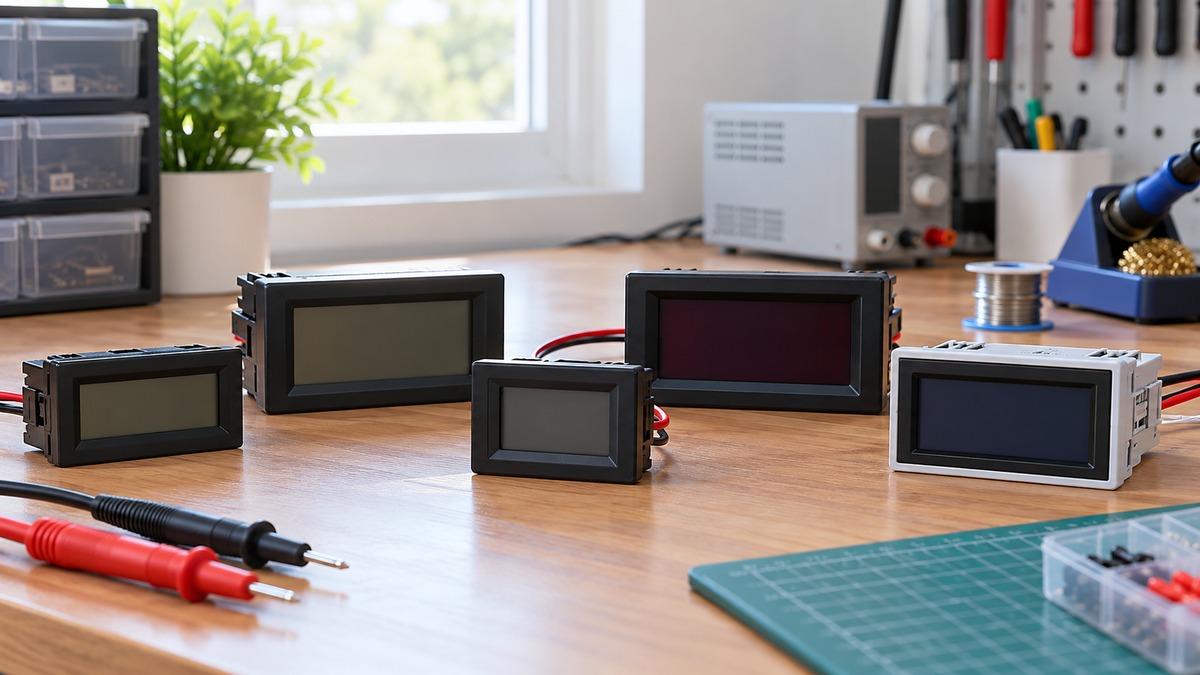
A panel volt meter is a small digital meter that fits a control panel, enclosure or board and shows voltage, and often current, while the equipment runs. The four listings below are panel-style meters. Two read DC voltage and two read AC voltage, and each names its input range. The figures were checked on 11 October 2026 and are shown as the sellers state them.
Quick answer: for DC monitoring of a small battery, the diymore and Rdxcv listings both state 0 to 100 V and 0 to 10 A. For AC monitoring of a 120 V or 240 V supply, the KETOTEK and DWEII listings both cover those voltages, and the DWEII also adds a 20 to 75 Hz frequency figure. The diymore listing has a conflict on its input cap, covered below.
The four meters at a glance
| Meter | Listed voltage | Listed current | Current type |
|---|---|---|---|
| diymore 5PCS 0.28 inch Volt Amp Meter (B08HQM1RMF) | DC 0 to 100 V display (30 V max input) | DC 0 to 10 A | DC |
| Rdxcv 2PCS 0.28 inch Digital Voltmeter Ammeter (B0GC3GXKYZ) | DC 0 to 100 V | 0 to 10 A | DC |
| KETOTEK Digital Ammeter Voltmeter Panel (B01EWW1RJ4) | AC 80 to 300 V | 0 to 100 A with CT | AC |
| DWEII 3PCS AC Panel Meter (B0DWMCDJGL) | AC 60 to 500 V | 0 to 100 A with CT | AC, 20 to 75 Hz |
How we chose these four
We kept a meter when its listing is a panel-style volt and ampere meter with a stated input range. We left out the Baomain DH-670, which is an analog ammeter with no voltage function. We also left out the USB-C power meters, the MakerHawk DC power tester with a TFT screen, and the handheld multimeters, because their listings describe a different job. Every fact below comes from the listing data alone.
- Voltage range: each pick states a voltage range and whether it is DC or AC.
- Current: each names the current range and whether a current transformer is included.
- Display: the display color and digit count are quoted where the listing gives them.
1. diymore 0.28 inch Volt Amp Meter, DC 100 V and 10 A
The listing gives a voltage display range of DC 0 to 100 V and a current range of DC 0 to 10 A. The display is a 0.28 inch digital tube with two colors, red and blue, and three digits. The listing gives a working voltage of DC 4 to 30 V, and it warns that the maximum input must not exceed 30 V, or the meter will be damaged. That warning conflicts with the 100 V display range on the same listing. The Specification Met field lists UL, IEC 61010-1 and IP67. The weight field reads 0.27 g, which looks wrong for a meter of this size, so check it on the product page.
Check the diymore meter on Amazon
2. Rdxcv 0.28 inch Digital Voltmeter Ammeter, DC 0 to 100 V
The listing gives a DC range of 0 to 100 V and 0 to 10 A, and it describes a dual-color LED system with red digits for voltage and blue digits for current. The casing is plastic. The listing says the meter can be wired in line with the circuit or powered from an independent supply. The package includes two volt amp meters, two two-wire connectors and two three-wire connectors. The title names EV cars and boats as uses. The listing gives no input cap, so its maximum input is not stated.
Check the Rdxcv meters on Amazon
3. KETOTEK Digital Ammeter Voltmeter, AC 80 to 300 V and 100 A
The listing gives an AC voltage range of 80 to 300 V and a current range of 0 to 100 A, with an accuracy stated as 1% plus 2 digits. It includes one precise current transformer, so no separate CT is needed. The display is red for voltage and green for current. The listing gives dimensions of 2.68 by 1.65 by 1.5 inches, which is 68 by 42 by 38 mm, and it runs from a corded supply. The title names 110 V and 220 V panels as uses.
Check the KETOTEK meter on Amazon
4. DWEII 3PCS AC Current Voltage Panel Meter with CT
The listing gives an AC voltage range of 60 to 500 V, a current range of 0 to 100 A and a frequency range of 20 to 75 Hz. The display is a 3-digit LED, and the listing says the meter is for single-phase AC between 60 V and 500 V. It includes a current transformer. The operating temperature is listed as minus 20 to plus 60 °C. The power-source field reads Solar Powered, which does not match the corded or AC use in the bullets, so confirm the supply on the product page.
Check the DWEII meters on Amazon
Worked example: does the input cap fit the circuit?
Take a 12 V battery bank. The diymore listing gives a 30 V maximum input, so 12 V sits well inside the limit. Now take a 48 V bank. The same listing shows a 0 to 100 V display, so the number on the screen looks like it covers 48 V. The 30 V maximum input is the figure to use, and 48 V is above it. The listing says the meter will be damaged above that input, so this bank needs a different meter. The Rdxcv listing gives 0 to 100 V with no separate cap, so check its maximum input before you connect it to a 48 V bank.
What the listings do not say
- None of the four listings gives an independent accuracy figure, apart from the KETOTEK’s stated 1% plus 2 digits.
- The diymore listing gives a 0 to 100 V display and a 30 V maximum input, and does not say which one is the working limit.
- The Rdxcv listing gives no maximum input, so its input limit is not stated.
- The DWEII power-source field reads Solar Powered, which the listing does not reconcile with its AC use.
Frequently asked questions
Which panel meters read DC voltage?
The diymore and Rdxcv listings both give DC 0 to 100 V with a 0 to 10 A current range.
Which panel meters read AC voltage?
The KETOTEK listing gives AC 80 to 300 V and the DWEII gives AC 60 to 500 V. Both include a current transformer for their 0 to 100 A current range.
What is a current transformer?
The KETOTEK and DWEII listings describe a current transformer included with the meter for measuring current on an AC line. The listings do not explain how to install it, so follow the manual.
Why does the diymore listing disagree with itself?
The listing gives a 0 to 100 V display range and also states a working voltage of DC 4 to 30 V, with a maximum input of 30 V. The listing does not explain the gap, so use the lower figure as the limit.
Conclusion
For DC monitoring, the diymore and Rdxcv are the two listings to compare, but the diymore’s 30 V input cap matters for anything above that voltage. For AC monitoring, the KETOTEK covers 80 to 300 V and the DWEII covers 60 to 500 V, so the DWEII reaches higher voltages. Check the input cap, the current transformer and the power source before you wire any of these meters.
For more on this kind of meter, see best DC volt meter, DC voltmeter and digital voltmeter.
diymore meter on Amazon · Rdxcv meters on Amazon · KETOTEK meter on Amazon · DWEII meters on Amazon