Home Energy Monitor
As an Amazon Associate we earn from qualifying purchases. Details
The person typing “home energy monitor” wants to see how much electricity the house, or one appliance, is using, so a bill stops being a surprise. That covers two kinds of product: panel monitors with clamp-on sensors that watch the whole home or individual circuits, and plug-in meters or smart plugs that watch one outlet. We kept eight listings across both kinds. Every figure comes from the Amazon listings we opened on 2026-10-17 or from the three outside pages named in the text. Where a listing is silent, we say it does not state the fact.
Quick answer
For a whole house, the Siemens Inhab listing states the most: up to 16 branch circuits plus two 200A main sensors, UL Listed. The Emporia Vue 3 listing states 8 circuit sensors and describes how long it keeps data. For one appliance, the P3 Kill A Watt P4400 is a plug-in meter with a kilowatt-hour display, and the Kasa KP125MP4 and Tapo P110M are smart plugs with energy monitoring in four-packs.
A panel monitor means working inside or beside the electrical panel, which belongs to a licensed electrician. A plug-in meter needs no wiring. Listings state specifications; they do not prove accuracy.
Whole-home monitor, plug-in meter or smart plug
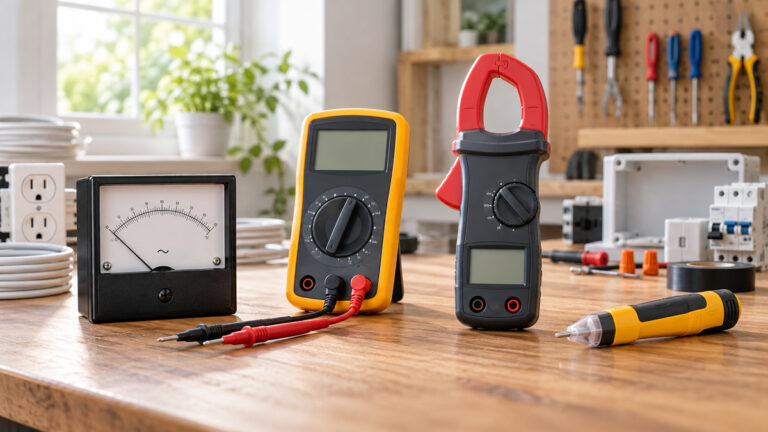
- Whole-home panel monitors (Emporia Vue 3, Siemens Inhab, Leviton LWHEM-2R) use clamp-on current sensors and a Wi-Fi module. They show total use, and some show individual circuits. They go in or at the panel.
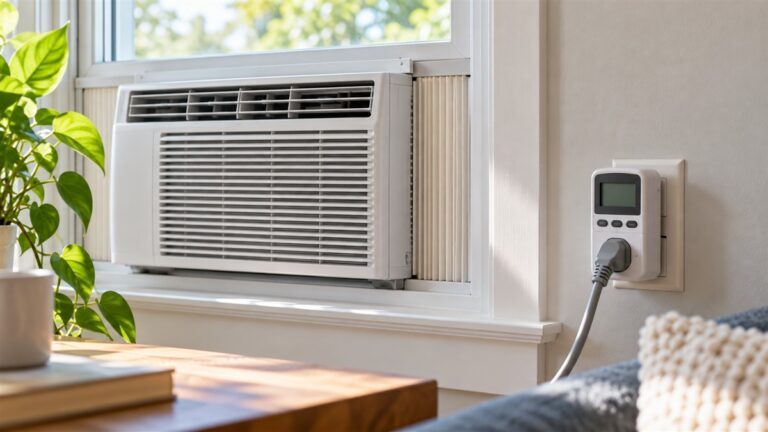
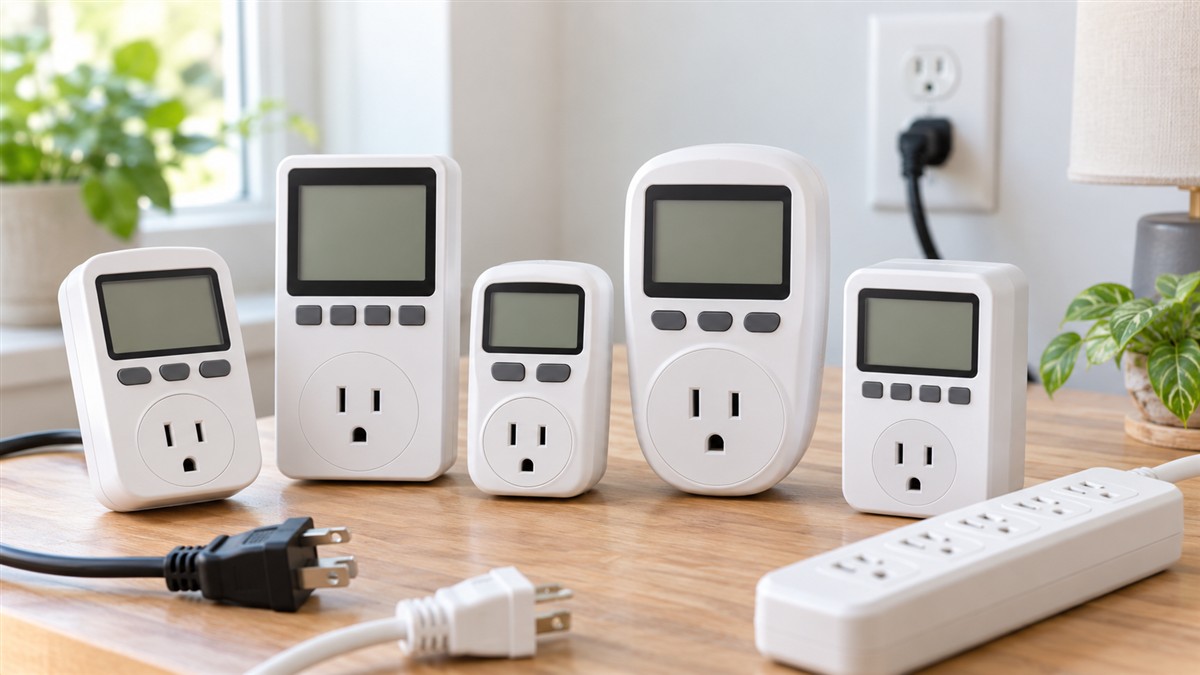
- Plug-in meters (Kill A Watt P4400 and P4460, Gardner Bender PM3000) sit between the appliance and the wall outlet and show volts, amps, watts or kilowatt-hours on a small screen.
- Smart plugs with energy monitoring (Kasa KP125MP4, Tapo P110M) do the same job for one outlet, but report to a phone app.
How we chose
We searched Amazon for “home energy monitor” and “plug in power usage meter” and kept brand-name listings that say they measure electricity use and give a model number. We favored listings with stated ratings, and we left out the many unbranded Wi-Fi meters. The criteria were:
- The listing says what it measures: whole home, individual circuits, or one outlet.
- It states a rating we can quote: circuits, amps, voltage, or a listing mark.
- It says how you read the result: LCD, or phone app.
What the listings do not state: none publishes a test report for accuracy. The Emporia listing says its sensors are accurate “from ±2%” (as written, with no upper bound), the Kill A Watt EZ listing says “accurate within 0.2%”, and the others state no accuracy. The Leviton listing does not state a circuit count, an accuracy figure or a UL listing.
Comparison table
Figures are from the listings, checked 2026-10-17. “Not stated” means the listing does not say.
| Product | Type | Measures | Rating or limit, per listing | How you read it | Listing mark | Warranty, per listing |
|---|---|---|---|---|---|---|
| Emporia Vue 3 (8 circuit sensors) | Panel monitor | Whole home plus circuits; solar and net metering | Single phase, single-split phase, 2-wire; others need an extra 200A sensor | App; needs 2.4 GHz Wi-Fi and internet | UL and CE | 1 year |
| Siemens Inhab INHEM1216 | Panel monitor | Mains plus up to 16 branch circuits | 16 x 50A sensors, 2 x 200A mains; USA and Canada only | App | UL Listed, CE marked | Not stated |
| Leviton LWHEM-2R | Panel monitor | Whole home; pairs with Leviton load center and smart breakers | One pair of CTs; circuit count not stated | My Leviton app | Not stated | Not stated |
| P3 Kill A Watt P4400 | Plug-in meter | One 115V appliance | 15 A; 115 volts | LCD, kWh | Certification field says “No” | 1 year limited |
| P3 Kill A Watt EZ P4460 | Plug-in meter | One appliance; eight units on LCD | 125 volts (field) | LCD | Not stated | 1 year limited |
| Gardner Bender PM3000 | Plug-in meter | One outlet; volts, amps, watts, Hz, VA, kWh | Not stated | LCD | CE, UL (specification field) | Field says “No Warranty” |
| Kasa KP125MP4 (4-pack) | Smart plug | One outlet each; usage over time | 15 A; 1800 W; 120 volts | Kasa app | FCC, RoHS, UL | 2 years |
| Tapo P110M (4-pack) | Smart plug | One outlet each; usage statistics and bill estimate | 15 A; 1800 W | Tapo app | FCC, RoHS, UL | Not stated |
Product cards
1. Siemens Inhab INHEM1216: best whole-home monitor for circuit-level detail
Specs (from the listing, checked 2026-10-17): Part number INHEM1216; weight 4.8 pounds; dimensions 1.1 x 5.71 x 2.76 inches; first available February 2, 2024. Title: 16-50Amp circuit level sensors and 2-200Amp main sensors. Included: energy monitor, wire harness, 200A CTs, 50A CTs, Wi-Fi assembly, wire nuts, splicing wires. Bullets: mobile app, USA and Canada only; measures at the panel mains and at up to 16 branch circuits; installs in new and existing electrical panels; custom alerts such as an oven left on; Time of Use, Peak Demand, Excess Solar, Net Metering and load shedding of compatible EV chargers and smart devices; CE marked and UL Listed in the US and Canada.
Pros: The most circuits stated, a listing mark, and a full included-parts list. Cons: The listing states no accuracy and no warranty. It is sold for the US and Canada only. It needs installation at the panel.
Best for: a household that wants to see which branch circuits are using power. Skip if: you will not use a licensed electrician for the panel work, or you live outside the US and Canada.
View on Amazon (affiliate link)
2. Emporia Vue 3 (8 circuit sensors): best for a stated data-retention policy
Specs (from the listing, checked 2026-10-17): Model EMV3A-2P-8; style: whole home monitor with 8 circuit sensors; weight 3.36 pounds; dimensions 10 x 5 x 5 inches; specification met: CE, UL; compatible with iPhone, Android and web app; 1-year warranty (bullet). Bullets: UL Listed; clamp-on sensors installed in the circuit panel; supports single phase, single-split phase and 2-wire systems, with a 200A sensor sold separately for other systems; needs 2.4 GHz Wi-Fi with an internet connection; 1-second data kept 3 hours in the app, 1-minute data kept 7 days, 1-hthe listing data kept indefinitely; solar and net metering.
Pros: The listing explains what data is kept and for how long, and states what electrical systems it supports. Cons: The accuracy wording (“from ±2%”) has no upper bound. It requires Wi-Fi and an internet connection to use the app.
Best for: a home with a standard panel where you want per-circuit use and solar monitoring. Skip if: your panel is a system the listing does not cover, or you have no 2.4 GHz Wi-Fi at the panel.
View on Amazon (affiliate link)
3. Leviton LWHEM-2R: best for a home with a Leviton load center
Specs (from the listing, checked 2026-10-17): Model LWHEM-2R; weight 1.89 pounds; included: monitor with one pair of current transformers, installation accessories and guide. Bullets: Wi-Fi connection for remote monitoring and control of a Leviton load center with over-the-air firmware updates; monitors whole-home consumption and production in real time and shows which power source is powering the home; can switch Leviton 2nd Gen Smart Circuit Breakers off and on and run schedules; My Leviton app.
Pros: It can control Leviton smart breakers as well as watch the load. Cons: The listing does not state the circuit count, accuracy, a listing mark or a warranty. It is written around a Leviton load center, and the listing does not say whether it works with other panels.
Best for: homes that already have, or plan to buy, Leviton smart breakers. Skip if: your panel is another brand, until the seller confirms compatibility in writing.
View on Amazon (affiliate link)
4. P3 Kill A Watt P4400: best plug-in meter for kilowatt-hours on one appliance
Specs (from the listing, checked 2026-10-17): Part number P4400; weight 6.4 ounces; dimensions 8.4 x 2.1 x 6.1 inches; 1 CR123A battery required; voltage 115 volts; amperage capacity 15 A; display LCD; certification field “No”; 1-year limited warranty; first available September 9, 2004. Bullets: four settings; monitor by day, week, month or year; large LCD counts consumption in kilowatt-hours; calculates electricity expense by day, week, month or year; designed for use with AC 115-volt appliances.
Pros: It states a 15 A capacity and a 115-volt design, and it shows kilowatt-hours directly. Cons: The listing carries odd fields (the power source reads “air-powered”) and the certification field says “No”. It needs a battery.
Best for: finding out what a refrigerator, a window unit or a computer uses over days. Skip if: you need a listing mark or you want to measure a 240-volt appliance; the listing states 115 volts.
View on Amazon (affiliate link)
5. P3 Kill A Watt EZ P4460: best plug-in meter with a stated accuracy
Specs (from the listing, checked 2026-10-17): Model P4460; voltage 125 volts; weight 6.7 ounces; dimensions 3.81 x 5.72 x 12.7 inches; 1-year limited warranty. Bullets: calculates cost and forecasts by week, month and year; displays eight units of measure on a large LCD; built-in backup of accumulated information; accurate within 0.2%. Several listing fields (heating method, fuel type, room type) look copied from another product category, and we do not use them.
Pros: It states an accuracy figure and a built-in backup of accumulated information. Cons: The listing does not state a current rating or a listing mark, and its category fields are unreliable. Its dimensions (12.7 inches high) are far larger than the figures in the P4400 listing, and the listing does not explain why.
Best for: an appliance check where a stated accuracy figure matters to you. Skip if: you need the current limit in the listing; it gives none.
View on Amazon (affiliate link)
6. Kasa KP125MP4 (4-pack): best smart plug with a stated 2-year warranty
Specs (from the listing, checked 2026-10-17): Model KP125MP4; 4 plugs; current rating 15 A; voltage 120 volts; wattage 1800 watts; specification met: FCC, RoHS, UL; weight 12.6 ounces; 2-year manufacturer warranty. Bullets: Matter-compatible with Apple Home, Alexa, Google Home and SmartThings; energy monitoring tracks usage over time; compact design, UL certified flame retardant; free Kasa app.
Pros: It states the 15 A and 1800 W limit and a UL mark, and you get four plugs. Cons: The listing does not state a measurement accuracy or whether the app shows watts live. It needs Wi-Fi.
Best for: tracking several lamps, chargers or small appliances in one app. Skip if: you want a display on the device itself; the listing describes an app.
View on Amazon (affiliate link)
7. Tapo P110M (4-pack): best smart plug with a stated cutoff threshold
Specs (from the listing, checked 2026-10-17): Model Tapo P110M (4-pack); current rating 15 A; wattage 1800 watts; specification met: FCC, RoHS, UL; weight 11.7 ounces. Bullets: Matter-certified; usage statistics and visuals; estimates your energy bill with single and periodic readings; scheduling; automatically cuts off power based on user-set thresholds and durations; Alexa and Google Assistant voice control.
Pros: The listing describes a power cutoff you can set, and bill estimates in the app. Cons: The listing states no accuracy and no warranty length. It reports to an app, not a built-in screen.
Best for: anyone who wants usage statistics and an automatic cutoff on one outlet. Skip if: you need a stated warranty in the listing.
View on Amazon (affiliate link)
8. Gardner Bender PM3000: best budget-style plug-in meter with a full unit set
Specs (from the listing, checked 2026-10-17): Model PM3000; battery powered; weight 4.8 ounces; dimensions 2.5 x 1.5 x 5.13 inches; specification met: CE, UL; one outlet; warranty field “No Warranty.” Bullets: LCD shows volts, amps, watts, Hz and VA; calculates in kilowatt-hours; cost planning for air conditioners, refrigerators, washing machines, lamps and computers.
Pros: It lists volts, amps, watts, hertz and VA, and a CE and UL mark. Cons: The warranty field says none. The listing states no voltage or current limit, and it relies on a battery.
Best for: a basic plug-in meter that shows amps and VA as well as watts. Skip if: you want a stated current limit or a warranty.
View on Amazon (affiliate link)
Which one fits the job
- See which circuits use the most power: Siemens Inhab or Emporia Vue 3, installed by a licensed electrician.
- Homes with Leviton smart breakers: Leviton LWHEM-2R.
- One appliance, no phone needed: Kill A Watt P4400 or P4460, or the Gardner Bender PM3000.
- Several outlets in an app: Kasa KP125MP4 or Tapo P110M.
Worked example: a plug-in meter shows a device drawing 120 W, and it runs 8 hours a day. Using the Virginia Cooperative Extension formula, (watts x hours per day) / 1000, that is 120 x 8 / 1000 = 0.96 kWh per day, or 28.8 kWh over 30 days. At an example rate of 15 cents per kWh (use the rate on your own bill), that is 28.8 x 0.15 = 4.32 dollars. The same page works a window fan: 200 W x 4 hours x 120 days / 1000 = 96 kWh. Now the plug limit: watts equal amps times volts, so a 15 A plug at 120 V can carry 15 x 120 = 1,800 W, which matches the Kasa and Tapo listings. The Kill A Watt P4400 lists 15 A at 115 volts, which is 15 x 115 = 1,725 W. So the ceiling depends on the voltage a product lists.
How the sources define the math
The formula comes from the Virginia Cooperative Extension page Estimating Appliance and Home Electronic Energy Use (February 2020), which gives “(Wattage x Hours Used per Day / 1000)” as daily kilowatt-hours. The watts, amps and volts relation comes from the University of Illinois Physics Van page on watts and volts, which states 1 watt equals 1 ampere times 1 volt. That page does not discuss AC power factor, so treat volts times amps as a ceiling check, not a measured watt figure.
Safety: panel work
Work on mains circuits can kill, and a panel monitor goes in or at the electrical panel. A hazard alert from the Center to Protect Workers’ Rights, hosted on CDC Stacks (Electric Safety in Construction for Non-Electricians, May 2003), says to make sure the current is off before working on electric wiring. It is 23 years old and written for construction workers. The Siemens listing says its monitor installs in new and existing panels, and the Emporia listing says it installs in the circuit panel with clamp-on sensors; neither listing is a substitute for an electrician. Panel or service work belongs to a licensed electrician.
Mistakes to avoid
- Plugging a high-load appliance into a plug-in meter without checking its current limit. The Kill A Watt P4400 lists 15 A at 115 volts; the Kasa and Tapo listings state 15 A and 1800 W.
- Assuming every panel monitor works with every panel. The Leviton listing is built around a Leviton load center, and the Siemens listing is for the US and Canada only.
- Counting on live second-by-second data forever. The Emporia listing says 1-second data is kept for 3 hours.
- Reading volts times amps as the watts the appliance actually uses. It is a ceiling check.
- Treating a listing mark as accuracy. UL, CE and FCC marks are not accuracy claims.
Who should skip buying
- Anyone who will not pay for panel work or does not want to open a panel. Use a plug-in meter or smart plug instead.
- Anyone who needs to measure a 240-volt appliance. The plug-in listings here state 115, 120 or 125 volts and none states 240-volt use.
- Anyone who wants a stated accuracy for billing disputes. Most listings give none.
Frequently asked questions
What is the difference between a home energy monitor and a plug-in power meter?
A home energy monitor uses clamp-on sensors at the electrical panel to watch the whole house or individual circuits, like the Emporia Vue 3 and Siemens Inhab. A plug-in meter such as the Kill A Watt P4400 sits in an outlet and measures only what is plugged into it.
How do I work out the cost of running an appliance?
The Virginia Cooperative Extension formula is wattage times hours used per day, divided by 1000, which gives daily kilowatt-hours. Multiply by your utility rate. For example, 120 W for 8 hours a day is 0.96 kWh per day.
Do I need an electrician to install a home energy monitor?
The Emporia and Siemens listings say the monitor installs in the electrical panel with clamp-on sensors. Work on mains circuits can kill, and panel or service work belongs to a licensed electrician. A plug-in meter or smart plug needs no panel work.
Do smart plugs measure energy use?
The Kasa KP125MP4 listing says it tracks energy usage over time, and the Tapo P110M listing says it shows usage statistics and bill estimates. Both are 15 A, 1800 W plugs. Neither listing states an accuracy figure.
Can a plug-in energy monitor measure a 240-volt appliance?
The listings here state 115, 120 or 125 volts and a 15 A limit for the Kill A Watt P4400 and the two smart plugs. None states 240-volt use, so check the manual or ask the seller before trying it.