Best Digital Multimeters and Clamp Meters: 12 Models Compared
As an Amazon Associate, this site earns from qualifying purchases. Product details in this guide come from the Amazon listing data and seller descriptions supplied for it. They have not been checked by running the meters, so confirm any safety rating or measurement range you depend on with the manufacturer before you buy.
This guide compares twelve digital multimeters and clamp meters, from a card-style Hioki to the 22,000 count UNI-T and the industrial Fluke 87V. The only AstroAI product in the set is a 2000 count clamp meter, and its model field reads ABCMCM2KORBK-US. The AM33D model is not in any of the supplied data, so no meter here is confirmed as that model.
The guide covers all twelve so you can compare them on measurements, safety rating, power source and what comes in the box. Where two fields for the same meter disagree, the entry is marked “Not confirmed”.
Quick answer: which meter fits which job
For general household checks, such as outlets, batteries, and small appliances, the DEASOMIYE T21D and the Neoteck VC746A cover the most functions in a pocket-sized body with a backlit display and a non-contact voltage alarm.
For automotive work, the Innova 3340 is the only meter in the set built around automotive tests, with a temperature probe, an inductive RPM clamp, and a carrying case included. Its power source is not confirmed, so check the manual before you buy.
For industrial or troubleshooting work where you need a higher-rated meter, the Fluke 87V and UNI-T UT161E are the two with the highest voltage ratings in the set, at CAT III 1000 V.
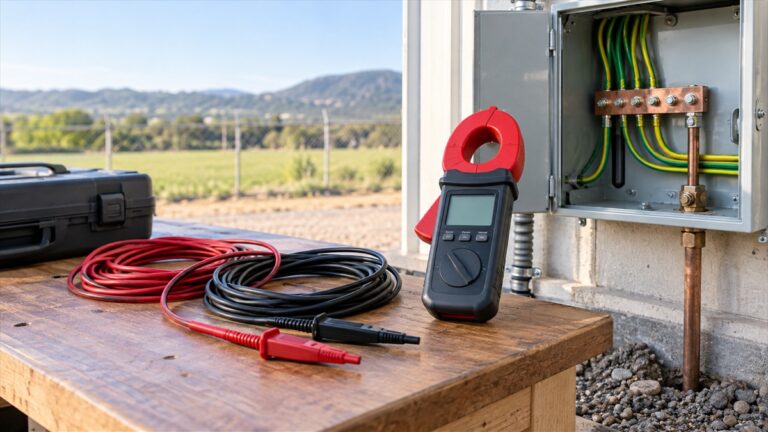
For a clamp meter that measures current without opening a circuit, the AstroAI clamp meter is the only clamp in the set. Its description says it cannot test DC current, which matters if you work on battery systems or DC circuits.
For a small, rechargeable meter, the NJTY T3 and Lscsdf both charge over USB rather than using replaceable batteries.
Comparison table
| Meter | Type | Counts | Safety rating (as listed) | Power | Weight | Warranty |
|---|---|---|---|---|---|---|
| AstroAI clamp meter | Clamp meter | 2000 | CAT III 600 V | Two AAA, included | About 203 g | Not stated in the listing |
| QCL-TECH 7-function | Multimeter | Not stated in the listing | Not stated in the listing | 9V battery | 145 g | Not stated in the listing |
| DEASOMIYE T21D | TRMS multimeter | 6000 | CAT III 600 V | Three AAA, included | 300 g | 30-day (description) |
| Innova 3340 | Automotive DMM | Not stated in the listing | Not stated in the listing | Not confirmed | 8 oz | 1-year limited |
| UNI-T UT161E | TRMS multimeter | 22,000 | CAT III 1000 V, CAT IV 600 V | Battery | 1.5 lb | Not stated in the listing |
| Fluke 87V | Industrial TRMS | 6,000 to 20,000 | CAT III 1000 V, CAT IV 600 V | Alkaline | 1.3 lb | 10 years |
| Hioki 3244-60 | Card-style multimeter | Not stated in the listing | EN 61010-1 | Not confirmed | 60 g | Not stated in the listing |
| Neoteck VC746A | Digital multimeter | 2000 | CAT III 600 V | Battery | 195 g | Not stated in the listing |
| Lscsdf 6000 count | Digital multimeter | 6000 | Not stated in the listing | USB rechargeable | Not stated in the listing | Not stated in the listing |
| NJTY T3 | Auto-ranging multimeter | 4000 (description) | UL 61010-1, IEC 61010-2-030 | USB-C rechargeable | Not stated in the listing | 2 years |
| TESMEN TSM-599 | TRMS multimeter | 6000 | CSA, ETL | Batteries, included | Not stated in the listing | Not stated in the listing |
| ANENG | Digital multimeter | Not stated in the listing | Not stated in the listing | Battery | Not stated in the listing | Not stated in the listing |
What this set covers, and what is not confirmed
Most of the meters in this set are general-purpose digital multimeters that measure voltage, current, and resistance. Several add extras such as continuity beeps, diode tests, capacitance, frequency, and non-contact voltage detection. The useful comparison is less about the list of functions and more about the safety rating, the count resolution, and whether the meter fits the work you do.
The AM33D model is not in the supplied data, so no product here can be confirmed as that model. The AstroAI product in this set is a clamp meter whose model field reads ABCMCM2KORBK-US, and its description refers to a part called CM2K0R. Those two codes do not match, so the model is marked “Not confirmed.”
Several meters in the set have missing or conflicting fields. The Hioki and Innova power source fields do not describe a power source in the usual way, and the Fluke’s safety field is marked “(Unset)” in one place. Those items are flagged in the product sections below.
How to choose a digital multimeter
Start with the work. A meter for checking batteries, outlets, and household wiring needs voltage and continuity tests, a clear display, and a rating that suits mains power. A meter for car electrical work needs the automotive tests and a probe set that fits the connections you use. A meter for electronics needs fine resolution and low-voltage ranges.
Next, read the safety rating before the count. Every meter in this guide that states a category rating lists CAT III, CAT IV, or both. A CAT III 600 V rating covers many household and light commercial measurements, while a CAT III 1000 V or CAT IV 600 V rating is intended for higher-energy environments. Where the rating is not stated, do not use the meter on mains power.
Then look at count resolution. A 2000 count meter shows values with fewer digits than a 6000 or 22,000 count meter. For most household checks, 2000 counts are enough. For fine measurements, such as small resistance changes or precise voltage readings, a higher count helps.
Finally, check how the meter is powered. Battery type, rechargeable or not, and whether batteries are included all affect the cost of ownership and how quickly you can start. The DEASOMIYE, AstroAI, and TESMEN include batteries. The NJTY and Lscsdf charge over USB, which removes the need to buy replacement batteries.
Measurement range and accuracy checks
Accuracy is listed as a percentage plus a number of digits. For example, the QCL-TECH DC voltage accuracy is listed as 0.5 percent plus 1 digit at 200 mV, and 1 percent plus 2 digits at 2000 mV through 250 V. The AC voltage accuracy at 200 V is 1.2 percent plus 10 digits. Those figures tell you how close a reading is likely to be, so use them when a small error matters.
Current ranges need the most care. The AstroAI clamp meter is listed for AC current only, with a note that it cannot test DC current. The QCL-TECH lists a DC current range from 200 microamps to 5 amps, with 3 percent accuracy at the 5 amp range. The Innova lists a current capacity of up to 15 amps for device testing. If your work involves high current, check the meter’s current range and fuse before you connect it.
The Fluke 87V is the meter in this set with the most detailed measurement features. Its description includes a peak capture function that catches signals as short as 250 microseconds, a low-pass filter for accurate readings on adjustable speed drives, and a switchable display between 6000 and 20,000 counts. Those features matter for industrial work, but they are not needed for a household meter.
Safety, fuses, and protection
A safety rating is only useful if the meter’s fuses and leads match it. The QCL-TECH lists fast-acting 5 amp fuses. The DEASOMIYE lists double ceramic fuses with thermistor protection. The TESMEN lists a 10 A, 250 V fuse. The Hioki lists overload protection to 500 V on its resistance and continuity functions, and the Innova lists overload protection and auto shut-off.
Test leads matter as much as the meter. The Hioki description says its leads have gold-plated tips with a 15 mm pin length, which the listing describes as better contact. The Fluke includes TL75 leads and AC175 alligator clips, and the UNI-T includes a set of test leads and a USB cable. Check that the leads are rated for the same category as the meter.
Non-contact voltage detection is a useful early warning, but it is not a measurement. Several meters here include an NCV function with a sound and light alarm. Use it to locate live wires, then take a measurement with the leads to confirm the value.
Product-by-product breakdown
AstroAI clamp meter (2000 count)
AstroAI digital clamp meter multimeter, 2000 counts, auto-ranging, with NCV
This is a clamp meter with a 2000 count display and auto or manual range selection. It measures AC and DC voltage, AC current, resistance, capacitance, continuity, and live wires, and it includes non-contact voltage detection. The listing gives a CAT III 600 V rating and a pollution degree of 2, with an altitude limit below 2000 meters. It weighs about 203 g and measures 8.46 by 4.53 by 1.77 inches. Two AAA batteries are included, and the kit includes test leads, a manual, and a storage bag.
The clamp design means you can measure current by placing the jaws around a single conductor, which is useful when you cannot open the circuit. The listing also includes a flashlight, a backlight, data hold, max and min readings, an auto shut-off, and a low battery indicator.
Three details are not confirmed. The model field reads ABCMCM2KORBK-US, while the description mentions CM2K0R, so the model is not confirmed. The storage temperature field gives 14 to 122 degrees Fahrenheit, which is listed as minus 10 to 6 degrees Celsius; the Celsius upper limit does not match the Fahrenheit figure, so the storage range is not confirmed. The description also says the clamp cannot test DC current, so do not use it for DC current measurements.
QCL-TECH 7-function digital multimeter
QCL-TECH 7-function digital multimeter with fuse protection
This is a 7-function meter that measures AC and DC voltage, DC current, resistance, continuity, and transistors, and it includes a battery test. It runs on a 9V battery and weighs 145 g. The DC voltage ranges run from 200 mV to 250 V, and the AC voltage range covers 200 and 250 V across a 45 to 450 Hz frequency range.
The fuse protection is a practical feature. The listing describes fast-acting 5 amp fuses, and the meter includes a low battery indicator and an over-range indicator. The accuracy figures are listed for each range, with 0.5 percent plus 1 digit at 200 mV and 1 percent plus 2 digits at higher DC voltage ranges.
The brand is QCL-TECH, and the manufacturer field reads Ruikes. The model is not stated in the listing, and the part number is 830B. The specification field reads “Cca,” which is not a recognized safety standard, so no safety rating is confirmed.
DEASOMIYE T21D TRMS multimeter
DEASOMIYE T21D auto-ranging TRMS multimeter with NCV and temperature
The T21D is a true RMS, auto-ranging meter with a 6000 count display and a listed CAT III 600 V rating. It measures AC and DC voltage and current, resistance, continuity, frequency, capacitance, diodes, and temperature with an included thermocouple. The non-contact voltage function uses sound and light alarms. The package includes test leads, a thermocouple, two safety tubes, three AAA batteries, and a user manual. It weighs 300 g.
The safety features are the main benefit. The description lists double ceramic fuses and a thermistor protection circuit, and it says the meter passed the overvoltage category III 600 V standard. The backlit display, the support stand, and the test lead holder help with reading and storage. The orange silicone shell is described as a drop protection feature.
The listing gives a 30-day manufacturer guarantee and a lifetime support statement. The warranty is not stated in the listing, so use the description as the seller’s commitment and confirm the terms before you rely on them.
Innova 3340 automotive digital multimeter
Innova 3340 professional automotive digital multimeter with temperature probe
The Innova 3340 is the only meter in the set built for automotive testing. Its description says it tests alternator diodes, duty cycle, solenoids, breaker points, wiring, and switches, and that it can pinpoint engine problems. It has a 10 megohm input impedance, which the description says protects the vehicle’s electronic control unit during testing. It is auto-ranging, with auto shut-off and over-load protection, and it can measure up to 15 amps.
The kit includes a temperature probe, an inductive RPM clamp, and a carrying case. It weighs 8 oz, and the kit measures 12.5 by 4.5 by 6.5 inches. The warranty is 1 year limited.
The power source is not confirmed. The power source field reads “Corded Electric,” which does not match how most handheld meters are powered. Check the manual for the battery type before you buy, because it affects how you would use the meter in a garage or on a roadside.
UNI-T UT161E TRMS multimeter
UNI-T UT161E 22,000 count TRMS multimeter with USB and iDMM app support
The UT161E is a true RMS multimeter with a 22,000 count display. It measures AC and DC voltage up to 1000 V, AC and DC current up to 20 A, capacitance up to 220 mF, frequency up to 220 MHz, and duty cycle from 0.1 to 99.9 percent. It includes a transistor hFE test, an NCV detection function, a backlight, max and min readings, and a relative mode.
The safety rating is CAT III 1000 V and CAT IV 600 V, which is the highest rating in this set alongside the Fluke. The package includes test leads, a USB cable, a Phillips screwdriver, a paper manual, and software. A Bluetooth adapter, model UT-D07B, is needed to connect the meter to a PC. The description says the meter works with the iDMM app on iOS and Android.
The weight is 1.5 lb. The listing mentions 24-hour email support from the manufacturer. The warranty is not stated in the listing.
Fluke 87V industrial multimeter
Fluke 87V industrial true RMS multimeter with temperature probe and holster
The Fluke 87V is the industrial meter in this set. It measures up to 1000 V AC and DC and has a peak capture function that the description says catches signals as short as 250 microseconds. The low-pass filter is designed for accurate frequency readings on adjustable speed drives, and the display switches between 6000 and 20,000 counts. The CAT III 1000 V and CAT IV 600 V ratings are listed.
The kit includes a 87V multimeter, TL75 test leads, AC175 alligator clips, a holster, and a temperature probe. It is powered by an alkaline battery and weighs 1.3 lb. The warranty is listed as 10 years.
Two fields do not agree. The model field reads FLUKE-87-5, while the listing title uses 87V. The specification field reads “(Unset).” The model code and the safety standard are both not confirmed. The Fluke is a strong choice for industrial work, but the features it lists go beyond what most household jobs need.
Hioki 3244-60 card-style multimeter
Hioki 3244-60 card HiTester digital multimeter with 41.99 megohm resistance
The Hioki is a card-style meter about 1 centimeter thick, with a palm-sized body that weighs 60 g. It has full auto-ranging and an automatic power saving function. The overload protection on its resistance and continuity functions is rated to 500 V. The description says the test leads have gold-plated tips with 15 mm pins for better contact.
The safety standards are EN 61010-1 and IEC 61010-1, with RoHS compliance. The title gives a resistance measurement up to 41.99 megohms, and the 500 V AC and DC voltage range is also listed.
The power source field reads “419.9 mV to 500 V,” which is a measurement range, not a power source. The power source is not confirmed. The Hioki is a good fit for a pocket kit, but check the battery type before you buy.
Neoteck VC746A digital multimeter
Neoteck VC746A 2000 count digital multimeter with NCV and temperature
The VC746A is a 2000 count digital meter with a CAT III 600 V rating. It measures AC and DC voltage and current, resistance, capacitance, frequency, duty cycle, continuity, diodes, temperature, and live wires. The listing gives a DC voltage accuracy of plus or minus 0.5 percent plus 4, and an AC voltage accuracy of plus or minus 0.8 percent plus 6.
The features are practical for a shop or a student bench. The meter has manual and automatic range modes, a data hold function, a low power indicator, a 15 minute auto shut-off, and a flashlight. It has two pen holders on the back and a screwdriver in its housing. The included items are the meter, a test probe, a temperature probe, an alligator clip, and a cloth pouch.
The model is VC746A and the part number is NTK197. The battery type is listed as battery powered, and the weight is 195 g.
Lscsdf 6000 count USB-rechargeable multimeter
Lscsdf USB rechargeable 6000 count multimeter with 4.8 inch color screen
The Lscsdf meter has a 6000 count display on a 4.8 inch color screen. It measures AC and DC voltage and current, capacitance, resistance, and temperature, and it includes non-contact voltage detection, a diode and continuity test, and firewire and null wire recognition. The description says the screen is easy to read in dim light and that the meter has a seismic protection function.
The battery is a built-in 200 mA rechargeable battery that charges over a micro USB cable, which is included. The meter has an LCD backlight and an LED flashlight. The dimensions are 5.98 by 2.87 by 0.79 inches.
The model is not confirmed. The title says FS899L, while the model field reads Lscsdf. The safety rating and warranty are not stated in the listing.
NJTY T3 auto-ranging multimeter
NJTY T3 auto-ranging digital multimeter with USB-C rechargeable battery
The NJTY T3 is an auto-ranging meter with a USB-C rechargeable battery and a 3.2 inch color display. The description gives a 4000 count display, and it measures AC and DC voltage and resistance, with non-contact voltage detection for live wire checks. The listing gives UL 61010-1 and IEC 61010-2-030 standards and a 2-year warranty.
The package includes the meter, a six-country manual, an after-sales contact card, and a USB-C charging cable. The dimensions are 6 by 3.4 by 1.5 inches. The measurement type field reads “Voltmeter,” while the title and description describe a multimeter with resistance and continuity tests. That is a field mismatch, so confirm the full function list with the manufacturer before you rely on current or continuity tests.
TESMEN TSM-599 TRMS multimeter
TESMEN TSM-599 TRMS 6000 count smart multimeter with manual and auto modes
The TSM-599 is a true RMS meter with a 6000 count display and two measurement modes, manual and auto. It measures AC and DC voltage and current, resistance, continuity, diode, capacitance, frequency in hertz and percent, temperature, and live wires. The description says the meter has a 10 A, 250 V fuse to prevent overload damage on current measurements. The listing gives CSA and ETL standards.
The package includes the meter, test leads, a carrying bag, batteries, and a user manual. The model is TSM-599. The warranty and weight are not stated in the listing.
ANENG digital multimeter
ANENG digital multimeter with case, AC and DC voltage and current
The ANENG is the simplest meter in the set. The listing describes it as a pocket-sized digital meter that measures AC and DC voltage and current, with a crisp LCD for easy reading. It includes a case and is listed as a multimeter tester.
Most fields are not stated in the listing, including the brand, the count resolution, the safety rating, the warranty, and the weight. Those gaps are not a judgment about quality, but they mean you should check the specifications on the box or with the seller before you use it on mains power. For basic checks such as batteries and low voltage, a meter with a clear rating is a better choice.
Reading the spec tables in this set
The spec tables in this set use a few terms that are easy to misread, so it helps to know what each one tells you before you compare meters.
The count figure, such as 2000 or 6000, is the number of steps the display can show. A 2000 count meter shows values in smaller steps than a 22,000 count meter. The count does not tell you how accurate the meter is. Accuracy is a separate line, and the QCL-TECH and Neoteck list it as a percentage plus a number of digits. The percentage is the error relative to the reading, and the digits are the error in the last place shown. Use the accuracy line when a small error matters.
TRMS, or true RMS, appears in several titles, including the DEASOMIYE, UNI-T, Fluke, and TESMEN. It describes how the meter measures AC voltage and current when the waveform is not a clean sine wave. A TRMS meter gives more accurate AC readings on electronics and variable-speed equipment, while a basic meter is enough for simple household voltage checks.
CAT ratings describe the electrical environment the meter is built for, and the number after the category is the highest working voltage for that category. The UNI-T and Fluke both list CAT III 1000 V. The DEASOMIYE, AstroAI, and Neoteck list CAT III 600 V. The Hioki lists EN 61010-1 without a category in the same field. Choose a meter whose rating covers the highest voltage you expect to meet, and do not rely on a rating you cannot find in the spec table.
NCV means non-contact voltage detection. It senses an AC field near a live wire and gives a sound and light alarm. It is a locator, not a measurement, so use it to find the live conductor and then take a reading with the leads to confirm the value.
Fuse ratings limit the current a meter can safely measure. The QCL-TECH lists fast-acting 5 A fuses, and the TESMEN lists a 10 A, 250 V fuse. If you measure current, check the fuse rating before you connect the leads.
Who should buy and who should skip
Buy a pocket meter with a backlit display if you check batteries, outlets, and small appliances around the house. The DEASOMIYE, Neoteck, and TESMEN all include batteries and combine several functions in a compact body.
Buy a clamp meter if you need to measure current on a live wire without opening the circuit. The AstroAI clamp is the only clamp in this set, and it is AC current only.
Buy an automotive meter if your work is on cars, trucks, or small engines. The Innova is built for that work, with a temperature probe, an inductive RPM clamp, and a carrying case. Confirm the power source first.
Buy a high-rated industrial meter if you need the highest voltage rating in the set, or if you measure drives and fast transients. The Fluke and UNI-T are the two with CAT III 1000 V ratings.
Buy a USB rechargeable meter if you want to avoid replacing batteries. The NJTY and Lscsdf charge over USB.
Skip any meter without a safety rating for mains power. The QCL-TECH’s “Cca” field is not a recognized rating, and the ANENG has no rating listed, so use those meters only for low-voltage work or not at all on mains.
Skip the Hioki if you need a meter with a confirmed battery type, because its power source field is a range, not a battery.
Use case: checking a wall outlet. A meter with a non-contact voltage detector finds the live side of the outlet, and then a voltage reading confirms the value. The DEASOMIYE and Neoteck both list NCV functions with alarms.
Use case: checking a car battery. The Innova includes a temperature probe and an automotive focus. The DEASOMIYE also lists a battery test, which is useful for a quick check.
Use case: measuring current in a live circuit. The AstroAI clamp meter fits this job for AC current. It cannot measure DC current, so do not use it for battery systems.
Decision rules and pre-purchase checks
- Check the safety rating first. For mains work, look for CAT III or CAT IV ratings at a voltage that covers your work. Where no rating is stated, do not use the meter on mains power.
- Confirm the model. The AM33D model is not in the supplied data, and the AstroAI clamp’s model field does not match its description. Treat the model as not confirmed until the seller or manufacturer confirms it.
- Match the count resolution to the work. 2000 counts is enough for most household checks. Use 6000 or higher for fine readings.
- Check the current range. The clamp meter is AC only. Confirm that the meter you buy covers the current type you need.
- Confirm the power source. Where the power source field is unclear, such as on the Innova and Hioki, check the manual before you buy.
- Check the leads. Make sure the test leads match the meter’s category rating and have fuses or protection that match the meter.
- Confirm the warranty. The Fluke (10 years), Innova (1 year limited), and NJTY (2 years) list warranties. Others do not.
Ranges, counts and what each listing measures
Counts set the resolution of a display, and the set here spans 2000 to 6000 counts. The Lscsdf FS899L and the DEASOMIYE T21D both list 6000 counts, and the DEASOMIYE listing describes a TRUE RMS reading for non-linear loads. The NJTY T3 lists 4000 counts. The AstroAI CM2K0R listing states 2000 counts and says it cannot test DC current, so it fits outlet and battery checks more than current work.
The UNI-T UT161E is the widest-range meter in the set. Its listing gives AC and DC voltage up to 1000 V, current up to 20 A, 22,000 counts, and CAT III 1000 V and CAT IV 600 V ratings. The Fluke 87V listing gives 1000 V AC and DC, a switchable display of 6000 to 20,000 counts, and a 250 microsecond peak capture for brief events.
Power and battery
Battery type decides how often you replace parts. The CM2K0R and ANENG listings use AAA or AA cells. The Lscsdf FS899L has a built-in 200 mA battery that charges through a micro USB cable, which the listing says is included. The NJTY T3 uses a rechargeable battery with a Type-C port and a battery-low indicator on its 3.2-inch colour screen. The QCL-TECH QF-954 runs from a single 9 V battery and shows an over-range indicator.
Safety ratings to check
- DEASOMIYE T21D: overvoltage CAT III 600 V, double ceramic fuse and a thermistor protection circuit.
- Neoteck VC746A: CAT III 600 V, overload and short-circuit protection, and automatic shut-off after 15 minutes without use.
- TESMEN TSM-599: a 10 A, 250 V fuse, a silicone casing and automatic shut-off after 15 minutes.
- UNI-T UT161E: CAT III 1000 V and CAT IV 600 V, with an audible and visible alarm for high voltage or current.
Extra features that matter on a job
The Innova 3340 listing is aimed at automotive work. It measures up to 15 amps, lists a 10 megohm input impedance that protects the vehicle’s computer, and includes a temperature probe, an inductive RPM clamp and a carrying case. The ANENG listing includes a fold-out kickstand and two pre-installed AA batteries, which helps when the meter sits on a bench. The Hioki 3244-60 is a palm-size card meter with gold-plated test leads and automatic ranging.
When two listings give different figures for the same spec, treat the value as unconfirmed until you read the live page. A meter that lists two different display counts or two fuse ratings needs that check before you buy.
What the AstroAI listings share
The AstroAI clamp meter in this set is listed at 2,000 counts and measures AC and DC voltage, AC current, capacitance, resistance and diode continuity. It also has a live-wire test, a data hold, max and min readings, auto shut-off, a low battery indicator and a continuity buzzer. The listing says it passed pollution degree 2 and overvoltage category III 600 volts. Those features cover most household and automotive checks, which is why the AstroAI name appears in several of the comparisons here.
The DC current limit
The most important caveat in the AstroAI listing is that the meter cannot measure DC current. The listing says so in its first tip. To measure AC current, clamp the meter around one wire with no other conductor inside the jaw. If your job needs DC current, for example a battery bank or a solar string, choose a meter whose own listing names DC current.
Non-contact testing and alarm
The non-contact voltage test uses a sound and light alarm. When the meter senses a weak AC signal near a live wire, the alarm sounds, so you know the wire is live before you touch it. A non-contact alarm is a yes-or-no check, not a reading. Confirm with a contact test before you work on a circuit.
Related reading: multimeter picks and hand-held digital multimeter options.
Frequently asked questions
Is the AM33D model confirmed in this set?
No. None of the supplied data names the AM33D model, so no meter here is confirmed as it.
Is the Fluke 87V model confirmed?
Not fully. The listing title uses 87V, while the model field reads FLUKE-87-5, so the model is marked Not confirmed.
Which meter in the set has the highest count?
The UNI-T is the 22,000 count meter in the set, as the introduction states.
What should I check before buying?
Check the listing’s safety rating and measurement range against your own circuit, and use the manual as the final guide.
Common mistakes and care
Common mistake: trusting a model number you have not checked. Model codes in this set do not always match the title or the description, as with the AstroAI clamp, whose model field reads ABCMCM2KORBK-US. Buy the meter whose model field and function list you have confirmed.
Common mistake: measuring DC current with an AC clamp. The AstroAI clamp is listed as AC only, and the description says it cannot test DC current.
Common mistake: ignoring the safety rating. A meter without a rating is not a safe choice for mains voltage, however well it reads on a battery.
Common mistake: keeping old batteries in the meter. A battery that is low or leaking can give unreliable readings and damage the case. Replace batteries when the low battery indicator shows, and remove them if you store the meter for a long period.
Care. Store the meter dry and at room temperature. The AstroAI listing gives a storage range, but that figure is not confirmed, so use room temperature as a safe default. Clean the case with a dry or lightly damp cloth, and inspect the test leads for cracks before each use. Replace leads that show damage, and keep the fuses in good condition.
Is there an AstroAI AM33D in this set?
No. The only AstroAI product is a 2000 count clamp meter whose model field reads ABCMCM2KORBK-US.
Which meter has the highest voltage rating?
The Fluke 87V and UNI-T UT161E both list CAT III 1000 V. The Fluke also lists CAT IV 600 V.
Which meters include batteries?
The AstroAI clamp meter includes two AAA batteries, the DEASOMIYE includes three AAA batteries, and the TESMEN includes batteries.
Can I measure DC current with the clamp meter?
No. The description says the AstroAI clamp meter cannot test DC current.
Which meter is the most suitable for a car?
The Innova 3340 is the automotive meter in this set. Confirm its power source before you use it in a garage.
Which meters charge over USB?
The NJTY T3 and Lscsdf both use built-in rechargeable batteries that charge over USB.
Which meter has the highest count?
The UNI-T UT161E lists 22,000 counts, the highest in the set. The Fluke 87V switches between 6,000 and 20,000 counts. The rest list 2,000, 4,000, or 6,000 counts, or do not state a count.
What does “Not confirmed” mean in this guide?
It means the supplied data gives two or more figures that do not agree, or a figure that does not fit the other fields. Confirm it with the manufacturer or seller before relying on it.