EITAI3440A Insulation Resistance Tester Review: Ranges, CAT Rating and Batteries
As an Amazon Associate we earn from qualifying purchases. Details
If you are considering the EITAI3440A insulation resistance meter, the first question is whether its test voltages and rating suit the equipment you want to test. An insulation tester applies a high voltage, and mains electricity can kill. This review covers only what the listing states about test voltages, resistance range, voltage measurement, CAT rating, batteries, display, weight and included parts. It does not report any test of the meter, and it does not describe how to run an insulation test on any equipment. Use the listing to decide whether the meter matches your work, and follow the manual, the equipment’s instructions and your local electrical rules for any test.
Quick answer
The EITAI3440A is a battery-powered, yellow and black digital insulation resistance meter with rated test voltages of 250, 500 and 1000 volts. The listing gives an insulation range of 0.25 megohms to 10 gigohms and a DC voltage test up to 600 volts AC. The listing’s specification field reads “Cat III 1000v, Cat IV 600v.” The six LR6 batteries are not included, because of import regulations, according to the power supply field. The listing includes a megger, a high-voltage test probe, a pen probe, three alligator clips and a tool bag, and does not state a warranty term.
What to check in an insulation tester
Four details decide whether this meter fits. Each one can rule it in or out.
1. Test voltage and resistance range. The listing gives rated voltages of 250, 500 and 1000 volts, and an insulation range of 0.25 megohms to 10 gigohms, with a resolution of 0.001 gigohm. The accuracy is plus or minus 5 percent plus 5 digits. The Wikipedia overview of the megohmmeter says these instruments provide high DC voltages, typically 500 volts to 5 kilovolts, so the 250-volt setting sits below the typical range. Check the test standard for the equipment before you choose a setting.
2. CAT rating. The specification field reads “Cat III 1000v, Cat IV 600v.” The CAT system classifies live circuits used in measurement, and the source describes CAT II as circuits directly connected to the low-voltage installation and CAT IV as the source of the high-voltage installation. A rating for one category does not cover another. The listing gives two ratings, so the one that suits your circuit is the one to check before you use the meter.
3. Batteries and power. The power supply field says the meter uses DC 9 volts from six LR6 1.5-volt alkaline batteries, and that the batteries are not included because of import regulations. The specs say the meter is battery powered and give an auto power-off of about 15 minutes. Buy the batteries separately before you test.
4. Display and voltage measurement. The display shows a maximum reading of 1999, and the listing says it shows the actual insulation test voltage. A light shows high voltage output. The voltage measurement covers AC 0 to 600 volts, with a resolution of 1 volt and an accuracy of plus or minus 1 percent plus 5 digits. The listing gives a short-circuit current of at least 1 milliamp.
Use these rules to choose:
- Choose this meter if you need a 250, 500 or 1000 volt insulation test and you will confirm the CAT rating for each circuit.
- Choose a different meter if you need a rating that the listing does not state for your circuit.
- Choose a different meter if you need the batteries included, because the listing says they are not.
For a wider look at insulation testers, the best insulation resistance tester guide compares that category, and the best digital insulation tester guide covers a related design.
1. EITAI3440A Digital Insulation Resistance Meter Tester, 0.25MΩ-10GΩ, AC 0V-600V, Manufacturer Direct (Review verdict)
Specs from the listing (checked 2026-10-13):
- Specification Met: Cat III 1000v, Cat IV 600v
- Rated voltage: 250V/500V/1000V
- Insulation resistance test: Range: 0.25MΩ-10GΩ; Resolution: 0.001GΩ; Accuracy: ±(5%+5)
- Power supply: DC9V Alkaline dry battery (LR6 1.5V*6PCS) (not inclueded due to import regulations)
- Included Components: Megger*1, HV Test Probe*1, Pen Probe*1, Alligator Clip*3, Tool Bag*1
- Item Weight: 430 g
Pros
- Rated test voltages of 250, 500 and 1000 volts, per the specs
- Insulation range of 0.25 megohms to 10 gigohms, per the specs
- Megger, high-voltage probe, pen probe, alligator clips and tool bag included, per the components field
Cons
- Six LR6 batteries not included, because of import regulations
- Two CAT ratings stated, so the circuit must be matched to one of them
- No warranty term stated
Best for: A reader who needs 250, 500 or 1000 volt insulation tests on equipment, with the CAT rating checked for each circuit.
Skip if: Skip if you need the batteries included, a CAT rating the listing does not state for your circuit, or a warranty term.
View on Amazon (affiliate link)
The EITAI3440A insulation tester
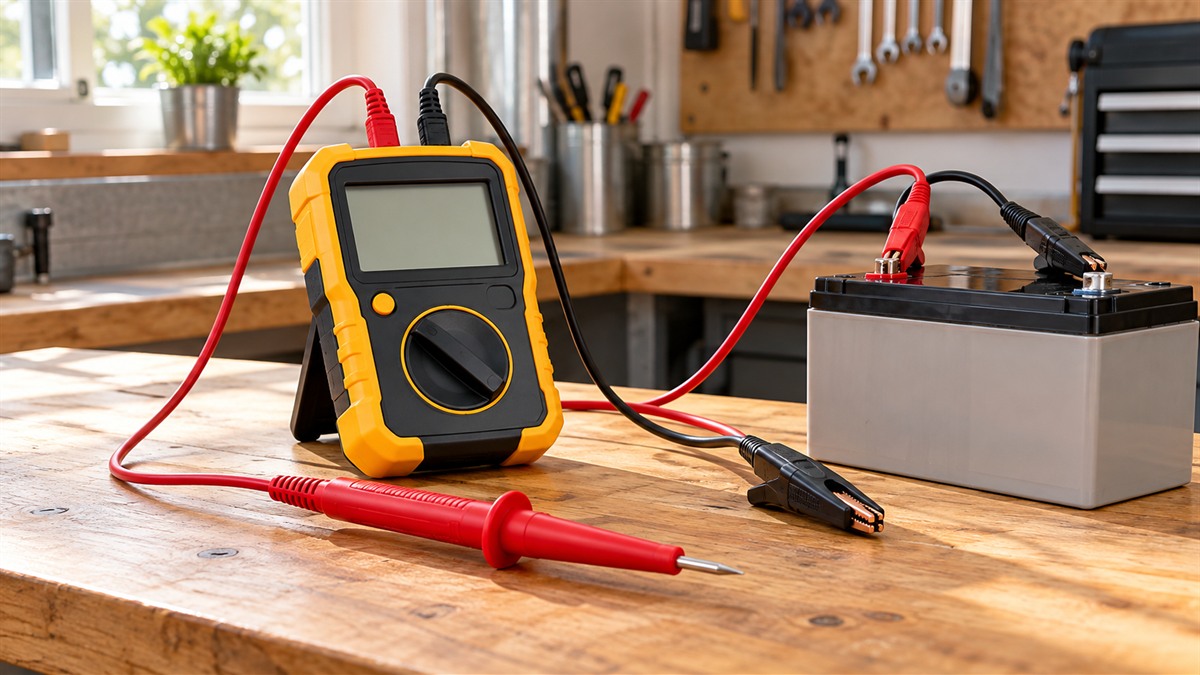
The EITAI3440A is a digital megohmmeter with a yellow and black body, an LCD display and an auto range setting. The listing names it as suitable for transformers, motors, cables and switches. The model is EITAI3440A, and the item weighs 430 grams with the battery. The dimensions are 150 by 101 by 59 millimeters. The storage environment is minus 10 to 60 degrees Celsius with humidity below 80 percent.
The meter fits a reader who needs insulation tests on electrical equipment, and who can confirm the CAT rating and the test voltage for each job. The included components are the megger, a high-voltage test probe, a pen probe, three alligator clips and a tool bag.
The listing has several things to check. The title and bullets say the meter reaches 1000 volts and 10 gigohms, while the bullets say the short-circuit current is at least 1 milliamp. The bullets say the megger shows test duration and output voltage together, and the listing gives no test duration figure. The bullets describe the meter as ideal for on-site testing, which is the maker’s description. The listing gives no warranty term.
Who should skip it: a reader who needs the batteries included, a reader who needs a CAT rating beyond what the listing states, and a reader who will test equipment without a manual or the equipment’s instructions.
Electrical safety first
Mains electricity can kill, and an insulation test applies a high voltage to the equipment. The CAT rating must suit the circuit you test, and the listing gives two ratings, so match the one to your circuit before you start. The OSHA electrical overview lists contact with power lines, lack of ground-fault protection, a path to ground that is missing or discontinuous, equipment not used in the manner prescribed, and improper use of extension cords as the most frequent causes of electrical injury, and it lists insulation, guarding, grounding, electrical protective devices and safe work practices as ways to reduce the risk.
Follow the meter’s manual and the equipment’s own instructions, isolate the equipment before testing, and ask a licensed electrician to test any installation. This review does not describe how to run a test.
Worked example: how a 500-volt test sits inside the 1000-volt setting
Compare that setting with the highest rated test voltage in the listing, so you can see how much margin the meter leaves.
- Highest listed test voltage: 1000 volts, from the listing.
- Test voltage in this example: 500 volts.
- Difference between them: 1000 minus 500 = 500 volts.
Check the arithmetic again. 1000 minus 500 is 500. The example shows that a 500-volt test sits 500 volts below the highest setting. Choose the voltage from the equipment’s instructions, not from the meter’s maximum.
Why the test voltage matters
The listing gives rated test voltages of 250, 500 and 1000 volts. The Wikipedia overview of the megohmmeter says these instruments typically provide high DC voltages from 500 volts to 5 kilovolts, and that acceptable insulation resistance is typically 1 to 10 megohms, depending on the standard. The 250-volt setting sits below that typical range, so check the test standard for the equipment before you choose it. The 1000-volt setting is the highest the listing gives, and it is the one to match to the equipment’s rating, not the one to pick by default.
Resistance of insulation
The listing measures insulation resistance in megohms and gigohms. The Wikipedia overview of electrical resistance says resistance depends in large part on the material. The Wikipedia overview of megohmmeters says these instruments use high DC voltages to test insulation. Record the reading and compare it with the equipment’s own limit, not with a number from another device.
Using the listing’s instructions
OSHA’s general electrical requirements say that listed or labeled equipment must be installed and used in accordance with any instructions included in the listing or labeling. The EITAI3440A listing gives a CAT rating and a set of accessories, and its manual is the instruction set that goes with that listing. Read the manual before the first test, check the high-voltage probe and the leads for damage, and use only the accessories the listing names.
Five common mistakes
- Assuming the batteries are included. The listing says they are not, because of import regulations.
- Using one CAT rating for everything. The listing gives Cat III 1000 volts and Cat IV 600 volts.
- Choosing the highest voltage. Use the voltage the equipment’s instructions allow.
- Skipping the isolation check. Follow the equipment’s instructions before any test.
- Trusting the auto power-off. The listing says it turns off after about 15 minutes, so check the battery before a long job.
FAQ
What test voltages does it offer?
The listing gives 250, 500 and 1000 volts.
What is the resistance range?
The listing gives 0.25 megohms to 10 gigohms.
What CAT rating does it state?
The specification field reads Cat III 1000 volts and Cat IV 600 volts.
Are the batteries included?
No. The listing says the six LR6 batteries are not included because of import regulations.
How heavy is it?
The listing gives 430 grams, with the battery.
Does it come with a warranty?
The listing states no warranty term.
Bottom line
The EITAI3440A suits a reader who needs 250, 500 or 1000 volt insulation tests on electrical equipment, with a 0.25-megohm to 10-gigohm range and a listed Cat III 1000 volt and Cat IV 600 volt rating. The listing does not include the six LR6 batteries, states no warranty term, and gives two CAT ratings, so match one to your circuit. Confirm the rating before use, follow the manual and the equipment’s instructions, and ask a licensed electrician to handle any installation.
Sources
- Megohmmeter, Wikipedia: typical megohmmeter test voltages from 500 V to 5 kV, and acceptable insulation resistance of about 1 to 10 megohms depending on the standard.
- Measurement category, Wikipedia: CAT II for circuits directly connected to the low-voltage installation, and CAT IV for the source of the high-voltage installation.
- OSHA, Electrical overview: the most frequent causes of electrical injury and the ways to reduce the risk.
- Megohmmeter, Wikipedia: typical megohmmeter test voltages of 500 V to 5 kV, and acceptable insulation resistance of about 1 to 10 megohms depending on the standard.
- Electrical resistance and conductance, Wikipedia: resistance depends in large part on the material.
- 29 CFR 1910.303, OSHA electrical general requirements (Cornell LII): listed or labeled equipment is used in accordance with the listing instructions.