Megger MIT310 500V Insulation Tester Review
As an Amazon Associate we earn from qualifying purchases. Details
If you searched for a 500 VDC megger, you are most likely looking for an instrument that applies a test voltage to equipment and reports insulation resistance, which is a different job from the one a multimeter does. The Megger MIT310-EN is a digital and analog insulation tester listed with selectable test voltages of 250 V, 500 V and 1000 V. It is battery powered, has a rubber-armored case and a self-contained protective cover, and carries a live circuit warning, an IP54 weatherproof rating, a calibration certificate and a three-year warranty according to its listing. This review sets out what the listing supports, what it leaves open, and what to check before buying.
Why the “500 V” in the search term needs careful reading
The search term refers to 500 V, and the product information does include a 500 V setting. The product information is explicit, however, that the instrument offers 250, 500 and 1000 V test voltages. It should not be described as a 500 V-only tool, and a buyer who needs a fixed 500 V instrument should read the specification closely before ordering.
Choosing among test voltages is a matter for the equipment documentation, the relevant standard and the site’s own procedures. The listing does not say which voltage belongs with which type of equipment, and this review does not offer that guidance. What the product information does establish is that a single unit covers three selectable levels, so the same tester can serve work that calls for different test voltages.
Insulation tester versus multimeter
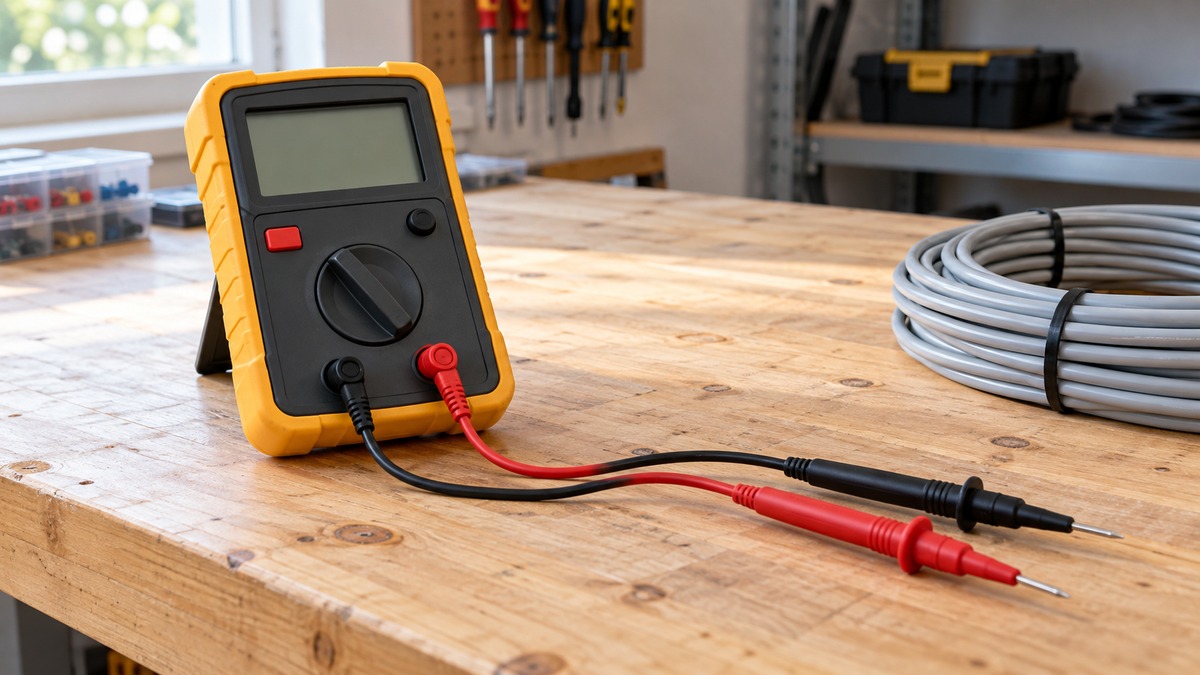
An insulation resistance tester applies a test voltage to the item under test and measures the resistance of the insulation. An ordinary ohmmeter range on a multimeter measures resistance in a different way. It does not apply a high test voltage in the same manner, so the two instruments are not interchangeable.
This distinction matters for purchasing. The MIT310-EN’s listing includes “Ohmmeter” and “Voltmeter” as measurement types. Those entries describe features the instrument carries, but the insulation test is the function that defines it. A buyer who only needs everyday resistance and voltage checks is likely to be better served by a multimeter. A buyer who needs to verify insulation on equipment should look at an insulation tester such as this one and then confirm its ranges against the work they do.
Specifications from the product information
The following figures come from the product title and specification fields. They describe the product as listed, and they should be checked against the manufacturer’s documentation before purchase.
- Model: Megger MIT310-EN, listed as a digital and analog insulation tester.
- Test voltages: 250 V, 500 V and 1000 V, as stated in the title.
- Measurement types: Ohmmeter and voltmeter.
- Style field: “1000 Megaohms Resistance.” This is a label from the product information and is not a full measurement range.
- Power source: Battery powered.
- Dimensions: 4.25 inches by 11 inches by 12 inches.
- Item weight: 2.2 pounds.
- Color: Black.
- Standards named: IEC 61326 and IEC 61010-1.
- Model identifiers: The model number MIT310-EN appears in the brand, model and part-number fields.
Two points stand out. The first is that the product information does not give a measurement range, accuracy figure or resolution for the resistance and voltage functions. The second is that “1000 Megaohms Resistance” is a style label rather than a specification of the full range. If you compare this tester with others, pull those figures from the manufacturer’s manual rather than from the product information.
Build and handling
The product information describes the MIT310-EN as extremely easy to use and as having a tough rubber armored case. It also describes a self-contained protective cover. These are manufacturer statements. The listing does not include drop, impact or temperature test results, so the durability claim should be read as a description rather than a verified result.
At 2.2 pounds and with dimensions of 4.25 inches by 11 inches by 12 inches, the unit fits the profile of a portable field instrument. The product information does not say how the protective cover attaches or where it is stored when the unit is in use. Before a job, check that the cover is complete and that the case shows no damage, and decide where the cover and the leads will be kept so that they travel with the instrument.
Because the unit is battery powered, the condition of the batteries should be checked before any job. The product information does not describe battery type, battery life or how the battery level is shown, so consult the manual for those details.
Safety features
The product information names three safety-related points.
- A live circuit warning. This is a feature to confirm in the manual, since it is one of the first things a user should understand before a test.
- An “intelligent safety system for protection.” The listing describes this only in general terms. Its behavior, thresholds and limits are not explained, so the manual is the place to learn what it does.
- Compliance with IEC 61010-1, which the specification field names as the safety standard for electrical measurement equipment. The product information also names IEC 61326.
The product information also describes the unit as weatherproof to IP54. That rating is a manufacturer statement and should be checked against the documentation for the unit you receive.
Insulation testing involves high voltage. The manual, the site’s electrical safety procedures and the relevant standards govern how the tester is used. This review does not add procedural safety advice beyond what the manufacturer documents and what the product information says.
The spread of test voltages
The listing gives 250 V, 500 V and 1000 V as selectable test voltages. Subtracting the lowest setting from the highest gives a spread of 750 V, so one unit covers a wide range of test voltages. The 500 V setting is the middle option, so a buyer who needs exactly 500 V still gets it as one of the three choices.
Calibration and warranty
The product information includes a calibration certificate and a three-year warranty. A calibration certificate shows that the instrument was checked at the time it was issued. It does not guarantee accuracy at a later date. If your work depends on traceable accuracy, plan periodic recalibration in line with the instrument’s documentation and the requirements of your own work.
The three-year warranty is stated in the bullets. The specification fields do not repeat it, so confirm the terms, including what they cover and how a claim is made, with the seller or manufacturer before you buy.
The manufacturer
The listing includes background on Megger Group Limited, the company that makes the MIT310-EN. The company is described as a British manufacturer of electronic test equipment for electrical power applications, and as a producer of electrical insulation testers among other instruments. The background also describes a long history of mergers and brand names, including AVO, Biddle and MultiAmp. This history explains why the brand appears under several names in older equipment. It does not say anything about the performance of this particular model, and it should not be read as a guarantee of it.
Who this tester suits
Based on the product information, the MIT310-EN is relevant to electricians and maintenance technicians who need to check insulation on equipment and who want one instrument that offers several test voltages. Its portable size, battery power and rugged case are the features most likely to matter in field use. The calibration certificate and warranty may also matter to buyers who want documented paperwork with the purchase.
It is less suited to these buyers:
- People who only need a general resistance or voltage meter for everyday troubleshooting. A multimeter is the better tool for that work.
- Anyone who expects a fixed 500 V-only instrument. The product information lists three test voltages.
- Buyers who need documented accuracy figures, measurement ranges or response times. The listing does not provide them.
- Technicians who require a specific calibration accreditation or certification that the product information does not mention.
What to verify before buying
The following checks follow directly from the gaps and claims in the product information.
- Confirm the three test voltages, 250 V, 500 V and 1000 V, on the current listing and in the manual.
- Read the manual’s section on the measurement ranges and accuracy, and compare those figures with your needs.
- Read the sections on the live circuit warning and the intelligent safety system so you know what the instrument does on its own and what it expects from you.
- Confirm the warranty and calibration terms with the seller or manufacturer.
- Check that the test voltages and the standards named in the specifications match the equipment and procedures you work to.
- Keep the documentation with the tester, since the manual is the authoritative source for the functions that the product information only summarizes.
A practical way to use the list above is to make a short note of the equipment you will test, the voltages your procedures call for and the accuracy you need. Then compare those three things with the manual. If the match is clear, the MIT310-EN is a reasonable fit. If the equipment calls for a voltage the product information does not state, or the accuracy you need is not documented, look at other testers before committing.
Where this product fits
Megger MIT310-EN Digital/Analog Insulation Tester is easiest to evaluate by fit, not as a universal recommendation. Its stated design can be useful when the dimensions, included parts, and intended use described above match your exact setup. It is a weaker choice when you need a capability the product information does not explicitly provide.
Buy it when
- You need an insulation tester with selectable 250 V, 500 V and 1000 V test voltages.
- You want a battery-powered portable instrument with a rubber-armored case.
- The limitations described in this review do not interfere with your main use case.
Avoid it when
- You need documented measurement ranges or accuracy figures, which the listing does not give.
- You need proof of performance beyond the manufacturer’s stated specifications.
- A simpler product would solve the same problem without unused features.
Before ordering, verify that the 250 V, 500 V and 1000 V settings cover the test voltages your work calls for. This single check is more useful than relying on a broad “works for most” description.
Limitations of this review
Product details come from published specifications and listing text only.
Conclusion
The Megger MIT310-EN is listed as a digital and analog insulation tester with selectable test voltages of 250 V, 500 V and 1000 V. Its strengths, as described in the product information, are the range of test voltages, the portable build, the stated safety features and the calibration and warranty package. Its main limitations are the missing measurement specifications and the need to read the manual for how the safety system behaves.
If your work involves insulation testing and you need one battery-powered instrument that covers several test voltages, the MIT310-EN deserves a close look. Confirm the points in the checklist above before you buy, and keep the difference between an insulation tester and a multimeter in mind throughout.
View the Megger MIT310-EN insulation tester on Amazon
Frequently asked questions
Is the MIT310-EN a 500 V only tester? No. The listing gives selectable test voltages of 250 V, 500 V and 1000 V, so it is not limited to a single 500 V setting.
Does a multimeter do the same job? No. Insulation testing applies a test voltage to the item under test, which a standard multimeter resistance reading does not do in the same way.
What warranty is listed? The bullets state a three-year warranty, and the specification fields do not repeat it, so confirm the terms with the seller.
What are the weight and size? The listing gives a weight of 2.2 pounds and dimensions of 4.25 inches by 11 inches by 12 inches.
Sources
- – https://www.amazon.com/dp/B008838W4M/?tag=bestmultimeter0f-20