SUPNOVA Waterproof Voltage Meter Review
The short answer
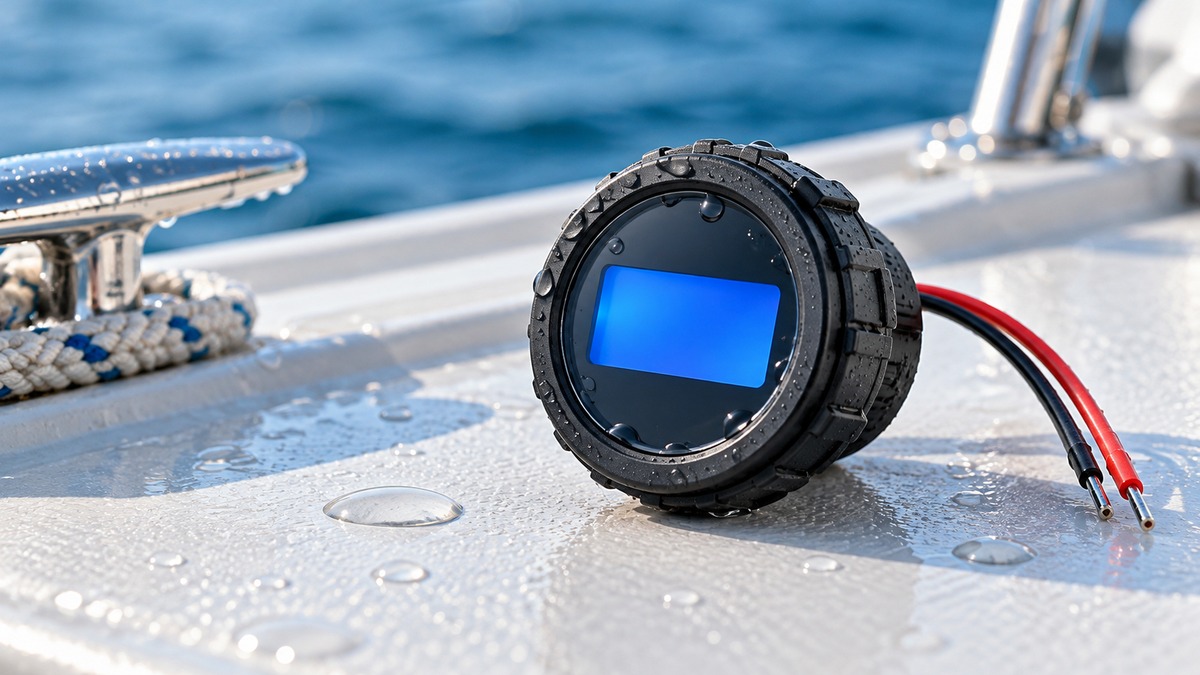
The SUPNOVA Waterproof Voltage Meter is a small, blue-LED DC voltage display for battery packs in vehicles, boats and small equipment. It is a voltmeter only. It reads 5 to 130 volts DC, and it is listed as IPX8 waterproof, dustproof and shockproof. If you want a gauge that stays wired to a battery bank on a golf cart, motorcycle, RV or boat, it is a focused option. If you need a general-purpose multimeter, it is the wrong tool.
See the SUPNOVA voltage meter on Amazon
What the numbers mean for you
- Measuring range, 5 to 130 V DC. This covers common pack voltages from 12 V up to 84 V, and the lower end of the range reads down to 5 V. Anything outside 5 to 130 V is outside what this meter is built for.
- Accuracy, plus or minus 1%. This is the listed figure. On a 12 V pack, 1% is about 0.12 V, which is enough to tell a healthy pack from a low one, but not enough to replace a laboratory instrument.
- Working current, 15 to 20 mA. The meter draws a small, steady current while connected. That is negligible for a healthy starter battery, but worth weighing if you leave it wired to a small battery for weeks at a time.
- Size, 1.95 by 1.17 by 0.98 inches, about 1 ounce. It is small enough to sit in a tight battery box or behind a dash panel.
- Wire length, 11.8 inches. The leads are short, so plan to mount the meter close to the terminals or plan a lead extension.
- Wiring, red for positive and black for negative. The listing describes reverse-connection protection, so a swapped connection is less likely to damage the meter.
- Protection, IPX8, dustproof and shockproof. IPX8 is a continuous-immersion standard. The depth and duration behind the IPX8 label are set by the maker and are not given in the listing, so check the maker’s conditions before planning for submersion.
- Certifications. The listing names RoHS, and its compatibility text also names CE.
Who this meter suits
- Owners of golf carts, electric motorcycles, RVs and boats who want a fixed check on a battery pack.
- Anyone with a lead-acid pack, a ternary lithium pack or a lithium iron phosphate pack in the 5 to 130 V range. The listing names all three chemistries.
- People who want a readable blue display in a dim garage, a shed or a boat compartment.
- Buyers who want one job done well: a voltage readout, with nothing extra to learn.
Who should skip it
- Anyone who needs current, resistance or continuity readings. The listed measurement type is voltmeter only.
- Anyone working above 130 V DC or below 5 V DC.
- Anyone who needs AC voltage. No AC measurement is listed.
- Anyone who needs long leads to reach a battery in a distant compartment, because the 11.8-inch wires will not reach.
Typical situations where it fits
- A golf cart battery bank. Before a round, you read the pack voltage at a glance instead of opening the cart and probing terminals.
- An RV house battery. You watch the voltage drop after shore power is disconnected and see how long the pack holds up.
- A motorcycle or small vehicle in storage. A permanently wired meter shows whether the battery is sliding down during a long sit.
- A boat battery compartment. The waterproof and dustproof listing suits a damp, salty space better than an open-face display.
Buying criteria and pre-purchase checks
Start with the voltage of your pack, not the number of cells. Then confirm the following before you buy:
- Your pack’s full voltage falls between 5 V and 130 V DC.
- Your battery chemistry is one the listing names: lithium ternary, lead-acid or lithium iron phosphate.
- The meter can sit within about 11.8 inches of the terminal, or you have a way to lengthen the leads safely.
- You need a voltage readout only, not current, resistance or continuity.
- Your install spot is exposed to rain, spray or dust, which the IPX8 and dustproof listing covers.
- You understand the 15 to 20 mA draw and whether it matters for how long the meter stays connected.
Mounting and placement planning
The dimensions give a starting point: 1.95 by 1.17 by 0.98 inches, weighing about 1 ounce. The listing also gives an open size of 1.79 by 1.0 inches, but it does not define that figure, so use the physical measurement of the mounting spot instead.
Three points decide whether a spot works:
- Lead reach. The 11.8-inch wires set the maximum distance from the terminals. If the display has to sit farther away, the listing does not describe an extension method.
- Exposure. The listing rates the meter IPX8, dustproof and shockproof, and describes it for outdoor use. A spot exposed to spray or dust fits that description. Submersion is a different case. The listing gives no depth or time limit for the IPX8 rating, so keep the meter out of standing water.
- Visibility. The display is a blue LED. Choose a spot where you can read it from where you stand, such as a dash panel or a battery box cover, and check that the cover can close with the wires routed through.
Strengths the listing supports
- A compact, one-ounce body that fits tight spaces.
- A wide DC range, from 5 V to 130 V, which covers several pack voltages in one device.
- Reverse-connection protection on the leads.
- Waterproof, dustproof and shockproof claims for outdoor and marine use.
- A blue LED display that is easy to read in low light.
- Compatibility with lead-acid, ternary lithium and lithium iron phosphate packs.
Limitations and open points
- Voltmeter only. The listing does not mention current, resistance, continuity or diode checks.
- Included components. The field reads “No,” and the item count is one.
- Battery inside the meter. The listing marks the meter as battery powered but does not name the cell type or battery life.
- Battery example conflict. The highlights name packs up to 84 V, while the compatibility text names a 96 V pack. The 5 to 130 V measuring range is the figure used throughout.
- Lead length. The 11.8-inch wire is short for many mounting positions.
Matching the SUPNOVA voltage meter to your pack voltage
The listing names several pack voltages in its highlights and compatibility text. Before you buy, check your pack’s full voltage against the 5 to 130 V range. The table below lists each voltage the listing names and whether it falls inside that range. It checks the range only. It does not confirm that a specific pack will work with the meter.
| Pack voltage named in the listing | Inside 5 to 130 V DC? |
| — | — |
| 6 V | Yes |
| 12 V | Yes |
| 24 V | Yes |
| 36 V | Yes |
| 48 V | Yes |
| 60 V | Yes |
| 72 V | Yes |
| 84 V | Yes |
| 96 V (compatibility text only) | Yes, but see the battery example conflict in the limitations above |
Measurement accuracy is plus or minus 1 percent. Applied to the named voltages, that works out to about 0.06 V on a 6 V pack, 0.12 V on a 12 V pack, 0.84 V on an 84 V pack and 0.96 V on a 96 V pack. Those figures show how much room the reading has at each voltage, so a larger pack means a larger absolute margin.
Wiring and reading steps
The listing names the wire colors directly. The red wire goes to the positive side of the pack and the black wire goes to the negative side. It also describes reverse-connection protection, which makes a swapped connection less likely to damage the meter. The listing does not describe what the display shows in that case, so confirm the polarity before you rely on any reading.
- Find the positive and negative terminals of the pack, and note the voltage you expect.
- Plan a route for the 11.8-inch wires so they do not stretch across the terminals or pinch against a moving part.
- Connect the red wire to positive and the black wire to negative.
- Read the display and compare it with your expected voltage, keeping the plus or minus 1 percent accuracy figure in mind.
- Write down the reading and the date. A short log shows whether a pack is holding its voltage over several weeks.
What the display does and does not tell you
The listing names three battery types the meter suits: ternary lithium, lead-acid and lithium iron phosphate. The display shows a voltage number for each of them, and the listing does not connect that number to charge level. Read the figure as the pack’s voltage at the moment you check it, and compare it with the voltage guidance from your battery maker for that chemistry.
How it compares with other meters in the category
A category example helps show what this meter does not do. The AstroAI AM33D multimeter, another model in the same category, lists DC voltage up to 600 V, DC current, resistance and a 3-year warranty, with manual range selection. Those specifications belong to that other product and are not features of the SUPNOVA meter. If you need several of those functions, a general multimeter is the better purchase. If you need only a fixed voltage readout on a battery pack, the SUPNOVA meter covers that task with fewer features to manage.
Voltmeter-only or multimeter: a quick comparison by group
The category example below helps show the difference between a voltage display and a general multimeter. The AstroAI AM33D is a different product, and its specifications do not describe the SUPNOVA meter.
| Group | SUPNOVA meter (this review) | AstroAI AM33D (category example) |
| — | — | — |
| Measurement type | Voltmeter | Multimeter |
| Measurement | DC voltage, 5 to 130 V | DC voltage up to 600 V, AC voltage, DC current, resistance |
| Range selection | — | Manual |
| Fuse protection | — | 250 mA and 10 A fuses listed |
| Power | — | 2 AAA batteries |
| Environment | IPX8 waterproof, dustproof, shockproof | CAT II 600 V and CAT III 300 V; 0 to 40 °C operating range |
| Warranty | — | 3-year warranty |
The comparison makes one trade-off clear. The SUPNOVA meter gives a single, sealed voltage reading for a battery pack. The multimeter covers more measurements, but it is an open instrument with a range selector and fuses that you manage yourself.
Questions buyers ask
Does it work on lithium packs? The listing names ternary lithium and lithium iron phosphate packs within the 5 to 130 V range. Check your pack’s total voltage against that range before you buy.
Can I leave it connected all the time? It draws 15 to 20 mA while working. For a large traction pack this is a small load. For a small starter battery, weigh the draw against how long the meter stays connected.
What color is the meter? The color field reads black, and the display is a blue LED. The two entries describe different parts of the unit, so the body and the display do not conflict.
The protection claims name waterproof, dustproof and shockproof performance, but the housing material is not given.
Which safety marks are named? The listing names RoHS. The compatibility text also names CE.
Can I move the meter to another pack? Yes, if the new pack’s full voltage falls between 5 and 130 V and its battery type is one the listing names. Check both before you move the meter.
Does the listing give an accuracy figure? Yes, the measurement accuracy is plus or minus 1 percent. The listing does not say whether that figure holds across the whole 5 to 130 V range.
Final verdict
The SUPNOVA Waterproof Voltage Meter is a sensible pick for a permanently wired voltage check on a DC battery pack, especially in damp or outdoor spaces. It does one job, reads 5 to 130 V, and fits in a small spot. It is the wrong choice for current, resistance or AC work, and its short leads and unstated warranty are worth checking before you order.