Milwaukee 2237 20
As an Amazon Associate we earn from qualifying purchases. Details
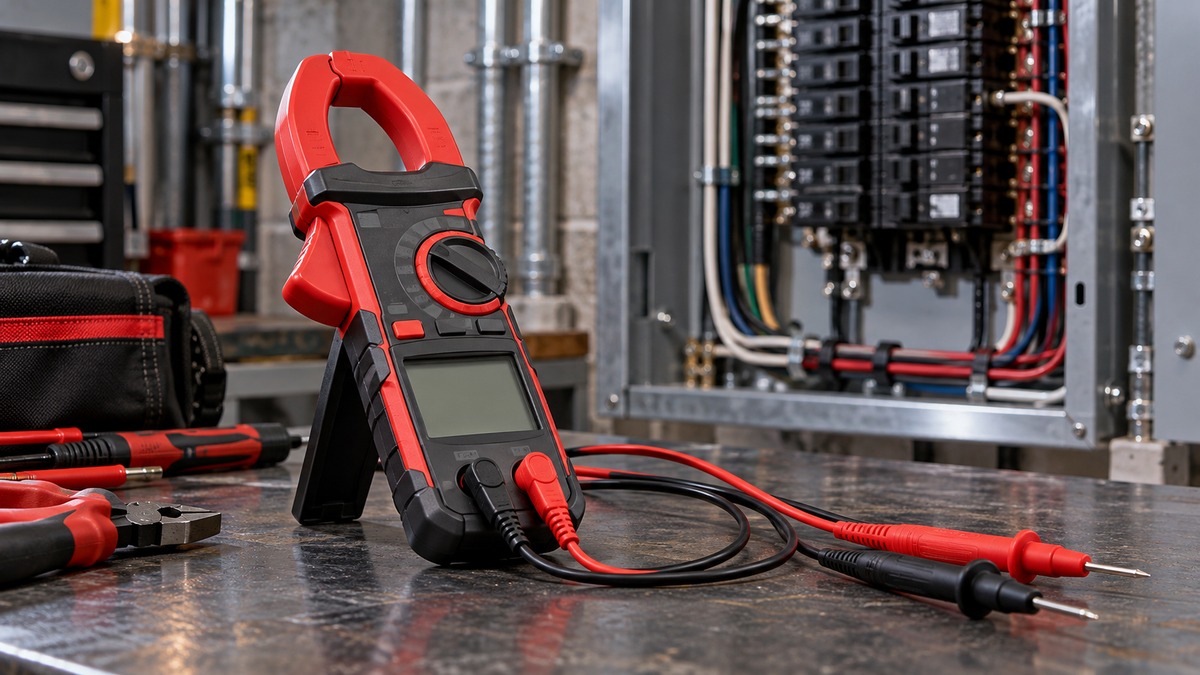
The milwaukee 2237 20, written Milwaukee 2237-20 in the manual, is a TRUE-RMS clamp meter that the manufacturer describes as a 600A clamp meter for professional residential, commercial and industrial work. The operator manual, which covers the 2236-20 and 2237-20 together, lists Measurement Category III, 600V and a jaw opening of about 1.3 inches. This explainer covers what the 2237-20 does, which functions the manual reserves for the 2237-20, the safe-use steps from the manual, and the points to confirm before you buy.
Quick answer
- The 2237-20 is a TRMS clamp meter rated to 600 A on the clamp, with voltage inputs rated 600 V, according to the manufacturer.
- The operator manual states Measurement Category III, 600V, and it asks users to use only leads rated 600V or better.
- The manual says the DC current function and the Hz function apply to the 2237-20 model, not the 2236-20.
- The meter runs on two AA batteries, and the manual gives about 30 hours of battery life with all lights on.
What the 2237-20 measures
The product page calls the 2237-20 a TRMS clamp meter, and the manual’s specification table lists DC voltage and AC current ranges, with the clamp rated to 600 A. The manual’s Hertz section gives frequency measurement for the 2237-20 only. For a homeowner or a service technician, the useful split is the clamp for current and the terminal inputs for voltage and resistance.
The manual lists a DC current function as specific to the 2237-20. That matters if you plan to check a DC load or a battery system, because the 2236-20 in the same manual does not carry that function. Confirm the model number on the box and the label before you assume the DC current reading is available.
The clamp jaws open to approximately 1.3 inches (33 mm), according to the manual. The product page describes a thin jaw profile for working around wires in panels and bundles. Jaw size decides which conductors fit. Measure the conductor’s outer diameter before you plan a reading, and do not force a larger cable into the jaws.
Ratings printed in the manual
The manual lists Measurement Category III, 600V and gives the operating altitude as 2,000 meters. It lists UL/CSA 61010-1 3rd Ed and UL/CSA 61010-2-032 1st Edition (Clamp Assemblies) as safety compliances. A category tells you the circuit locations the meter is built for. It does not tell you that every circuit at that level is safe to open, so check the category against the circuit you are working on.
The manual’s voltage limits and warnings sit in the same section as the category. The manual says a meter should be used only with leads rated 600V or better, and it says not to ground yourself while measuring. Those two lines are the ones to memorise before the first job.
Safe-use steps from the manual
The operator manual is short, and most of its warnings are simple steps you can follow every time:
- Use only leads rated 600V or better. The manual’s warning applies to the test leads you connect to the meter.
- Do not ground yourself while measuring. Keep your body insulated from earth and from other conductors during the reading.
- Do not use the meter with the battery cover removed. The manual repeats this in its battery and measurement notes.
- Never open the battery cover during a measurement. The manual makes this a standalone warning.
- Verify proper operation on a known source before use. A reading that looks normal can still be wrong if the meter is not working, so check it on a known source first.
- Do not expose the instrument to direct sun. The manual includes this instruction with its operating-condition notes.
Mains electricity can kill. A clamp meter does not make a live circuit safe to open, and panel, service and uncertain live-circuit work belongs to a licensed electrician. The manual’s warnings are a minimum, not a full safety plan.
Batteries and power
The manual says the meter is designed to run on two AA batteries and lists the battery life as approximately 30 hours with all lights on. The LCD backlight turns off after about three minutes, according to the manual. Those two details mean the light and the display can go dark during a long job, so keep spare AA batteries in the case. Replace the batteries when the low-battery indicator shows, and follow the manual’s battery replacement steps with the rotary dial set to OFF and the leads disconnected.
The jaw, the flashlight and the non-contact detector
The product page describes the 2237-20 as having a built-in voltage detector and an LED work light. The manual lists an NCVD indicator on the meter face. A non-contact detector is a screening tool. It does not measure voltage, and the manual does not treat it as a substitute for a meter reading. Use it to find a live conductor, then take the reading with the rotary dial in an appropriate position.
Who the 2237-20 suits
The product page positions the meter for professional residential, commercial and industrial applications. For an electrician or a maintenance technician who reads current on feeders, motors and branch circuits, a 600 A clamp with True RMS measurement fits the job. A homeowner who checks one appliance cord may find a smaller clamp easier to store and simpler to use. The 2237-20 makes more sense when the job needs a high current range or a DC current reading on the same meter.
Before you buy: a short checklist
- Confirm the model number. The manual covers the 2236-20 and 2237-20. The DC current and Hz functions apply to the 2237-20.
- Confirm the category. The manual states Measurement Category III, 600V. Check the listing for the same rating.
- Measure the cable you plan to clamp. The jaw opening is about 1.3 inches (33 mm).
- Plan spare AA batteries. The manual gives about 30 hours with all lights on.
- Plan spare parts. Milwaukee’s revised parts bulletin lists the jaw set and other parts by catalog number, so keep the catalog number with the meter.
- Check the warranty. The product page lists a 5-year warranty in the sources we opened.
How we chose
This explainer uses only the Milwaukee operator manual, the 2237-20 product page and the revised parts bulletin 54-07-2225, all opened on 2026-10-27. We did not compare the 2237-20 with other clamp meters and did not rank it. The manual covers two models, so we flagged the functions that the manual assigns to the 2237-20 only.
What we could not verify
The sources we opened do not give a full accuracy table we can quote here, so we did not repeat accuracy figures. The product page does not give the frequency range of the clamp in the same form as the manual. The parts bulletin is a parts list, not a specification, so it does not tell you about performance. The warranty figure comes from the product page, and you should confirm it in the warranty document that ships with the meter.
Mistakes to avoid
- Buying the 2236-20 and expecting DC current. The manual assigns the DC current function to the 2237-20 only.
- Forcing a cable into the jaws. The opening is about 1.3 inches (33 mm).
- Grounding yourself to make a reading. The manual says not to ground yourself while measuring.
- Relying on the detector alone. The non-contact detector finds a conductor; it does not replace a reading.
FAQ
Is the Milwaukee 2237-20 rated CAT III 600V?
The operator manual states Measurement Category III, 600V. Confirm the same rating on the listing before you buy.
What battery does the 2237-20 use?
The manual says two AA batteries and about 30 hours of life with all lights on.
Does the 2237-20 measure DC current?
The manual lists the DC current function as specific to the 2237-20, so the 2236-20 does not carry it.
How large a cable fits the jaws?
The manual gives the jaw opening as approximately 1.3 inches (33 mm). Measure your conductor before you clamp it.
Bottom line
The Milwaukee 2237-20 is a TRMS clamp meter with a stated Measurement Category III, 600V rating, a 1.3-inch jaw and a DC current function that the manual assigns to this model. Use leads rated 600V or better, do not ground yourself while measuring, and leave panel and service work to a licensed electrician. If you are still choosing a clamp type, read Best Clamp Meter: AC Current, True RMS and Logging Compared and Best Ac Dc Current Clamp Meter.
For the basic steps before any clamp reading, read How to Use a Clamp Meter Safely, Step by Step, then return to the checklist above.
Sources
- Milwaukee Electric Tool Corporation, “Cat. No. 2236-20, 2237-20 Operator’s Manual” (Clamp Meters). https://documents.milwaukeetool.com/58-14-2221d6.pdf (opened 2026-10-27)
- Milwaukee Tool, “Clamp Meter 2237-20” product page. https://www.milwaukeetool.com/products/details/clamp-meter/2237-20 (opened 2026-10-27)
- Milwaukee Electric Tool Corporation, “2237-20 Clamp Meter (AC/DC Clamp)” revised parts bulletin 54-07-2225. https://documents.milwaukeetool.com/54-07-2225.pdf (opened 2026-10-27)