Best ESR Meter for Capacitor Testing and Repair Work
As an Amazon Associate we earn from qualifying purchases. Details
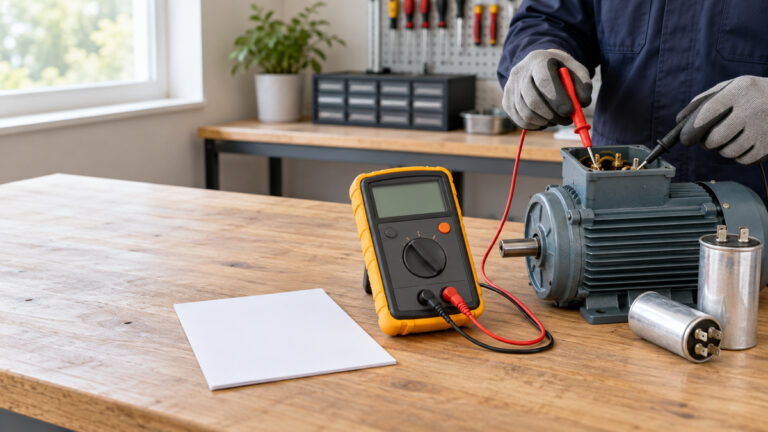
An esr meter helps you find bad electrolytic capacitors that look fine but cause power supplies, amplifiers, and control boards to fail. It measures equivalent series resistance, which rises as capacitors age and dry out. A good esr meter can save hours of guessing when a device hums, resets, will not start, or shows ripple on the output.
This guide helps you decide which type fits your repair work. You will learn what in-circuit testing means, which ranges matter, and how to compare dedicated meters with LCR meters that also read ESR. Product details below come from the product listings, and safety limits come from cited sources. Use it to match a meter to your boards, parts, and skill level.
Quick answer
Choose a dedicated esr meter if your main job is fast checks of electrolytic capacitors on unpowered boards. Choose an LCR meter with ESR if you also need inductance, capacitance, D, Q, and sorting. For quick bench screening, the Signstek MESR-100 V2 style and the GME in-circuit tester cover common electrolytics. For capacitance plus ESR in one handheld, the Peak Atlas ESR70 style fits 1uF to 22000uF parts. For wider lab work, a 19,999-count LCR meter with 100Hz to 100kHz test frequencies fits sorting and value checks. Check the listing for leads, calibration, discharge rules, and CAT information before you buy.
What matters when you choose an esr meter
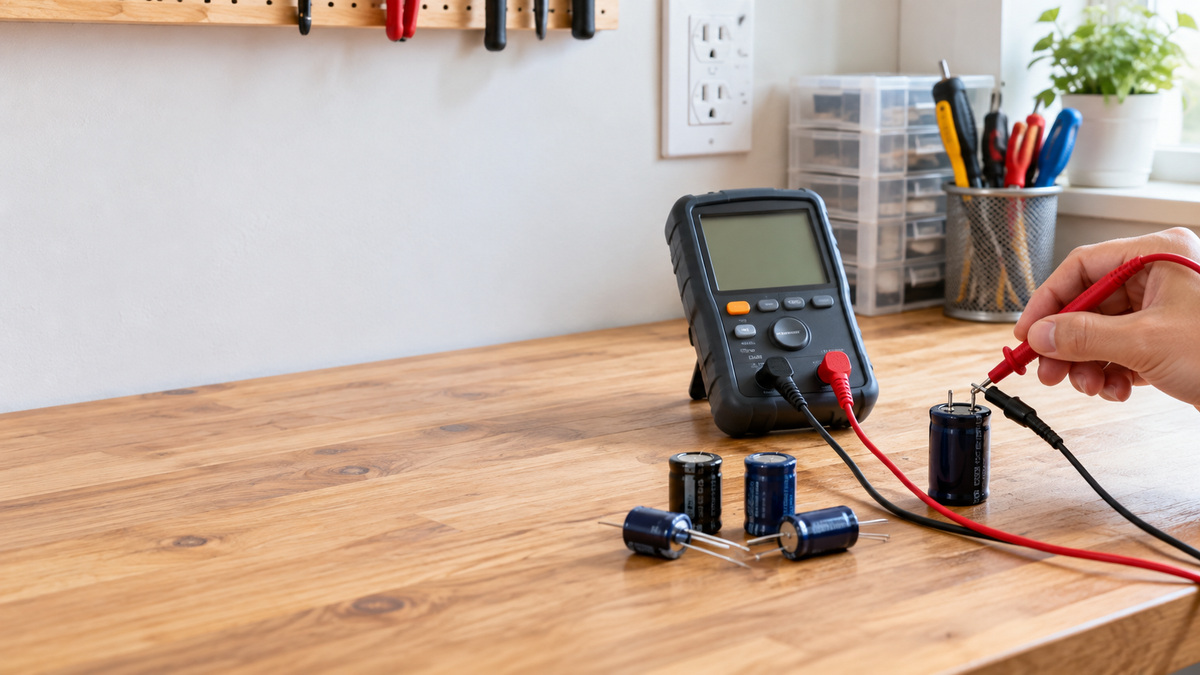
An esr meter is not a general multimeter. It applies a small low-voltage test signal to a discharged capacitor and reports resistance in ohms. Low ESR usually means a healthier electrolytic. High ESR points to aging or failure. You still need capacitance and visual checks, because a capacitor can read fair ESR and still be off value or leaky.
1. In-circuit testing and test voltage
Many readers search for esr meter in circuit because they want to test without removing every part. In-circuit means the capacitor stays soldered while the circuit has no power. Parallel parts can still affect the reading, so treat in-circuit results as screening, then remove a suspect part to confirm.
Low test voltage matters for in-circuit work. The GME listing states a 100 kHz output test frequency and low 15 mVp-p output test voltage that will not turn on solid-state devices during testing. The FNIRSI listing states adjustable test voltage of 0.1/0.3/0.6V and warns not to measure live circuits. Always power off the board, discharge the capacitor, and follow the manual. Work on mains circuits can kill, and panel or service work belongs to a licensed electrician.
2. Capacitance range and ESR range
Match both ends. A dedicated meter may focus on electrolytics from 0.47uF to 2200uF, while another covers 1uF to 22000uF. An LCR meter may cover 1pF to 100mF for capacitors plus resistors and inductors. On resistance, examples from the listings include 0.01R to 100R, 0.00 to 40.0 ohms with 0.01 ohms resolution, 10mOhm to 10MOhm, and 0 to 25Ohm ranges.
If you repair switch-mode supplies, audio amplifiers, and monitors, a 0.01-ohm resolution helps separate good low-ESR parts from tired ones. The Peak listing states ESR resolution as fine as 0.01 ohms. The Signstek title states 0.01R-100R. The GME listing states 0.47uF to 2200uF. Check the listing when you work outside those spans, especially for very small film capacitors or very large motor-start parts.
3. Test frequency and extra parameters
ESR changes with frequency. Many LCR meters let you select 100Hz/120Hz/1kHz/10kHz/100kHz, which helps compare parts under the same conditions and supports D, Q, phase, and related readings. Dedicated ESR meters often use one fixed high-frequency signal, often around 100 kHz, for fast go/no-go checks.
Decide which workflow you want. For fast repair triage, one-button ESR is enough. For parts sorting, incoming inspection, or matching replacements, frequency choice plus D/Q/theta helps. The DER EE listing states test frequencies of 100Hz/120Hz/1kHz/10kHz/100kHz. The FNIRSI listing states the same five frequencies plus main/secondary parameters X/D/Q/theta/ESR. Learn more in our capacitor tester guide before you rely on one number.
4. Leads, fixtures, calibration, and power
Small resistance readings depend on contact and zeroing. Four-terminal Kelvin fixtures, tweezers, short calibration, and auto-zero reduce lead error. The FNIRSI listing mentions 3-pin sockets and 5-slot jacks for four-terminal Kelvin measurements plus open/short calibration. The GME listing mentions intelligent automatic calibration on power up. The Asixxsix-style listing mentions automatic zero calibration at power-on and during range switching.
Check what ships in the box, battery type, and auto-off time. Examples from the listings include a 3000mAh battery with Type-C charging, a 240mAH built-in battery, a 9V battery requirement, 5 minutes of inactivity before auto-off, and 20 seconds after measurement before auto power off. Long cables and tweezer tips help on dense boards. If you already use a general meter, see when a Fluke 115 fits bench work and where a Fluke 101 fits basic checks.
5. Safety ratings and limits
Do not use an esr meter as a mains safety meter unless the listing states the right protection. Measurement category is an IEC classification for live-circuit measurement locations, and higher categories reflect higher transient energy near the supply source. See the background on measurement categories in the cited source below.
The listings in this guide focus on component testing, not panel testing. Several state Battery Powered and LCR Meter or ESR Meter use, but the listing does not state a CAT rating for most picks. If the listing does not state a CAT rating, do not call the meter safe for household mains. Follow the instrument manual and local electrical rules. For mains context, compare with a Fluke electrical meter for mains work.
Readers also search for esr meter fluke, blue esr meter, anatek blue esr meter, bob parker esr meter, mesr 100 esr meter, best esr meter, and good esr meter. Those phrases describe different maker traditions and popular kit-built or small-shop designs. This roundup covers only the models in the product listings below, so use the same checks — range, frequency, in-circuit behavior, calibration, and stated safety rating — if you compare those other designs. A detailed look at one popular MESR platform is in our MESR-100 V2 guide, with related background in MESR-100 notes and Blue ESR notes.
How to choose for your repair situation
Start with the board, not the meter. If you fix power supplies with bulging or warm electrolytics, prioritize fast in-circuit ESR screening, audible alerts, auto-ranging, and one-hand tweezers. If you rebuild vintage audio or test mixed drawers of parts, prioritize wide capacitance coverage, clear ESR resolution, and a printed or on-screen reference.
Next, decide bench or field. A handheld unit that weighs 137 g or 250 g travels well. A larger handheld that measures 6 x 3.5 x 2 inches or 3.74 x 7.4 x 2.07 inches may be easier to hold with tweezers but takes more bag space. Check Item Weight and Item Dimensions in the listing. One listing states 8 ounces, another states 16 ounces, another states 450 g, and another states 0.1 kg.
Then check support parts. If you test surface-mount devices, look for SMD tweezers, Kelvin fixtures, spare probes, and data hold. The DER EE listing includes alligator leads, SMD tweezers, and guard line accessories in its standard accessories. The FNIRSI listing includes data hold and sorting with success/fail counts. The WESTOBiG listing mentions pointed and hook tweezer heads and data transfer to PC via EXCEL after connection.
Finally, confirm the discharge rule. Every listing here expects discharged, unpowered parts. One states to fully discharge capacitors and inductors. Another states to be sure to discharge the capacitor before testing. Another states the tester automatically discharges the capacitor under test. Automatic discharge is a convenience, not permission to probe live circuits. When in doubt, stop and ask a professional.
1. Signstek MESR-100 V2 ESR Meter, Capacitor Tester/Low Ohm Meter 0.01R-100R (Best overall)
Specs from the listing (checked 2026-10-11):
- Brand: Signstek
- Power Source: Battery Powered
- Item Weight: 8 ounces
- Measurement Type: LCR Meter
- Model: US-171024-02
- Item Highlight: Auto Ranging in Circuit, Support in Measuring Capacitance Resistance Circuit, 2026 Upgraded Test Clip
Pros
- Auto-ranging capacitor ESR and low-ohm function from listing
- Title states 0.01R-100R coverage for low-ohm checks
- Dual terminal design described for fast capacitor or resistor inspection
Cons
- Listing does not state capacitor uF limits or CAT rating, so confirm fit before mains-adjacent work
- Printed ESR table is a guide only, not a pass/fail rating for every brand
Best for: Quick bench screening of general capacitors and resistors
Skip if: You need stated uF limits, frequency choice, or inductance sorting — choose an LCR pick instead
View on Amazon (affiliate link)
2. GME Professional in-Circuit ESR Capacitor Tester, Capacitance ESR Meter, Designed and Engineered (Best in-circuit pick)
Specs from the listing (checked 2026-10-11):
- Brand: GME
- Power Source: Battery Powered Or Ac Adapter
- Style: Handheld
- Item Dimensions: 6 x 3.5 x 2 inches
- Specification Met: Ul 61010-1, Ce Marked, Rohs Compliant
- Model: 236
Pros
- States 0.47µF to 2200µF in or out of circuit testing
- States 100 kHz output with low 15 mVp-p test voltage for in-circuit work
- Automatically discharges capacitor under test and calibrates on power up per listing
Cons
- Narrower uF span than wide-range handhelds; listing does not state a CAT rating
- 16 ounces and 6 x 3.5 x 2 inches is bulkier than pocket LCR tweezers
Best for: One-handed in-circuit triage of electrolytics on unpowered boards
Skip if: You work mainly above 2200µF or need L/C sorting — choose a wider-range meter
View on Amazon (affiliate link)
3. Velleman Atlas ESR70 Capacitance and ESR Meter (Best for large electrolytics)
Specs from the listing (checked 2026-10-11):
- Brand: PEAK
- Power Source: Battery Powered
- Measurement Type: ESR Meter, Capacitance Meter
- Model: ESR70
- Item Dimensions: 5.51 x 7.87 x 1.18 inches
- Item Weight: 0.1 kg
Pros
- States 1uF to 22000uF including motor and smoothing types
- States 0.00 to 40.0 ohms range with 0.01 ohms resolution
- Audible alerts for ESR levels per listing for faster sorting
Cons
- Listing does not state test frequency or CAT rating, so check the manual for comparison charts
- 5.51 x 7.87 x 1.18 inches package size is large for tight field kits
Best for: Mains-adjacent appliance and audio work with large electrolytics, parts discharged
Skip if: You need selectable test frequencies or inductor measurement — choose an LCR meter
View on Amazon (affiliate link)
4. FNIRSI LC1020E 100kHz LCR Meter, 19,999 Counts Resistor Inductor Capacitor Tester, Auto Component (Best LCR with ESR)
Specs from the listing (checked 2026-10-11):
- Brand: FNIRSI
- Power Source: Battery Powered
- Item Weight: 250 g
- Measurement Type: LCR Meter
- Model: LC1020E
- Item Dimensions: 3.35 x 1.38 x 7.28 inches
Pros
- States 19,999-count display with dual-parameter X/D/Q/theta/ESR readings
- States capacitors 1pF–100mF, resistors 10mΩ–10MΩ, inductors 1µH–100H
- Adjustable 0.1/0.3/0.6V test voltage plus Kelvin fixtures and sorting mode
Cons
- Requires open/short calibration before measurement and fully discharged parts
- 250 g plus fixtures is more setup than a one-button ESR checker
Best for: Parts sorting and lab checks needing frequency choice and D/Q data
Skip if: You want the simplest go/no-go ESR buzzer — choose a dedicated ESR checker
View on Amazon (affiliate link)
5. DE-5000 Handheld LCR Meter (Best bench LCR)
Specs from the listing (checked 2026-10-11):
- Brand: DER EE
- Power Source: Battery Powered
- Style: Handheld
- Measurement Type: LCR Meter
- Model: DE-5000
- Item Dimensions: 3.74 x 7.4 x 2.07 inches
Pros
- States 19999/9999 counts dual display with D, Q, phase, ESR or Rp
- Fully auto ranging with AUTO-LCR smart mode per listing
- Includes alligator leads, SMD tweezers, and guard line as standard accessories
Cons
- Listing does not state uF or ohm spans in one line, so confirm limits before buying
- 450 g and 3.74 x 7.4 x 2.07 inches is heavier than tweezer-style meters
Best for: Bench users who want auto LCR plus sorting mode
Skip if: You need pocket size or automatic in-circuit discharge — choose a smaller or dedicated pick
View on Amazon (affiliate link)
6. FNRSI Upgraded Version LCR-ST1 Mini Smart LCR Meter, SMD Tester, ESR Meter – 100Hz, 1kHz, and 10kHz (Best compact tweezers)
Specs from the listing (checked 2026-10-11):
- Brand: WESTOBiG
- Power Source: Battery Powered
- Measurement Type: LCR Meter
- Model: LCR-ST1
- Specification Met: CE
- Style: PROFESSIONAL LEVEL
Pros
- States capacitance 1pF-22mF and resistance 10mΩ-10MΩ with ESR/D/Q/Z/X display
- Offers 100Hz, 1kHz, 10kHz with 0.3V, 0.6V RMS test levels
- Weighs only 1.45ounces with 1.4 inch color screen and two tweezer heads
Cons
- 240mAH built-in battery is small for long sessions; check listing for runtime
- Not stated for powered in-circuit mains work; use only on discharged parts
Best for: SMD and field checks where tweezers and light weight matter
Skip if: You need 100kHz testing or large-bench sorting counts — choose a full-size LCR pick
View on Amazon (affiliate link)
7. BSIDE ESR02 PRO Digital Transistor SMD Components Tester Diode Triode Capacitance Inductance (Best multi-part identifier)
Specs from the listing (checked 2026-10-11):
- Brand: BSIDE
- Power Source: Battery Powered
- Item Weight: 137 g
- Measurement Type: Multimeter
- Model: Professional BSIDE ESR02PRO Digital
- Item Dimensions: 5.43 x 3.19 x 1.73 inches
Pros
- Auto-identifies transistors, MOSFET, diodes, resistors, capacitors and other devices
- Includes typical ESR value guide table on back for quick reference
- Large LCD with backlight and auto shut-down function per listing
Cons
- Listing does not state ESR ohm resolution or test frequency, so confirm before critical work
- Auto power off 20 seconds after measurement can interrupt slow note-taking
Best for: Hobby sorting of mixed plug-in and SMD parts plus basic ESR guidance
Skip if: You need calibrated in-circuit ESR ranges — choose a dedicated ESR meter
View on Amazon (affiliate link)
Comparison table built only from the listings
| Meter style | Capacitor coverage stated | ESR / resistance coverage stated | Frequencies / parameters stated | Size / weight stated | Power / auto-off stated |
|---|---|---|---|---|---|
| Signstek MESR-100 V2 style | Stated as capacitor ESR in title; check listing for uF limits | 0.01R-100R in title | Auto-ranging capacitor ESR and Low Ohm Meter | 8 ounces | Battery Powered |
| FNIRSI LC1020E style | Capacitors 1pF–100mF | Resistors 10mΩ–10MΩ | 100Hz/120Hz/1kHz/10kHz/100kHz; X/D/Q/θ/ESR; 19,999-count display | 3.35 x 1.38 x 7.28 inches; 250 g; 2.8” TFT | 3000mAh battery; auto-off; Type-C charging |
| Peak Atlas ESR70 style | 1uF and 22000uF, any dielectric type | 0.00 to 40.0 ohms; 0.01 ohms resolution | Capacitance and ESR; audible alerts | 5.51 x 7.87 x 1.18 inches; 0.1 kg | Battery Powered |
| GME 236 in-circuit style | 0.47µF to 2200µF, in or out of circuit | ESR and DCR testing stated; check listing for ohm limits | 100 kHz output; 15 mVp-p output | 6 x 3.5 x 2 inches; 16 ounces | Battery Powered Or Ac Adapter |
| DER EE DE-5000 style | L/C/R components; check listing for uF limits | ESR or Rp as secondary parameter; 19999/9999 counts dual display | 100Hz/120Hz/1kHz/10kHz/100kHz; D, Q, phase angle, ESR or Rp | 3.74 x 7.4 x 2.07 inches; 450 g | Battery Powered; DC9V Battery included as accessory |
| WESTOBiG LCR-ST1 style | Capacitance range: 1pF-22mF | Resistance range: 10mΩ-10MΩ; shows ESR, D, Q, Z, X | 100Hz, 1kHz, 10kHz; 0.3V, 0.6V RMS test levels | 1.4 inch color screen; weighs only 1.45ounces | 240mAH built in battery; automatically shutdown |
| BSIDE ESR02PRO style | Capacitors plus transistors, diodes, inductors; check listing for uF limits | Typical ESR value table on back for guidance | Auto identification of device type and pin polarity | 5.43 x 3.19 x 1.73 inches; 137 g | 1pcs of 9V 6LR61 battery; Auto power off 20 seconds after measurement |
Worked example with our planning estimate
This example shows how an ESR screening session might flow on a dead power supply board. It is our planning estimate, not a meter specification.
Example: screening ten electrolytics on one unpowered board
Assume a hypothetical bench job with numbers you define once:
- Suspect capacitors on board: 10 parts
- Time to discharge, probe, and note each ESR reading: 45 seconds per part
- Time to remove and retest one flagged part out of circuit: 6 minutes
- Flagged as high ESR in circuit: 2 parts
Step 1 — In-circuit screen time. Multiply parts by time per part: 10 x 45 seconds = 450 seconds. Convert to minutes: 450 / 60 = 7.5 minutes. Re-verify: 10 x 40 = 400, plus 10 x 5 = 50, total 450 seconds, correct. Then 420 seconds = 7 minutes, remainder 30 seconds = 0.5 minute, total 7.5 minutes, correct.
Step 2 — Out-of-circuit confirmation time. Multiply flagged parts by removal time: 2 x 6 minutes = 12 minutes. Re-verify: 6 + 6 = 12 minutes, correct.
Step 3 — Total bench time. Add screening plus confirmation: 7.5 + 12 = 19.5 minutes. Re-verify: 7 + 12 = 19, plus 0.5 = 19.5 minutes, correct.
Step 4 — Share flagged. Divide flagged by total: 2 / 10 = 0.20. Multiply by 100 for percent: 0.20 x 100 = 20%. Re-verify: 1/10 = 10%, so 2/10 = 20%, correct.
This is why in-circuit ESR matters. A short 7.5-minute screen narrows the work to 20% of the parts, before you spend 12 minutes on removal. If you tested every part out of circuit, the removal time alone could exceed 60 minutes. For related mains-meter context, see Fluke 117 notes for electrical checks and Fluke 87 notes for advanced troubleshooting.
Five common mistakes with an esr meter
1. Probing a charged or powered board
Capacitors can hold charge after power off. One listing warns to fully discharge capacitors and inductors and not to measure live circuits. Another warns to discharge before testing or the internal circuit may be damaged. Use the manual discharge method, verify no voltage with a suitable meter, then test resistance/ESR.
2. Treating one in-circuit number as final
Parallel capacitors, low-value resistors, inductors, and active devices can pull the reading low or high. Use in-circuit ESR to rank suspects, then lift one leg or remove the part and retest. The GME design aims for in-circuit work with a low test signal, but even then confirm a failure before replacing parts.
3. Ignoring lead zero and contact
At fractions of an ohm, dirty tips and long leads add error. Use open/short calibration or auto-zero as the listing describes. Hold tweezers steady, clean oxidized leads, and repeat the reading. If two fields in a listing contradict each other on size or range, rely on neither number and check with the maker.
4. Using an ESR meter for mains safety checks
Component testers are not proof that a wall circuit, breaker, or panel is safe. The listings here do not state a CAT rating for most picks. The required impulse withstand varies widely by category and voltage, from 500 V at CAT II 50 V to 12,000 V at CAT IV 1000 V. If you need mains measurements, use a meter with a stated CAT and voltage rating that suits the circuit, and leave panel work to a licensed electrician.
5. Forgetting capacitance and temperature
ESR is one clue. A capacitor can have acceptable ESR but low capacitance, high leakage, or heat damage. Compare capacitance when the meter supports it, check for bulging or venting, and let hot boards cool before testing. One listing mentions temperature compensation as an added function, but that does not replace correct handling and manual checks.
Care, handling, and manual-first safety
Store tweezers and Kelvin clips so tips do not bend. Keep spare batteries or a charging cable ready, because weak power can cause odd readings. One listing notes replacing the 9V battery when power falls under 6V. Another uses smart shutdown after 5 minutes of inactivity. Another shuts down 20 seconds after measurement.
Keep the manual with the meter. IEC 61010-1 requires that transient withstand capability be made known to the user, which is why stated CAT and voltage markings matter on mains-rated tools. For component work, the manual still controls discharge steps, maximum part voltage, polarity handling, and calibration. Never work on airbag circuits or high-voltage hybrid/EV systems with a small component tester, and disconnect/handle batteries safely.
FAQ
What does an esr meter actually measure?
It reports equivalent series resistance in ohms for a capacitor, using a small test signal. High ESR often means an aged electrolytic with more loss and heat. Use it with capacitance, visual inspection, and circuit symptoms. Check the listing for the ohm range, such as 0.00 to 40.0 ohms or 0 to 25Ohm ranges stated here.
Can I test capacitors without removing them?
Often yes for screening, with power off and parts discharged. An esr meter in circuit design tries to avoid turning on nearby semiconductors, but parallel paths can still shift readings. Flag suspects in circuit, then remove and retest the worst parts. Never probe live boards.
Do I need true RMS or CAT rating for ESR work?
True RMS matters for AC voltage measurement, not for basic ESR screening. CAT rating matters when you probe live mains, not when you test discharged parts on the bench. Most listings here do not state a CAT rating, so do not use them for household mains. Use a properly rated meter for that work and follow local rules.
What is the difference between an ESR meter and an LCR meter?
A dedicated ESR meter gives fast resistance checks for electrolytics. An LCR meter measures inductance, capacitance, and resistance plus secondary terms such as D, Q, ESR, phase, or impedance. If you only fix power rails, a simple ESR checker is faster. If you sort parts or match values, an LCR meter with 100Hz to 100kHz frequencies is more flexible.
Why do listings mention 100 kHz?
Many ESR checks use about 100 kHz because bad electrolytics show resistance clearly at higher frequency. The GME listing states a microprocessor generated 100 kHz output. LCR meters in this guide also offer lower frequencies for capacitance and inductance. Use the same frequency when you compare a part to a chart or a known-good part.
How do I get stable low-ohm readings?
Short the leads or run open/short calibration as directed, clean the tips, press firmly, and hold still. Use four-terminal Kelvin fixtures or SMD tweezers when supplied. Avoid long extension wires. If readings jump, re-zero, change the battery, and retest. Check the listing for included leads and calibration steps.
Can an esr meter test batteries or motors?
No. These picks are for capacitors, resistors, inductors, and small component checks, depending on model. They are not for measuring battery capacity, motor windings under power, airbag circuits, or traction-voltage systems. Disconnect/handle batteries safely and ask a professional for high-energy or safety-critical systems.
Bottom line
Choose fast in-circuit ESR screening if you repair boards: look for a stated electrolytic range, low test voltage, auto calibration, and clear low-ohm resolution. Choose an LCR meter with ESR if you also sort, match, or document parts: look for selectable frequencies, D/Q support, Kelvin fixtures, and data hold. If the listing does not state a CAT rating, keep the tool on discharged bench parts only. Confirm the capacitor range, ohm range, leads, battery, and discharge steps on the listing before you buy.
Sources
- Measurement category: CAT definitions, impulse withstand range, and IEC marking rule