Non Contact Voltage Tester vs Multimeter: Which to Use
As an Amazon Associate we earn from qualifying purchases. Details
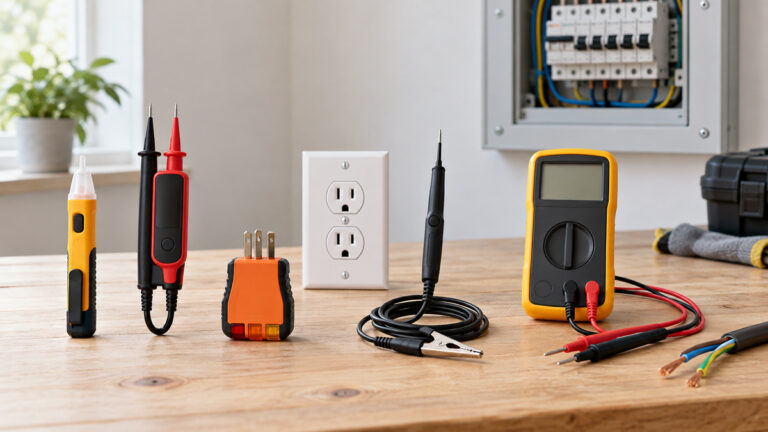
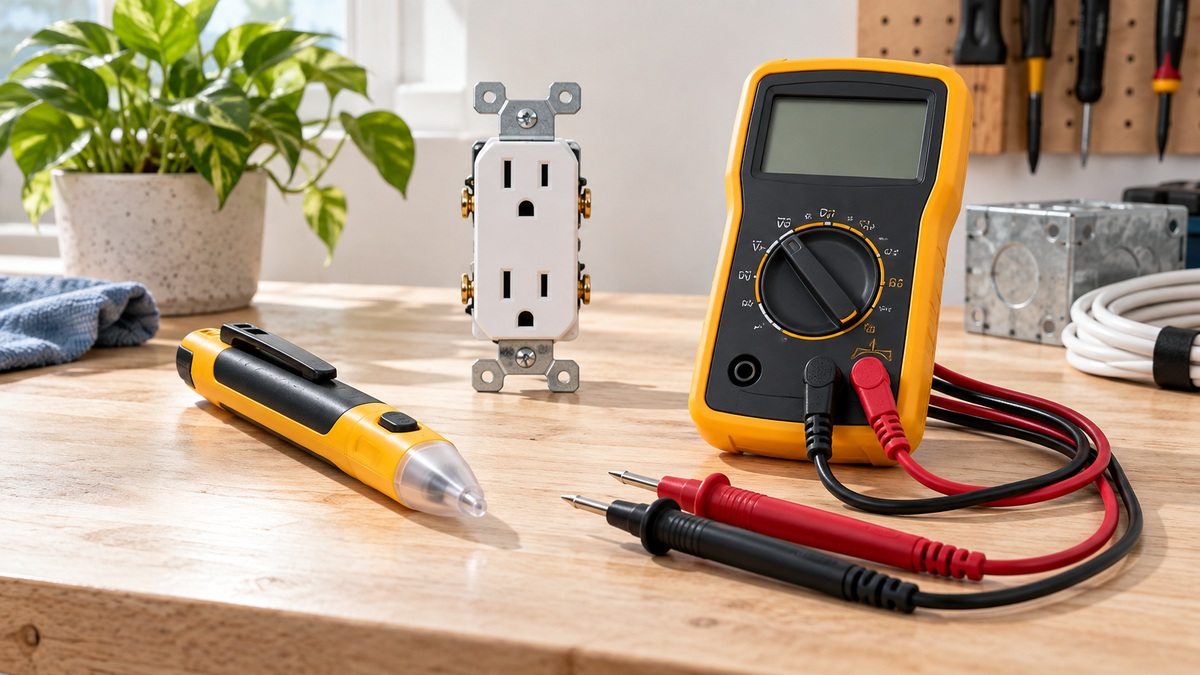
A non contact voltage tester signals that a conductor is energized without touching it. A multimeter uses probes to read a numeric value, such as volts, amps, or ohms. Some combination meters offer both functions. The two tools answer different questions, so the job settles which one belongs in your hand.
Use a non-contact tester for a quick first check before you touch a wire or outlet, then use a meter when you need a measured value. Mains electricity can kill. Match the CAT rating to the circuit, follow the manual, and leave panel or service work to a licensed electrician.
Quick answer
Choose a non-contact pen for its explicitly stated AC proximity-detection task, a multimeter when you need a listed numeric mode, or a combination meter only when both functions are clearly specified. A dedicated non contact voltage tester vs multimeter tool reduces irrelevant functions, while a multifunction instrument can suit a broader troubleshooting kit when every needed mode is explicitly stated. Never infer live-circuit suitability from the word tester. If the listing omits a required CAT rating, voltage range, fixture, or compatible device, treat that omission as a reason to pause. For adjacent decisions, use our non-contact checks on wires testing AC voltage with a multimeter false-positive detector guidance; each covers a different tool family and should not be treated as interchangeable with this roundup.
What matters for non contact voltage tester vs multimeter
Exact task and circuit state
Start with the named job. For non contact voltage tester vs multimeter, a continuity-only instrument, an LCR or ESR meter, and an automotive powered probe solve different problems even when each can report an electrical condition. Confirm whether the listing calls for a non-live circuit, an in-circuit component, or a vehicle electrical system. A tool intended for one context does not gain permission for another merely because its display can show a number.
Declared range and measurement mode
A range is useful only when it belongs to the required mode. Read the range label together with its unit and function. Do not compare a cable length with a voltage range, a display count with resistance, or an item dimension with usable probe reach. When a listing gives several modes, identify the one that controls your purchase and ignore unrelated headline figures.
Leads, clips, sockets, and fixtures
The connection hardware can decide whether the instrument fits the work. A long lead can help across a vehicle, tweezers can suit small components, and an alligator clip can hold a reference connection. Those are different advantages. Check what is included, whether a replaceable tip is stated, and whether the supplied connector matches the target without an improvised adapter.
Display and indication
Some choices provide a numeric display, while others use a lamp, buzzer, polarity color, or a combination. Select the indication that answers the actual question. A pass or fail alert may be enough for tracing a path, but a diagnostic comparison may require a stated numeric range. Do not assume an audible feature supplies measurement resolution unless the listing says so.
Safety information and missing ratings
Measurement category classifies live circuits by installation location and available transient energy. The cited reference distinguishes category II from category IV and notes that required impulse withstand varies from 500 V to 12,000 V across its examples. Those figures are not blanket approval for any pick. Use only the rating printed for the exact instrument, and do not use a missing rating as evidence of suitability.
Comparison snapshot
| Pick | Listed type | Power source | One listed detail |
|---|---|---|---|
| First | Multimeter | Battery Powered | 0.15 kg |
| Second | Voltmeter | Battery Powered | 22.68 g |
| Third | Voltmeter | Alkaline | 59 g |
| Fourth | Multimeter | Battery Powered | check the listing |
| Fifth | Multimeter, Voltmeter | Battery Powered | 0.1 kg |
Qualifying picks
The first pick: AstroAI
This product is listed as “AstroAI Digital Multimeter Tester 2000 Counts with DC AC Voltmeter and Ohm Volt Amp Meter; Measures Voltage, Current, Resistance, Continuity and Diode, Blue.” For distinguishing these tool types, the recorded specification fields are power source: Battery Powered; style: compact; color: Blue; item weight: 0.15 kg; environmental conditions: CAT II 600 V; CAT Ill 300 V; pollution level: 2; temperature and humidity: 32-104 ° F (0-40 °C);(<80% RH, <10 °C RH). Those fields make the first choice easiest to judge by its declared format and included hardware, rather than by an unsupported assumption. The listing also states: “Professional Technical Support Team – If you have any questions about the product, feel free to contact us. Our California-based support team will respond within 24 hours.” That detail identifies the job or handling feature that separates this option from the surrounding picks. Another listed point says: “Ease of Use – Support Data Hold and Continuity Buzzer. Includes Convenient feature like LCD Backlit Screen makes it easy to use in dimly light areas. Batteries/Set of Test Leads/User Manual are Included.” Treat that statement as the boundary of the comparison; do not extend it to circuits, components, or conditions that are not named. The AstroAI entry fits a buyer whose required task matches those exact statements. Leave this first option off the list when its range, category, accessory, or circuit type is absent, then consult the current product page and manual before connecting it.
The second pick: KLEIN TOOLS
This product is listed as “Klein Tools NCVT1P Voltage Tester, NCVT Pen, 50 to 1000V AC.” For distinguishing these tool types, the recorded specification fields are power source: Battery Powered; style: NCVT; color: Orange/Black; item weight: 22.68 g; measurement type: Voltmeter; style name: NCVT; item dimensions: 5.5 x 0.72 x 1 inches. Those fields make the second choice easiest to judge by its declared format and included hardware, rather than by an unsupported assumption. The listing also states: “CONSERVE BATTERIES with auto power-off function” That detail identifies the job or handling feature that separates this option from the surrounding picks. Another listed point says: “BROAD APPLICATION with a 50 to 1000V AC power detection range” Treat that statement as the boundary of the comparison; do not extend it to circuits, components, or conditions that are not named. The KLEIN TOOLS entry fits a buyer whose required task matches those exact statements. Leave this second option off the list when its range, category, accessory, or circuit type is absent, then consult the current product page and manual before connecting it.
The third pick: Fluke
This product is listed as “Fluke 1AC II VoltAlert Non-Contact Voltage Tester, Pocket-Sized, 90-1000V AC, Audible Beeper, CAT IV Rating.” For distinguishing these tool types, the recorded specification fields are power source: Alkaline; style: ACV DETECTOR 90-1000V; color: Red; item weight: 59 g; voltage sensing ranges: Nominally, 90 V AC to 1000 V AC; detector tip style: Flat-tip; light source: One high intensity red LED. Those fields make the third choice easiest to judge by its declared format and included hardware, rather than by an unsupported assumption. The listing also states: “Audible/Silent mode for added convenience” That detail identifies the job or handling feature that separates this option from the surrounding picks. Another listed point says: “Continuous self-test so you always know it’s working” Treat that statement as the boundary of the comparison; do not extend it to circuits, components, or conditions that are not named. The Fluke entry fits a buyer whose required task matches those exact statements. Leave this third option off the list when its range, category, accessory, or circuit type is absent, then consult the current product page and manual before connecting it.
The fourth pick: ZMIWNIED
This product is listed as “2026 Upgraded FS899L Digital Multimeter, 6000 Counts True RMS Auto-Ranging AC/DC Voltage Tester, NCV Capacitance Meter, USB-C Rechargeable Color Screen with 2 A.” For distinguishing these tool types, the recorded specification fields are power source: Battery Powered; style: modern; color: Black; specification met: Cat.iii 1000v, Cat.iv 600v; measurement type: Multimeter; compatible devices: Appliances, Electronics, Vehicles, etc.; style name: modern. Those fields make the fourth choice easiest to judge by its declared format and included hardware, rather than by an unsupported assumption. The listing also states: “USB-C Power: Always Ready: Stop hunting for spare batteries. The modern USB-C rechargeable design offers a fast 2-hour charge for a full day of continuous field use. It’s a cost-effective, eco-friendly solution that ensures your most important tool is always powered up and ready for the next task.” That detail identifies the job or handling feature that separates this option from the surrounding picks. Another listed point says: “Hands-Free Alligator Clips: Take the struggle out of tight spots. This kit includes a pair of heavy-duty, fully insulated alligator clips that snap securely onto your test leads. They provide a rock-solid, hands-free connection for long-term monitoring or testing in crowded panels.” Treat that statement as the boundary of the comparison; do not extend it to circuits, components, or conditions that are not named. The ZMIWNIED entry fits a buyer whose required task matches those exact statements. Leave this fourth option off the list when its range, category, accessory, or circuit type is absent, then consult the current product page and manual before connecting it.
The fifth pick: TESMEN
This product is listed as “TM-510 Digital Multimeter, 4000 Counts, Smart Measurement, Auto-Ranging Voltmeter; Voltage Tester with Non-Contact Voltage Function, Measures AC/DC Voltage, Res.” For distinguishing these tool types, the recorded specification fields are power source: Battery Powered; style: TM-510 Smart Digital Multimeter; color: Green; item weight: 0.1 kg; certification: CE, UKCA, RoHS; altitude: < 2000 m; working environment: 0 ~ 40 ℃. Those fields make the fifth choice easiest to judge by its declared format and included hardware, rather than by an unsupported assumption. The combination meter description says a detected battery voltage below 0.8V causes auto mode to measure resistance. Its named package contents are the meter, 2 test leads, a storage bag, 2 AAA batteries, and a user manual. That detail identifies the job or handling feature that separates this option from the surrounding picks. Another listed point says: “Non-contact: Completely safe Non-Contact Voltage test with a visual and audible alarm; a time-saving and safe feature. You can measure the voltage on the AC wire without having to connect the wire, which makes troubleshooting the line much easier” Treat that statement as the boundary of the comparison; do not extend it to circuits, components, or conditions that are not named. The TESMEN entry fits a buyer whose required task matches those exact statements. Leave this fifth option off the list when its range, category, accessory, or circuit type is absent, then consult the current product page and manual before connecting it.
1. AstroAI Digital Multimeter Tester 2000 Counts with DC AC Voltmeter and Ohm Volt Amp Meter; Measures (Listed first)
Specs from the listing (checked 2026-10-11):
- Brand: AstroAI
- Power Source: Battery Powered
- Style: compact
Pros
- For a non-contact-tester versus multimeter decision, the AstroAI entry gives Power Source as Battery Powered, providing a concrete comparison point for this pick.
Cons
- The AstroAI product page does not state the lead length needed to settle every detail of a non-contact-tester versus multimeter decision; confirm that point before ordering.
Best for: Choose this AstroAI option when its stated Power Source of Battery Powered and Style of compact match the planned job.
Skip if: Skip the AstroAI selection when Style at compact does not fit the circuit, connection method, or reading required for a non-contact-tester versus multimeter decision.
View on Amazon (affiliate link)
2. Klein Tools NCVT1P Voltage Tester, NCVT Pen, 50 to 1000V AC (Listed second)
Specs from the listing (checked 2026-10-11):
- Brand: KLEIN TOOLS
- Power Source: Battery Powered
- Style: NCVT
Pros
- For a non-contact-tester versus multimeter decision, the KLEIN TOOLS entry gives Power Source as Battery Powered, providing a concrete comparison point for this pick.
Cons
- The KLEIN TOOLS product page does not state the lead length needed to settle every detail of a non-contact-tester versus multimeter decision; confirm that point before ordering.
Best for: Choose this KLEIN TOOLS option when its stated Power Source of Battery Powered and Style of NCVT match the planned job.
Skip if: Skip the KLEIN TOOLS selection when Style at NCVT does not fit the circuit, connection method, or reading required for a non-contact-tester versus multimeter decision.
View on Amazon (affiliate link)
3. Fluke 1AC II VoltAlert Non-Contact Voltage Tester, Pocket-Sized, 90-1000V AC, Audible Beeper, CAT (Listed third)
Specs from the listing (checked 2026-10-11):
- Brand: Fluke
- Power Source: Alkaline
- Style: ACV DETECTOR 90-1000V
Pros
- For a non-contact-tester versus multimeter decision, the Fluke entry gives Power Source as Alkaline, providing a concrete comparison point for this pick.
Cons
- The Fluke product page does not state the display resolution needed to settle every detail of a non-contact-tester versus multimeter decision; confirm that point before ordering.
Best for: Choose this Fluke option when its stated Power Source of Alkaline and Style of ACV DETECTOR 90-1000V match the planned job.
Skip if: Skip the Fluke selection when Style at ACV DETECTOR 90-1000V does not fit the circuit, connection method, or reading required for a non-contact-tester versus multimeter decision.
View on Amazon (affiliate link)
4. 2026 Upgraded FS899L Digital Multimeter, 6000 Counts True RMS Auto-Ranging AC/DC Voltage Tester (Listed fourth)
Specs from the listing (checked 2026-10-11):
- Brand: ZMIWNIED
- Power Source: Battery Powered
- Style: modern
Pros
- For a non-contact-tester versus multimeter decision, the ZMIWNIED entry gives Power Source as Battery Powered, providing a concrete comparison point for this pick.
Cons
- The ZMIWNIED product page does not state the replacement probe availability needed to settle every detail of a non-contact-tester versus multimeter decision; confirm that point before ordering.
Best for: Choose this ZMIWNIED option when its stated Power Source of Battery Powered and Style of modern match the planned job.
Skip if: Skip the ZMIWNIED selection when Style at modern does not fit the circuit, connection method, or reading required for a non-contact-tester versus multimeter decision.
View on Amazon (affiliate link)
5. TM-510 Digital Multimeter, 4000 Counts, Smart Measurement, Auto-Ranging Voltmeter; Voltage Tester (Listed fifth)
Specs from the listing (checked 2026-10-11):
- Brand: TESMEN
- Power Source: Battery Powered
- Style: TM-510 Smart Digital Multimeter
Pros
- For a non-contact-tester versus multimeter decision, the TESMEN entry gives Power Source as Battery Powered, providing a concrete comparison point for this pick.
Cons
- The TESMEN product page does not state the calibration interval needed to settle every detail of a non-contact-tester versus multimeter decision; confirm that point before ordering.
Best for: Choose this TESMEN option when its stated Power Source of Battery Powered and Style of TM-510 Smart Digital Multimeter match the planned job.
Skip if: Skip the TESMEN selection when Style at TM-510 Smart Digital Multimeter does not fit the circuit, connection method, or reading required for a non-contact-tester versus multimeter decision.
View on Amazon (affiliate link)
Three ways to narrow the choice
You need one focused answer
Favor the pick whose named measurement matches non contact voltage tester vs multimeter without depending on extra modes. Verify the supplied lead or fixture and confirm the target must be de-energized when the listing says non-live. A simpler indicator can be more direct when you only need to establish whether a path exists or a component falls within a stated measurement range.
You diagnose several related faults
A multifunction choice can make sense when its listed modes all belong in your workflow. Write down the modes you will actually use, then verify each one against the product page. More functions do not compensate for a missing connection method, unclear category, unsuitable circuit range, or absent accessory.
You work across a large assembly
Cable reach, clip style, and carrying format deserve priority when the connection points are far apart. Use only the stated cord or lead length for comparison. A coiled lead and a straight extension may route differently, while item dimensions describe the instrument body rather than working reach.
Comparing the listed weights
A buyer compares a non-contact pen listed at 22.68 g with a compact multimeter listed at 0.15 kg. Converting 0.15 kg produces 150 g. Subtracting 22.68 g from 150 g gives 127.32 g. The reverse check adds 127.32 g and 22.68 g to recover 150 g. The lighter body does not make proximity detection equivalent to a probe-based measurement.
Mistakes that lead to the wrong non contact voltage tester vs multimeter tool
Treating every tester as equivalent
The product type controls the job. A voltage detector, resistance meter, continuity lamp, LCR instrument, and powered automotive probe are not synonyms. Keep accessories and unrelated analyzers out of the shortlist even when their titles share a broad electrical word.
Reading a maximum without its mode
Attach every maximum to its exact measurement. A stated voltage ceiling cannot establish a current range, and a resistance span does not establish live-circuit permission. Preserve the unit and mode together when comparing cards.
Assuming included parts
If the listing does not name a lead, clip, battery, probe tip, charger cable, or case, check the product page before ordering. An instrument can match the measurement yet still require a separate part for the intended connection.
Ignoring contradictory fields
When a title, specification, and bullet disagree, do not choose the favorable value. Ask the seller or manufacturer to resolve the conflict. This is especially important for ratings, ranges, dimensions, and included components.
Using a tool outside its stated context
Automotive compatibility does not establish household mains suitability, and a component meter does not become a wiring tester. Follow the manufacturer’s manual and stop when the named circuit or device differs from your job.
FAQ
What proves that a product belongs in this non contact voltage tester vs multimeter roundup?
Its title, measurement type, or feature bullets must explicitly identify the required function and any keyword modifier. A generic electrical tester is not enough. The connection method and compatible circuit also need to fit the intended job, because identical-sounding measurements can occur in very different electrical contexts.
Can I use a missing CAT rating on household mains?
No suitability should be inferred from an omitted category. Check the current product page and the instrument marking for the exact CAT and voltage rating. Measurement category describes where a tool is intended to be used within an installation, so leave uncertain panel or service work to a licensed electrician.
Should I choose a numeric display or an alert?
Choose based on the decision you need to make. A light or buzzer can communicate a listed continuity or polarity state, while a numeric screen can expose a stated measured value. Confirm the product actually provides that indication in the required mode instead of assuming every display supports every function.
Why do lead and cable details matter?
The tool must physically reach both connection points without turning the listed body dimensions into an imaginary working length. Compare only explicit lead, coil, or extension specifications. Also check the clip and tip style, because reach alone does not prove that the connection will be stable or appropriate.
Is a multifunction tester automatically the better purchase?
No. Extra modes help only when they are relevant and adequately specified. A dedicated instrument can give a clearer answer for one repeated task, while a multifunction model may reduce the number of tools in a broader workflow. Let the required mode, range, connection, and circuit context decide.
What should I verify immediately before ordering?
Reconfirm the measurement mode, applicable range, power source, included leads or fixtures, compatible devices, and any stated safety category. Product pages can change, so resolve omissions or conflicting fields with the manufacturer. Do not substitute a similarly named model’s manual or rating.
When should I stop and call a professional?
Stop when the work involves a live panel, service entrance, unknown conductor, damaged insulation, or a circuit outside the instrument’s clearly stated rating. This guide supports product comparison only. A licensed electrician can assess mains hazards and local requirements that a product listing cannot settle.
Bottom line
Reject any option whose range, connection, compatible circuit, or safety marking does not answer the planned job. The strongest shortlist is the one that matches the target exactly and leaves no important specification to guesswork.
Sources
- Measurement category: supports the explanation of CAT classifications and impulse withstand examples.