Best Stud Finder
As an Amazon Associate we earn from qualifying purchases. Details
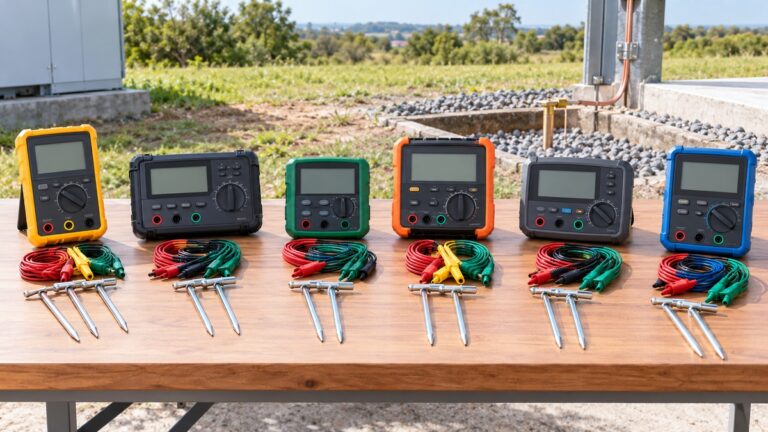
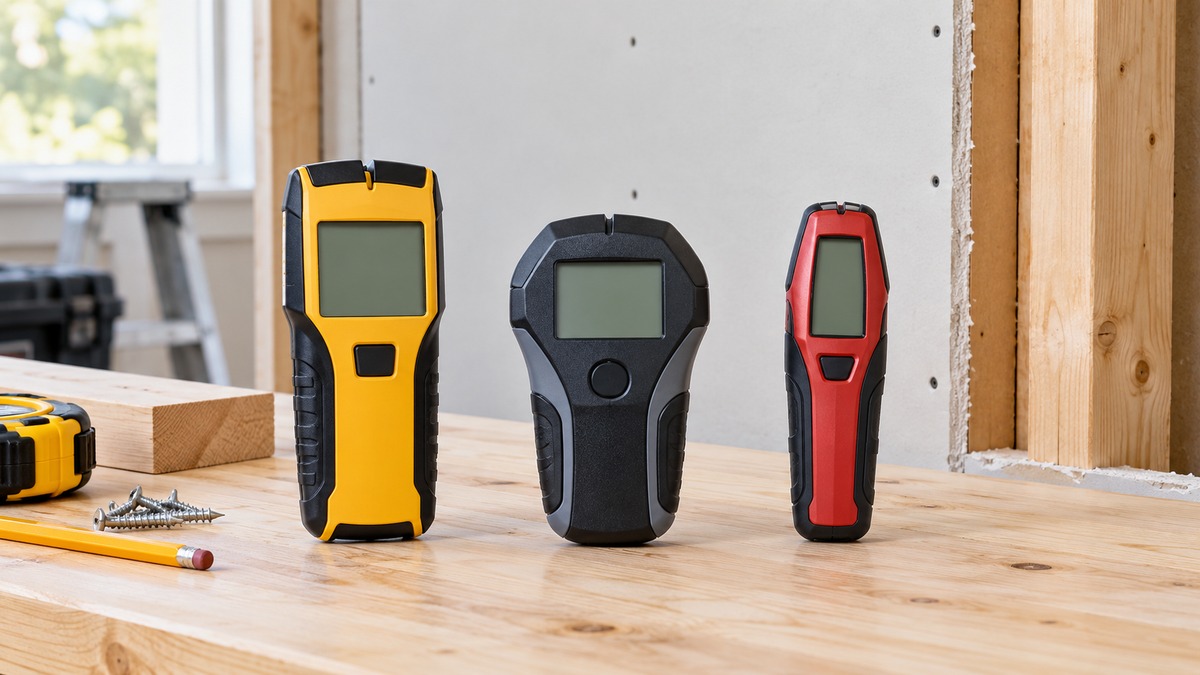
The person typing “best stud finder” wants to find the wood or metal studs behind a wall before hanging a TV, a shelf or a cabinet, and does not want to hit a wire while drilling. The six listings below split into two kinds: three electronic scanners (Zircon MultiScanner A200, Craftsman CMHT77633, DeWalt DW0100) and three battery-free magnetic finders (Zircon StudScout, StudBuddy, CH Hanson). Every figure comes from the Amazon listings we opened on 2026-10-17 or from the safety page named in the safety section. Where a listing says nothing, we write that it does not state it.
Quick answer
If you want one scanner that states a depth, a live-wire alert and a metal mode, the Zircon MultiScanner A200 is the most fully described: StudScan to 3/4 in., DeepScan to 1 1/2 in., Metal Scan and WireWarning, on one 9V battery. If you want AAA batteries and a stated AC and live wire detection, look at the DeWalt DW0100. If your walls are drywall fastened with screws or nails and you want no batteries, the StudBuddy, CH Hanson and Zircon StudScout are magnetic finders that look for the fasteners instead of the wood.
A listing states a feature; it does not prove it works in your wall. A wire alert is not a promise that no wire is there, so read the safety section before you drill.
Electronic or magnetic: what the listings say
The three magnetic finders describe the same method. The StudBuddy listing says it uses neodymium magnets to detect the screw and nail heads that hold drywall to the studs, and the level “sticks” to the wall at a fastener. The StudScout listing says its magnet sticks to ferrous metal nails and screws commonly fastened to wall studs. CH Hanson says its rare earth magnets detect nails and screws. All three say no batteries.
The three electronic scanners describe edge and center finding of wood and metal studs, with a stated depth of 3/4 in. for the Craftsman and the DeWalt, and 3/4 in. (StudScan) or 1 1/2 in. (DeepScan) for the Zircon A200. Only the Zircon and the DeWalt listings mention live or AC wire detection.
The listings disagree about plaster. The StudBuddy listing says it is not intended for lath and plaster walls. The CH Hanson listing says its magnets detect nails and screws behind drywall, plaster and paneling. The DeWalt listing says its sensor will not detect objects in plaster. We do not resolve this: if your wall is plaster, check the product’s own manual first.
How we chose
We searched Amazon for “stud finder” and kept six listings whose titles and bullets say they locate studs. We wanted at least one product of each kind, and we dropped results with no brand or model we could name. The criteria were:
- The listing says what it finds: wood studs, metal studs, edges, centers, or fasteners.
- The listing states a depth or a method we can quote.
- The listing says whether it alerts you to live AC wiring. If it does not say, we say so.
What the listings do not state: none gives a tested accuracy in inches, none names a drywall thickness it was checked on, and a full spec table loaded for only one of the six (the StudScout), so for the rest we rely on titles and bullets. Six is the number of true matches we kept, and we did not add products to reach a bigger number.
Comparison table
Figures come from the listing titles and bullets, checked 2026-10-17. “Not stated” means the listing does not say.
| Product | Type | Power, per listing | Depth stated | Live or AC wire alert | Metal detection |
|---|---|---|---|---|---|
| Zircon MultiScanner A200 | Electronic scanner | 9V alkaline battery (low-battery indicator) | StudScan 3/4 in.; DeepScan 1 1/2 in. | WireWarning detection of hot wires | Metal Scan mode; also metal studs |
| Craftsman CMHT77633 | Electronic scanner | Not stated | 3/4 in. through drywall | Not stated | Edges of wood and metal studs |
| DeWalt DW0100 | Electronic scanner | AAA batteries included | 3/4 in. for wood and metal | AC and live wire detection | Wood and metal |
| Zircon StudScout 75306 | Magnetic | None (battery-free) | Not stated | None stated | Finds ferrous nails and screws |
| StudBuddy (The Original) | Magnetic | None | Not stated | None stated | Finds screws and nails in drywall |
| CH Hanson magnetic | Magnetic | None | Not stated | None stated | Finds nails and screws |
Product cards
1. Zircon MultiScanner A200: best for the most complete stated feature set
Specs (from the listing, checked 2026-10-17): Title: stud finder with metal and live wire detection. Bullets: locates wood studs, metal studs, edges, centers and stud direction; three modes (StudScan to 3/4 in., DeepScan to 1 1/2 in., Metal Scan); WireWarning Detection; LCD display, audio tone and SpotLite Pointer; low battery indicator; uses a 9V alkaline battery. Calibration per the listing: place the scanner flat against the wall, press and hold Power, wait 1-2 seconds for a short beep, and do not move it until calibration is complete.
Pros: Three named modes with two stated depths, and a wire alert described in the listing. Cons: The spec table did not load, so no weight, size or warranty is quoted. The listing gives no accuracy figure, and you must calibrate against the wall each time.
Best for: a scanner you can use for wood studs, metal studs and a quick metal check before drilling. Skip if: you want no calibration step or no batteries; the magnetic finders below need neither.
View on Amazon (affiliate link)
2. DeWalt DW0100: best for stated AC detection on AAA batteries
Specs (from the listing, checked 2026-10-17): Title: 3/4 in., LED arrows, ideal for wood and metal, AAA batteries included (DW0100). Bullets: center-find technology; detection depth of 3/4 in. for wood and metal; AC and live wire detection for added safety; constant auto-calibration; center marking channel; audible alert; directional LED arrows. The listing says the sensor will not detect objects in concrete, mortar, block, brick work, plaster, carpeting, foil-faced materials, metallic surfaces or ceramic tile, and is not designed to locate non-ferrous or plastic objects such as pipes.
Pros: Batteries are included, calibration is described as constant, and the limits are spelled out in the listing. Cons: Only 3/4 in. is stated, so it is shallower than the Zircon DeepScan mode. The listing gives no weight, size or warranty.
Best for: wood and metal stud edges and centers on ordinary walls, with arrows and a sound to guide you. Skip if: your wall is plaster, tile or foil-faced, which the listing says it will not detect through, or you need to find pipes.
View on Amazon (affiliate link)
3. Craftsman CMHT77633: best for covered walls, if the missing details are acceptable
Specs (from the listing, checked 2026-10-17): Title: stud finder, 3/4-inch depth (CMHT77633). Bullets: depth range of 3/4 in. through drywall; works on surfaces covered in wallpaper and fabric; edge detection to locate stud edges of both wood and metal studs; shock-resistant and water-resistant body; includes one CMHT77633 stud sensor.
Pros: It is the only listing that says it works through wallpaper and fabric. Cons: The listing does not state the battery type, a live-wire alert, a metal-pipe mode or a warranty. It also says edge detection only, not center finding.
Best for: finding stud edges through wallpaper or fabric-covered walls. Skip if: you need a stated live-wire alert, which this listing does not give.
View on Amazon (affiliate link)
4. StudBuddy (The Original): best battery-free finder for drywall
Specs (from the listing, checked 2026-10-17): Title: magnetic stud finder, made in the USA, no batteries required. Bullets: works with all drywall construction by using powerful magnets to locate the screws in the studs; best used on drywall and wood; not intended for lath and plaster walls; neodymium magnets detect screw and nail heads and the level sticks to the wall at the fastener; no batteries, moving parts or calibration.
Pros: No batteries, no calibration, and the listing is clear about how it works. Cons: It finds fasteners, not the stud itself, so it depends on screws or nails being in the stud. The listing states no depth, and it excludes lath and plaster walls.
Best for: a quick check on a drywall wall where you only need a stud location. Skip if: your wall has no ferrous fasteners at the surface, or it is lath and plaster.
View on Amazon (affiliate link)
5. CH Hanson magnetic stud finder: best magnetic finder with a built-in level and a stated warranty
Specs (from the listing, checked 2026-10-17): Title: magnetic stud finder, battery-free, rare earth magnets, built-in level. Bullets: finds nails and screws behind drywall, plaster and paneling to help locate wood and metal studs without batteries, calibration or false readings; rotating level marks horizontal and vertical lines; 0.15 lbs; backed by a limited lifetime warranty.
Pros: A rotating level is built in, and a limited lifetime warranty is stated in the bullets. Cons: Like the other magnetic finders it senses fasteners only. The “false readings” claim is the listing’s wording and we cannot check it. It says plaster works, which the StudBuddy and DeWalt listings contradict for their own products.
Best for: a pocket-sized finder that also marks a level line. Skip if: you need a depth figure or a live-wire alert; the listing gives neither.
View on Amazon (affiliate link)
6. Zircon StudScout 75306: best magnetic finder with a one-press marker
Specs (from the listing, checked 2026-10-17): Part Number 75306; weight 1.28 ounces; dimensions 3.37 x 1.3 x 0.79 inches; size small; color yellow; power source field “hand_powered” (as printed); includes one stud finder; limited lifetime warranty; first available March 11, 2026. Bullets: strong magnet sticks to ferrous nails and screws commonly fastened to wall studs; easy-mark button marks locations; integrated wrist lanyard; built-in rotating bubble level; battery-free.
Pros: It is the only magnetic finder here with a marker button and a full dimension line. Cons: The listing is new, so it has a short track record (first available March 2026). It states no depth and no wall types.
Best for: marking stud locations quickly and leveling a shelf or frame with the same tool. Skip if: you want a scanner that finds studs without relying on fasteners.
View on Amazon (affiliate link)
Which one fits the job
- Widest stated feature set, with a deeper mode: Zircon MultiScanner A200.
- AAA batteries and a stated AC and live wire detection: DeWalt DW0100.
- Wallpaper or fabric-covered wall: Craftsman CMHT77633, with the missing details noted above.
- No batteries, drywall: StudBuddy, CH Hanson or Zircon StudScout.
- Pocket tool that also levels: CH Hanson or Zircon StudScout.
Worked example: suppose the surface you must scan through is 1 inch thick. The DeWalt and Craftsman listings state 3/4 in. (0.75 in.), which is 0.25 in. short of 1 inch. The Zircon A200 StudScan mode also states 3/4 in., but its DeepScan mode states 1 1/2 in., which clears 1 inch by 0.5 in. On that one number, only the Zircon A200 is stated to reach through it. The magnetic finders state no depth at all, so they cannot be judged this way; they work only if a fastener is close enough to the surface for the magnet to find it, and the listings do not say how close.
Safety: before you drill
A stud finder can show a wood stud and still not show a cable run beside it. The Zircon A200 and DeWalt listings describe wire alerts; the others do not. A hazard alert from the Center to Protect Workers’ Rights, hosted on CDC Stacks (Electric Safety in Construction for Non-Electricians, May 2003), says employers must check for live circuits a worker could contact, including circuits in walls where you might drill, and says to make sure the current is off before working on electric wiring. It is written for construction workers and it is 23 years old. We read the same point as sensible for a homeowner: do not treat a detector’s silence as proof the wall is safe.
Work on mains circuits can kill. If a scanner signals a wire where you want to drill, move the hole. Panel or service work belongs to a licensed electrician, and so does any wiring you have to open up to get past a stud.
Mistakes to avoid
- Drilling on the strength of one scan. Scan the area in more than one direction before you mark it.
- Trusting a wire alert as a guarantee. The listings describe the feature; they do not publish a detection rate.
- Using a magnetic finder on a wall with no ferrous fasteners at the surface, or on lath and plaster for the StudBuddy.
- Skipping calibration on the Zircon A200: the listing says to place it flat, hold Power and wait for the beep before sliding.
- Assuming 3/4 in. is enough for thick or layered surfaces. The DeWalt and Craftsman listings state no more than that.
Who should skip buying
- Anyone whose wall is plaster, tile or foil-faced and who does not have a manual that says the product works on it.
- Anyone who expects a stud finder to locate pipes. The DeWalt listing says its sensor is not designed to find non-ferrous or plastic objects such as pipes.
- Anyone who wants a stated accuracy in inches. None of the six listings gives one.
Frequently asked questions
How does a magnetic stud finder work?
The StudBuddy listing says it uses neodymium magnets to detect the screw and nail heads that hold drywall to studs. The Zircon StudScout and CH Hanson listings describe the same idea. They find fasteners, not the stud itself.
Do stud finders detect live wires?
Two listings say so: the Zircon MultiScanner A200 lists WireWarning Detection and the DeWalt DW0100 lists AC and live wire detection. The Craftsman, StudBuddy, CH Hanson and StudScout listings do not state a wire alert. A listing feature is not a guarantee, so keep the power off when you can and keep clear of where a wire may run.
How deep can a stud finder scan?
The Craftsman and DeWalt listings state 3/4 in. The Zircon A200 lists StudScan up to 3/4 in. and DeepScan up to 1 1/2 in. The magnetic finders state no depth.
Do I need batteries?
The Zircon A200 uses a 9V alkaline battery according to its listing, and the DeWalt DW0100 comes with AAA batteries. The Craftsman listing does not state a battery type. The three magnetic finders are battery-free.
Will a stud finder work on plaster?
The listings disagree. CH Hanson says its magnets detect nails and screws behind plaster, while StudBuddy says it is not intended for lath and plaster and DeWalt says its sensor will not detect objects in plaster. Check the manual for your product.