Best Inrush Current Meter for Motor Start-Up Checks
As an Amazon Associate we earn from qualifying purchases. Details
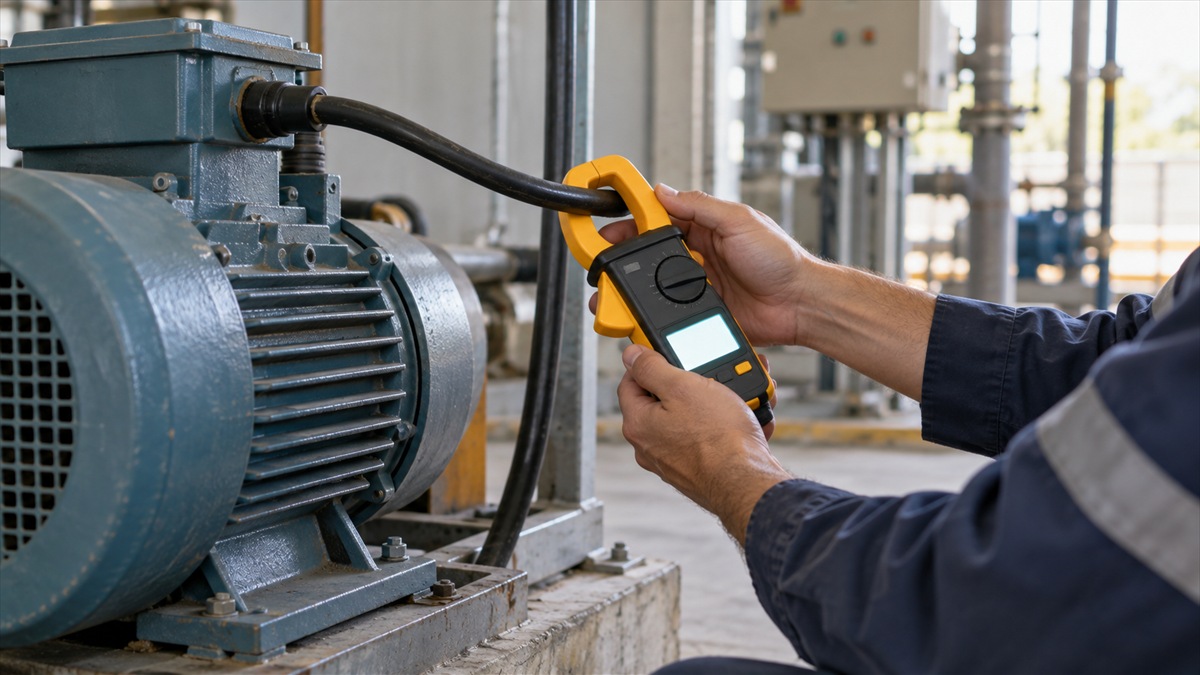
What is the best inrush current meter for start-up checks? An inrush current meter captures the peak current a load draws when it starts, which a normal reading can miss. Motors, compressors and some AC circuits can draw a short surge before they settle to a steady current. The right meter depends on whether its listing names an inrush or surge function, the current types it reads, the range and jaw size, and the CAT rating for the point you measure. This guide sets out those criteria, then compares three models using only what each listing says.
Quick answer
Choose an inrush current meter whose listing names an inrush or surge function, and check that the function covers the current type you need. Confirm the range and the jaw size against your cable. Check the CAT rating in the specs or manual before any mains use. Read the manual on how the function is triggered, because listings differ. Work on a motor circuit only if you understand it, and stop at any panel or service job. Never work on airbag or high-voltage hybrid or EV systems.
What matters for an inrush meter
Five criteria change the choice for this keyword:
- Inrush or surge function. The function holds the peak current at start-up. Listings name it as inrush, surge or maximum current at start, so read the function list rather than the title alone.
- Current type. Some surge functions are listed for AC only. If your load runs on DC, check that the function covers DC current in the listing or manual.
- Range. The range must cover the start-up peak. A range set too low can give a misleading reading, so check the listed range before you rely on it.
- Jaw size. The jaw must enclose the cable. Listings give jaw sizes such as 30mm or 1.02 inches, so compare them with the cable you need to clamp.
- CAT rating and protection. The rating must suit the point you measure, and overload protection tells you how the tool handles a fault. A rating on the test leads is not the same as a rating for the meter.
How to choose
Start with the load. For a motor or compressor on an AC supply, an AC inrush function covers the job. For a DC load, check whether the function covers DC current. Then check the jaw size against the cable, and the range against the start-up peak you expect.
Next, check the protection and the rating. Look for a CAT rating in the specs or manual and confirm it before mains work. Finally, consider the extras that help during start-up checks: a backlit display, data hold or max readings, and a flashlight for dark panels.
Where each model fits
The three models below cover the main inrush styles in this group: a clamp with a dedicated inrush function and VFD mode, a surge current meter for AC start-up checks, and a True RMS clamp with inrush capture and a CAT III 600V rating. Each write-up relies on that listing’s own wording. Use the picks as a shortlist, and check the listing before you buy.
1. Digital Inrush Clamp Meter Multimeter, TEMIRUP T-RMS 6000 Counts 600A Current Amp Volt Meter (Inrush clamp with VFD and LoZ modes)
Specs from the listing (checked 2026-10-13):
- Model: CM87C
- Maximum display value: 5999
- Jaw size: 30mm
- Auto-shutdown time: About 15 minutes
- Item Weight: 8 ounces
- Item Dimensions: 8.6 x 3 x 1.5 inches
Pros
- The inrush function measures the maximum current at the moment a machine starts, as its bullets state
- The specs list a 5999 maximum display value and a 30mm jaw
- VFD and LoZ modes are listed for higher-accuracy readings, per its bullets
Cons
- Its bullets say to clamp around a single live wire and zero the meter before DC current, so the procedure needs care
- Its specs list a 30mm jaw, which limits the cable size you can clamp
Best for: Motor-start checks where the peak current at start-up needs to be captured.
Skip if: Your cable is wider than the 30mm jaw.
Check the listing before buying: the text suggests this item may be sold without a battery and/or charger.
View on Amazon (affiliate link)
2. Inrush Digital Clamp Meter Multimeter 1000A TRMS 6000 Counts, Amp Voltage Tester with VFD, LOZ Mode (Surge current meter, 1000A)
Specs from the listing (checked 2026-10-13):
- Part Number: 2566D-V1
- Style: Testers
- Compatible Devices: All devices requiring electrical testing or measurement
Pros
- Its title and bullets name 1000 amp AC/DC current, with surge current measurement listed
- Surge current measurement takes about 100 milliseconds, per its bullets
- Variable Frequency Drive and Low Impedance modes are listed for readings on VFDs
Cons
- Its surge function is listed for AC current only, so DC current is not covered by that function
- Its specs state no jaw size, so check the jaw opening before clamping a thick cable
Best for: Startup surge checks on motors and AC circuits where a 1000A range and VFD mode help.
Skip if: You need DC inrush current or a CAT rating stated on the listing.
View on Amazon (affiliate link)
3. Westinghouse Auto-Ranging True RMS Digital Clamp Meter, Non-Contact Multimeter, 600A Current (Inrush capture with True RMS)
Specs from the listing (checked 2026-10-13):
- Model: 850024390034
- Measurement Type: Multimeter
- Style: 1000V Clamp
- Specification Met: CSA, EN 61010-1, IEC 61010-1:2000-1, UL
- Item Weight: 10.24 ounces
- Item Dimensions: 9.4 x 3 x 1.5 inches
Pros
- Inrush current capture is listed among its functions, with data hold and min/max readings
- Auto-ranging True RMS is in its title, with a 600 amp current range
- The backlit LCD is listed as a 6000-count display, per its bullets
Cons
- Its Style field reads 1000V Clamp while its bullets state CAT III 600V, so confirm the rating before mains use
- Its inrush capture sits among many functions, so check the manual for how it is triggered
Best for: Start-up checks on motors where inrush capture, True RMS and a backlit display matter, at CAT III 600V.
Skip if: You need a CAT rating above 600V for the meter.
View on Amazon (affiliate link)
Common mistakes
- Expecting a surge function to read DC. Some inrush or surge functions are listed for AC current only.
- Clamping the whole cable. Clamp around a single live conductor, as the manual directs, and not the whole power cord.
- Ignoring the jaw size. A cable wider than the jaw cannot be enclosed, so check the jaw before you plan the test.
- Trusting a range that is too low. A start-up peak above the range can give a misleading reading.
- Forgetting that the function may need a trigger. Read the manual on how the inrush capture starts and stops.
Worked example: a motor start on one conductor
The motor settles to 10 A once it runs. The difference between the peak and the running current is 40 minus 10 equals 30 A. Check the arithmetic: 10 plus 30 equals 40, so the two readings agree. The peak is the figure the inrush function is there to capture, so the reading is the one to record. Check the listing’s range before you rely on it, because a peak above the range can read wrongly.
FAQ
What is an inrush current meter?
It is a clamp meter with a function that holds the peak current a load draws when it starts. Listings name it as inrush, surge or maximum current at start. For a broader look at clamp designs, see Best How Does a Current Clamp Work.
Can an inrush meter measure DC current?
It depends on the function. Some surge functions are listed for AC current only. Check the listing or manual for DC before you use the meter on a DC load. For a fuller answer on clamp types, see Can Clamp Meter Measure Dc Current.
Do I need True RMS for inrush work?
It matters when the waveform may be distorted. A true RMS converter gives a more correct value than an averaging meter, which uses a correction factor valid only when the input is sinusoidal. If the load is clean and sinusoidal, the difference may be small.
Why does my reading fall after the start?
A motor draws a higher current at start-up than when it runs. The peak falls to the running current once the load settles. That is normal, and the inrush function exists to capture the peak.
What jaw size do I need?
The jaw must enclose the cable. Compare the jaw size in the listing with the cable you will clamp. A cable wider than the jaw cannot be measured without breaking the circuit.
Is an inrush meter safe on a panel?
Panel and service work belongs to a licensed electrician. An inrush meter does not change that rule. For a related read on True RMS clamps, see Best True Rms Digital Clamp Meter.
Bottom line
An inrush current meter is worth choosing when the start-up peak is what you need to see. Pick a listing that names the inrush or surge function, covers the current type you need, and has a jaw and range that fit your cable. Check the CAT rating before any mains work, and follow the manual on triggering the capture. Stop at any panel or service job.
Sources
- Current clamp, Wikipedia: jaws around a conductor, AC-only current transformers, Hall effect for DC and AC
- Measurement category, Wikipedia: CAT II and CAT IV definitions and impulse voltages
- True RMS converter, Wikipedia: averaging meters and distorted waveforms
- Circuit breaker, Wikipedia: overcurrent protection that can be reset
- OSHA electrical safety: most frequent causes of electrical injuries and ways to reduce risk
- 29 CFR 1910.303, Cornell LII: equipment used per the listing or label instructions