Best Sperry Volt Meter
Where the details come from: the specs and descriptions below come from the product list and seller copy for these twelve testers and meters. They have not been checked by using any of them, so confirm measurement ranges, ratings, battery type and included parts on the live Amazon page before you buy or connect anything to a circuit.
People who search for a “Sperry volt meter” usually want one thing: a dependable way to check whether a wire, outlet, battery or charger is delivering power. That job can be done by very different tools. A voltage tester that you hold against a socket is not the same as a multimeter that measures current and resistance, and neither is the same as a USB tester that reads what a phone charger is sending. This guide sorts the twelve products in the list by the job each one is built for, and it explains what the specs mean in practice.
What this list really contains
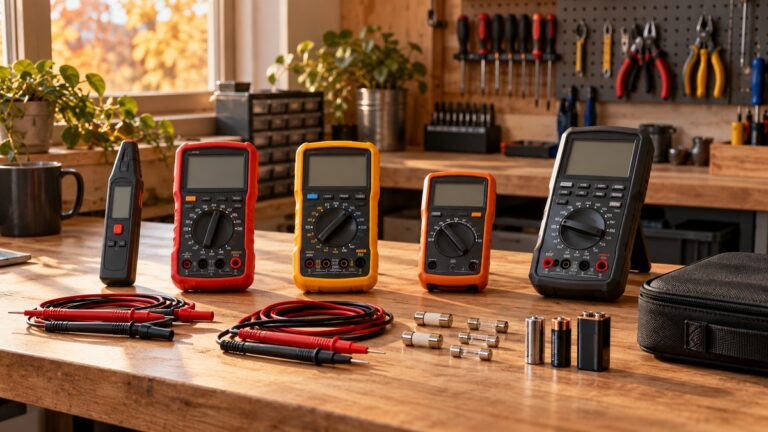
Only one of the twelve products is a Sperry. The Sperry VC61000 is a handheld voltage and continuity tester. The other eleven come from other brands and fall into four groups. Three are handheld digital multimeters that measure a range of values. Two are voltage testers that check for voltage and continuity in a circuit. Four are USB or DC port testers that show what a charger or power source is delivering. Three are small panel meters that mount on a vehicle, boat or equipment and show voltage and current on a display.
That mix is useful because each group solves a different problem, but it also means the Sperry name is not a reason to buy. Choose the tester by the job first, then compare brands within the group.
Who should buy from this list
This list suits a homeowner who wants a basic way to check outlets, switches and simple DC circuits. It also suits someone who works on cars, boats or motorcycles and needs to read battery voltage, and a person who charges phones, tablets or laptops and wants to see what a charger or power bank is delivering.
It suits a buyer who wants a voltage tester they can carry in a pocket, or a multimeter with several ranges and a backlit display for dim spaces. The Sperry VC61000, the GALOOK UT18C and the handheld multimeters in the list all describe one of those roles.
It also suits someone installing a panel meter on a vehicle or equipment, provided they are comfortable with the wiring. The KETOTEK, diymore and Rdxcv meters all describe a permanent or semi-permanent mounting that shows voltage and current at a glance.
Who should skip these testers
Skip the USB and DC port testers if you want to check mains electricity. None of the four USB or DC testers is built for a wall outlet. The YOJOCK, Eversame and YEREADW testers describe USB and USB-C use, and the MakerHawk tester describes DC devices with a 4 to 30 volt range.
Skip the panel meters if you need a handheld tool for general troubleshooting. A panel meter is fixed to a point in a circuit, which makes it useful for monitoring, but it is not a probe you can move from one outlet to the next.
Skip any product in the list if you need a measurement it does not describe. The AstroAI multimeter, for example, notes that it cannot test all AC current and some low AC voltages, so a job that needs those readings needs a different tool.
Skip the GALOOK voltage tester if you only need a basic household check and do not want to spend time on its industrial features. Its specification covers three-phase, RCD and rated categories far beyond a home outlet check, which is useful for professionals but more than most homeowners need.
Use cases that fit each group
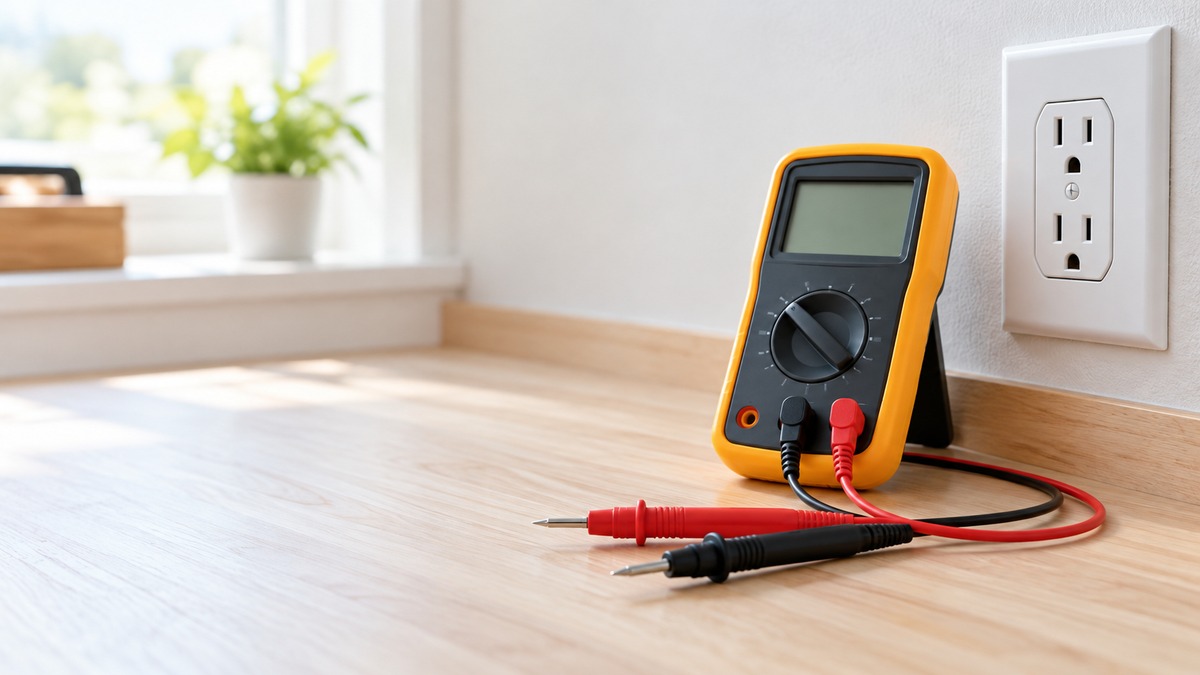
Checking an outlet or fixture is the most common household job. A voltage tester such as the Sperry VC61000 is designed for this, with snap-in leads that fit a standard outlet and a tip that detects AC voltage without contact. The GALOOK tester does the same job with a backlit display and a buzzer, and it is rated for much higher voltages than a home outlet uses.
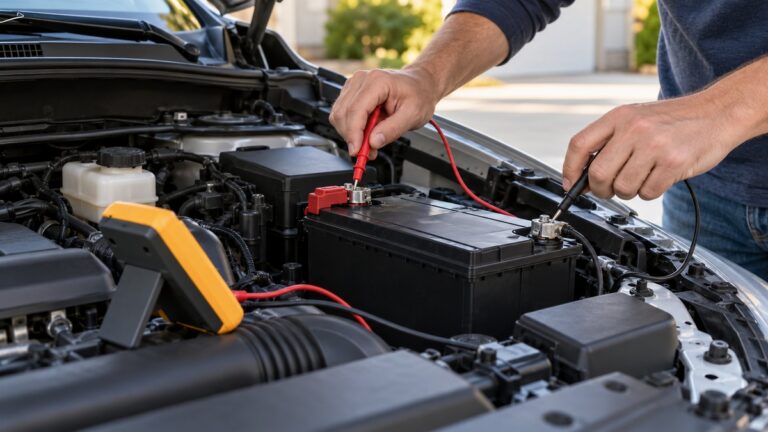
Testing a battery is a common car or boat job. The AstroAI multimeter lists batteries among its uses. The ANENG multimeter goes further and lists a battery test for 12-, 9- and 7.5-volt batteries. The panel meters from diymore and Rdxcv are described for automotive, motorcycle and small marine batteries.
Checking a phone or laptop charger is a USB job. The YOJOCK, Eversame and YEREADW testers read voltage, current, capacity and power as a charger delivers them. Their copy describes support for common fast-charging protocols, including PD and QC standards, so the tester can show what the charger is actually doing.
Measuring a DC device is a bench or equipment job. The MakerHawk tester reads a DC source with a 4 to 30 volt range and up to 12 amps, and its copy lists power measurement up to 360 watts. It fits a monitor, power tool or adapter that uses a DC barrel plug.
Monitoring a circuit over time is the job for the panel meters. The KETOTEK meter comes with a current transformer, which is a clamp-style sensor that reads current without cutting into the wire. It is described for AC circuits between 80 and 300 volts, with a current range up to 100 amps. The diymore and Rdxcv meters read DC voltage and current on a small display.
How to choose: the criteria that matter
Measurement type. Decide what you need to read. A multimeter reads voltage, current, resistance and often continuity and diodes. A voltage tester reads voltage and continuity. A USB tester reads what a USB port is delivering. A panel meter shows voltage and current at one point. Choosing the wrong type is the most common mistake in this category.
Voltage and current ranges. Check the range against the highest value you will meet. A DC tester rated to 30 volts is not suitable for a 120-volt outlet, and a panel meter rated to 100 volts is not a substitute for a tool rated for a mains circuit. Keep a margin between your expected reading and the top of the range.
Category rating. Multimeters and voltage testers carry a safety category rating, such as CAT II or CAT III, that describes the environments they are built for. The AstroAI multimeter lists CAT II 600 volts and CAT III 300 volts, and the GALOOK tester lists CAT III 690 volts and CAT IV 600 volts. Match the rating to the environment, not the other way round.
Resolution and counts. The count figure, such as 2000 counts, describes how finely a multimeter can display a reading. A higher count gives more detail, but it does not make the reading more accurate. Accuracy is a separate figure.
Accuracy. Accuracy is listed as a percentage plus a number of digits. The ANENG, AstroAI and diymore listings give accuracy figures for their ranges. Read the accuracy for the range you will use, because the figure can differ from one range to another.
Protection and fuses. Look for a fuse rating and overload indication. The AstroAI multimeter lists fuses for a 250-milliamp and a 10-amp range, and the ANENG and LJPXHHU listings describe overload protection. Those features help protect the meter and, in some cases, you.
Display and backlight. A backlit display is useful for dim spaces such as a car footwell or a basement panel. The LJPXHHU and AstroAI multimeters describe backlit displays, and the GALOOK tester describes a backlit LCD with a buzzer.
Power for the tester. Check what powers the tool. Some multimeters use AAA cells and a 9-volt battery, some panel meters use the circuit they measure, and some USB testers draw from the port. Confirm the battery type and whether a battery is included.
Installation. Panel meters need wiring. The KETOTEK meter uses a current transformer, and the Rdxcv meter includes two-wire and three-wire connectors. If you are not comfortable with wiring, choose a handheld tool instead.
Compare the twelve at a glance
The table lists the figures from the product data. Where two numbers do not agree, it says Not confirmed, and the product section explains the conflict.
| Tester | Type | Main range | Batteries or power | Included parts | Best for |
|---|---|---|---|---|---|
| AstroAI AM33D digital multimeter | Handheld multimeter | 200 mV to 600 V DC and AC | Battery type Not confirmed | Test leads and manual | General troubleshooting |
| YOJOCK USB-C power meter | USB port tester | 3.6 to 32 V, 0 to 8 A | Powered from the USB port | USB tester and OTG adapter | Charger and power bank checks |
| ANENG SZ301 digital multimeter | Handheld multimeter | 200 mV to 600 V DC and AC | Battery type per tips | Not stated in the listing | Multimeter tasks and battery tests |
| diymore five-pack panel meter | Panel meter | 0 to 100 V DC, 0 to 10 A | Working voltage 4.5 to 30 V DC | Five meters | Vehicle battery monitoring |
| LJPXHHU XL830L multimeter | Handheld multimeter | AC and DC voltage, DC current, resistance | Nine-volt battery included | Test leads and stand | Backlit general use |
| Sperry VC61000 Volt Check tester | Voltage and continuity tester | 6 to 220 V DC, 24 to 600 V AC | Corded electric per field | Leads and tester | Outlet and fixture checks |
| Eversame AT085 USB-C tester | USB-C port tester | 4.5 to 50 V, 0 to 12 A | Powered from the USB port | Tester only | Fast-charge and power bank checks |
| YEREADW UT003 USB-C tester | USB port tester | 3.6 to 32 V, 0 to 8 A | Powered from the USB port | Tester, adapter and case | Phone and laptop charger checks |
| KETOTEK AC panel meter | Panel meter with current transformer | AC 80 to 300 V, 0 to 100 A | Powered by the circuit, no separate supply | Current transformer | Circuit monitoring |
| Rdxcv two-pack DC panel meter | Panel meter | 0 to 100 V DC, 0 to 10 A | Connected to the circuit | Two meters and connectors | Vehicle and marine monitoring |
| GALOOK UT18C voltage tester | Voltage and continuity tester | 12 to 690 V AC and DC | Not stated in the listing | Tester only | Heavier-duty voltage checks |
| MakerHawk DC power tester | DC port tester | 4 to 30 V, 0 to 12 A | Powered from the device | Tester only | DC device checks |
Before you buy: five checks
Check one: confirm the battery type on the AstroAI multimeter. The power field lists two 1.5-volt AAA batteries, but the included-components field lists a 9-volt battery. Both cannot be the full answer, so the battery type is Not confirmed. Check the manual on the live page, and confirm which battery you will need before you start using the meter.
Check two: confirm the sample rate on the AstroAI meter. The spec table lists three samples per second, while the copy lists two. The sample rate is Not confirmed. It matters for a reading that changes quickly, such as a voltage that fluctuates under load, so check it before you rely on the meter for that job.
Check three: confirm the weight of the diymore pack. The spec table lists the item weight as 0.27 grams, which is not a realistic weight for a meter this size. The weight is Not confirmed, but the dimensions and specifications for each meter are otherwise clear. Ask the seller if weight matters for your mounting plan.
Check four: confirm the warranty on the Rdxcv pack. The warranty field reads 0.2, which is not a warranty term. The warranty is Not stated in the listing, so confirm the coverage with the seller before you order.
Check five: confirm the included parts on the ANENG and KETOTEK listings. The ANENG included-components field is blank, shown as a single slash, so the contents are Not stated in the listing. The KETOTEK copy says a current transformer is included, which is the part that makes the meter work, so confirm the contents on the live page before you plan the wiring.
The twelve testers, one by one
1. AstroAI AM33D digital multimeter
This is a handheld digital multimeter with a 2000-count display and a backlit LCD. It reads AC and DC voltage up to 600 volts, DC current up to 10 amps, resistance up to 20 megohms, and it includes continuity and diode tests. The safety category is listed as CAT II 600 volts and CAT III 300 volts, which describes the environments it is built for. It has a manual range selector, a data hold button and a low-battery indicator.
The copy includes a useful limit: the meter cannot test all AC current and does not read AC voltage below 100 millivolts. Those limits matter if you need to check very small signals. The battery type and the sample rate are Not confirmed, as covered above. The warranty is listed as three years. This meter suits a homeowner who wants a general-purpose multimeter for household circuits, car batteries and simple electronics, and who will read the manual before the first use.
2. YOJOCK USB-C power meter
This is a USB tester that reads voltage from 3.6 to 32 volts, current up to 8 amps, capacity up to 99,999 milliamp-hours and power up to about 256 watts. It also reads USB data-line voltage and resistance. The measurement rate is 0.5 times per second, and the self-consumed current is below 0.02 amps. It supports common fast-charging standards, including PD and QC protocols, and the copy describes eight color interfaces that you switch by pressing a button.
The box includes a USB tester and an OTG adapter. The copy describes overvoltage, overcurrent and undervoltage protection. The warranty is handled by the seller, so the seller asks buyers to make contact for warranty information. This tester suits someone who wants to see what a phone charger, power bank or cable is delivering, and it is not meant for mains electricity.
3. ANENG SZ301 digital multimeter
This is a 2000-count handheld multimeter that reads AC and DC voltage up to 600 volts, AC and DC current up to 10 amps, resistance up to 200 megohms, capacitance and diodes. It includes a live-wire detection function, a non-contact voltage sensing feature, a reverse-polarity display and an auto shut-off. The copy describes double fuses and insulated probes.
The battery test function covers 12-volt, 9-volt and 7.5-volt batteries, which suits a car or small equipment. The tips section mentions 1.5-volt AA power sources, while the power field says battery powered, so confirm the battery type before you use the meter. The weight is 155 grams. The included-components field is shown as a single slash, so the contents are Not stated in the listing. This meter suits a buyer who wants a multimeter with battery testing and live-wire detection in one handheld unit.
4. diymore five-pack panel meter
This is a pack of five small dual-display panel meters that read DC voltage from 0 to 100 volts and DC current from 0 to 10 amps. The display is 0.28 inches with red and blue digits, so voltage and current read at the same time. The resolution is 0.1 volt and 0.01 amp, the accuracy is 1 percent plus one digit, and the refresh rate is about 300 milliseconds. The meter is rated IP67, which the listing describes as waterproof, and its operating range is minus 10 to 65 degrees Celsius.
The working voltage is listed as 4.5 to 30 volts DC in one field and 4 to 30 volts in the copy. The copy also says the maximum input cannot exceed 30 volts, or the meter will burn out. That limit is important for a vehicle, so do not connect the meter to a higher-voltage source. The weight is Not confirmed, because the spec table lists 0.27 grams. The meter suits a car, motorcycle or small marine battery where you want to see voltage and current at a glance.
5. LJPXHHU XL830L multimeter
This is a handheld multimeter with a 2.7-inch backlit LCD, which the copy describes as easy to read in dim spaces. It measures AC and DC voltage, DC current, resistance, continuity and diodes, and it tests batteries. The copy describes overload protection on all ranges, a low-battery indication and an audible continuity signal. A removable rubber cover protects the meter from drops and bumps, and a fold-out stand lets you use it hands-free.
The box includes a 9-volt battery, a set of test leads and a user manual. The meter carries a two-year guarantee. The weight is 166 grams, and the dimensions are 5.51 by 2.56 by 1.18 inches. The included-components field contains a typo, but the copy describes the full set. This meter suits a buyer who wants a backlit, drop-protected multimeter for car repair and home use, and who wants the stand for hands-free reading.
6. Sperry VC61000 Volt Check tester
This is the Sperry product in the list. It is a handheld voltage and continuity tester, not a full multimeter. It has a non-contact AC voltage detector in the tip that the copy describes as detecting 50 to 600 volts AC. Its twin probes read 24 to 600 volts AC and 6 to 220 volts DC, and the DC probe shows polarity. It includes a continuity function, and the copy describes snap-in leads spaced to fit a standard outlet so you can work with one hand.
The leads are 26 inches long with strain reliefs and are described as suited to cold weather. The tester weighs 3.52 ounces and measures 2.25 by 0.5 by 9 inches. The measurement type field lists voltmeter and ohmmeter, while the copy describes AC and DC voltage, continuity and polarity. That is a real difference in scope, so confirm what you need before you buy. This tester suits a homeowner who checks outlets, switches and fixtures, and it suits an electrician’s helper who needs a quick voltage and continuity check.
7. Eversame AT085 USB-C tester
This is a color-screen USB-C tester that reads voltage, current, capacity, power and CPU temperature of devices connected to a USB-C port. The copy lists support for PD 3.1 at 48 volts, PD 2.0 and 3.0, PPS, QC 2.0 and 3.0, FCP and several other protocols. The title gives a range of 4.5 to 50 volts DC and 0 to 12 amps. It has six display interfaces and records the peak current, voltage and power during a charge.
The copy describes a battery capacity calculation based on voltage data, and the listing gives an 18-month service statement. The weight is 9.93 grams and the tester is champagne gold. The box includes one USB-C tester. This tester suits someone who wants to see the peak values of a fast charger, a power bank or a laptop charger, and who wants a colorful, compact display.
8. YEREADW UT003 USB-C tester
This is a USB and Type-C tester with a voltage range of 3.6 to 32 volts and a current range of 0 to 8 amps. It supports PD 3.0 and 2.0, QC 3.0 and 2.0, and BC 1.2 charging, and the copy lists iPhone, MacBook, Dell, Chromebook and Surface device compatibility. It has eight color interfaces and protection against overvoltage, overcurrent, undervoltage and low energy.
The copy gives a clear method for testing a power bank. Charge the bank fully, divide the watt-hour reading by the battery voltage, and compare the result with the reading the tester shows. The example in the copy is 35 watt-hours divided by 3.7 volts, which gives about 9.46 amp-hours. The box includes a micro-USB adapter, a user manual and a storage case. This tester is almost the same electrical spec as the YOJOCK tester, so the choice comes down to the display and the included parts.
9. KETOTEK AC panel meter
This is a panel meter for AC circuits, reading voltage from 80 to 300 volts and current up to 100 amps. The display shows voltage in red and current in green, which the copy describes as easy to read at a glance. The accuracy is listed as 1 percent plus or minus two digits. The package includes one current transformer, which is a clamp-style sensor that reads current without cutting into the wire. The copy says no separate power supply is needed.
The unit measures 2.7 by 1.5 by 1.7 inches and weighs 82 grams. The title mentions 110 volts and 220 volts, which matches the AC range. The meter is for a fixed installation, not a handheld job. Confirm the wiring diagram on the live page and check that a qualified person installs it if the circuit is not one you are comfortable working on. This meter suits a workshop, a generator or an equipment panel where you want a steady readout.
10. Rdxcv two-pack DC panel meter
This is a two-pack of small DC panel meters that read 0 to 100 volts and 0 to 10 amps. The display is dual-color, with red digits for voltage and blue for current, so you can read both at the same time. The copy claims a voltage accuracy of around 0.1 percent and a current accuracy near 1 percent. The meter can be wired in line with the circuit or powered from an independent supply, depending on how you install it.
The package includes two meters, two two-wire connectors and two three-wire connectors. The wiring note says the thick black wire goes to the battery negative and the thick red wire goes to the positive. The warranty is Not stated in the listing. The copy suits cars, motorcycles and small marine batteries. This is the same class of meter as the diymore pack, so the choice comes down to the included connectors and the warranty you can confirm.
11. GALOOK UT18C voltage tester
This is a waterproof voltage tester with an LCD display, LED scale and audible alarm. It measures AC and DC voltage from 12 to 690 volts and includes a continuity test. The copy describes three-phase AC measurement, phase indication, RCD testing and the ability to measure zero and live conductors. The IP65 rating is listed as protection against rain and humidity, and the safety categories are listed as CAT III 690 volts and CAT IV 600 volts.
The weight is 280 grams. The copy lists industrial uses, including smelting, electronics, manufacturing, petroleum and power distribution. That level of detail is useful for a professional, but a homeowner may only need the basic voltage and continuity features. Check the category rating and the environment before you use the tester on a circuit. This tester suits someone who needs a rugged, waterproof voltage tester for outdoor or industrial use.
12. MakerHawk DC power tester
This is a DC tester that reads voltage from 4 to 30 volts, current up to 12 amps and power up to 360 watts. It supports two-way measurement, so it can read a DC source and a DC load. The display shows voltage, current, power, capacity, energy, time and CPU temperature, and you switch between two display modes with a click. The copy says the tester is built for DC devices with a 5.5 by 2.5 or 2.1 millimeter barrel plug, such as monitors, power tools and power adapters.
The tester is powered from the device it measures, and the box includes only the tester itself. The listing does not describe a warranty term in the fields provided, so check the seller’s terms before you order. This tester suits a buyer who wants to check a DC power adapter or a power tool’s supply, and it is not a tool for mains voltage.
Using a tester safely
The most important rule is to match the tester’s rating to the work. A tester with a 30-volt DC range should not be used on a 120-volt outlet, and a meter that says it cannot exceed 30 volts is a warning sign for the job you have in mind. Check the category rating and the voltage range on the live page before you connect the probes.
Read the manual before the first use. The AstroAI manual note says the meter will not show results if the leads are in the wrong socket or the rotary switch is in the wrong position, which is a common source of confusion. Set the switch to the correct function before you connect the leads, and do not change the setting with the probes in a live circuit.
Keep your hands on the insulated part of the probe, and keep the probe tips clear of other conductors. Use the continuity function and the voltage function as separate checks, not as substitutes for each other.
If you are working on a panel meter installation, turn off the circuit before you wire it, and confirm the wiring diagram before you energize it. The KETOTEK and Rdxcv listings both describe wiring that depends on the circuit’s voltage and current, so a mistake can damage the meter or the equipment it is connected to.
Common mistakes buyers make
The first mistake is buying a Sperry tester expecting a multimeter. The Sperry VC61000 reads voltage and continuity, and its measurement field lists ohmmeter as well, but it is not a full multimeter that measures a wide range of currents. Check the function you need before you assume the brand covers it.
The second mistake is choosing a USB tester for mains work. The USB and DC testers in the list are designed for ports and adapters, not for a wall outlet. A USB tester is the right tool for a phone charger and the wrong tool for a switch.
The third mistake is ignoring the category rating. A multimeter or voltage tester rated for a low category may not be suitable for an industrial panel or a high-energy circuit. Match the rating to the work.
The fourth mistake is trusting a number that conflicts with another field. The AstroAI battery type and sample rate, and the diymore weight, are all Not confirmed for this reason. Ask the seller or read the manual before you rely on the figure.
The fifth mistake is connecting a panel meter without the right wiring. The KETOTEK and Rdxcv meters depend on a current transformer or connectors. Wiring a meter to the wrong point can damage it or the circuit.
Voltage checkers and multimeters in this set
A volt checker and a multimeter do different jobs. The Sperry VC61000 is a handheld volt checker: its listing says it shows AC and DC voltage, continuity and DC polarity. Its tip has a non-contact AC detector that the listing rates at 50 to 600 volts AC. Its twin probes cover 24 to 600 volts AC and 6 to 220 volts DC. The leads are spaced to fit a standard outlet, so one hand can test a socket. The listing also calls the cold-weather leads 26-inch Sta-Flex leads with strain reliefs.
The GALOOK UT18C covers a wider range. Its listing gives 12 to 690 volts for the tester, CAT III 690 V and CAT IV 600 V ratings, and an IP65 rating for use in rain or humid places. It also tests continuity and RCD trips and shows phase rotation for three-phase work.
Multimeters in the same price band
The AstroAI listing states 2000 counts, a sampling rate of three readings per second, and a CAT II 600 V and CAT III 300 V rating. Its fuses are rated 250 mA at 250 V and 10 A at 250 V. The listing says it measures AC and DC voltage, DC current, resistance and diodes, and it does not list AC current.
The ANENG SZ301 listing gives full ranges for each mode, including DC voltage from 200 mV to 600 V at plus or minus 1 percent plus 5 digits, and DC current from 2 mA to 10 A. The LJPXHHU XL830L listing says it includes a 9 V battery and a fold-out stand, and gives a two-year guarantee.
Before you buy a volt checker
- Check the voltage range against the circuits you test. A 50 to 600 volt AC detector will not cover a 12 volt DC battery.
- Look at the CAT rating printed on the listing. The GALOOK listing gives CAT III 690 V and CAT IV 600 V, which is higher than the AstroAI rating.
- Check whether the listing names a battery. The LJPXHHU listing includes a 9 V battery in the box, while the ANENG listing includes two AA batteries.
- Note the test leads. A tool with a fixed cable needs a socket that fits the probes, and the Sperry leads are spaced for a standard outlet.
Frequently asked questions
Is the Sperry VC61000 a multimeter? No. It is a voltage and continuity tester with an AC voltage detector in the tip and a pair of probes for AC and DC voltage. Its measurement field lists ohmmeter as well, but it is not a full multimeter with current and resistance ranges.
Which tester is best for a phone or laptop charger? The YOJOCK, Eversame and YEREADW testers read USB charging data, including voltage, current, power and capacity. The YOJOCK and YEREADW testers share the same electrical range, while the Eversame tester adds peak recording and a color display.
Can I test a wall outlet with a USB tester? No. The USB testers in the list read USB and USB-C ports. Use a voltage tester or a multimeter with the right category rating for mains work.
Which tester is best for a car battery? The AstroAI and ANENG multimeters both list a battery test function, and the diymore and Rdxcv panel meters are described for automotive batteries. Check the range and the maximum input before you connect.
What does Not confirmed mean in this guide? It means two listed figures disagree, or a field is blank or clearly wrong. The figure is left out of the table, and the product section gives the reason once. Confirm it with the seller before you rely on it.
Do I need a separate power supply for a panel meter? The KETOTEK copy says no separate power supply is needed, and the Rdxcv copy says the meter can be wired in line or powered from an independent supply. Confirm the power arrangement for your installation on the live page.
Final take: pick the tool for the job
For a general household multimeter, the AstroAI, ANENG and LJPXHHU meters cover the common tasks. The LJPXHHU meter has the backlit display and the stand, and the AstroAI meter has the category rating and a 3-year warranty. Check the battery and the limits before you rely on either.
For an outlet or fixture check, the Sperry VC61000 is the Sperry product in the list, and the GALOOK tester is the heavier-duty option with a waterproof body and a higher category rating. For a USB or power bank check, the YOJOCK, Eversame and YEREADW testers cover the common needs, and the MakerHawk tester handles DC devices.
For a permanent panel meter in a vehicle, boat or workshop, the diymore, Rdxcv and KETOTEK meters are the options, each with different ranges and installation needs. Read the maximum input and the wiring diagram before you connect any of them.