AstroAI DM130B Multimeter Review: CAT III Ranges
As an Amazon Associate we earn from qualifying purchases. Details
The AstroAI DM130B has to clear one question before its features matter: does its CAT III 600V rating cover the circuits you plan to measure? A meter rated below a circuit is a safety risk, and a range that is too small returns no useful reading. Check the voltage and current ranges against your own work at the same time, so you know the meter fits before you rely on it.
Capacitance, fuses and the included parts are the next items to read. Fuse details are worth confirming on the product page, because a blown fuse is a common reason a meter stops working. This review works only from what the page gives and does not report any test of the meter. Follow the manual and your local electrical rules for every measurement.
Quick answer
The DM130B is a battery-powered auto-ranging multimeter that the listing says has EN 61010-1 CAT III 600 volt compliance. It measures AC and DC voltage up to 600 volts, AC and DC current up to 10 amps, resistance up to 40 megohms, and capacitance up to 400 microfarads. Its display is listed as 3999, while the title says 4000 counts. It runs on three AAA batteries, and it includes two fuses rated for 500 milliamps and 10 amps at 600 volts. The listing does not state a warranty term. Mains electricity can kill, so check the rating against the circuit before use.
What to check in an auto-ranging multimeter
Four details decide whether this meter fits. Each one can rule it in or out.
1. Rating and category. The listing states EN 61010-1 CAT III 600 volts. The CAT system classifies live circuits used in measurement. The source describes CAT II as circuits directly connected to the low-voltage installation, and CAT IV as the source of the high-voltage installation. CAT III sits between them. The meter’s category must suit the circuit, and a 600-volt rating does not cover higher voltages.
2. Ranges. The listing gives DC voltage up to 600 volts, AC voltage up to 600 volts, DC current up to 10 amps and AC current up to 10 amps. It gives resistance up to 40 megohms, and capacitance in steps from 40 nanofarads to 400 microfarads. Check that the ranges cover your work. A current range of 10 amps is the top of the listed range. For a wider look at meters that select ranges automatically, the best auto-ranging digital multimeter guide compares the options.
3. Display and display count. The listing gives a digital display of 3999, while the title says 4000 counts. The difference is small, but the count is the figure the listing gives in its specs. The bullets describe a large backlit LCD, data hold and a kickstand. Read the display count on the product page if the count matters for your use.
4. Fuses, power and battery. The listing gives two fuses, one rated 500 milliamps at 600 volts and one 10 amps at 600 volts. It runs on three 1.5-volt AAA batteries, and the listing gives a low battery indicator. The bullets say the meter has overload protection on all ranges.
Use these rules to choose:
- Choose this meter if you need a CAT III 600 volt rating, auto ranging and capacitance on a budget of features, and you will check the display count.
- Choose a different meter if you need a rating above 600 volts or a stated warranty term.
- Choose a different meter if you need a current range above 10 amps.
1. AstroAI DM130B Multimeter, 4000 Counts, Auto-Ranging, Capacitance Testing (Review verdict)
Specs from the listing (checked 2026-10-11):
- Safety/Compliances: EN 61010-1 CAT III 600V
- Digital Display: 3999
- Power: 1.5V x 3, AAA size
- Dimensions: 145×73×34mm
- Weight: Approximately 185g with battery
Pros
- EN 61010-1 CAT III 600 volt rating, per the specs
- Auto and manual ranging, per the specs
- Capacitance up to 400 microfarads and two fuses, per the specs and bullets
Cons
- Display count is 3999 in the specs but 4000 in the title
- No warranty term stated
- Current range tops out at 10 amps
Best for: A reader who needs an auto-ranging multimeter with a listed CAT III 600 volt rating and capacitance.
Skip if: Skip if you need a rating above 600 volts, current above 10 amps, or a stated warranty.
View on Amazon (affiliate link)
The AstroAI DM130B multimeter
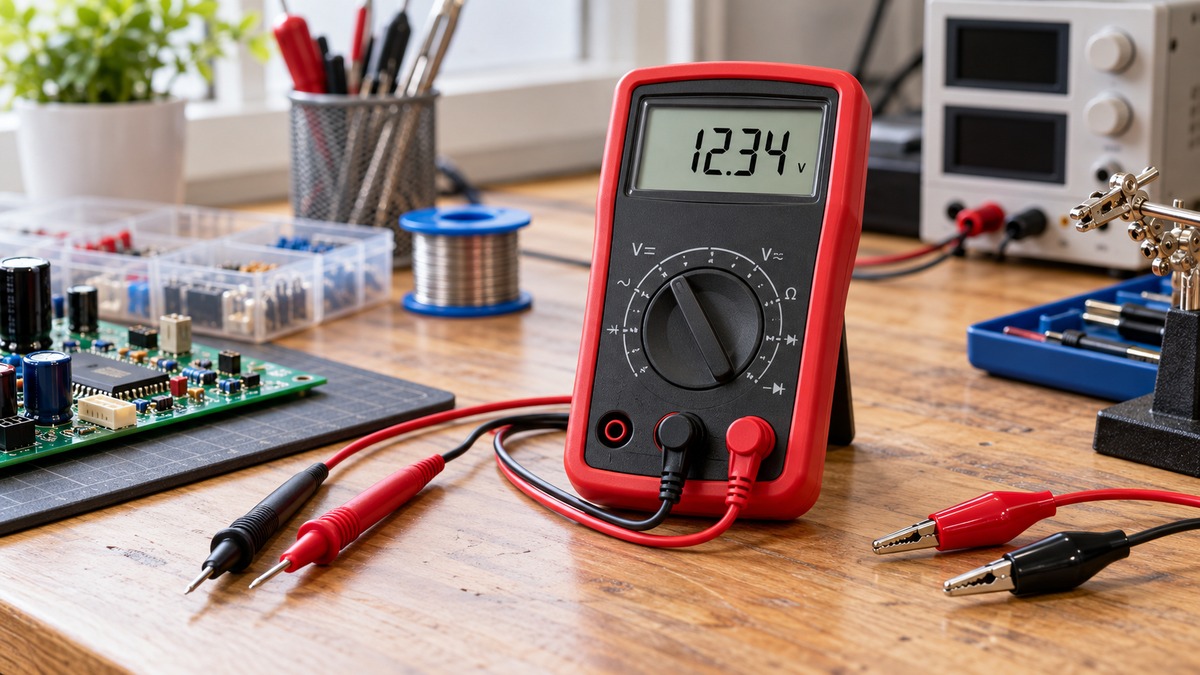
The DM130B is a red digital multimeter with an auto and manual range setting. The specs give the dimensions as 6.3 by 4.53 by 1.57 inches, the weight as about 185 grams with the battery, and the sampling speed as two times per second. The bullets describe a continuity check, a diode and battery test with 1.5, 9 and 12-volt battery settings, a non-contact voltage detection function and a kickstand. The included components are the manual, a pair of test leads, a pair of alligator clips and the meter.
The meter fits a reader who needs a compact multimeter with auto ranging, capacitance and a rated CAT III 600 volt category. The kickstand helps you read the display while you work. If you want a handheld meter without the capacitance function, the best hand-held digital multimeter guide covers that category.
The listing has several things to check. The display count is 3999 in the specs and 4000 in the title. The bullets describe the non-contact voltage function as a way to minimize exposure to live wires, which is the maker’s description and does not replace a rated tester. The listing gives no warranty term. The storage temperature is given in both Fahrenheit and Celsius, so use the one that matches your storage space.
Who should skip it: a reader who needs a rating above CAT III 600 volts, a reader who needs current above 10 amps, and a reader who needs a stated warranty.
Electrical safety first
Mains electricity can kill. Before you use any multimeter on a circuit, check the meter’s rating against the circuit, and check that the function you need is one the listing states. The source explains that the CAT system classifies circuits, and that a meter’s category must suit the circuit’s position in the installation.
The listing describes overload protection and two fuses, but a fuse is not a substitute for choosing the right rating and following the manual. Follow the manual for how to connect the leads, read the range and handle the meter. Follow your local electrical rules, and ask a licensed electrician if the work is outside your training. This review does not describe how to measure any circuit.
Power, fuses and storage
The meter runs on three AAA batteries. The low battery indicator shows when the batteries need replacing. The listing gives a storage temperature of 14 to 122 degrees Fahrenheit, which is minus 10 to 50 degrees Celsius, with humidity below 85 percent. Store the meter in a dry place, and check the fuses and the leads before each use.
Worked example: how far a 120-volt reading sits below the 600-volt rating
Compare that voltage with the meter’s listed 600-volt rating, so you can see the margin the rating leaves.
- Listed rating: 600 volts, from the listing.
- Reading in this example: 120 volts.
- Margin below the rating: 600 minus 120 = 480 volts.
Check the arithmetic again. 600 minus 120 is 480.
The example shows that the rating covers a 120-volt reading with a wide margin. The rating is a limit, not a guarantee, and the category must suit the circuit. Confirm the rating and the category before you measure.
How a digital multimeter measures
A multimeter combines several meters in one case. A typical one measures voltage, resistance and current, and some add temperature or capacitance, according to the Wikipedia overview of the multimeter. Digital multimeters, which show a numeric reading, are more precise than the older analog meters that use a moving pointer, the same source says. The DM130B is a digital meter, so its display count and ranges define the readings it can give.
The probes connect the meter temporarily to the circuit under test. The same overview says multimeters offer some intrinsic safety features to protect the operator if they are connected to voltages above their measuring capability. The overview does not describe how much protection a given model offers. For the DM130B, the listing gives the CAT III 600 volt rating and the fuse ratings, and those are the figures to check against your circuit.
Electrical hazards to plan around
The U.S. Occupational Safety and Health Administration lists the most frequent causes of electrical injury in the workplace. They are contact with power lines, a lack of ground-fault protection, a path to ground that is missing or discontinuous, equipment not used in the manner prescribed, and improper use of extension and flexible cords. The same OSHA page lists insulation, guarding, grounding, electrical protective devices and safe work practices as ways to reduce the risk.
A multimeter does not supply those protections. The meter’s rating, your work practice and the circuit’s own protection all matter, and the meter is only one part of that. If the circuit is outside your training, the OSHA page’s advice to use trained professionals applies, and a licensed electrician should handle it.
A checklist before you measure
- Confirm that the circuit’s voltage and type fall within the listed ranges and the CAT III 600 volt rating.
- Set the function you need, and check the display count against the reading you expect.
- Inspect the leads and the case for damage, and use the manual to check the fuses before a measurement.
- Keep the leads and your hands clear of the probe tips while the circuit is live, following the manual’s instructions.
Five common mistakes
- Trusting one display count. The specs say 3999 and the title says 4000 counts.
- Assuming a warranty. The listing states no warranty term.
- Ignoring the category. The rating is CAT III 600 volts, which must suit the circuit.
- Relying on the fuse as protection. Choose the right rating and follow the manual.
- Using the non-contact function as the only check. The listing describes it as reducing exposure, not as a substitute for a rated test.
FAQ
What is the rating?
The rating the listing names is EN 61010-1, CAT III at 600 volts.
What ranges does it measure?
The listing gives DC and AC voltage up to 600 volts, DC and AC current up to 10 amps, resistance up to 40 megohms, and capacitance up to 400 microfarads.
What batteries does it use?
The listing gives three 1.5-volt AAA batteries.
Does it include test leads?
Yes. The included components name a pair of test leads and a pair of alligator clips.
Does it come with a warranty?
The listing states no warranty term.
Is the display 4000 counts?
Title and specs disagree on the count, at 4000 and 3999. Confirm the figure on the product page before you rely on it.
Bottom line
The DM130B suits a reader who needs an auto-ranging multimeter with a listed CAT III 600 volt rating, capacitance and a kickstand, and who will confirm the display count and the rating for the circuit. It does not state a warranty term, and its display count differs between the title and the specs. Before use, read the manual, check the rating for the circuit, and follow your local electrical rules. Mains electricity can kill.
Sources
- Measurement category, Wikipedia: CAT II for circuits directly connected to the low-voltage installation, and CAT IV for the source of the high-voltage installation.
- Multimeter, Wikipedia: what a multimeter measures, digital versus analog precision, and built-in protection.
- OSHA, Electrical overview: common causes of electrical injury and the ways to reduce the risk.