Digital Multimeters Compared: 3 Listings
As an Amazon Associate we earn from qualifying purchases. Details
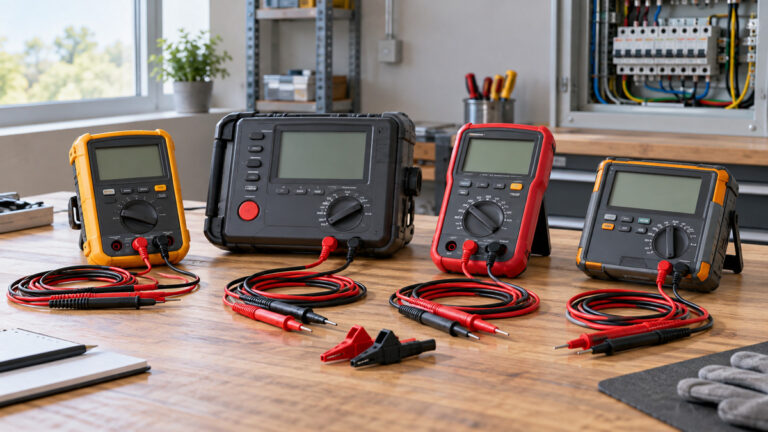
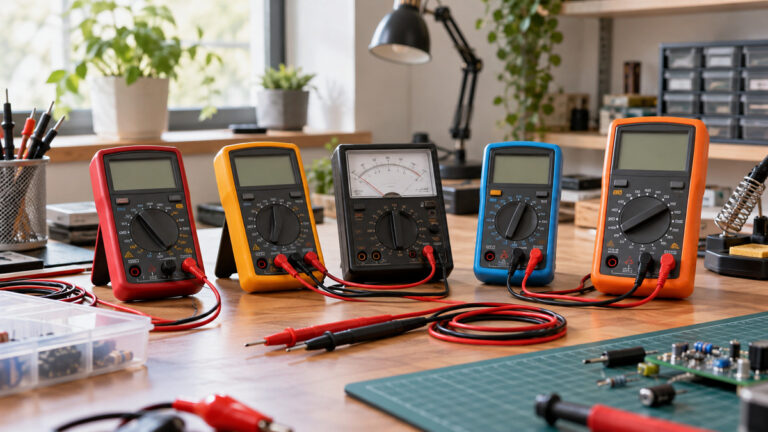
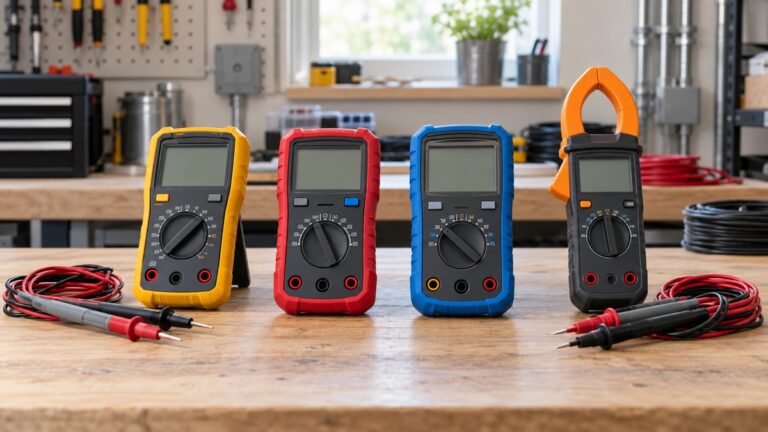
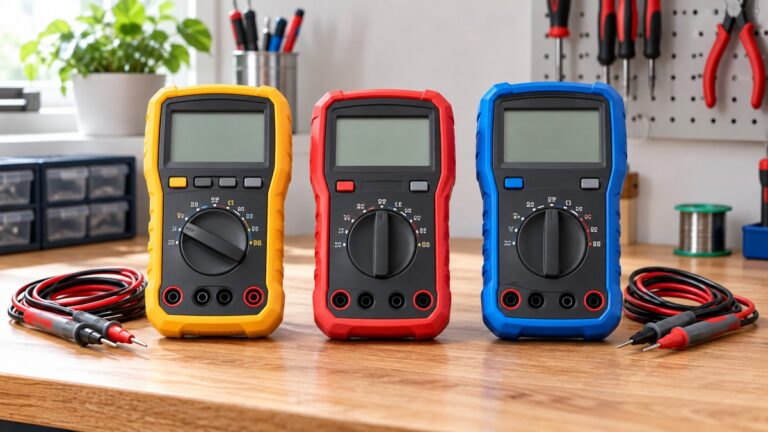
The keyword voltage tick meter does not name one product type in the listing data. This comparison therefore covers the three handheld digital multimeters in the set: battery-powered meters with a digital display that measure voltage, current and resistance. Clamp meters from the same research pool are a different product type and are not compared here.
Each card keeps the figures from its own listing. Where one listing gives two different values for the same feature, both values are shown rather than averaged.
Quick answer
Start with the measurement figures you cannot do without. The AstroAI AM33D is the only one of the three whose specification fields give DC voltage, AC voltage, DC current and resistance ranges with accuracy figures, so it is the easiest to check against a job. The ZMIWNIED FS899L is the only listing that states a 1000 V category rating and the only one that gives a 6000 count display, but its battery entry conflicts with its USB-C charging bullet. The LJPXHHU XL830L gives the fewest numbers of the three.
Comparison table
| Listing | Power entry in specifications | Display count | Safety or range figure stated |
|---|---|---|---|
| AstroAI AM33D (B01ISAMUA6) | Battery Powered, 2 x 1.5 V AAA | 2000 Counts | CAT II 600 V; CAT III 300 V; IEC 61010 |
| LJPXHHU XL830L (B0CXM242J1) | Battery Powered | 2000 Counts (title only) | Safety Standards Met (no category voltage given) |
| ZMIWNIED FS899L (B0GWL4KVZM) | Battery Powered (bullet says USB-C rechargeable) | 6000 counts (title and bullet) | Cat.III 1000V, Cat.IV 600V |
1. AstroAI AM33D Digital Multimeter
Listing data checked 2026-10-11. Brand AstroAI, model AM33D, compact style, blue, weight 0.15 kg.
- DC voltage: 200mV, 2V, 20V, 200V and 600V, each at ±(0.5%+3)
- AC voltage: 200V and 600V, at ±(0.8%+5)
- DC current: 200µA, 200mA and 10A, at ±(1.2%+3)
- Resistance: 200Ω, 2KΩ, 20KΩ and 200KΩ at ±(1.0%+3), plus 20MΩ at ±(1.5%+3)
- Fuse protection: F250 mA/250 V for the mA input and F10 A/250 V for the 10 A input
- Sample speed: 3 times per second in the specification field
- Included components: one meter, one 9V 6F22 battery, two test leads and one user manual
The bullets describe a data hold function, a continuity buzzer and a backlit LCD. The listing says it can not test all AC current or AC voltage below 100mV, and it warns that a reading may not appear if the test lead plugs are not fully inserted into the correct sockets.
Conflict to check: the specification field says 3 samples per second, while a bullet says 2 samples per second. The bullet also describes a 3 1/2 digit display with a 1999 count, while the specification field and title give 2000 counts. Confirm both on the product page before relying on either figure.
Best for: buyers who want the most printed range and accuracy figures in one listing.
Skip if: you need AC current, because the listing says AC current is not fully covered.
View the AstroAI listing on Amazon (affiliate link)
2. LJPXHHU XL830L Digital Multimeter
Listing data checked 2026-10-11. Brand LJPXHHU, model XL830L, modern style, orange and black, weight 166 g, dimensions 5.51 x 2.56 x 1.18 inches.
- Power source: Battery Powered
- Specification met: Safety Standards Met
- Display: 2.7 inch backlit LCD, described in a bullet
- Measures: AC and DC voltage, DC current, resistance, continuity, diode and batteries, per the bullets
- Warranty and battery: 2 year quality guarantee, with a 9V battery included according to the bullet
The listing has no numeric voltage ranges, current ranges or accuracy percentages in its specification fields. Its bullets mention overload protection on all ranges and a fold-out stand that lets the meter stand on a bench. The bullets say the battery, a set of test leads and a user manual are included. The specification field for included components lists only the word multimter, so the bundle needs confirmation.
Conflict to check: the bullets say test leads are included, while the included components field does not list them. The title says 2000 counts, and no specification field repeats that figure.
Best for: buyers who want a simple battery meter with a stand and a backlit screen, and who will check ranges on the product page.
Skip if: you need printed accuracy figures to plan a job, because the listing does not give them.
View the LJPXHHU listing on Amazon (affiliate link)
3. ZMIWNIED FS899L True RMS Multimeter
Listing data checked 2026-10-11. Brand ZMIWNIED, part number FS899L-1, modern style, black, with a specification field listing CAT III 1000V and CAT IV 600V.
- Safety rating: Cat.III 1000V and Cat.IV 600V in the specification field
- Compatible devices: appliances, electronics and vehicles
- Power source: Battery Powered in the specification field
- Included components: instruction manual in the specification field
The bullets describe a 6000 count True RMS meter that measures AC and DC voltage and current, resistance and capacitance, and that includes non-contact voltage detection, continuity and frequency functions. The listing describes a 4.8 inch color screen, a built-in flashlight, a data hold function and a pair of fully insulated alligator clips that snap onto the test leads.
Conflict to check: the specification field gives battery power, while a bullet says the meter has a USB-C rechargeable design with a charge time of about 2 hours. The included components field lists only the instruction manual, while a bullet mentions the alligator clips as part of the kit. The listing gives no accuracy percentage in its specification fields.
Best for: buyers who want the only listing here that states a 1000 V category rating and a 6000 count display.
Skip if: you need a battery type you can replace, because the power entry and the charging bullet do not agree.
View the ZMIWNIED listing on Amazon (affiliate link)
How the three listings were compared
The comparison uses only the specification fields and bullet text in the three listings. Fields were matched by name: power source with power source, safety rating with safety rating, and display count with display count. A value that appears only in the title, such as the 2000 count figure for the LJPXHHU, is labelled as a title-only figure. A listing with no value for a field is marked as not stated rather than filled from another listing.
Worked example: reading the AstroAI DC voltage accuracy
The AstroAI listing gives the DC voltage accuracy for the 20V range as ±(0.5%+3). Take a reading of 12.00 V. The percentage part is 0.5% of 12.00 V, which is 0.06 V. The listing does not state the size of one count, but a 2000 count display on a 20 V range resolves steps of 0.01 V. The 3 count part therefore adds 0.03 V. The total stated tolerance is about ±0.09 V around the displayed value.
The same method cannot be applied to the other two listings, because neither gives a percentage or count-based accuracy figure in its specification fields. For those listings the accuracy has to be checked on the product page or in the manual.
What the listings do not say
None of the three listings gives a numeric DC voltage range in its specification field except the AstroAI AM33D. The FS899L gives safety and count figures, while the LJPXHHU gives only a safety standards statement and a count in its title. Neither of them gives the full set of ranges a buyer would need to compare the three meters on equal terms.
The AstroAI and LJPXHHU listings do not state a true RMS rating or a capacitance function. Those points are not stated in their listings and should be checked before purchase.
Frequently asked questions
Which listing gives the most measurement ranges?
The AstroAI AM33D gives DC voltage, AC voltage, DC current and resistance ranges with accuracy percentages in its specification fields. The LJPXHHU and the FS899L do not give numeric ranges in their specification fields.
Do the listings agree on the AstroAI sampling speed?
No. The specification field says 3 times per second, and a bullet says 2 times per second. Confirm the figure on the product page.
Does the FS899L run on batteries or on USB-C?
The specification field says Battery Powered. A bullet describes a USB-C rechargeable design with a 2 hour charge. The listing does not explain which one applies to every unit, so check the product page.
Are test leads included with each meter?
The AstroAI lists two test leads in its included components field. The LJPXHHU bullets say test leads are included, but its included components field does not list them. The FS899L specification lists only an instruction manual, while a bullet mentions alligator clips.
Can these multimeters measure AC current?
The AstroAI listing says it can not test all AC current, and its specification fields list DC current only. The FS899L bullet says it measures AC and DC current. The LJPXHHU bullets do not describe AC current.
Related guides
For a meter used on a car, see Best Digital Voltage Meter for Car. For a compact model with a USB port, see Best Multitester USB. For a broader list of handheld meters, see Best Multimeter, and for a related clamp-style choice, see Best True RMS Digital Clamp Meter.
Conclusion
Among these three digital multimeter listings, the AstroAI AM33D gives the most checkable specification figures, the FS899L gives the largest display count and the only 1000 V category rating, and the LJPXHHU gives the fewest figures. Each listing has at least one field that conflicts with another field or bullet, so confirm the power source, test leads and sampling speed on the product page before ordering.