Best Voltage Testers: 5 Picks for Live Circuit Checks
As an Amazon Associate we earn from qualifying purchases. Details
A voltage tester tells you whether a wire, outlet or circuit is live, which is a simpler job than taking a full multimeter reading. This guide compares five options, from non-contact pens to a car test light, and shows how to match each one to the circuit in front of you.
Mains circuits can kill, so start with safety: check the CAT rating and voltage range against the circuit you plan to work on. Panel and service work belongs to a licensed electrician. Each pick is described from its own listing, so confirm those fields on the product page and follow the manual for use.
Quick answer
For household outlets, switches and wires, the Klein NCVT1P is the clearest pick here, because its listing states a CAT IV 1000 V rating. The Fluke 1AC II is also a strong fit, since its title states a CAT IV rating and a 90 to 1000 V AC range. For car batteries and fuses on circuits from 3 to 48 volts, choose the WINAMOO automotive test light. The MXCOIRTP listing states no CAT rating, so do not use it on household wiring until you confirm one. Match the range and the rating to your circuit before you buy.
What decides the right voltage tester
Five factors change the answer more than appearance does.
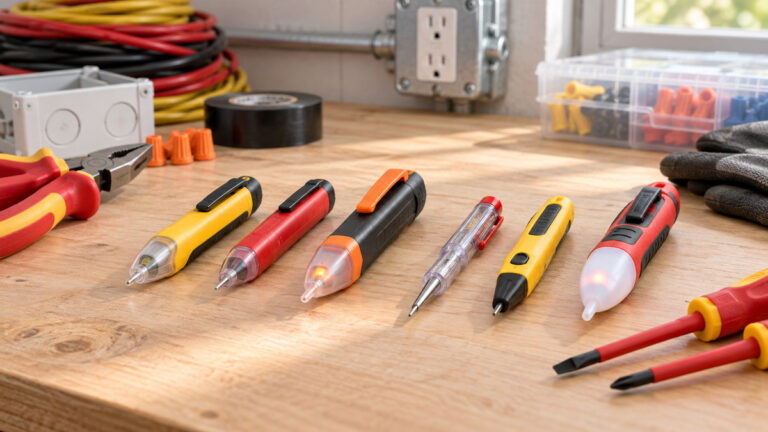
Type of tester. A non-contact pen detects AC voltage near a wire or outlet without touching metal. The Klein, Fluke, Neoteck and MXCOIRTP pens work this way. An automotive test light uses a probe and clip, and shows a digital reading. The WINAMOO unit is in that group. The two types answer different questions, so pick the one that fits the job.
Voltage range. A tester works only inside its listed range. The Klein listing covers 50 to 1000 V AC, the Fluke listing covers a nominal 90 to 1000 V AC, the Neoteck listing covers 12 to 1000 V AC, and the MXCOIRTP listing covers 12 V, 48 V and 70 V to 1000 V. The WINAMOO listing covers 3 to 48 V. Check your circuit against those limits before you rely on a reading.
CAT rating. CAT means measurement category, an International Electrotechnical Commission (IEC) classification of live circuits by where they sit in an installation. A CAT II rating covers circuits directly connected to the low-voltage installation. A CAT IV rating covers measurements at the source of the high-voltage installation. The rating on the tester must suit the circuit. The Klein listing states CAT IV 1000 V. The Neoteck listing states CAT III 600 V. The MXCOIRTP and WINAMOO listings state no CAT rating.
Alerts and self-check. Visual and audible alerts help you read the tester without looking at a screen. The Klein pen shows a green LED when it is working and flashes red with a beep when voltage is detected. The Fluke pen has a continuous self-test and an audible or silent mode. The MXCOIRTP pen has three sensitivity modes, each signaled by a number of buzzer beeps.
Power and batteries. Most pens here use AAA batteries. The Klein listing includes two AAA batteries and says it auto-powers off to save them. The Fluke listing includes two AAA alkaline batteries with a typical life of greater than 1 year. The WINAMOO listing’s power field reads corded electric, which is unusual for a pen, so check that field before you buy.
How to choose
Use these rules to narrow the list.
- Choose a non-contact pen for a quick check of outlets, switches and wires at home. Confirm that the range covers your circuit and that the CAT rating suits it.
- Choose the Klein or Fluke pen if a stated CAT IV rating at 1000 V matters to you. These two listings are the clearest on that point.
- Choose the WINAMOO test light for car battery, fuse, headlight and turn-signal checks on 3 to 48 V DC circuits.
- Skip the MXCOIRTP pen for mains until you can confirm a CAT rating that suits the circuit.
- You may not need a new tester if the one you own already has a rating and range that cover the circuit. For more home options, see our guide to the best voltage tester for home use. Trade work has different needs, so our best voltage tester for electricians guide covers those. If you want a pen that finds a live wire without a probe, see our best contactless voltage tester guide.
1. Klein Tools NCVT1P Voltage Tester, NCVT Pen, 50 to 1000V AC (Household outlets and wires)
Specs from the listing (checked 2026-10-11):
- Specification Met: Cat Iv 1000v
- Item Weight: 22.68 g
- Item Dimensions: 5.5 x 0.72 x 1 inches
- Included Components: Instructions and 2 x AAA 1.5 Volt Batteries
- Warranty Description: See Manufacturer Website
Pros
- Specification field lists CAT IV 1000 V for this pen
- Green LED confirms it is working, red flash and beep show voltage
- Auto power-off is listed to conserve batteries
Cons
- Detects voltage presence and gives no numeric reading
- Warranty field says see manufacturer website
- Not suited to DC automotive circuits
Best for: Quick AC checks of outlets, switches and wires at home, following the manual
Skip if: You need a numeric reading or a tester for DC automotive circuits
View on Amazon (affiliate link)
2. Fluke 1AC II VoltAlert Non-Contact Voltage Tester, Pocket-Sized, 90-1000V AC, Audible Beeper, CAT (Pocket tester with self-test)
Specs from the listing (checked 2026-10-11):
- Voltage sensing ranges: Nominally, 90 V AC to 1000 V AC
- Batteries: 2 AAA alkaline batteries included; Typical battery life of greater than 1-year
- Specification Met: Beeps
- Item Weight: 59 g
- Warranty Description: 2 years
- Item Dimensions: 10.24 x 7.5 x 1.46 inches
Pros
- Continuous self-test shows you the unit is working
- Audible and silent modes for different settings
- Two AAA alkaline batteries included with greater than 1-year typical life
Cons
- Lower limit is 90 V AC, so it does not cover low voltages
- Spec fields do not state the voltage for its CAT IV rating
- No numeric display of the reading
Best for: A pocket tester for AC outlets, switches and wires in a home
Skip if: You need a DC car tester or a numeric voltage reading
View on Amazon (affiliate link)
3. Neoteck Non Contact Voltage Detector 12-1000V AC Voltage Tester (Flashlight pen with CAT III)
Specs from the listing (checked 2026-10-11):
- Specification Met: CE
- Item Weight: 65 g
- Item Dimensions: 6.3 x 0.79 x 0.79 inches
- Warranty Description: 18 Months
- Included Components: 2×1.5V AAA batteries
Pros
- Covers 12 to 1000 V AC in one non-contact pen
- Built-in LED flashlight for dark outlets and breakers
- Warranty field lists 18 Months
Cons
- Listed CAT III 600 V rating is lower than the Klein and Fluke listings
- Bullets say it is not suitable for Christmas light checks
- Bullets claim it removes shock risk, which is a claim, not a guarantee
Best for: Basic home checks of outlets, breakers and switches where a CAT III 600 V rating suits the circuit
Skip if: Your circuit needs a CAT IV rating or you need to check Christmas lights
View on Amazon (affiliate link)
4. MXCOIRTP Voltage Tester, Non-Contact Voltage Detector, Electrical Tester, 3 Ranges AC (Three sensitivity modes)
Specs from the listing (checked 2026-10-11):
- Warranty Description: 1 year warranty
- Power Source: Battery Powered
- Included Components: Voltage Tester
- Measurement Type: Voltmeter
- Style: Compact
Pros
- Three sensitivity modes signaled by buzzer count
- Auto power-off after 3 minutes without operation or signal
- Low-battery warning at 2.5V is described in the bullets
Cons
- The listing does not state a CAT rating for mains use
- Tail flashlight works only when the tester is off
- Warranty of 1 year is shorter than the Fluke listing's 2 years
Best for: A compact pen for hobbyists who first confirm a rating suits their circuit
Skip if: You need a stated CAT rating for household mains
View on Amazon (affiliate link)
5. WINAMOO Automotive Test Light with 3-48V LED Digital Voltage Display, Auto Circuit Tester (Car battery and circuit checks)
Specs from the listing (checked 2026-10-11):
- Power Source: Corded Electric
- Item Weight: 200 g
- Specification Met: CE, UL
- Item Dimensions: 11.1 x 4.2 x 1.4 inches
- Included Components: Automotive Test Light
- Measurement Type: Voltmeter
Pros
- Digital readout over a 3 to 48 V range
- 96-inch spring wire with a large alligator clip
- Sharp stainless steel probe stored in a protective sleeve
Cons
- Listing states no CAT rating, so it is not for household wiring
- Power field reads corded electric, which the listing does not explain
- Sharp probe needs the sleeve when not in use
Best for: Car battery, fuse, headlight and turn-signal checks on 3 to 48 V DC circuits
Skip if: You need household mains checks or work near airbag or high-voltage hybrid or EV systems
View on Amazon (affiliate link)
Pick-by-pick notes
Klein Tools NCVT1P: the clearest CAT IV listing
The Klein Tools NCVT1P is a non-contact pen with a 50 to 1000 V AC detection range. Its specification field reads Cat Iv 1000v, which is the rating to compare against your circuit. The pen weighs 22.68 g and measures 5.5 by 0.72 by 1 inches, so it fits in a pocket with its clip. The box includes instructions and two AAA batteries. The bullets describe a green LED that lights when the tester is working, and a flashing red LED with a beeping alert when voltage is detected. The bullets say it detects AC voltage in cables, cords, circuit breakers, switches, outlets and wires. It auto-powers off to conserve batteries, and it lists 6.6-foot drop protection. The limits are real. A pen like this signals that voltage is present, but it gives no numeric reading. The warranty field says see the manufacturer website, so check the terms before you buy. Skip this pen if you need a number, or if your work is on DC automotive circuits.
Fluke 1AC II VoltAlert: the pocket tester with self-test
The Fluke 1AC II VoltAlert is a pocket-sized non-contact tester with a nominal 90 to 1000 V AC sensing range. Its bullets also mention a 200 to 1000 V AC option. The title states a CAT IV rating, but the spec fields do not list the voltage for that rating, so check the listing before you rely on it. The tip glows red and a beeper sounds when voltage is detected. The bullets describe a continuous self-test, so you know the unit is working, and an audible or silent mode. The item weighs 59 g and measures 10.24 by 7.5 by 1.46 inches. Two AAA alkaline batteries come in the box, and the listing gives a typical battery life of greater than 1 year. The warranty field reads 2 years. Its limits are the lower bound and the lack of a display. Below 90 V AC, the listing gives no guidance, so this pen is not the tool for low-voltage checks. Skip it if you need a numeric reading or a DC car tester.
Neoteck Non Contact Voltage Detector: the flashlight pen
The Neoteck Non Contact Voltage Detector covers 12 to 1000 V AC in an orange pen body. The bullets say it uses different alarm sounds and LED signals to tell a live wire from a neutral one. It also has an LED flashlight that lights dark outlets, switches and breakers. The bullets describe a CE CAT III 600 V rating, which is lower than the CAT IV rating on the Klein and Fluke listings. The item weighs 65 g and measures 6.3 by 0.79 by 0.79 inches. It takes two AAA batteries, included with the unit, and the warranty field reads 18 Months. Limits come from the listing itself. The bullets say the pen is not suitable for Christmas light checks. They also claim the pen removes any shock risk, but a bullet is not a guarantee, so follow the manual. Skip this model if your circuit needs a CAT IV rating.
MXCOIRTP Voltage Tester: three sensitivity modes
The MXCOIRTP Voltage Tester is a compact non-contact pen with three ranges in its title: AC 12 V, 48 V and 70 V to 1000 V. The bullets describe three sensitivity modes. The pen starts in low mode with one buzz, and each press of the S button steps to medium with two buzzes and high with three. It also has a detection light and a tail flashlight, which works only when the tester is off. The pen auto powers off after 3 minutes without operation or signal detection. The bullets say the battery warning comes at 2.5 V, when the power light flashes three times. The warranty is 1 year. The listing states no CAT rating, and that is the limit that matters most here. Without a stated rating, do not use this pen on household mains. Skip it for household wiring unless you confirm a rating that suits your circuit.
WINAMOO Automotive Test Light: car batteries and fuses
The WINAMOO Automotive Test Light has a 3 to 48 V LED digital voltage display with a 0.1 V resolution, according to the bullets. It has a sharp stainless steel probe that stores in a protective sleeve, and a large alligator clip for one-handed use. The spring wire is 96 inches long. The bullets say the bidirectional LED shows positive polarity in red and negative in green. The unit is aimed at car batteries, alternator charging systems, headlight and taillight circuits, turn-signal circuits, sockets and fuse connections. The listing states no CAT rating, so it is not for household wiring. Its power field reads corded electric, which the listing does not explain for a pen, so check the listing before you buy. Disconnect or handle car batteries safely, and follow the vehicle manual. Do not use this tool on airbag or high-voltage hybrid or EV systems. Skip it if you need a household mains tester.
The first check is whether the tester’s range includes that voltage. We measure the gap between the outlet voltage and each listed limit.
- WINAMOO upper limit: 48 V. Outlet 120 V − 48 V = 72 V above its maximum. Outside its range.
- Fluke lower limit: 90 V. Outlet 120 V − 90 V = 30 V above its minimum. Inside its range, with 1000 V as the upper limit.
- Klein lower limit: 50 V. Outlet 120 V − 50 V = 70 V above its minimum. Inside its range.
- Neoteck lower limit: 12 V. Outlet 120 V − 12 V = 108 V above its minimum. Inside its range.
The Klein, Fluke and Neoteck pens pass the range check. The range check is only the first step. The CAT rating must also suit the circuit, and the MXCOIRTP listing states none, so it fails that check for mains.
Worked example: comparing listed lengths
The Klein NCVT1P lists item dimensions of 5.5 x 0.72 x 1 inches, and the Neoteck lists 6.3 x 0.79 x 0.79 inches. The first figure of each is 5.5 inches for the Klein and 6.3 inches for the Neoteck. The difference is 6.3 inches minus 5.5 inches, which equals 0.8 inches.
Common mistakes with a voltage tester
- Choosing by the word “voltage” alone. A DC automotive light and an AC non-contact pen both carry the word voltage in their titles, but they serve different circuits.
- Ignoring the CAT category. A CAT II rating covers circuits connected directly to the low-voltage installation. A CAT IV rating covers the source of the high-voltage installation. A lower rating does not cover a higher-risk point.
- Using a car tester on household wiring. The WINAMOO range stops at 48 V, far below mains voltage.
- Treating a quiet pen as proof of no voltage. A non-contact pen gives a signal, not a full reading. Follow the manual’s limits, and use the right instrument before you touch conductors.
- Skipping the battery check. Confirm the pen’s self-check or indicator before each use. The Klein green LED and the Fluke self-test are the signals to look for.
FAQ
Is a voltage tester the same as a multimeter?
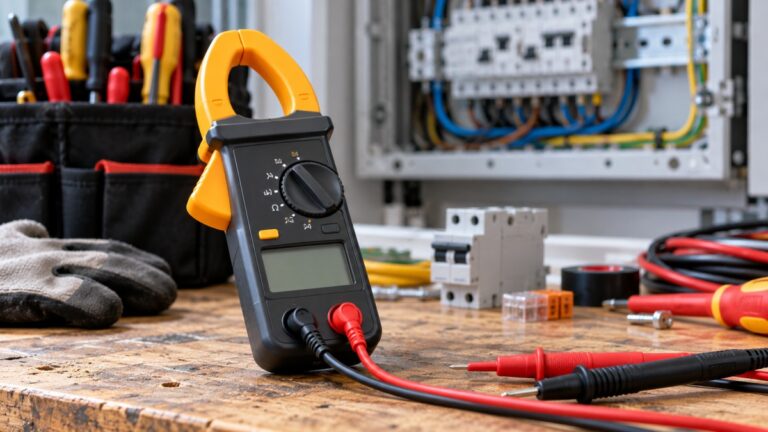
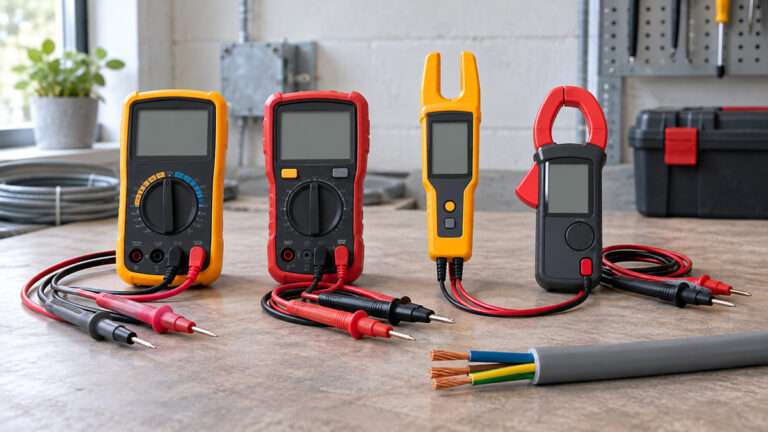
No. A multimeter takes numeric readings of voltage, current and resistance. The Klein and Fluke pens here detect voltage and give an alert, without a number. Use a multimeter when you need a value.
What does the CAT rating on a voltage tester mean?
CAT is a measurement category used by the IEC. CAT II applies to circuits directly connected to the low-voltage installation. CAT IV applies at the source of the high-voltage installation. Choose a tester whose rating suits the point where you work.
Can I use a voltage tester on Christmas lights?
The Neoteck listing says its pen is not suitable for Christmas light checks. For other pens, read the manual before you use them on lights.
Can a voltage tester check a car battery?
The WINAMOO test light is made for car battery and circuit checks between 3 and 48 V. Handle the battery safely, and follow the vehicle manual. Do not use it on airbag or high-voltage hybrid or EV systems.
How long do the batteries last?
The Fluke listing gives a typical battery life of greater than 1 year. The Klein pen uses an auto power-off to save its AAA batteries. Replace batteries when the low-battery indicator shows.
What should I check if the pen does not light or beep?
Start with the self-check. The Klein green LED shows the pen is working, and the Fluke pen runs a continuous self-test. If the pen fails its check, do not rely on it, and replace the batteries or the unit.
When should I call an electrician?
Call one when a circuit needs work beyond plugging in a tester, or when you are unsure which circuit you are dealing with.
Bottom line
Start with the circuit. For household outlets, switches and wires, choose the Klein NCVT1P or the Fluke 1AC II, and confirm that the range and CAT rating suit the job. For car batteries, fuses and headlights on circuits from 3 to 48 volts, choose the WINAMOO test light. Skip the MXCOIRTP pen for mains until a CAT rating is confirmed. If you need a number instead of an alert, a multimeter is the better tool.
Sources
- Wikipedia: Measurement category: CAT classification and the difference between CAT II and CAT IV